Skip to content
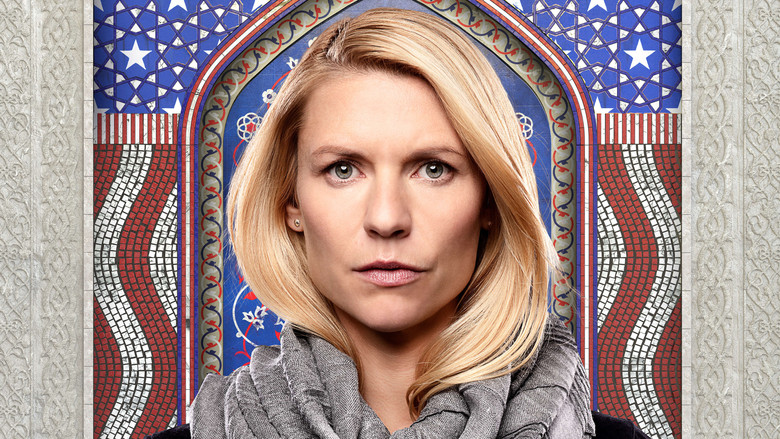
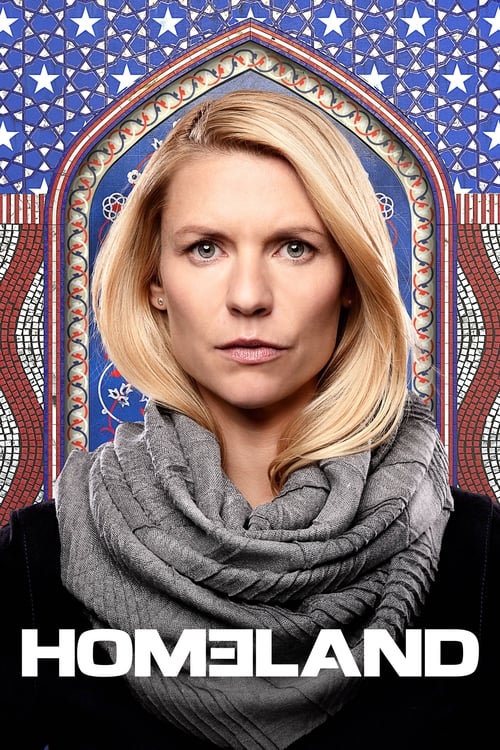
Homeland
A feverish psychological espionage thriller defined by suffocating paranoia and obsessive grief, where frayed geopolitical loyalties mirror the cracked, overstimulated labyrinth of a brilliant agent’s manic mind.
Homeland

Homeland

"The nation sees a hero. She sees a threat."

02 October 2011 — 26 April 2020 United States of America 8 season 96 episode Ended 7.6 (2,666)

Cast: Claire Danes, Mandy Patinkin, Rupert Friend, Maury Sterling, F. Murray Abraham

Drama Crime War & Politics The Human Cost of National Security & Eternal Vigilance Mental Illness, Intuition, and Perception of Reality Institutional Compromise, Moral Ambiguity, and Disinformation Radicalization, Trauma, and the Cycle of Retaliation

Overview

Developed by Howard Gordon and Alex Gansa based on Gideon Raff’s Israeli drama Hatufim (Prisoners of War), Homeland is an eight-season espionage saga running 96 episodes. It centers on CIA operations officer Carrie Mathison (Claire Danes), whose acute analytical mind and bipolar disorder make her simultaneously the Agency’s most indispensable asset and its most volatile liability. The narrative begins when decorated U.S. Marine Sergeant Nicholas Brody (Damian Lewis) is rescued after eight years in Al-Qaeda captivity, prompting Carrie to suspect that the celebrated national war hero was secretly turned into a radical sleeper agent.

As the initial cat-and-mouse tension expands, the series evolves into a globe-spanning exploration of modern counterterrorism, international intelligence operations, and systemic statecraft. With her long-time mentor and father figure Saul Berenson (Mandy Patinkin) anchoring her to the intelligence establishment, Carrie’s covert missions take her through the geopolitical flashpoints of Washington, D.C., Islamabad, Berlin, New York, and Moscow.

Across eight seasons, Homeland continually reinvents its operational theater, moving from individual counterterrorist investigations to high-stakes drone warfare, Russian disinformation campaigns, deep-state conspiracies, and fragile nuclear peace negotiations. The overarching story charts the profound human, psychological, and institutional costs borne by those tasked with maintaining national security in an increasingly fractured world order.

Core Meaning

The core thesis of Homeland is that the post-9/11 "War on Terror" and perpetual global surveillance state erode the moral soul and sanity of both the individual intelligence operative and the democratic nation they serve. Across its entire run, the series argues that true patriotism in espionage demands catastrophic personal sacrifice—alienation, loss of family, destruction of reputation, and complicity in moral ambiguity—while revealing that violence, revenge, and state exceptionalism inevitably generate endless cycles of blowback and institutional decay.

Thematic DNA

The Human Cost of National Security & Eternal Vigilance 30%
Mental Illness, Intuition, and Perception of Reality 25%
Institutional Compromise, Moral Ambiguity, and Disinformation 25%
Radicalization, Trauma, and the Cycle of Retaliation 20%

The Human Cost of National Security & Eternal Vigilance

Homeland illustrates how the relentless demands of counterintelligence consume the operatives themselves. From Carrie’s sacrifice of personal relationships and motherhood to Peter Quinn’s physical and mental degradation and Nicholas Brody’s irreversible trauma, state security functions as an insatiable machine that extracts everything from its field personnel.

Mental Illness, Intuition, and Perception of Reality

Carrie’s Type 1 bipolar disorder serves as both a central narrative engine and a thematic prism. Her hyper-manic states generate brilliant counterterrorism insights that the bureaucratic establishment ignores, yet also make her susceptible to profound vulnerability, gaslighting, and paranoia. The series continuously probes the border between genuine institutional foresight and manic delusion.

Institutional Compromise, Moral Ambiguity, and Disinformation

The series deconstructs the conventional binary between "us" and "them" in geopolitical warfare. From lethal drone strikes on civilian targets in Pakistan (Season 4) to deep-state weaponization of domestic media and Russian cyber-espionage (Seasons 6–8), the CIA and Western governments frequently utilize methods indistinguishable from those of their adversaries.

Radicalization, Trauma, and the Cycle of Retaliation

Through characters across opposing factions—such as Brody, Aayan Ibrahim, Haissam Haqqani, and Russian operative Yevgeny Gromov—the series explores how personal grief, torture, and military aggression spawn radicalization. The violence unleashed by both superpowers and insurgency networks is depicted as an unbroken chain reaction of vengeance.

Character Analysis

Carrie Mathison

Claire Danes

Archetype: The Tragic Hero / Cassandra Key Trait: Unyielding, obsessive analytical genius coupled with bipolar volatility.

Motivation

Driven by counterterrorist duty, obsessive analytical insight, and the pursuit of national security and global peace at any personal cost.

Character Arc

Evolves from an obsessive CIA case officer driven by counterterrorist duty to an operative who realizes true defense of peace requires betraying her own government’s institutional hubris. She sacrifices family, mental stability, and country, ending as Saul's deep-cover asset inside Moscow.

Saul Berenson

Mandy Patinkin

Archetype: The Moral Mentor / Statesman Key Trait: Deep, pragmatic moral conscience paired with strategic patience.

Motivation

Driven by a belief in statecraft, pragmatism, and diplomacy over brute military force.

Character Arc

Transitions from CIA Middle East Division Chief to CIA Director and National Security Advisor. His paternal devotion to Carrie is repeatedly tested by her willingness to break every operational rule.

All 5 characters and cast

Symbols & Motifs

The Drone Screen / Aerial Surveillance Feeds

Meaning:

Symbolizes sterile, dispassionate warfare and the moral detachment of modern statecraft.

Context:

Used when operatives make lethal life-and-death decisions based on pixelated heat signatures thousands of miles away, insulating them from immediate carnage while sowing geopolitical blowback.

The Wall Board (Carrie's Color-Coded Yarn and Case Files)

Meaning:

Reflects the manic, non-linear architecture of Carrie's mind, representing both her genius for synthesizing obscure global intelligence connections and her descent into psychological fixation.

Context:

Created during Carrie's obsessive analytical investigation phases.

Jazz Music (The Trumpet and Freeform Improvisation)

Meaning:

The discordant, improvisational nature of modern jazz mirrors the erratic, fast-shifting landscape of espionage where established rules collapse.

Context:

Used by Carrie as an auditory anchor during both manic episodes and covert surveillance.

The Star on the CIA Memorial Wall

Meaning:

An institutional symbol of ultimate sacrifice and state-sanctioned anonymity, as well as unofficial truth, unrecognized sacrifice, and counter-institutional memory.

Context:

In the Season 3 finale, Carrie hand-draws a star with a black marker for Brody on the Agency memorial wall.

The Red/Green Coded Signals and Secret Dead Drops

Meaning:

Symbolizes the solitary reality of espionage where true communication can occur only in coded isolation.

Context:

Seen from Brody tapping fingers in Season 1 to Carrie’s hidden book deliveries in Season 8.

Memorable Quotes

I missed something once before, I won't... I can't let that happen again.
— Carrie Mathison

Context

Spoken in Season 1, Episode 1 ("Pilot").

Meaning

Carrie’s defining credo, rooted in her lingering guilt over not detecting the September 11 attacks, which fuels her obsessive pursuit of Brody.

Brody: I liked you, Carrie. / Carrie: I loved you.
— Nicholas Brody & Carrie Mathison

Context

Delivered in a secluded cabin in Season 1, Episode 7 ("The Weekend") when their operational deceptions unravel.

Meaning

Stripping bare the raw romantic and psychological connection between hunter and prey.

All 5 quotes

Episode Highlights

Pilot

S1E1

Directed by Michael Cuesta; establishes Carrie’s covert surveillance of newly returned POW Nicholas Brody and introduces her secret battle with bipolar disorder.

Significance:

Sets the foundational DNA for the entire series and defined post-9/11 television psychological thrillers.

The Weekend

S1E7

Carrie and Brody retreat to a rural cabin, where sexual intimacy clashes with espionage interrogations.

Significance:

Solidified Danes and Lewis's electric chemistry and established Homeland as an intimate character study as much as an espionage thriller.

Marine One

S1E12

Brody stands in a bunker with a suicide vest ready to assassinate the Vice President, only aborted by a phone call from his daughter Dana; Carrie undergoes electroconvulsive therapy.

Significance:

A watershed cliffhanger that subverted thriller conventions by keeping the antagonist alive.

Q&A

S2E5

An extended interrogation room masterclass where Carrie breaks Brody and flips him into a CIA double agent.

Significance:

Widely hailed by critics and creators as the finest episode of the series, radically accelerating the plot.

The Star

S3E12

Brody is publicly hanged in a public square in Tehran; Carrie secretly draws a CIA star for him on the Agency memorial wall.

Significance:

Concluded the founding three-season arc, proving the show’s willingness to kill its co-lead and reboot its operational premise.

There's Something Else Going On

S4E9

A tense prisoner exchange with Saul serves as a tactical diversion while Taliban leader Haissam Haqqani raids the U.S. Embassy in Islamabad via secret underground tunnels.

Significance:

Rejuvenated the series post-Brody, establishing Season 4 as an action-espionage benchmark.

America First

S6E12

Peter Quinn drives President-Elect Keane and Carrie through an armed ambush, sacrificing his life under gunfire.

Significance:

Marked the tragic end of Peter Quinn and signaled the series’ shift toward domestic political extremism and authoritarian creep.

All In

S7E11

Carrie leads a high-stakes tactical mission inside Moscow to extract Russian defector Simone Martin amidst international brinkmanship.

Significance:

Showcased large-scale Cold War-style tactical espionage and set the stage for Carrie's Russian institutional imprisonment.

Prisoners of War

S8E12

Carrie feigns Saul's assassination to uncover his deep-cover Russian asset, prevents a U.S.-Pakistani nuclear conflict, defects to Russia with Yevgeny Gromov, and assumes the role of Saul’s new high-level Moscow spy.

Significance:

Neatly brought the 96-episode journey full circle, paying homage to the original Israeli series title and resolving Carrie’s tragic destiny.

Philosophical Questions

Can a democratic society maintain its civil liberties and moral standing while conducting covert extrajudicial warfare?

Explored through the depiction of lethal drone strikes, targeted assassinations, and surveillance mechanisms that erode democratic principles and fuel endless geopolitical blowback.

Does state security justify the total instrumentalization and psychological destruction of individual human assets?

Examined through the personal, mental, and physical degradation experienced by Carrie Mathison, Peter Quinn, and Nicholas Brody in service to national security imperatives.

Is intuition and foresight indistinguishable from paranoia when the threat landscape is inherently invisible?

Investigated via Carrie's Type 1 bipolar disorder, probing the volatile boundary between manic delusion, gaslighting, and genuine counterterrorism genius.

Can violence and counter-terror ever break the cyclical loop of trauma and radicalization?

Addressed across opposing factions by showing how state aggression, drone collateral damage, and personal grief trigger continuous retaliatory cycles.

Alternative Interpretations

Carrie: Rogue Hero vs. Dangerous Institutional Instigator: One reading views Carrie as a visionary whose moral instincts protect the free world. An alternative critical reading sees her as a manic agent of state violence whose operations repeatedly leave devastation, dead assets, and destabilized governments in their wake.

Full ending explanation

Cultural Impact

Homeland debuted on Showtime on October 2, 2011—roughly a decade after September 11 and five months after the death of Osama bin Laden. Moving away from the physical, black-and-white counterterrorism of 24, Homeland reflected the Obama era’s introspective, legally ambiguous drone warfare and targeted assassinations.

The show swept the 64th Primetime Emmy Awards in 2012 (winning Outstanding Drama Series, Lead Actress for Danes, Lead Actor for Lewis, and Writing for Gansa and Gordon) and captured major Golden Globe awards. It demonstrated that serialized prestige cable drama could tackle active, unfolding geopolitical realities with psychological nuance.

Later seasons proved prescient: Season 5 anticipated European ISIS terror threats; Season 6 dealt with fake news farms, alt-right radio influencers, and presidential antagonism toward the intelligence community; and Season 8 depicted fragile peace deals in Afghanistan and Russian cyber-espionage.

Audience Reception

Seasons 1–2: Received universal critical acclaim (100% RT / Emmy Sweep) and was praised for Danes and Lewis’s intense acting, airtight plotting, and psychological complexity.

Season 3: Experienced narrative drag and critical discontent due to overextended focus on the Brody family domestic subplots, though the Tehran finale was praised for its dramatic boldness.

Seasons 4–5: Celebrated as a masterclass in narrative reinvention and a reboot into a pure spy thriller; the move to Pakistan and Germany refocused the show on operational tradecraft. Notable controversies included accusations of orientalist depictions of Islamabad and the famous 2015 "Homeland is racist" graffiti incident slipped onto the Berlin set by local street artists.

Seasons 6–8: Generated polarized reactions during its domestic political intrigue focus and Quinn’s tragic condition in Season 6, but Season 8 marked a return to high acclaim, garnering widespread praise for its tense pacing, political relevance, and resonant series finale.

Interesting Facts

  • Creators Alex Gansa and Howard Gordon optioned Gideon Raff’s Israeli series Prisoners of War (Hatufim) before its first episode had even aired in Israel.
  • Damian Lewis did not audition for Nicholas Brody; Gansa and Gordon offered him the role after seeing his performance in the 2004 independent film Keane.
  • To realistically portray Type 1 bipolar disorder, Claire Danes met with CIA operatives, consulted mental health author Julie Fast, and analyzed video diaries of individuals experiencing manic episodes.
  • Carrie Mathison was originally named "Claire" in the initial script outline, but the name was altered to Carrie to avoid using the lead actress's real first name.
  • Ben Affleck was originally invited and attached to direct the pilot episode, but stepped down due to family and feature film commitments, leading Michael Cuesta to direct the seminal pilot.
  • While the first three seasons were filmed primarily in Charlotte, North Carolina (standing in for Washington/Virginia) and Israel, subsequent seasons were shot extensively on location in Cape Town (South Africa), Berlin (Germany), Budapest (Hungary), and Morocco.

Easter Eggs

Finale Title Homage

The series finale title, "Prisoners of War" (Season 8, Episode 12), is a direct reference to the English title of the Israeli source series Hatufim created by Gideon Raff.

Cross-Cast Actor from the Israeli Original

Makram Khoury, who portrays Samir Khalil in Homeland, was originally a primary cast member in the Israeli series Hatufim.

Abu Nazir's Casting Origin

Navid Negahban was scouted and cast by Homeland producers after they attended an open public reading session of Iranian poetry.

Kamasi Washington Musical Cameo

Acclaimed jazz musician Kamasi Washington makes a special cameo appearance in the final episode playing live jazz in Moscow, emphasizing the jazz motif that accompanied Carrie from the pilot.

The "Tyranny of Secrets" Book Dedication

In the finale, Carrie publishes an insider book in Russia titled Tyranny of Secrets: Why I Had to Betray My Country, containing a coded dedication to Saul Berenson that echoes Edward Snowden's real-world asylum trajectory while serving as a secure intelligence transmission channel.

Frequently Asked Questions

Explore More About This Movie

Dive deeper into specific aspects of the movie with our detailed analysis pages

Comments (0)

Leave a comment

No comments yet. Be the first to share your thoughts!

Similar Movies