Polisse
Overview
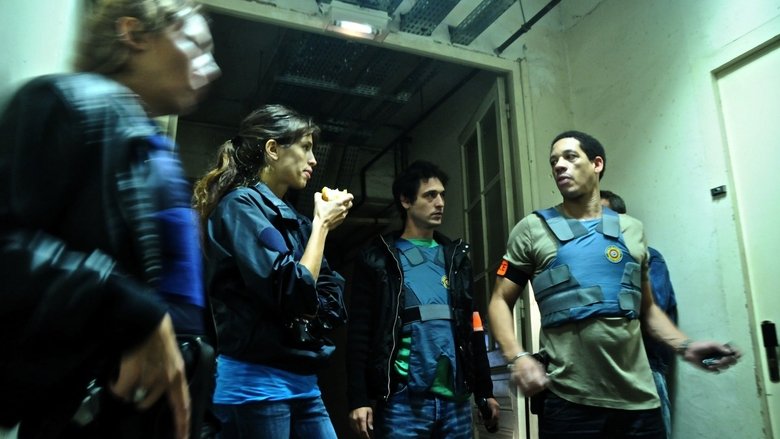
Polisse is a gripping ensemble drama that follows the daily operations of the Brigade de Protection des Mineurs (BPM), the Child Protection Unit of the Paris Police. The film captures the relentless grind of officers tasked with investigating harrowing cases of child abuse, neglect, and juvenile delinquency. Through a series of vignettes based on real-life police files, director Maïwenn presents a raw and unvarnished look at the systemic horrors children face and the profound psychological toll this work takes on the investigators.
The narrative is framed through the eyes of Melissa, a government-assigned photographer who joins the unit to document their work. As she embeds herself with the squad, the film shifts between intense interrogations and the officers' chaotic personal lives. Tensions flare and bonds are forged in the station house, at communal lunches, and during nocturnal escapes to nightclubs, highlighting the 'schizophrenic' existence of professionals who must confront darkness by day and return to their own families by night.
Core Meaning
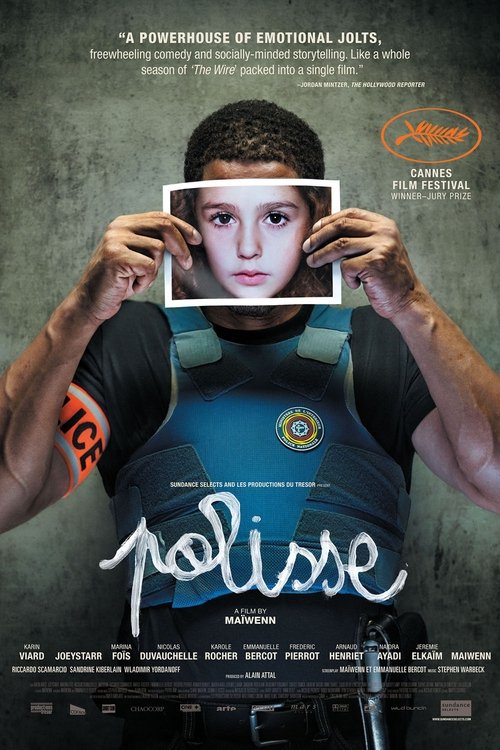
The core of Polisse lies in the exploration of the emotional cost of empathy. Maïwenn argues that there is no 'bulletproof vest' for the soul when dealing with the suffering of children. The film suggests that while the officers are often viewed as heroes, they are deeply flawed humans struggling to maintain their sanity in a world where the boundary between professional duty and personal life is constantly eroded. The title itself—a child's misspelling of 'police'—serves as a reminder that the world of law enforcement is inextricably linked to the fragile, often broken world of childhood innocence.
Thematic DNA
The Burden of Empathy
The film illustrates how the officers, particularly Fred, cannot easily detach themselves from their cases. This emotional investment leads to 'vicarious trauma,' where the officers' mental health and relationships deteriorate under the weight of the suffering they witness.
Juxtaposition of Horror and Levity
Maïwenn uses a narrative structure that jumps between brutal interrogations and scenes of dark humor or communal celebration. This reveals how the unit uses camaraderie and gallows humor as a necessary survival mechanism against burnout.
The Fractured Personal Life
Almost every character faces a crumbling home life—divorce, anorexia, or isolation. The film shows that the intensity of protecting other people's children often leads to the neglect of their own needs and relationships.
Social Realism and Bureaucracy
By documenting various cases (from illegal pickpocketing to elite sexual predators), the film exposes the limitations of the justice system and the frustration of officers when political connections shield criminals.
Character Analysis
Fred
JoeyStarr
Motivation
Driven by an intense sense of justice and a refusal to 'get used' to child suffering.
Character Arc
Initially the most aggressive and reactive officer, Fred finds a temporary respite through his relationship with Melissa, but his deep sensitivity remains a liability to his stability.
Iris
Marina Foïs
Motivation
A desperate need for control and recognition, which she fails to find in her personal life.
Character Arc
Masks her internal pain with workaholism and high standards; she eventually collapses under the pressure of professional promotion and personal isolation.
Nadine
Karin Viard
Motivation
Maintaining her dignity and emotional independence while being surrounded by domestic chaos.
Character Arc
Navigates a messy divorce and professional friction with Iris, representing the struggle to maintain a functional 'self' outside the police force.
Baloo
Frédéric Pierrot
Motivation
Keeping the unit cohesive and protecting them from the bureaucratic 'sharks' above.
Character Arc
The steady head of the unit who must balance his loyalty to his team with the demands of his superiors.
Symbols & Motifs
The Camera (Melissa's lens)
Symbolizes the objective observer versus the subjective participant. Melissa starts as a witness but eventually becomes emotionally entangled, representing how no one can remain neutral in the face of such work.
Used throughout the film as Melissa captures candid moments of the squad, often without them noticing, until the lines between her and the group blur.
Polisse (The misspelling)
Represents the child's perspective and the innocence that the unit is trying to protect. It also sounds like 'Peau Lisse' (Soft Skin), alluding to the vulnerability of children.
The title appears on screen in a child's handwriting, setting the tone for a film about childhood trauma seen through an adult lens.
Dancing
A metaphor for release, freedom, and the temporary expulsion of the 'toxins' gathered during work hours.
The scene where the squad goes clubbing and dances to 'Stand on the Word' serves as a rare moment of pure, unadulterated joy amidst the misery.
Memorable Quotes
C'est pas que ça ce qu'on fait, c'est plus complexe que ça.
— Fred
Context:
Fred says this to Melissa to explain why their outbursts and dark humor are part of the job's complexity.
Meaning:
Highlights the nuance and emotional depth of their work, refuting the idea that it is just about 'catching bad guys.'
Il m'a gratté les fesses.
— Little Girl
Context:
During an interrogation that opens the film, setting the baseline for the unit's daily reality.
Meaning:
The chillingly innocent way a child describes abuse, which haunts the officers.
Je ne le branle pas tous les soirs...
— Single Mother
Context:
A mother explains why one son is calmer than the other, revealing her misguided and abusive 'parenting' technique.
Meaning:
A shocking moment of 'clueless' parenting that leaves the unit—and the audience—stunned by the normalization of abuse.
Philosophical Questions
Can empathy be a liability?
The film questions whether a police officer can effectively do their job if they feel too much. Fred's rage and Iris's collapse suggest that a 'thick skin' is necessary for survival, but a lack of empathy makes the officer a 'machine' rather than a protector.
Is humor moral in the face of tragedy?
The officers' uncontrollable laughter during disturbing testimonies is portrayed as a psychological release rather than malice, raising questions about how humans process horror and whether 'inappropriate' humor is a valid coping mechanism.
Alternative Interpretations
While most see Iris's ending as a direct result of professional burnout, some critics interpret it as a commentary on the isolation of the modern woman; her anorexia and the loss of her partner suggest that her identity was too tied to a job that offered no emotional return. Another reading suggests the film is a critique of the observer effect: that the presence of the camera (Melissa) forced the officers into 'performative' emotions, eventually leading to the unit's psychological fracture.
Cultural Impact
Polisse had a significant impact on French cinema by revitalizing the 'social procedural' genre, drawing comparisons to the American series The Wire. It was praised for its 'unflinching eye for truth' and became a box-office success in France, sparking national conversations about the underfunding of child protection services and the mental health of police officers. It remains a definitive example of Maïwenn's naturalist style, where the focus on ensemble energy and raw emotion takes precedence over traditional plot structures.
Audience Reception
Audiences generally praised the film for its high-octane energy and the powerful performances, particularly by JoeyStarr. While critics at Cannes were largely enthralled, some (like Peter Bradshaw) criticized it for 'hysterical' overacting and tonal shifts. However, the prevailing consensus is that the film's 'messiness' is an intentional reflection of the messy reality it depicts. It holds an 86% on Rotten Tomatoes, with viewers often describing it as an 'emotionally exhausting' but 'essential' viewing experience.
Interesting Facts
- The title 'Polisse' comes from a misspelling of 'police' made by Maïwenn's son.
- Director Maïwenn spent months doing an internship with the real BPM in Paris to research the script.
- Every case presented in the film is based on real police files or events witnessed by Maïwenn during her research.
- The film was shot using two or three digital cameras simultaneously to capture the spontaneity and improvisational energy of the actors.
- The scene with the African boy being separated from his mother featured a real mother and son whom Maïwenn met on the street.
- Polisse won the Jury Prize at the 2011 Cannes Film Festival.
- The film received 13 César Award nominations, the most for any film that year.
Easter Eggs
Maïwenn's Dual Role
Maïwenn plays Melissa, the photographer. This mirrors her real-life role as the director 'observing' the police for her film, making the character a meta-representation of her own research process.
The 'Peau Lisse' Pun
In French, 'Polisse' is phonetically identical to 'Peau Lisse' (Smooth Skin), a subtle linguistic nod to the literal and figurative vulnerability of children's skin/bodies.
⚠️ Spoiler Analysis
Click to reveal detailed analysis with spoilers
Frequently Asked Questions
Explore More About This Movie
Dive deeper into specific aspects of the movie with our detailed analysis pages
Comments (0)
No comments yet. Be the first to share your thoughts!