Skip to content
Hope
A remote coastal village descends into adrenaline-soaked kinetic chaos, where frantic human survival clashes against cosmic mysteries across mist-drenched Korean peaks and fire-ravaged frontiers.
Hope

Hope

호프

"Is this how it ends?"

15 July 2026 South Korea 157 min 7.2 (104)

Director: Na Hong-jin

Cast: Hwang Jung-min, Zo In-sung, Hoyeon, Alicia Vikander, Michael Fassbender

Action Mystery Science Fiction The Trap of Human Ignorance and Escalation Isolation and Systemic Abandonment Cosmic Indifference vs. Faith The Fracturing of Community
Budget: $46,000,000
Box Office: $41,212,538

Overview

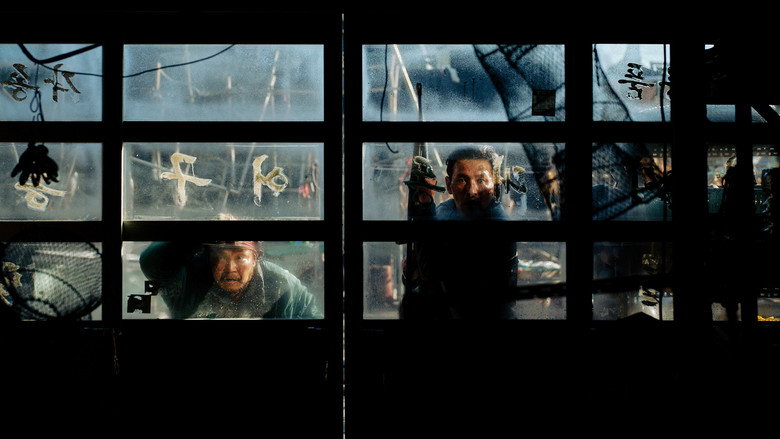
Set in Hope Harbor (Hop-eung), an isolated rural coastal enclave situated along the edge of the Korean Demilitarized Zone, the film chronicles an escalating crisis that begins with rumors of livestock killings and suspected wild animal attacks. Police Chief Ko Bum-seok and his determined rookie deputy Sung-ae investigate an unnatural disturbance in the outskirts, only to realize that their insular town of aging veterans is confronted by a massive, unidentified extraterrestrial menace rather than local fauna.

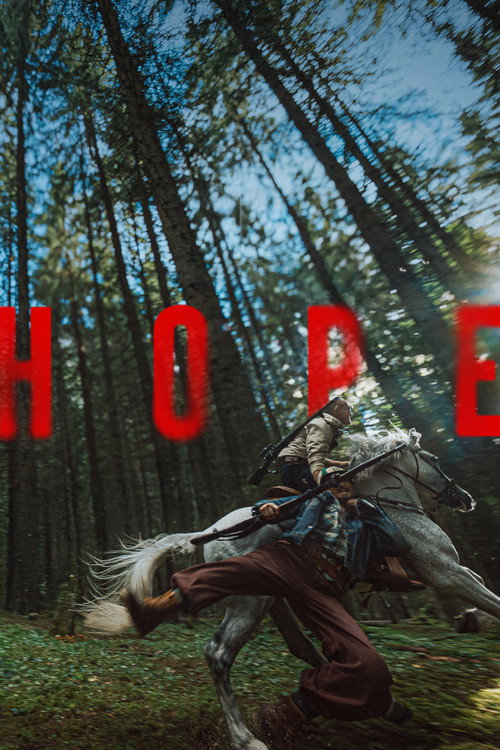
As sweeping wildfires spread across the surrounding mountain terrain, severing all phone lines, electrical infrastructure, and emergency backup routes, the small town is plunged into complete quarantine. Local hunter Ko Sung-ki leads an improvised tracking party of senior townsfolk armed with vintage hunting rifles into the dense wilderness to trap the beast, only to watch the roles reverse violently as the predators become the prey in a relentless war of attrition.

Over the course of an unrelenting night, what began as a municipal defense rapidly detonates into visceral pandemonium. The harrowing struggle pushes the fractured community to its absolute brink as strange cosmic forces, unearthly signals, and unexpected otherworldly entities emerge, turning a desperate survival tale into a bewildering, large-scale confrontation with the unknown.


Core Meaning

Director Na Hong-jin uses the framework of an alien invasion to explore humanity's primal dread of the unknown and the tragic irony of human self-destruction. By stripping away conventional military intervention and placing defenseless everyday citizens in the crosshairs of an unfathomable cosmic force, the film examines how fear breeds rash violence. Na challenges classic monster tropes, suggesting that divine or cosmic will operates beyond human comprehension and morality, leaving humans to confront their own blind vulnerability when isolated from civilizational safety nets.

Thematic DNA

The Trap of Human Ignorance and Escalation 30%
Isolation and Systemic Abandonment 25%
Cosmic Indifference vs. Faith 25%
The Fracturing of Community 20%

The Trap of Human Ignorance and Escalation

Disaster stems from humanity's compulsion to attack what it does not understand. The villagers mistake cosmic arrivals for simple wild game or military spies, initiating a violent cycle that brings catastrophic retaliation upon themselves.

Isolation and Systemic Abandonment

Trapped between natural wildfires and the Demilitarized Zone with all outside communications severed, the community illustrates societal abandonment, forcing an elderly populace to wage an unwinnable battle alone.

Cosmic Indifference vs. Faith

Mirroring religious allegories, the film positions extraterrestrial forces not merely as monstrous invaders, but as incomprehensible, godlike entities whose motives dwarf human notions of good and evil.

The Fracturing of Community

Faced with existential panic, the bonds holding Hope Harbor together snap under intense pressure, revealing the raw instinct for self-preservation underneath neighborly camaraderie.

Character Analysis

Ko Bum-seok

Hwang Jung-min

Archetype: Reluctant Everyman / Weary Lawman Key Trait: Exasperated resourcefulness under crushing pressure

Motivation

To protect his isolated village community and survive an impossible night of unrelenting carnage.

Character Arc

Begins as an exhausted, exasperated rural police chief eager to dismiss odd town gossip, but is forced into becoming an iron-willed protector fighting desperately across endless chase sequences to keep his people alive.

Ko Sung-ki

Zo In-sung

Archetype: Bold Hunter Key Trait: Steely determination laced with fatalistic pride

Motivation

To eliminate the creature threatening livestock and prove his frontier prowess.

Character Arc

Transitions from an overconfident tracker determined to bag the mountain beast into a humbled, terrified combatant trapped in an unearthly nightmare.

All 5 characters and cast

Symbols & Motifs

The Demilitarized Zone Border Signs

Meaning:

Symbolizes humanity's parochial political divisions and paranoia, emphasizing how trivial national borders become when confronted with cosmic threats.

Context:

Featured prominently along the foggy borders of Hope Harbor, warning residents against infiltrators before otherworldly beings render terrestrial defense systems irrelevant.

The Raging Wildfires

Meaning:

Represents creeping destruction, claustrophobia, and nature's apocalyptic purification that isolates the human characters from salvation.

Context:

Burns continuously along the mountain ridges throughout the film, cutting off electrical grids, phone lines, and escape corridors.

Vintage Hunting Rifles and Relic Weapons

Meaning:

Represents humanity's outdated hubris and clinging to martial pasts when facing an advanced, transcendent evolutionary force.

Context:

Carried by the town's elder hunting militia, who naively believe their mid-century firearms will conquer an unfathomable cosmic visitor.

Memorable Quotes

Faith is the substance of things hoped for, the evidence of things not seen.
— Qual (Cosmic Being)

Context

Spoken in the surreal, dreamlike cosmic sequence during the film's climactic revelation.

Meaning

Evoking Hebrews 11:1, this line reframes the alien beings as divine arbiters operating on spiritual logic far beyond human understanding.

Bamigir... the night is long.
— Bamigir

Context

Uttered as the alien looks up toward the night sky while keeping watch over the mountains.

Meaning

Highlights the creature's strange sentience and melancholic observation of Earth's atmosphere, subverting expectations of a mindless beast.

Philosophical Questions

Is humanity doomed to perceive transcendent encounters through the lens of hostility?

The story exposes human instinct to default to ballistic violence whenever confronted with unclassifiable life forms, asking whether fear inevitably forecloses peaceful cosmic communication.

How can faith exist in the face of profound cosmic indifference?

By incorporating explicit scriptural scripture into extraterrestrial revelations, the film probes whether divine will is indistinguishable from apocalyptic catastrophe.

How It Ends

Alternative Interpretations

While broad audiences perceive the film as an adrenaline-fueled hybrid of creature feature and alien disaster cinema, critics and genre analysts have offered divergent readings. A prominent metaphysical interpretation argues that the extraterrestrial presence embodies the biblical Old Testament God—a force not inherently malevolent, but destructive by virtue of humanity's inability to comprehend divine reality. Another reading views Hope Harbor as a socio-political microcosm of South Korea itself: an aging, heavily fortified society paralyzed by cold-war border vigilance, blinded by paranoia, and helpless when confronted with crises outside known ideological boundaries.

Full ending explanation

Cultural Impact

Premiering a decade after Na Hong-jin's acclaimed horror masterpiece The Wailing, Hope became a landmark tentpole representing the peak financial and stylistic ambition of South Korean blockbuster cinema. Selected for Cannes' official competition—a rarity for high-octane science fiction—the movie disrupted international arthouse expectations with unabashed maximalist action. Its massive international co-casting featuring European powerhouses Fassbender and Vikander alongside top Korean stars demonstrated the expanding global footprint and cross-border commercial viability of contemporary Korean filmmaking.

Audience Reception

Critical and audience reception was energetic yet polarizing. Viewers and critics universally lauded the first two hours, hailing its relentless pacing, Hong Kyung-pyo's breathtaking widescreen cinematography, Michael Abels' brass-heavy score, and Hwang Jung-min's comedic yet grounded everyman performance. However, significant contention arose over the divisive final thirty minutes, where the grounded pursuit gives way to surreal extraterrestrial lore and uneven digital creature effects. While action purists celebrated its audacity, others found the dramatic tonal shift and sequel setup jarring.

Interesting Facts

  • Reported to be the most expensive motion picture production in South Korean cinematic history, with an estimated production budget of approximately $46 million (over 50 billion KRW).
  • Cinematographer Hong Kyung-pyo shot the film using one of only two rare vintage anamorphic lens sets in existence worldwide to capture its textured widescreen visuals.
  • Real-life married couple Michael Fassbender and Alicia Vikander joined the production to portray intelligent extraterrestrial beings, delivering lines in a distinct constructed alien dialect.
  • The film had its world premiere in the main competition at the 79th Cannes Film Festival in May 2026, marking director Na Hong-jin's first appearance in Cannes' Palme d'Or race.
  • Between its Cannes competition premiere and wide theatrical release in July and September 2026, Na Hong-jin re-edited the movie, trimming its runtime from 160 minutes down to 156 minutes.
  • Extensive international location filming took place in the dense, atmospheric forests of Romania to complement locations shot across rural South Korea.

Easter Eggs

Anti-espionage warning signs scattered along Hope Harbor's borders

Directly ties into Korea's Cold War border tensions, creating dramatic irony when the villagers mistake cosmic intruders for foreign military infiltrators.

Subtle visual echoes of Paul Verhoeven's sci-fi action and creature staging

Director Na Hong-jin cited RoboCop and classic tactile 1980s genre blockbusters as fundamental stylistic blueprints for the film's kinetic choreography.

Frequently Asked Questions

Explore More About This Movie

Dive deeper into specific aspects of the movie with our detailed analysis pages

Comments (0)

Leave a comment

No comments yet. Be the first to share your thoughts!

Similar Movies