Skip to content
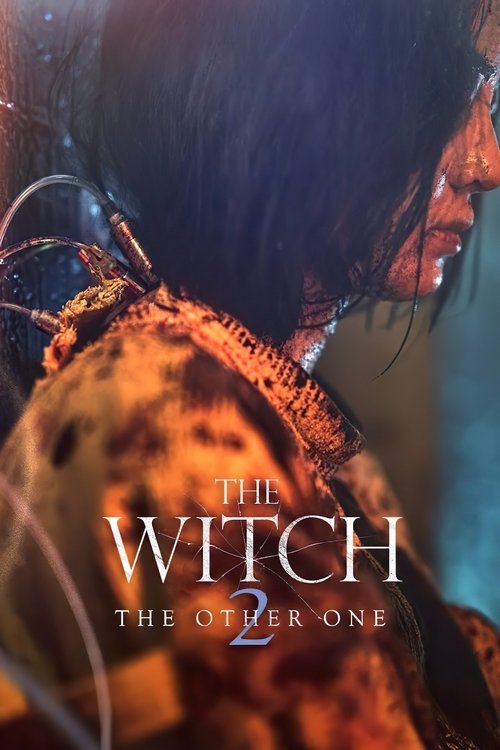
The Witch: Part 2. The Other One
In a cold, blood-stained landscape of bio-engineered warfare, a silent storm awakens—emerging from frozen shadows like an unstoppable force of nature to tear apart the monstrous hands that sought to chain her.
The Witch: Part 2. The Other One

The Witch: Part 2. The Other One

마녀 2

"The beginning of everything."

15 June 2022 South Korea 137 min 7.4 (461)

Director: Park Hoon-jung

Cast: Shin Sia, Park Eun-bin, Seo Eun-soo, Jin Goo, Sung Yu-been

Action Thriller Mystery Science Fiction Humanity vs. Bio-Engineered Weaponization Autonomy and the Search for Identity Innocence and Sanctuary in a Hostile World Corporate Exploitation & Human Hubris Sisterhood and Bloodline
Box Office: $23,068,596

Overview

The Witch: Part 2. The Other One (마녀 Part2. The Other One) is a 2022 South Korean sci-fi action thriller written and directed by Park Hoon-jung. Expanding upon the universe established in 2018’s The Witch: Part 1. The Subversion, this sequel pivots to a new protagonist, a mysterious girl codenamed "Ark 1 Datum Point". After a brutal assault leaves a secret bio-engineering facility known as "The Ark" in ruins on Jeju Island, the girl emerges as the sole survivor, stepping out into a world she has never experienced.

Barefoot and covered in blood, the girl wanders onto a remote road where she intervenes in a kidnapping, easily annihilating a group of armed thugs. Grateful for her unexpected rescue, the kidnapped woman, Kyung-hee, takes the girl to her family farm, where she lives with her younger brother, Dae-gil. For the first time in her life, the girl experiences warmth, domestic peace, and the simple joy of food. However, her refuge is short-lived; multiple deadly factions—including local mobsters trying to seize the farm, corporate military headhunters, and an elite team of bio-engineered assassins—are closing in to capture or execute the girl.
Core Meaning

The core idea behind The Witch: Part 2 centers on the tension between unbridled human hubris and the resilient nature of humanity. Director Park Hoon-jung uses the sci-fi lens of genetic manipulation to critique corporate and scientific arrogance—specifically the belief that living beings can be reduced to weaponized property.

Through the Girl's journey, the film asserts that even a weapon created solely for carnage possesses an innate craving for autonomy, connection, and peace. Despite being raised in a cold, lab-controlled environment, the Girl responds instantly to simple human kindness. The director conveys that true strength lies not in total destructive dominance, but in the freedom to choose empathy over violence.

Thematic DNA

Humanity vs. Bio-Engineered Weaponization 30%
Autonomy and the Search for Identity 25%
Innocence and Sanctuary in a Hostile World 20%
Corporate Exploitation & Human Hubris 15%
Sisterhood and Bloodline 10%

Humanity vs. Bio-Engineered Weaponization

Revealed through the central clash between the Girl's artificial design as a hyper-lethal killer ("Ark 1") and her gentle, childlike reactions to everyday human life.

Autonomy and the Search for Identity

Explores how subjects created in laboratories strive to break free from their assigned codes, names, and functions to reclaim ownership of their lives.

Innocence and Sanctuary in a Hostile World

Revealed through the farm environment provided by Kyung-hee and Dae-gil, demonstrating how kindness temporarily tames a destructive god-like entity.

Corporate Exploitation & Human Hubris

Manifested by various secret organizations and scientists (Dr. Baek, Jang) who view human life purely as intellectual property and military assets.

Sisterhood and Bloodline

Underlying bonds between genetic experiments, culminations of maternal origin, and the connection between the Girl and Goo Ja-yoon.

Character Analysis

The Girl / Ark 1

Shin Si-ah

Archetype: Innocent Deity / Weapon Key Trait: Stoic, silent, omnipotent

Motivation

Freedom, safety, and sensory discovery.

Character Arc

Evolves from an emotionless lab creation into an individual with affection for her protectors.

Kyung-hee

Park Eun-bin

Archetype: Moral Anchor / Protector Key Trait: Compassionate, brave, resilient

Motivation

Protecting her family farm and younger brother.

Character Arc

Takes in a strange monster without fear, fighting to preserve normal human morality until the end.

All 5 characters and cast

Symbols & Motifs

Food and Domestic Meals

Meaning:

Symbolizes sensory humanity, comfort, and socialization. The Girl’s voracious appetite for convenience store snacks and home-cooked food represents her awakening to human pleasure outside a laboratory tank.

Context:

Experienced by the Girl at Kyung-hee's family farm and during her visit to a convenience store.

Blood on Snow / White and Red Palette

Meaning:

Symbolizes the stark intrusion of extreme violence into purity and innocence.

Context:

Featured prominently in the opening sequence where the barefoot Girl walks through snow drenched in blood.

The "Ark" Compound

Meaning:

Symbolizes human arrogance, suppression, and artificial creation. It represents the scientific cage from which the divine/monstrous creation escapes.

Context:

The secret bio-engineering facility located on Jeju Island where the Girl was created and held.

Cassette Walkman

Meaning:

A recurring visual motif from the 1990s bus prologue symbolizing origin, lingering memory, and the preservation of human emotion across generations.

Context:

Worn by the pregnant teenager in the 1990s bus flashback scene.

Telekinetic Whirlwinds & Levitation

Meaning:

Symbolizes natural, god-like power breaking free from human containment, serving as a contrast to structured human weaponry like firearms.

Context:

Unleashed during high-intensity combat scenes when the Girl confronts hostiles.

Memorable Quotes

너... 정체가 뭐야?
— Yong-du / Gangsters

Context

Spoken in disbelief when normal humans realize their bullets and knives mean nothing against the Girl's telekinetic barrier.

Meaning

Highlights the sheer terror and confusion of normal humans when encountering supernatural abilities that render their conventional weapons useless.

맛있다.
— The Girl (Shin Si-ah)

Context

Uttered as she experiences the joy of food outside the laboratory setting.

Meaning

One of her very few spoken lines, highlighting her childlike, basic sensory discovery of food away from scientific torture.

All 3 quotes

Philosophical Questions

What constitutes true humanity—genetics or environment?

The film explores whether an entity genetically coded for violence can transcend her programming through human warmth.

What are the moral limits of scientific progress?

Raises concerns regarding bio-engineering and the ethics of treating living beings as proprietary military technology.

Can absolute power coexist with morality?

Examines how individuals with god-like power navigate human conflicts where normal laws do not apply.

Alternative Interpretations

Superhero Universe Setup: Viewers view the film primarily as an expansive bridge chapter (akin to an X-Men origin) designed to establish multiple super-powered factions for a massive final showdown in Part 3.

Full ending explanation

Cultural Impact

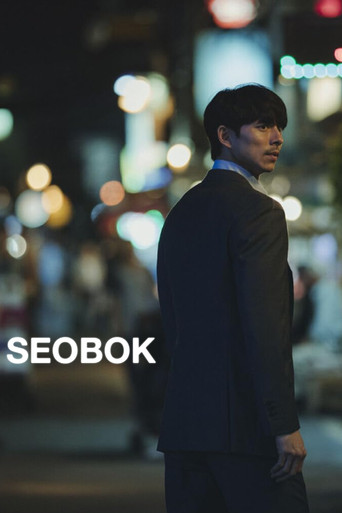
The Witch: Part 2 contributed to South Korea's growing footprint in high-concept sci-fi and superhero hybrid genres alongside titles like Seobok and Space Sweepers.

It continues director Park Hoon-jung’s subversion of traditional male-dominated Korean action-noir by placing violently overpowered young female leads at the absolute top of the power hierarchy.

The film was a major commercial hit in South Korea, grossing over 2.8 million admissions. Critics praised the hyperkinetic action and CGI, though some noted the plot felt overstuffed compared to the tighter focus of Part 1.

Audience Reception

Praised Elements: Critics and fans widely praised the explosive third-act action, kinetic CGI action, wirework visual effects, Shin Si-ah's stoic debut performance as the quiet yet terrifying lead, and the expanded international world-building.

Criticized Elements: Criticism focused on Act II pacing, convoluted plot structure, overstuffed subplots, heavy reliance on dark night-time CGI during the final battle, and light story progression for Ja-yoon.

Interesting Facts

  • Rookie actress Shin Si-ah was selected for the lead role after outperforming 1,408 other applicants during an intense 3-round audition process.
  • The film marked actor Lee Jong-suk’s official screen return after completing his mandatory military service.
  • Originally produced under Warner Bros. Korea, the franchise's distribution rights were transferred to NEW (Next Entertainment World) following Warner Bros.' exit from local Korean film production.
  • Director Park Hoon-jung revealed in interviews that the events of Parts 1 and 2 represent less than 1/10th of the grand story he has planned for the "Witch Cinematic Universe".
  • Filming was extensively executed on Jeju Island, utilizing natural winter snowscapes combined with heavy CGI wirework.

Easter Eggs

Goo Ja-yoon Cameo

Kim Da-mi repeats her role as Goo Ja-yoon from Part 1 in the final sequence, explicitly revealing that the two girls are twin sisters.

Dr. Baek Twin Sister

Jo Min-soo returns to play Dr. Baek's twin sister, executive director of the lab operations, paralleling the twin dynamic between Ja-yoon and the Girl.

1990s Bus Flashback

The opening sequence set decades earlier features a pregnant teenager wearing a cassette Walkman, hinting at the biological mother of the core Witch twins.

"TOW" Unit

The four Shanghai-based superhumans represent international branches of the global lab project, opening the universe to global threats.

Frequently Asked Questions

Explore More About This Movie

Dive deeper into specific aspects of the movie with our detailed analysis pages

Comments (0)

Leave a comment

No comments yet. Be the first to share your thoughts!

Similar Movies