Skip to content
How I Met Your Mother
Bittersweet romantic nostalgia washed in amber tavern light, where youthful longing, laughter, and heartbreak drift through a rain-soaked Manhattan like an echoing yellow umbrella in the storm.
How I Met Your Mother

How I Met Your Mother

"A love story in reverse."

19 September 2005 — 31 March 2014 United States of America 9 season 208 episode Ended 8.1 (5,908)

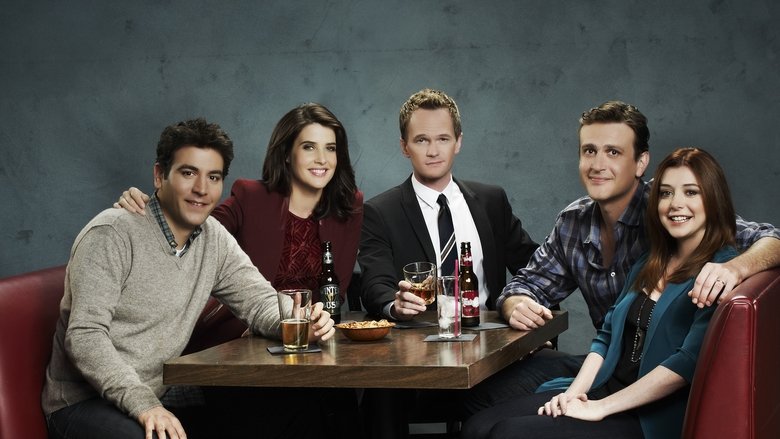
Cast: Josh Radnor, Neil Patrick Harris, Jason Segel, Alyson Hannigan, Cobie Smulders

Comedy Destiny, Timing, and the Search for "The One" The Evolution of Friendship and Growing Up Idealism vs. Reality in Romance Grief, Healing, and Life's Unpredictability Memory, Subjectivity, and the Art of Storytelling

Overview

How I Met Your Mother is an American sitcom and romantic dramedy created by Carter Bays and Craig Thomas that aired on CBS from September 19, 2005, to March 31, 2014, spanning nine seasons and 208 episodes. Framed through a narrative device set in the year 2030, an older Ted Mosby (voiced by Bob Saget) recounts to his teenage children the intricate, decade-long story of his twenties and thirties that led to meeting their mother. The central action follows younger Ted (Josh Radnor), an idealistic architect seeking romantic fulfillment in Manhattan alongside his tight-knit circle of friends.

The core ensemble consists of Marshall Eriksen (Jason Segel), Ted’s college roommate and an aspiring environmental lawyer; Lily Aldrin (Alyson Hannigan), a kindergarten teacher and aspiring painter whose long-term relationship with Marshall forms the emotional bedrock of the group; Robin Scherbatsky (Cobie Smulders), an ambitious Canadian journalist who becomes an enduring romantic interest for Ted; and Barney Stinson (Neil Patrick Harris), an outrageous, suit-wearing playboy dedicated to elaborate romantic cons. Over nine seasons, the show chronicles the group's transitions through career highs and lows, relationship milestones, sudden tragedies, and personal growth.

Unlike traditional episodic multi-camera sitcoms of its era, How I Met Your Mother utilizes a complex, non-linear narrative structure defined by nested flashbacks, subjective memory gaps, visual cutaways, running gags, and deliberate flash-forwards. The overarching narrative tracks Ted’s maturation from an obsessive romantic to a man ready for genuine partnership, culminating in the fateful weekend of a high-profile friend's wedding where the sprawling threads of fate converge.

Core Meaning

The central thesis of How I Met Your Mother is that the journey to happiness is neither direct nor strictly predetermined, and true love requires personal growth, timing, and accepting life’s unpredictability.

Through Ted’s expansive storytelling, creators Bays and Thomas argue that romance cannot be forced through sheer idealism; every heartbreak, detour, and missed connection serves as essential preparation for the person one is meant to become. The series balances the tension between cosmic destiny and human agency, demonstrating that while the 'universe' may present opportunities, individuals must learn humility, patience, and the courage to move forward. Furthermore, the complete narrative arc emphasizes that life encompasses multiple chapters: grief and loss are inevitable, but enduring friendship and the capacity to love again define the human experience.

Thematic DNA

Destiny, Timing, and the Search for "The One" 30%
The Evolution of Friendship and Growing Up 25%
Idealism vs. Reality in Romance 20%
Grief, Healing, and Life's Unpredictability 15%
Memory, Subjectivity, and the Art of Storytelling 10%

Destiny, Timing, and the Search for "The One"

The series constantly interrogates whether romantic connections are governed by fate or arbitrary coincidence. Throughout nine seasons, near-misses, dropped items, and serendipitous encounters show that even when two people are theoretically compatible, timing dictates whether a relationship can succeed.

The Evolution of Friendship and Growing Up

The show charts the transition from free-wheeling twenty-somethings sharing a living room booth at MacLaren’s Pub to mature adults managing careers, marriages, and parenthood. As life pulls the group in different directions, the bond among the central five endures as a chosen family.

Idealism vs. Reality in Romance

Ted’s romanticization of Grand Gestures is regularly contrasted against the hard work and compromise embodied by Marshall and Lily, as well as the cynical detachment weaponized by Barney. The series gradually dismantles fairy-tale expectations, showing that lasting love requires emotional maturity rather than theatrical infatuation.

Grief, Healing, and Life's Unpredictability

From the sudden death of Marshall’s father to Robin learning she cannot have children and the tragic loss of Tracy, the show weaves real-world pain into its comedic framework. It shows that life rarely adheres to planned scripts, requiring resilience and mutual support.

Memory, Subjectivity, and the Art of Storytelling

Framed by Ted’s retrospective narration, the series explicitly questions the reliability of memory. Narrative omissions (e.g., substituting marijuana with 'sandwiches'), exaggerations, and altered timelines highlight how humans narrate their past to make sense of emotional growth.

Character Analysis

Ted Mosby

Josh Radnor

Archetype: The Romantic Idealist / Seeker Key Trait: Unwavering romantic persistence

Motivation

Motivated by finding 'The One' and building a family; shifts from seeking cinematic perfection to appreciating genuine connection and resilience.

Character Arc

Begins as an obsessive bachelor expecting an instantaneous fairy tale. Endures multiple failed engagements and heartbreaks, learning to let go of control before meeting Tracy; in 2030, after grieving Tracy, he embraces love again with Robin.

Marshall Eriksen

Jason Segel

Archetype: The Moral Compass / Loyal Anchor Key Trait: Wholesome empathy and integrity

Motivation

Driven by justice and dedication to his family; evolves to balance lofty environmental ideals with real-world familial responsibilities.

Character Arc

Transitions from an idealistic law student to a conflicted corporate attorney, eventually becoming a dedicated environmental lawyer and New York State Supreme Court judge. Remains the group's emotional rock while processing deep family grief.

All 5 characters and cast

Symbols & Motifs

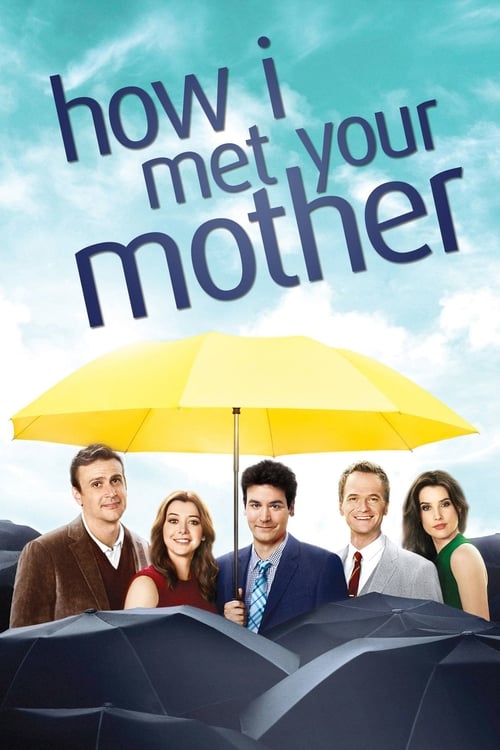
The Yellow Umbrella

Meaning:

Represents hope, perfect timing, and the unseen forces guiding Ted and Tracy's convergence.

Context:

The definitive symbol of Ted and Tracy’s intertwined destinies, passing between them unknowingly across several seasons (from a St. Patrick’s Day party to Cindy’s apartment).

The Blue French Horn

Meaning:

Symbolizes Ted’s grand, uncompromising, and occasionally overbearing romantic idealism, as well as his willingness to make impractical sacrifices.

Context:

Stolen for Robin on their first date, it appears at critical junctures of their relationship across the series.

The Slap Bet & Countdown Clock

Meaning:

Represents accountability, karmic justice, and shared group mythology.

Context:

Originating in Season 2 over Robin’s past, the five (later eight) slaps awarded to Marshall against Barney serve as an enduring comic motif spanning seven seasons, culminating in the final weekend before Barney's wedding.

Barney’s Playbook & The Suit

Meaning:

Represents Barney’s elaborate facade, womanizing persona, and fear of emotional vulnerability.

Context:

The Playbook contains his deceptive seduction tactics, and its burning during his proposal to Robin marks his commitment to shedding these defensive layers.

The Ducky Tie

Meaning:

Serves as a visual metaphor for humility and accepting the consequences of one's arrogance.

Context:

A bet Barney loses in Season 7, forcing him to wear a ridiculous duck-patterned tie for an entire year.

The Five Doppelgängers

Meaning:

Serves as symbolic milestones and signs from the universe regarding life transitions.

Context:

Bizarre New York lookalikes of the five main characters found across the city; for Marshall and Lily, finding the final doppelgänger becomes a sign that they are ready to become parents.

Memorable Quotes

Suit up!
— Barney Stinson

Context

Recurring throughout the series, introduced in Season 1, Episode 1 ('Pilot').

Meaning

Barney’s definitive battle cry, representing his philosophy that clothes make the man and serving as armor against emotional vulnerability.

Whenever I'm sad, I stop being sad and be awesome instead.
— Barney Stinson

Context

Delivered during Season 2, Episode 16 ('Stuff').

Meaning

Captures Barney’s defense mechanism: masking genuine emotional pain with performative, outward bravado.

All 5 quotes

Episode Highlights

The Pineapple Incident

S1E10

The gang pieces together the events of Ted's drunken night out, trying to uncover how a pineapple ended up on his nightstand.

Significance:

Establishes the show's signature non-linear, fragmented detective-style storytelling.

Slap Bet

S2E9

The gang uncovers Robin’s secret past as Canadian teen pop star Robin Sparkles, while Marshall and Barney initiate a long-term slap bet.

Significance:

Introduces Robin Sparkles and creates the 'Slap Bet,' defining the show's long-term internal mythology and recurring running gags.

Ten Sessions

S3E13

Ted pursues dermatologist Stella Zinman and attempts to woo her with a meticulously orchestrated 'Two-Minute Date'.

Significance:

Introduces Stella Zinman and re-energized series viewership through a high-profile guest appearance by Britney Spears.

The Naked Man

S4E9

The group learns about and tests a desperate, high-risk dating gambit known as 'The Naked Man'.

Significance:

Explores the comedic desperation of dating culture while demonstrating the cast's comedic timing and ensemble dynamic.

Right Place, Right Time

S4E22

Ted details an intricate chain reaction of minuscule daily events that culminated in him running into Stella on a Manhattan street corner.

Significance:

Encapsulates the series' core philosophy of destiny and domino-effect causality.

Bad News

S6E13

Marshall and Lily await fertility results while a visual countdown appears throughout the episode, ending with the news that Marshall's father has died.

Significance:

Features a hidden visual countdown from 50 to 1 disguised throughout background props, culminating in one of the series' most devastating emotional turns.

Symphony of Illumination

S7E12

Robin frames the episode by talking to her future children, only to reveal an emotional truth about her personal life.

Significance:

Robin narrates a story to her 'future children,' which is revealed in a twist to be an internal coping mechanism upon discovering she cannot biologically bear children.

The Time Travelers

S8E20

Ted hallucinates conversations with future versions of himself and Barney at MacLaren's Pub, realizing he is completely alone.

Significance:

Reveals Ted's deep loneliness and features his poignant speech where he imagines running to Tracy's apartment to ask for 45 extra days with her before her future passing.

How Your Mother Met Me

S9E16

The show's 200th episode recounts the major events of the past eight years entirely from the perspective of Tracy McConnell.

Significance:

Reframes the show's timeline from Tracy’s perspective, exploring her personal grief over the loss of her first love, Max, and her parallel path toward meeting Ted.

Last Forever

S9E23

The two-part series finale chronicles sixteen years of life, concluding the wedding weekend, showing Barney and Robin's divorce, revealing Tracy's passing, and bringing Ted back to Robin.

Significance:

Wraps up the overarching narrative arc of all five characters, reveals the Mother's ultimate fate, and concludes with Ted seeking his children's blessing to date Robin.

Philosophical Questions

Determinism vs. Free Agency

Explores whether destiny arranges human lives through yellow umbrellas and coincidences, or if individuals retrospectively impose meaning and order onto arbitrary luck.

The Nature of 'The One'

Examines whether there is a single soulmate destined for each individual, or if a person can experience multiple distinct, true loves across different chapters of life.

The Pain of Timing

Investigates whether emotional incompatibility between two people at age 27 can transform into harmony at age 50 once individual life ambitions and careers have been fulfilled.

Alternative Interpretations

Interpretations of the series and its conclusion generally divide into three critical perspectives:

Full ending explanation

Cultural Impact

Premiering one year after the finale of Friends (2004), How I Met Your Mother arrived when network television sought a defining urban ensemble comedy. It pushed the sitcom genre forward by discarding traditional theatrical stage layouts in favor of cinematic, non-linear storytelling inspired by films like Annie Hall and contemporary internet meme culture.

The series made major contributions to the modern pop culture lexicon, popularizing catchphrases and concepts such as 'The Bro Code,' 'The Playbook,' 'Suit Up,' 'Legen—wait for it—dary,' 'The Platinum Rule,' 'The Slap Bet,' and 'The Cheerleader Effect.' It established Neil Patrick Harris as a major comedic powerhouse and influenced subsequent serialized comedies through its use of mystery-box plotting and detailed continuity callbacks.

Audience Reception

The critical and audience reception of How I Met Your Mother evolved significantly across its broadcast run:

  • Seasons 1–4 (Golden Era): Widely acclaimed for inventive storytelling, sharp ensemble interplay, and genuine emotional heart.
  • Seasons 5–7 (The Maturing Sitcom): Maintained strong ratings and critical appreciation, balanced by emerging fatigue over prolonged relationship loops.
  • Season 8 (Treading Water): Criticized for filler and stretching the central mystery, though praised for poignant emotional moments in 'The Time Travelers' and the introduction of Cristin Milioti in the finale.
  • Season 9 & Finale Backlash: The decision to set all 24 episodes over a single 56-hour wedding weekend proved polarizing. The series finale ('Last Forever') remains one of television history's most debated episodes, prompting CBS and the creators to include an official happier alternate ending on the complete series DVD box set.

Interesting Facts

  • The series was filmed on a multi-camera soundstage on the Fox lot in Los Angeles without a live studio audience because episodes featured over 50 rapid-fire scene transitions, cutaways, and flashbacks.
  • The brief theme song consisting of vocal 'da-da-das' is taken from the track 'Hey Beautiful' by The Solids, an indie rock band formed in 1996 by series creators Carter Bays and Craig Thomas.
  • Had CBS canceled the series during Season 1 or Season 2, pastry chef Victoria (Ashley Williams) was planned as the definitive Mother.
  • The reaction footage of Ted’s teenage children (played by Lyndsy Fonseca and David Henrie) responding to the end of the story was secretly filmed in 2006 during Season 2 so the actors would not visibly age.
  • Real-life spouses of the cast made guest appearances: Alexis Denisof (Alyson Hannigan’s husband) played Sandy Rivers, David Burtka (Neil Patrick Harris’s husband) played Scooter, and Taran Killam (Cobie Smulders’ husband) played Gary Blauman.
  • Britney Spears requested a guest role as receptionist Abby in Season 3 ('Ten Sessions'), creating a surge in ratings and buzz that saved the series from potential network cancellation.
  • Director Pamela Fryman directed 196 out of the series' 208 episodes, creating the visual timing and consistent pacing throughout all nine seasons.
  • In Season 1, Episode 9 ('Belly Full of Turkey'), a stripper introduces herself as Tracy, prompting Ted to joke to his kids, 'And that, kids, is how I met your mother,' which the creators incorporated eight years later when naming the Mother.

Easter Eggs

The Countdown in 'Bad News' (S06E13)

Numbers from 50 to 1 appear sequentially hidden in everyday props (such as magazines, taxi doors, bottles, and pamphlets) leading up to Lily arriving to break the news of Marshall's father's death.

The Rehearsal Dinner Canadian Life Story (S09E12)

In the background of an entire scene at an ice rink/restaurant, an extra couple can be seen getting engaged, having a child, celebrating graduations, and eventually mourning a death, silently acting out a lifetime.

The Mother's Name Tease (S01E09)

The stripper joke in Season 1 proved to be a genuine clue, as the kids only gasped because Tracy was indeed their mother's true name.

The Captain’s Pineapples (S09E20)

Resolves the long-standing mystery from Season 1's 'The Pineapple Incident' by revealing that The Captain kept pineapples on his porch as a maritime welcoming tradition.

Conan O'Brien Cameo (S07E17)

Conan O'Brien won a charity auction to appear as an extra in 'No Pressure'; refusing a speaking role, he is visible drinking beer in the background of MacLaren's.

Frequently Asked Questions

Explore More About This Movie

Dive deeper into specific aspects of the movie with our detailed analysis pages

Comments (0)

Leave a comment

No comments yet. Be the first to share your thoughts!

Similar Movies