Skip to content
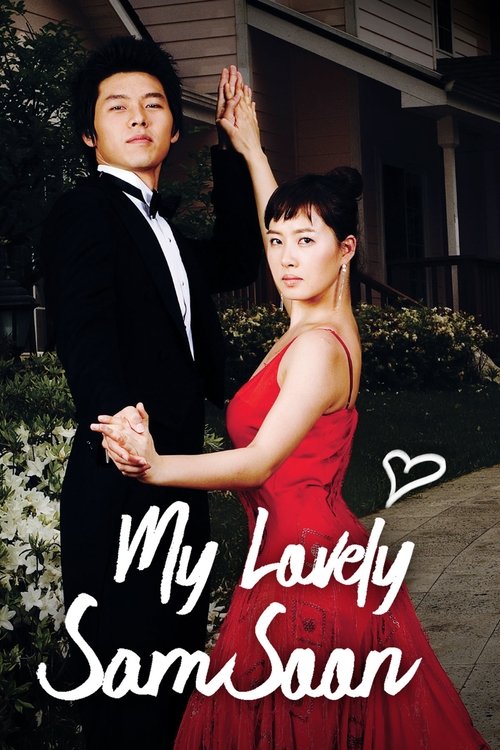
My Lovely Sam Soon
An unapologetic 29-year-old pastry chef and a traumatized restaurant owner navigate an antagonistic fake-dating arrangement, discovering healing and imperfect love amid Seoul's grounded urban reality.
My Lovely Sam Soon

My Lovely Sam Soon

내 이름은 김삼순

""Shall we pretend to be dating?""

01 June 2005 — 21 July 2005 South Korea 1 season 16 episode Ended 8.5 (193)

Cast: Kim Seon-a, Hyun Bin, Jung Ryeo-won, Daniel Henney, Kim Ja-ok

Drama Comedy Female Autonomy, Body Image, and Societal Defiance Trauma, Guilt, and Emotional Healing The Illusion of Romantic Fantasy vs. Grounded Reality Class, Professional Identity, and Craftsmanship

Overview

My Lovely Sam Soon follows Kim Sam-soon, an unapologetic, 29-year-old French-trained pastry chef whose life hits rock bottom on Christmas Eve when she catches her long-term boyfriend cheating and subsequently loses her job. Determined to rebuild her career and self-respect, she crosses paths with Hyun Jin-heon, the prickly 27-year-old owner of high-end French restaurant Bon Appétit. Jin-heon hires Sam-soon after tasting her pastries, but their professional dynamic quickly expands when he offers her a financial lifeline—a loan of 50 million won to save her family's home—in exchange for entering a contract dating relationship to ward off his domineering mother’s relentless blind dates.

What begins as an antagonistic transaction evolves into complicated emotional dependency. Jin-heon carries severe trauma and survivor's guilt from a fatal car accident that killed his brother and sister-in-law and left his niece Mi-joo mute, while Sam-soon struggles against social pressures surrounding her age, weight, and unsophisticated name. The dynamic shifts further with the return of Jin-heon’s former love, Yoo Hee-jin, who had secretly disappeared to undergo cancer treatment in the United States, accompanied by her Korean-American physician, Dr. Henry Kim.

The narrative unfolds across 16 episodes into a nuanced deconstruction of grief, modern romance, and female autonomy. Sam-soon refuses to play the role of a demure, self-sacrificing heroine, while Jin-heon is forced to confront unresolved grief and emotional immaturity. Transcending conventional Cinderella fairy tales, the series anchors itself in everyday vulnerability, culminating in a celebration of resilient, imperfect love that embraces the uncertainties of life.

Core Meaning

The overarching message of My Lovely Sam Soon is that true self-worth and emotional fulfillment come from radical self-acceptance and the bravery to live and love authentically, even in the face of inevitable pain. Directed by Kim Yoon-cheol and written by Kim Do-woo, the series challenges rigid East Asian societal scripts regarding women’s bodies, marriage timelines, and class hierarchy. A meaningful life is not defined by external validation, societal pedestals, or neat fairy-tale resolutions, but forged through resilience, professional pride, and the courage to work, live, and "love like you’ve never been hurt before."

Thematic DNA

Female Autonomy, Body Image, and Societal Defiance 30%
Trauma, Guilt, and Emotional Healing 25%
The Illusion of Romantic Fantasy vs. Grounded Reality 25%
Class, Professional Identity, and Craftsmanship 20%

Female Autonomy, Body Image, and Societal Defiance

Sam-soon completely dismantles the delicate, demure, and self-sacrificing K-drama heroine archetype. She speaks her mind, drinks soju, swears, possesses a healthy appetite, and refuses to apologize for taking up physical and emotional space. Rather than undergoing an aesthetic makeover to conform to patriarchal beauty standards, she retains her authentic self and demands respect on her own terms.

Trauma, Guilt, and Emotional Healing

Both leads are shaped by psychological wounds: Jin-heon endures survivor's guilt, PTSD, and physical scarring following the crash that orphaned his niece Mi-joo, while Sam-soon processes the lingering grief of losing her father. Alongside Hee-jin's battle with cancer, the series portrays emotional healing not as linear or instantaneous, but as an ongoing journey requiring patience, vulnerability, and open communication.

The Illusion of Romantic Fantasy vs. Grounded Reality

Classic tropes like the contract relationship are systematically satirized rather than romanticized into effortless fairy tales. Characters deal with public breakups, unglamorous digestive issues, drunken regrets, and financial burdens. Love is presented not as a static state of euphoria, but as an active, often terrifying everyday choice made between flawed individuals.

Class, Professional Identity, and Craftsmanship

Sam-soon's identity as a Le Cordon Bleu-trained pâtissier provides her with dignity, agency, and economic self-determination. The drama frequently contrasts Jin-heon's inherited corporate wealth with Sam-soon’s hard-earned artisanal labor. By ultimately opening an independent neighborhood bakery instead of relying on chaebol funding, she cements her professional independence.

Character Analysis

Kim Sam-soon

Kim Sun-a

Archetype: Everyday Heroine / Rebel Key Trait: Unfiltered candor, fierce resilience, and artisanal mastery.

Motivation

Initially seeks financial stability and traditional romantic security, evolving into pursuing authentic self-expression and loving without self-erasure.

Character Arc

Begins heartbroken, insecure about her rustic name and body, and financially desperate. Across 16 episodes, she refuses to let societal prejudice diminish her, earns Jin-heon's devotion on equal terms, and launches her own bakery while embracing her name and identity.

Hyun Jin-heon

Hyun Bin

Archetype: Damaged Tsundere / Reluctant Heir Key Trait: Emotional guardedness masking deep vulnerability and guilt.

Motivation

Starts by rebelling against his mother's control and clinging to the ghost of his past love, evolving toward mature emotional intimacy and accountability.

Character Arc

A cynical, aloof 27-year-old chaebol heir haunted by survivor's guilt and abandonment. Through Sam-soon's grounding presence, he sheds his petulant defenses, confronts past trauma, learns to communicate, and defies family expectations.

All 5 characters and cast

Symbols & Motifs

Pâtisserie and Madeleines

Meaning:

Baking represents memory, comfort, and restorative creation. Pastry serves not as empty indulgence, but as an honest artisanal craft providing solace when words fail.

Context:

Highlighted prominently in Episode 7, referencing Marcel Proust to illustrate how tastes and scents unlock dormant grief, involuntary memory, and nostalgic healing.

The Name "Sam-soon" vs. "Hee-jin"

Meaning:

Represents the tension between an authentic, rustic identity and societal pressure to project modern elegance and conformity.

Context:

Sam-soon spends much of the series pursuing an official name change to escape social derision, but ultimately tears up the paperwork at the civil registry to reclaim her true self.

Michael Ende's novel Momo

Meaning:

Signifies the power of active listening and emotional presence in defeating emotional defense mechanisms and trauma.

Context:

Read by Jin-heon to his traumatized, mute niece Mi-joo and discussed between the leads as a mirror for Jin-heon learning how to listen to pain and reconnect with others.

The Pig Stuffed Toy ("Sam-shiki")

Meaning:

Serves as an emotional surrogate representing unpretentious warmth and affection beneath a prickly facade.

Context:

Won by Jin-heon at an arcade and gifted to Sam-soon, sitting in her bed as a confidant for her late-night monologues and bearing his mocking nickname.

Mount Hallasan

Meaning:

Marks the physical and emotional crossroads where solitary grief transforms into shared commitment and renewal.

Context:

Hiked by Sam-soon in a torrential downpour in Episode 13 as a ritual purge of heartbreak upon turning thirty, where Jin-heon surprises her near the summit with hot soup.

The Namsan Outdoor Stairs

Meaning:

Symbolizes the arduous, step-by-step nature of building an honest relationship in the real world.

Context:

Featured during informal dates and serving as the iconic setting for the couple's open, tender kiss in the final scene of the series.

Memorable Quotes

몸이 마음에 물었다. ‘내가 아프면 의사가 고쳐주지만, 네가 아프면 누가 고쳐주니?’ 그러자 마음이 말했다. ‘나는 스스로 고쳐야 해.’ 그래서 사람들은 저마다 상처를 치유하는 법을 갖고 있다.
— Kim Sam-soon

Context

Delivered via voiceover in Episode 1 while Sam-soon bakes alone before sunrise after discovering her boyfriend's infidelity.

Meaning

Reflects on emotional self-reliance and pastry making as her personal method of mending a broken heart.

추억은 아무런 힘도 없어. 기억은 그냥 기억일 뿐이야.
— Hyun Jin-heon

Context

Spoken to Yoo Hee-jin in Episode 12/13 when explaining why he cannot return to their previous relationship despite their past history.

Meaning

Acknowledges that shared history cannot replace present emotional reality, solidifying his decision to let go of the past.

All 4 quotes

Episode Highlights

Life is a Box of Chocolate Bonbons

S1E1

Sam-soon catches her boyfriend cheating at a luxury hotel, has an abrasive initial encounter with Jin-heon in the men's restroom, and later demonstrates her culinary talent to secure a job at Bon Appétit.

Significance:

Establishes the clash of social classes, the show's grounded comedic tone, and the central workplace dynamic.

Teach Us How to Write a Love Contract!

S1E3

Desperate to secure a 50 million won loan to prevent the foreclosure of her family home, Sam-soon agrees to sign a fake-dating contract with Jin-heon.

Significance:

Formalizes their faux-romance arrangement, creating behavioral boundaries that both characters immediately begin to cross.

How Many Calories are in Kissing and in Love?

S1E6

Alone together in the restaurant late at night, Jin-heon plays the piano and the two share wine and songs before exchanging their first authentic, tender kiss, prompting Sam-soon to flee in panic.

Significance:

Marks the crucial transition where their contractual dynamic collapses into genuine romantic attraction.

Madeleines... In Search of Lost Time

S1E7

Hee-jin unexpectedly reappears in Jin-heon's life, while Sam-soon discusses Marcel Proust's madeleines to reflect on sensory memory and grief.

Significance:

Deepens the central conflict by introducing Jin-heon's unresolved past just as his bond with Sam-soon begins to take root.

My Name is Kim Hee-jin

S1E10

The truth regarding Hee-jin’s three-year absence—her grueling battle with stomach cancer—is revealed, burdening Jin-heon with overwhelming guilt.

Significance:

Elevates the narrative stakes from lighthearted romantic comedy to a mature exploration of duty, guilt, and emotional transition.

How to Say Goodbye to Her...

S1E13

Sam-soon hikes Mount Hallasan in rain and wind to achieve catharsis; Jin-heon tracks her down near the summit with hot soup, confesses his love, and subsequently ends his relationship with Hee-jin.

Significance:

The dramatic turning point of the series where Jin-heon decisively commits his heart to Sam-soon.

The Basics of Romance

S1E14

Jin-heon visits Sam-soon’s family home, navigates her mother's tough interrogation, participates in family karaoke, and explores ordinary dating routines.

Significance:

Grounds their romance within working-class family life, demonstrating their warmth and compatibility as an everyday couple.

Love Like You've Never Been Hurt

S1E16

Jin-heon returns from escorting Hee-jin abroad after an address mix-up delayed his letters. Sam-soon opens her own bakery and withdraws her name-change request. The series closes with Jin-heon's mother still withholding approval while the couple kisses on the Namsan stairs.

Significance:

Concludes the series on a realistic, highly acclaimed note by choosing grounded daily commitment over conventional melodrama tropes.

Philosophical Questions

Can past love truly be decoupled from present duty?

Explored through Jin-heon and Hee-jin's relationship, questioning whether extreme loyalty and lingering guilt over illness obligate ongoing romantic devotion, ultimately concluding that guilt cannot substitute for love.

Is identity dictated by societal naming, or internal self-possession?

Addressed through Sam-soon's journey to change her rustic name, illustrating that shedding external labels cannot provide genuine dignity unless accompanied by radical self-acceptance.

Why do humans embrace love when heartbreak is statistically probable?

Examined through the characters' fear of vulnerability, resolving that love's finite, impermanent nature makes the courageous act of loving wholeheartedly in the present deeply meaningful.

Alternative Interpretations

Progressive Feminist Deconstruction: Interpreted as a sharp critique of patriarchal marriage culture, presenting a heroine who refuses to diminish herself for male approval or societal beauty ideals.

Full ending explanation

Cultural Impact

Aired in the summer of 2005, My Lovely Sam Soon captured a transformative era in South Korea marked by women marrying later, pursuing higher education, and asserting autonomy against traditional patriarchal expectations. The show addressed the anxieties of unmarried women in their late twenties and thirties labeled as 'old maids' (노처녀).

Hailed as Korea's answer to Bridget Jones's Diary, the series presented a protagonist who was distinctly more assertive, unapologetic, and professionally driven. It sparked the 'noona romance' (older woman / younger man) trend in Korean television, introduced the profession of 'pâtissier' into the public lexicon, swept the 2005 MBC Drama Awards, and won the Grand Prize (Daesang) for TV at the 42nd Baeksang Arts Awards.

Audience Reception

During its 2005 broadcast, My Lovely Sam Soon was a historic ratings hit, concluding with a peak of 50.5% viewership. Audiences—particularly women in their twenties and thirties—strongly resonated with the candid dialogue, relatable body image struggles, and realistic female agency. Kim Sun-a's performance received widespread critical acclaim, culminating in the Grand Prize at the MBC Drama Awards.

While retrospective critiques have noted dated elements in mid-2000s fashion, visual grading, and male lead arrogance, the series remains celebrated as a landmark classic that revolutionized romantic comedy heroines in Korean television.

Interesting Facts

  • Kim Sun-a gained between 7 to 8 kg (approx. 15–18 lbs) to authentically portray the physical reality of a relatable 29-year-old baker.
  • The series became a national phenomenon known as 'Sam-soon Syndrome,' averaging 37.6% and peaking at 50.5% viewership for its finale.
  • Prior to production, Kim Sun-a underwent several months of intensive French pastry-making training to perform intricate pastry and chocolate tempering scenes without doubles.
  • Model Daniel Henney made his acting debut in the series, with his character Dr. Henry Kim written as an English-speaking Korean-American adoptee due to his limited Korean.
  • The role of Jin-heon catapulted Hyun Bin into top-tier Hallyu stardom across Asia following his earlier work in Nonstop 4 and Ireland.
  • The soundtrack featured electro-pop group Clazziquai Project, whose tracks 'Be My Love' and 'She Is' became massive chart-topping pop anthems.
  • The Episode 13 Mount Hallasan hiking sequence was filmed during real rainstorms on Jeju Island, lending genuine physical exhaustion to the scene.
  • In September 2024, streaming platform Wavve released an 8-episode remastered Director’s Cut as part of their 'New Classic Project,' re-edited by director Kim Yoon-cheol for modern audiences.

Easter Eggs

Marcel Proust's In Search of Lost Time

Directly referenced in Episode 7 via the madeleine discussion, highlighting how taste and aroma trigger involuntary memory and suppressed grief.

Michael Ende's Momo

Serves as a literary touchstone throughout the drama, reflecting Jin-heon's journey in learning active listening to heal his mute niece and connect with Sam-soon.

Alfred D. Souza’s Subway Poem

Featured in the finale voiceover from a real-life poster popular in Seoul subway stations during the mid-2000s, anchoring the series' closing message in authentic urban life.

The Namsan Outdoor Staircase

The site of the iconic finale kiss became an enduring real-world romantic landmark, colloquially dubbed the 'Sam-soon Stairs' by tourists and locals.

Frequently Asked Questions

Explore More About This Movie

Dive deeper into specific aspects of the movie with our detailed analysis pages

Comments (0)

Leave a comment

No comments yet. Be the first to share your thoughts!

Similar Movies