Divines
A combustible mix of Scarface ambition and female rage in the Parisian banlieues. This explosive coming-of-age drama fuses gritty realism with spiritual longing, culminating in a tragic, fiery visual metaphor for a generation's burning desire to escape.
Divines

Divines

31 August 2016 France 105 min ⭐ 7.7 (677)
Director: Houda Benyamina
Cast: Oulaya Amamra, Déborah Lukumuena, Kévin Mischel, Jisca Kalvanda, Yasin Houicha
Drama
Female Empowerment and Rage Friendship as Sanctuary Materialism vs. Spirituality Social Determinism vs. Free Will
Budget: $2,791,874

Overview

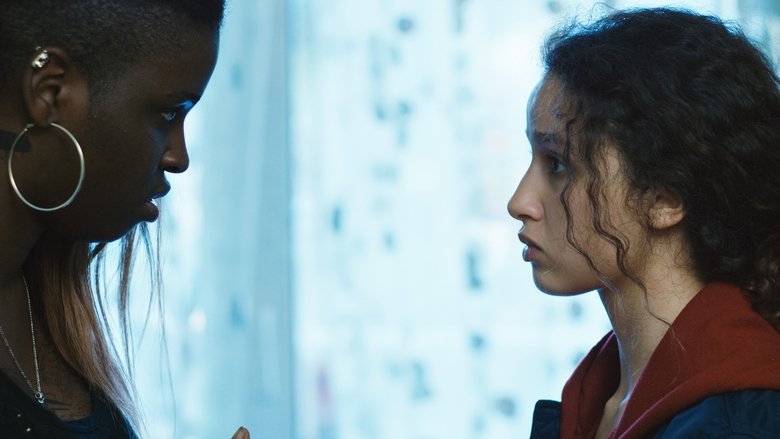
In a Romani camp on the outskirts of Paris, fifteen-year-old Dounia (Oulaya Amamra) and her best friend Maimouna (Déborah Lukumuena) dream of escaping their poverty-stricken lives. Rejecting the path of low-wage labor offered by her school, Dounia sets her sights on the local drug dealer, Rebecca (Jisca Kalvanda), convinced that money is the only path to dignity and power. Nicknamed "Bastard" due to her mother's reputation, Dounia uses her fierce intelligence and fearlessness to climb the ranks of Rebecca's operation.

As Dounia descends deeper into the criminal underworld, she simultaneously discovers a window into a different world through Djigui (Kévin Mischel), a security guard and contemporary dancer. From the catwalks of a theater where she spies on his rehearsals, she finds herself torn between the brutal, materialistic allure of Rebecca's world and the transcendent, physical beauty of Djigui's art. The film hurtles towards a devastating climax where these conflicting desires collide with the harsh realities of their environment.
Core Meaning

Director Houda Benyamina describes Divines not just as a film about the suburbs (banlieues), but as a "humanist" and "political" tragedy about the quest for dignity and recognition in a society driven by consumerism. The film critiques a world where young people feel that "to exist is to have," leading them to adopt the ruthless values of capitalism to survive.

Benyamina juxtaposes the spiritual (represented by dance and the "divine" bond of friendship) with the material (money, drugs, violence). The ultimate message warns that the pursuit of power without spirituality leads to destruction, yet it also celebrates the indomitable, "divine" life force of its heroines who refuse to be invisible.

Thematic DNA

Female Empowerment and Rage 30%
Friendship as Sanctuary 25%
Materialism vs. Spirituality 25%
Social Determinism vs. Free Will 20%

Female Empowerment and Rage

The film subverts the male-dominated "hood movie" genre. Dounia and Rebecca appropriate masculine codes of power and violence. The famous line "T'as du clito" (You have clitoris) reclaims courage as a female trait, replacing the phallic "having balls" with a uniquely female expression of guts and bravery.

Friendship as Sanctuary

The bond between Dounia and Maimouna is the film's emotional core. In a harsh world, their laughter and physical closeness provide a "divine" sanctuary. Their friendship transcends their differences—Dounia is cynical and reckless, while Maimouna is religious and grounding.

Materialism vs. Spirituality

Dounia is torn between two "temples": the supermarket/drug world (materialism, "Money, money, money") and the theater/mosque (spirituality, art, elevation). The film visually contrasts the claustrophobic basements of crime with the open, elevated space of the dance stage.

Social Determinism vs. Free Will

The characters are trapped by their environment—poverty, racism, and failing institutions (school, police). The film asks whether it is possible to break free from these predestined paths without destroying oneself in the process.

Character Analysis

Dounia

Oulaya Amamra

Archetype: The Tragic Hero / Antihero
Key Trait: Unrelenting resilience and rage

Motivation

To escape the "shame" of her poverty and her mother's reputation; to acquire "money, money, money" as a means of survival and respect.

Character Arc

Starts as a scrappy, ambitious teenager humiliated by her poverty. She hardens herself to become a ruthless enforcer for Rebecca, only to be softened by love (Djigui) before facing a tragic reckoning that costs her what she valued most.

Maimouna

Déborah Lukumuena

Archetype: The Loyal Companion / The Innocent
Key Trait: Pure-hearted loyalty

Motivation

Unconditional love for Dounia and a desire to support her friend's dreams, despite her own fears and religious values.

Character Arc

Dounia's moral anchor and comic relief. She follows Dounia out of loyalty rather than ambition. Her arc is one of tragic sacrifice, as she pays the ultimate price for Dounia's choices.

Rebecca

Jisca Kalvanda

Archetype: The Mentor / The Shadow
Key Trait: Masculine authority in a female body

Motivation

Power and dominance in a male world; refusing to be a victim.

Character Arc

The "Queen Pin" of the neighborhood. She represents what Dounia thinks she wants to become: powerful, feared, and rich. She seduces Dounia into the criminal life but ultimately reveals the hollowness and danger of that path.

Djigui

Kévin Mischel

Archetype: The Muse / The Window
Key Trait: Physical grace

Motivation

Artistic expression and connection.

Character Arc

A dancer who represents a world of discipline, beauty, and expression outside the crime life. He becomes Dounia's potential salvation, offering her a different way to channel her energy.

Symbols & Motifs

The Invisible Ferrari

Meaning:

Symbolizes the power of imagination and the refusal to accept their reality. It represents their shared dream and the tragic gap between their aspirations and their actual circumstances.

Context:

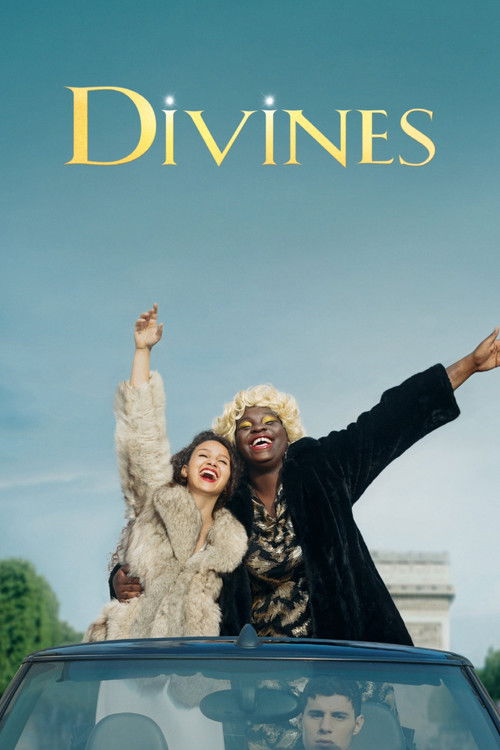
In a joyous scene, Dounia and Maimouna ride a construction cart but pantomime driving a luxury Ferrari through the slums, visualizing a future of wealth and freedom.

The Theater Catwalk

Meaning:

Represents a higher perspective, art, and the divine. It is a space of observation and longing, physically elevated above the "gutter" of their daily lives.

Context:

The girls hide in the theater's ceiling vents to watch Djigui dance. It is here that Dounia first connects with beauty and the possibility of a different kind of life.

High Heels

Meaning:

A tool of power and armor rather than just seduction. Rebecca insists Dounia wear them not to be pretty, but to dominate and project status.

Context:

Rebecca forces Dounia to wear heels for a job, telling her they are a weapon. Later, they emphasize Dounia's transformation from a street kid to a player in the criminal world.

Fire

Meaning:

Represents both purification and destruction. It is the explosive result of the characters' bottled-up rage and the system's indifference.

Context:

Used throughout the film (Dounia burning a car) and centrally in the tragic ending where the pursuit of money literally consumes them.

Memorable Quotes

T'as du clito.

— Rebecca

Context:

Rebecca says this to Dounia after Dounia proves her fearlessness during a confrontation or dangerous task, validating her entry into the gang.

Meaning:

Literally "You have clitoris." A feminist reclamation of the phrase "You have balls." It redefines courage and toughness as inherent female traits, not male ones.

Money, money, money!

— Dounia

Context:

Dounia shouts this in English, treating it almost like a prayer or a war cry, defining her primary motivation throughout the film.

Meaning:

A chant that encapsulates the characters' obsession with material wealth as the only escape from their reality. It reflects the influence of capitalist pop culture.

Le monde est à nous.

— Dounia (referencing Scarface)

Context:

Used when the girls are dreaming of their future success, directly referencing the cinematic tropes of gangster rise-and-fall stories.

Meaning:

"The world is ours." A twist on Scarface's "The world is yours." It signifies their collective ambition and the bond between Dounia and Maimouna against the world.

Philosophical Questions

Can the marginalized truly possess free will?

The film explores whether Dounia's choices are her own or dictated by her circumstances. Does she choose crime because she is "bad," or because her environment offers no other viable path to the dignity she craves?

Is violence a necessary tool for female emancipation?

Rebecca and Dounia adopt violence to gain respect in a patriarchal world. The film questions whether this "masculinization" is true empowerment or just a reproduction of the oppressor's tools.

Alternative Interpretations

While the ending is undeniably tragic, some critics view it as a radical political statement rather than just a sad conclusion. The state's failure to save Maimouna (firemen waiting for police) can be read as a direct indictment of how French society views bodies in the banlieues as "expendable."

Others interpret the film as a Greek Tragedy or an opera (emphasized by the use of Vivaldi in the score), where the characters are driven by fatal flaws (hubris/greed) toward an inevitable doom, elevating their street struggles to the level of myth.

Cultural Impact

Divines made a significant splash in French cinema, often being cited as a female counterpart to La Haine (1995). It was praised for bringing a female gaze to the banlieue film genre, which had historically been dominated by male narratives. The film sparked discussions about intersectionality, highlighting the specific struggles of women of color who face both racism and sexism.

The "clitoris" speech at Cannes became a viral moment for feminist cinema. The film's success on Netflix helped bring the specific reality of the French projects (cités) to a global audience, challenging stereotypes by showing the characters' humor, dreams, and humanity alongside the violence.

Audience Reception

Praised: Audiences and critics universally acclaimed the explosive energy of the two leads, Oulaya Amamra and Déborah Lukumuena. The film's raw emotion, humor, and the chemistry between the friends were highlighted as its strongest points.

Criticized: Some viewers felt the second half veered too much into melodrama or "action movie" tropes, and the ending was seen by some as overly punishing or manipulative. A few critics argued it relied on some clichés of the "hood film" genre despite subverting others.

Interesting Facts

  • The lead actress, Oulaya Amamra, is the director Houda Benyamina's younger sister. Despite this, she had to go through a rigorous casting process involving 3,000 other candidates.
  • The film won the Caméra d'Or (Best First Feature) at the 2016 Cannes Film Festival, where it received a 10-minute standing ovation.
  • During her acceptance speech at Cannes, director Houda Benyamina famously exclaimed, "Women, it is not a problem of quality, it is a problem of having balls... no, clitoris!" echoing the line from her film.
  • The script was inspired by the anger and energy of the 2005 French riots, which Benyamina felt were misunderstood by the media.
  • Benyamina co-founded the organization 1000 Visages (1000 Faces) to democratize cinema and help young people from underprivileged backgrounds access the film industry; many cast members came from this workshop.

Easter Eggs

Scarface References

The film deliberately references Brian De Palma's Scarface (1983). Dounia and Maimouna watch clips of Tony Montana, and the phrase "The World is Yours" is re-appropriated. This highlights the cross-cultural impact of the American gangster mythos on French suburban youth.

Phone aspect ratio intro

The film opens with vertical, grainy footage shot on a mobile phone (Snapchat/Instagram style). This firmly places the narrative in the perspective of the "selfie generation," emphasizing how these characters construct their identities and document their existence.

⚠️ Spoiler Analysis

Click to reveal detailed analysis with spoilers

Frequently Asked Questions

Explore More About This Movie

Dive deeper into specific aspects of the movie with our detailed analysis pages

Comments (0)

Leave a comment

No comments yet. Be the first to share your thoughts!