Skip to content
Hungry
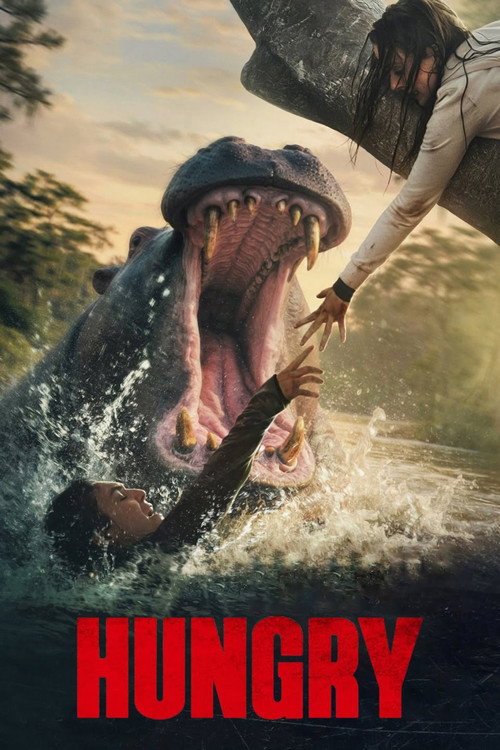
A suffocating green nightmare where murky bayou waters conceal a relentless, prehistoric fury, Hungry plunges viewers into primal terror as human arrogance collides with nature's most merciless territorial predator.
Hungry

Hungry

"This hippo isn't playing games."

03 June 2026 United States of America 93 min 7.2 (204)

Director: James Nunn

Cast: Madison Davenport, Tracey Bonner, Joaquim de Almeida, Michel Curiel, Samantha Coughlan

Thriller Horror Ecological Hubris & Invasive Consequences Survival Instinct: Greed vs. Solidarity Personal Resilience & Overcoming Trauma Subversion of Nature & Unpredictable Threats

Overview

Hungry (2026) begins in New Orleans, where Sistine (Madison Davenport), struggling with job loss and her mother's declining health, embarks on a swamp vacation with her best friend Hannah (Olivia Bernstone). Eager to catch a glimpse of the bayou's legendary 12-foot alligator "Big Ben," the pair join a swamp boat excursion operated by local tour guide Rodrigo (Michel Curiel) and owned by veteran hunter Walker (Joaquim de Almeida). Joining them on the flatboat are a diverse group of vacationers: Dionne (Tracey Bonner), a pushy businesswoman; Sally (Samantha Coughlan), a nurse traveling with her retired firefighter father Tim (Jim Meskimen) and her teenage son Mikey (River Codack).

The excursion takes a sinister turn when Dionne secretly bribes Rodrigo with $300 to steer the riverboat miles off the established tour route into uncharted territory. Deep in the swamp, they discover "Big Ben" brutally slaughtered and torn in half. Before the group can comprehend what apex predator could mangle a giant alligator, their boat is violently capsized.

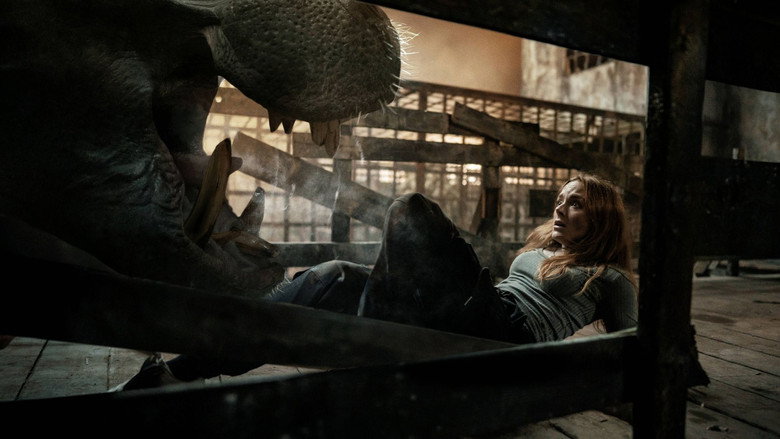
Stranded atop overturned debris and trapped in surrounding trees with no cell service or quick route back, the survivors realize they are being systematically hunted not by an alligator, but by a massive, hyper-aggressive hippopotamus lurking beneath the algae-covered water.
Core Meaning

Director James Nunn uses the creature-feature framework to deliver a warning about human hubris, ecological arrogance, and the folly of exploiting nature. By centering the story on an invasive hippopotamus in Louisiana, the film illustrates how human historical schemes—motivated by short-term greed or economic convenience—leave permanent scars on the environment. Beyond its ecological warning, Hungry highlights human resilience and selfless solidarity when pitted against an uncaring, primal force that operates purely on territorial survival.

Thematic DNA

Ecological Hubris & Invasive Consequences 30%
Survival Instinct: Greed vs. Solidarity 25%
Personal Resilience & Overcoming Trauma 25%
Subversion of Nature & Unpredictable Threats 20%

Ecological Hubris & Invasive Consequences

Revealed through the backstory of human attempts to import foreign species into North American wetlands. Human intervention disrupts natural ecosystems, creating deadly long-term consequences.

Survival Instinct: Greed vs. Solidarity

Juxtaposes Dionne's self-serving bribery against the selflessness shown by Sistine, Tim, and Walker, showing that panic and greed cost lives while unity offers a path to survival.

Personal Resilience & Overcoming Trauma

Mirroring Sistine's inner struggles with life failure and personal grief, her survival against the hippo becomes a metaphor for reclaiming personal strength under extreme adversity.

Subversion of Nature & Unpredictable Threats

Replaces standard horror antagonists (sharks, alligators) with a hippo, subverting pop-culture perceptions of hippos as "cute" animals to reveal them as brutal territorial guardians.

Character Analysis

Sistine

Madison Davenport

Archetype: Protagonist / Final Girl Key Trait: Vulnerable yet adaptable under severe pressure

Motivation

Protect her friends and return home to care for her ailing mother.

Character Arc

Begins feeling like a failure in her career and life, but evolves into a courageous leader who uses empathy and strategy to survive.

Dionne Edwards

Tracey Bonner

Archetype: Catalyst / Antihero Key Trait: Domineering, pushy, and self-centered

Motivation

Rebuild her image and secure custody of her stepchildren.

Character Arc

Her bribe triggers the crisis. Confronted with the fatal consequences of her actions, she learns humility and works alongside Sistine to survive.

All 5 characters and cast

Symbols & Motifs

Big Ben (The Mutilated Alligator)

Meaning:

Symbolizes the collapse of the expected natural hierarchy.

Context:

Finding the bayou's apex predator torn in half establishes the presence of a far more dangerous threat.

Murky Bayou Water & Water Hyacinths

Meaning:

Represents hidden danger and confusion.

Context:

Water hyacinths tie directly to historical hippo import proposals aimed at eating invasive flora.

The Trapped Hippo Calf

Meaning:

Symbolizes maternal preservation and misplaced rage.

Context:

It shifts the monster from a mindless killing machine into a protective parent.

The Abandoned Breeding Ranch

Meaning:

Symbolizes forgotten corporate and governmental hubris.

Context:

An industrial monument left to rot in nature.

Flares and Fire

Meaning:

Represents humanity's desperate attempts to exert control and summon help.

Context:

Used amidst primal darkness during night encounters.

Memorable Quotes

The only cute hippo is a dead hippo.
— Walker

Context

Spoken by Walker during the confrontation with the killer hippo threat.

Meaning

Directly counters pop-culture romanticism surrounding hippos, framing them as lethal threats.

They don't attack because they're evil. They kill because you're in their house.
— Walker

Context

Spoken by Walker when explaining the creature's nature to the group.

Meaning

Summarizes the animal's motivation—territorial defense rather than malice.

All 3 quotes

Philosophical Questions

Is nature inherently cruel, or are human standards of morality inapplicable to wild animal survival?

Explored through the hippo's actions, which are driven by natural territorial protection and maternal instinct rather than human malice.

Where does personal moral accountability lie when one individual's selfish choices endanger an entire group?

Explored through Dionne's bribe to Rodrigo, which directly precipitates the catastrophic situation for the entire boat.

Can modern humanity ever truly control or predict the long-term outcomes of manipulating ecosystems?

Explored through the lasting legacy of the real historical 1910 proposal to introduce invasive species into foreign habitats.

Alternative Interpretations

Interpretations of the ending and core storyline include:

Full ending explanation

Cultural Impact

Hungry entered the market during a resurgence of creature features (Crawl, Cocaine Bear, Beast). Critical response was mixed to positive (holding a 57% Tomatometer rating). Critics praised its non-ironic, serious treatment of a killer hippo premise, Job Reineke's claustrophobic water cinematography, and solid character development. Criticism centered on CGI inconsistencies and a slower pacing in its first half before the creature attacks kick off.

Audience Reception

Audience reception breakdown:

  • Praised Elements: Unique monster choice, tense atmosphere, Austin Wintory's score, grounded character motivations, low water-level camera framing.
  • Main Points of Criticism: Restrained gore levels (fewer onscreen kills than expected for a slasher creature feature), uneven CGI in daylight scenes, slow build-up to the first major attack.
  • Overall Verdict: A solid, entertaining, 93-minute character-driven survival thriller that executes its unique premise with surprising earnestness.

Interesting Facts

  • Shot in Malta: Despite being set in the Louisiana bayou, the film was shot almost entirely in Malta, where production designer Charlo Dalli built a massive 50x50-meter outdoor water tank layered with artificial swamp decay.
  • True Historical Inspiration: The plot stems from the real-life 1910 'American Hippo Bill' (H.R. 23261), proposed by Louisiana Congressman Robert F. Broussard and backed by Theodore Roosevelt, which aimed to import hippos to Southern swamps to solve a national meat shortage and eat invasive water hyacinths.
  • Subverting Cute Memes: Director James Nunn conceived the idea after searching for Earth's deadliest animals, wanting to make a horror film that challenged viral internet depictions of 'cute' hippos like Moo Deng and Fiona.
  • Hybrid Effects: Creature effects combined animatronics designed by MUFX artist Dan Martin (Possessor) with CGI by Magic Dust VFX (True Detective: Night Country).
  • Score by Austin Wintory: The film's score was composed by BAFTA-winning and Grammy-nominated video game composer Austin Wintory (Journey, Abzû).
  • Casting Lead: Madison Davenport was James Nunn's immediate first choice for Sistine and accepted the role straight after reading the script.
  • Period Piece Rejection: Nunn originally envisioned Hungry as a 1920s period piece detailing the original hippo ranching operations, but shifted to a modern survival story due to production budget limitations.

Easter Eggs

Hungry Hungry Hippos (Hasbro)

The film's title is a nod to the 1978 Hasbro tabletop board game, turning a childhood game into a creature feature.

1910 American Hippo Bill

Historical references to Congressman Robert Broussard, President Theodore Roosevelt, and spy Fritz Duquesne are integrated into the film's lore.

Moo Deng & Fiona References

Dialogue pokes fun at famous viral hippos, pointing out that hippos kill over 500 people annually in the wild.

Cinematic Homages

Low water-line shot angles pay homage to Steven Spielberg's Jaws, while the swamp-tour-gone-wrong setup mirrors Hatchet and Jurassic Park.

Frequently Asked Questions

Explore More About This Movie

Dive deeper into specific aspects of the movie with our detailed analysis pages

Comments (0)

Leave a comment

No comments yet. Be the first to share your thoughts!

Similar Movies