Skip to content
Primate
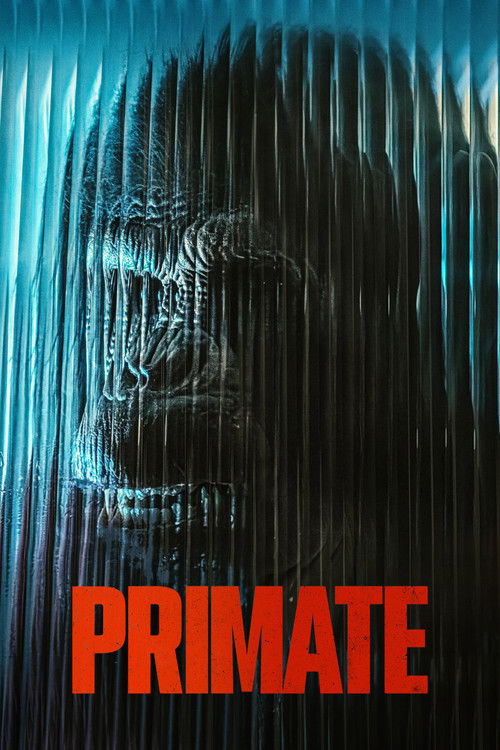
A claustrophobic tropical creature horror that erupts with primal dread, where a pristine glass sanctuary on a Hawaiian cliff becomes a blood-soaked cage as man's closest kin shreds the illusion of domestic harmony.
Primate

Primate

"Something's wrong with Ben."

01 January 2026 United States of America 89 min 6.5 (814)

Director: Johannes Roberts

Cast: Johnny Sequoyah, Jessica Alexander, Troy Kotsur, Victoria Wyant, Gia Hunter

Thriller Horror The Fallacy of Domestication & Human Hubris Grief, Loss, and Emotional Substitution False Security in Modern Luxury & Isolation Biological Terror & Primordial Survival
Budget: $21,000,000
Box Office: $41,235,665

Overview

Primate (2026) is a high-concept natural horror thriller directed by Johannes Roberts. The story follows Lucy Pinborough (Johnny Sequoyah), a college student returning to her family's secluded cliffside estate in Hawaii after spending years away following the death of her mother. Joining her on the getaway are her best friend Kate (Victoria Wyant), Kate's brother Nick (Benjamin Cheng)—Lucy’s long-time crush—and an uninvited, party-seeking acquaintance named Hannah (Jessica Alexander). Upon arrival, the group reunites with Lucy’s younger sister Erin (Gia Hunter) and her father Adam (Troy Kotsur), a renowned deaf crime novelist who primarily communicates through American Sign Language.

Central to the household is Ben, an adopted, highly intelligent chimpanzee who was raised as part of the family. Taught to communicate using custom soundboard software on a tablet by Lucy’s late mother (a linguistics professor), Ben is treated almost like a sibling. When Adam is called away on a promotional book tour, the young vacationers decide to host a relaxed poolside party at the isolated modern mansion.

Unbeknownst to anyone, Ben was bitten inside his enclosure by an infected mongoose. As a severe rabies infection quickly incubates, the gentle, communicative pet transforms into a cunning, hyper-aggressive monster. Cut off from help, the friends find themselves trapped in a desperate battle for survival against a predator that possesses brute simian strength and human-like intellect.
Core Meaning

Director Johannes Roberts uses Primate to explore the dangerous arrogance of human hubris regarding the natural world. The film argues that no amount of human affection, linguistic training, or technological bridges can erase millions of years of wild evolutionary instinct or protect nature from unpredictable biological threats like rabies.

On a human level, the film serves as a commentary on broken familial communication and grief. Following the mother's death, the family attempted to fill the emotional void by treating a wild primate as a replacement sibling and child. Ben’s descent into viral madness exposes how fragile human comfort structures are when built on artificial illusions of safety and control.

Thematic DNA

The Fallacy of Domestication & Human Hubris 35%
Grief, Loss, and Emotional Substitution 25%
False Security in Modern Luxury & Isolation 20%
Biological Terror & Primordial Survival 20%

The Fallacy of Domestication & Human Hubris

The central thematic spine argues that wild animals cannot truly be domesticated. Despite growing up wearing clothes and using communication tablets, Ben ultimately remains a dangerous wild ape whose primal nature reasserts itself catastrophically under stress.

Grief, Loss, and Emotional Substitution

Ben represents the surviving family's attempt to cling to the memory of their deceased mother/matriarch. Lucy's avoidance of home and Adam's withdrawal into his work reflect an inability to process grief directly, leading to tragic blind spots.

False Security in Modern Luxury & Isolation

The stunning glass-walled Hawaiian cliffside mansion symbolizes human privilege and safety. However, its open-concept design and remote location turn luxury into a prison once a threat emerges inside.

Biological Terror & Primordial Survival

The film explores the visceral terror of rabies—a disease that strips away reason, instills uncontrollable aggression, and weaponizes a beloved companion against those who nurtured it.

Character Analysis

Lucy Pinborough

Johnny Sequoyah

Archetype: The Hero / Final Girl Key Trait: Resourcefulness and fierce loyalty

Motivation

To survive the night and save her family.

Character Arc

Begins as a grief-stricken college student running away from her family's past; evolves into a brave, decisive survivor who steps up to protect her sister and confront the monster Ben has become.

Ben the Chimpanzee

Miguel Torres Umba (Motion Capture/Suit Performance), Ben Pronsky (Vocals)

Archetype: The Antagonist / Tragic Monster Key Trait: Simian physical strength combined with human-level tool and communication comprehension

Motivation

Rabies-induced survival rage and predatory instinct.

Character Arc

Transforms from an affectionate, highly educated family pet into a calculating, bloodthirsty predator driven by viral brain degradation.

All 5 characters and cast

Symbols & Motifs

The Soundboard Tablet

Meaning:

Symbolizes human attempt to bridge language and mind with nature.

Context:

Once Ben turns feral, the tablet becomes a chilling motif as his mechanical soundboard voice announces horrific words like "Lucy bad" and "Dead".

The Infinity Pool

Meaning:

Symbolizes artificial luxury turned into a literal sanctuary.

Context:

Because rabies induces severe hydrophobia (fear of water), the pool becomes a moat where the surviving characters must take refuge to stay out of Ben's reach.

The Teddy Bear

Meaning:

A motif representing childhood innocence, maternal comfort, and past warmth.

Context:

Lucy gifts it to Ben upon her arrival, and its presence throughout the film contrasts sharply with the gory carnage.

The Glass House

Meaning:

Symbolizes transparency and vulnerability.

Context:

Sleek and modern, its glass walls afford no real security against a creature capable of shattering physical boundaries.

The Rabid Mongoose

Meaning:

Symbolizes invasive, chaotic nature.

Context:

Bringing a deadly virus to an island ecosystem previously considered rabies-free, it represents the unpredictable butterfly effect of nature.

Memorable Quotes

Lucy... bad.
— Ben (via electronic tablet soundboard)

Context

Broadcasted by Ben using his electronic soundboard software as his viral behavior escalates.

Meaning

Ben uses his language tool to broadcast his shifting perception of Lucy, signaling the terrifying transition from pet to killer.

Dead. Dead. Dead.
— Ben (via electronic tablet soundboard)

Context

Triggered through the soundboard tablet as Ben stalks the trapped characters.

Meaning

Repeated by Ben's communication app as he stalks the house, creating a surreal, chilling techno-horror motif.

All 5 quotes

Philosophical Questions

Can domestication ever truly eliminate evolutionary wild instincts?

The film suggests human training is merely a thin facade easily shattered by biological triggers.

Where is the boundary between animal love and exploitation?

It questions whether keeping complex wild primates in domestic environments is an act of affection or selfish captivity.

How reliable is technological language when primal instincts collapse?

Demonstrates how digital tools fail to bridge fundamental biological divides during a crisis.

Alternative Interpretations

The Ecological Cautionary Reading: A straightforward warning against human ego—attempting to mold wild creatures into human family members inevitably backfires when nature takes over.The Grief Allegory Reading: Ben’s rabies rampage represents the destructive, unaddressed trauma breaking through the family's artificial normalcy following the matriarch's death.Class & Privilege Satire: A dark satire...

Full ending explanation

Cultural Impact

Primate arrived as part of the mid-2020s wave of high-octane "animal attack" horror movies (such as Cocaine Bear and The Monkey). It draws inspiration from real-life cautionary tales regarding exotic pet ownership, notably the 2009 Travis the Chimpanzee incident.

Critically, the film was praised as a lean, effective 89-minute B-movie slasher that delivers intense practical gore without taking itself too seriously. Holding a positive rating on Rotten Tomatoes (~77–78%), it established itself as a January genre hit for Paramount Pictures.

Audience Reception

Praised Aspects: Incredible practical suit/animatronic work by Miguel Torres Umba, relentless 89-minute pacing, visceral face-ripping jaw-tearing gore, and clever suspense mechanics involving hydrophobia and deaf perspective.

Criticisms: Thinly written secondary characters, classic slasher tropes involving foolish decision-making, and an abrupt shift from family drama to animal slasher.

Controversial Moments: The final scene where surviving family members seem strangely relieved/laughing in an ambulance despite six deaths drew mixed reactions.

Overall Verdict: A thrilling, crowd-pleasing B-movie creature feature that delivers gnarly fun.

Interesting Facts

  • Director Johannes Roberts avoided heavy CGI, opting for a physical suit performance by movement specialist Miguel Torres Umba, combined with animatronics built by Millennium FX.
  • Roberts explicitly cited Stephen King’s Cujo (1983) and the 1990 cult baboon horror Shakma as major narrative influences.
  • Oscar-winner Troy Kotsur’s character is deaf, allowing the film to use non-auditory perspectives where characters are unaware of threats approaching behind them.
  • Paramount greenlit the project in July 2024; filming ran from September 16 to November 4, 2024, ahead of its Fantastic Fest premiere in September 2025.
  • Actor Rob Delaney makes a brief appearance in the opening sequence as Dr. Doug Lambert, the unfortunate veterinarian.
  • Produced on a budget of $21–24 million, Primate grossed over $41.5 million worldwide.

Easter Eggs

Homage to Cujo

The opening text explaining the stages of rabies infection and the pet-turned-killer setup directly homage Lewis Teague’s 1983 adaptation of Stephen King's Cujo.

Reference to Jordan Peele's Nope

Ben’s face-tearing violence pays homage to the infamous "Gordy's Home" chimpanzee attack sequence in Nope (2022).

Adam’s Mystery Novels

The fictional book covers displayed for father Adam all feature the word "Silent" in their titles (e.g., Silent Murders), referencing his deaf identity.

Inverted Creature Trope

Johannes Roberts, who previously directed shark thrillers like 47 Meters Down, completely inverted the water horror trope—making water the only safe zone from the terrestrial monster.

Frequently Asked Questions

Explore More About This Movie

Dive deeper into specific aspects of the movie with our detailed analysis pages

Comments (0)

Leave a comment

No comments yet. Be the first to share your thoughts!

Similar Movies