Skip to content
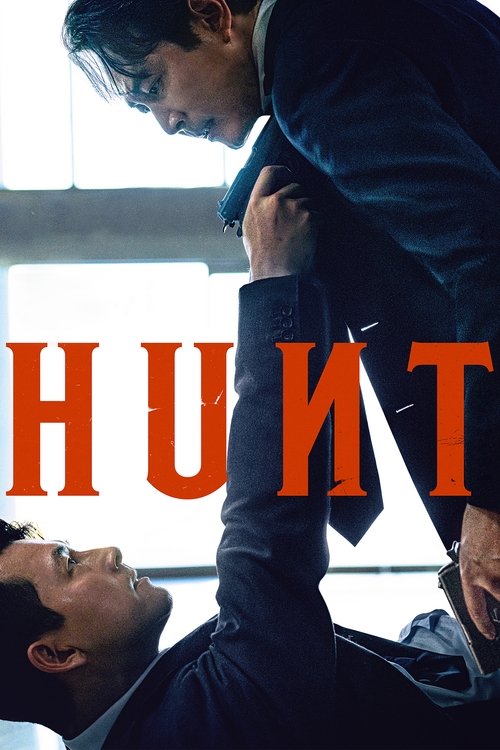
Hunt
A suffocating, rain-drenched espionage thriller where paranoid rage and tragic disillusionment collide like two speeding locomotives locked on a single track, hurtling relentlessly toward mutual annihilation in a fog of state-sanctioned violence.
Hunt

Hunt

헌트

"Two rivals, a hidden truth."

10 August 2022 South Korea 131 min 6.8 (217)

Director: Lee Jung-jae

Cast: Lee Jung-jae, Jung Woo-sung, Jeon Hye-jin, Heo Sung-tae, Go Youn-jung

Drama Action Mystery The Tragic Blindness of Ideological Dogmatism Historical Trauma and Moral Complicity The Self-Devouring Nature of State Paranoia Generational Inheritance of Conflict vs. Emancipation
Budget: $17,000,000
Box Office: $25,994

Overview

Set in 1983 amid the escalating Cold War tensions and political turbulence of South Korea’s Fifth Republic, Hunt follows two elite security chiefs within the Korean Central Intelligence Agency (KCIA / later National Security Planning). After a close-call assassination attempt on the South Korean President during a visit to Washington, D.C., intelligence officials receive intelligence that a high-ranking North Korean mole—codenamed "Dong-rim"—has penetrated the agency’s inner sanctum.

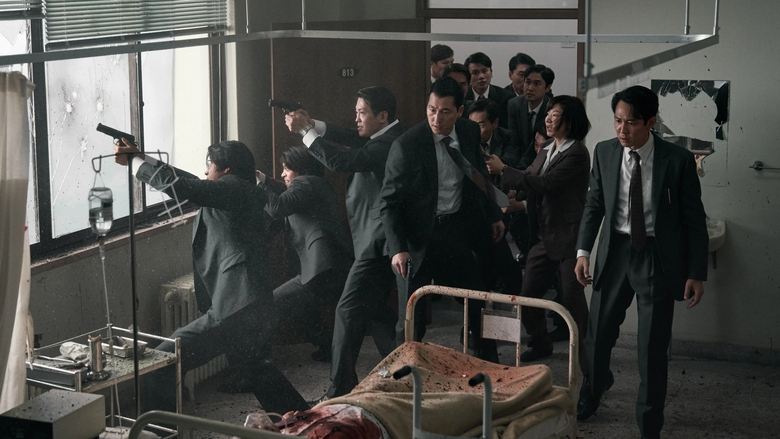
The agency assigns Foreign Unit Chief Park Pyong-ho (Lee Jung-jae) and Domestic Unit Chief Kim Jung-do (Jung Woo-sung) to investigate each other’s departments to root out the traitor. What begins as an intelligence audit rapidly spirals into a cutthroat, factional war between the two branches. As interrogation rooms turn into chambers of torture and street confrontations erupt into chaotic firefights, both men employ wiretaps, counter-espionage, and psychological warfare to expose their rival.

As the hunt intensifies across Seoul, Tokyo, and Bangkok, both chiefs discover that unmasking Dong-rim is tied to a far larger conspiracy targeting the head of state. Caught between brutal authoritarian regime orders, rogue military factions, and foreign intelligence machinations, Pyong-ho and Jung-do find themselves ensnared in a lethal web where discovering the truth could cost them their lives and reshape the fate of the Korean Peninsula.
Core Meaning

Director Lee Jung-jae crafts Hunt as an indictment of destructive ideological polarization and state-engineered fanaticism. The film argues that when political systems demand blind obedience and justify systemic atrocities in the name of national security or revolutionary doctrine, individuals become disposable instruments of violence.

Both protagonists represent men trapped inside oppressive machinery who arrive at parallel convictions—that the corrupt dictator must be stopped—yet are driven to destroy one another because manufactured dogma blinds them to their shared underlying humanity and goals. The film advocates for breaking the intergenerational cycle of hatred, urging modern society to prioritize coexistence and critical skepticism over inherited animosity.

Thematic DNA

The Tragic Blindness of Ideological Dogmatism 30%
Historical Trauma and Moral Complicity 25%
The Self-Devouring Nature of State Paranoia 25%
Generational Inheritance of Conflict vs. Emancipation 20%

The Tragic Blindness of Ideological Dogmatism

The narrative examines how institutional rivalry and Cold War dogmatism prevent two men with compatible moral revulsion against dictatorship from uniting, turning potential allies into fatal adversaries.

Historical Trauma and Moral Complicity

Through lingering memories of state-sponsored atrocities (notably the 1980 Gwangju Massacre), the film explores how soldiers and intelligence operatives carry deep psychological scars and guilt, driving them toward extreme acts of redemption.

The Self-Devouring Nature of State Paranoia

The internal witch hunt within the KCIA illustrates how authoritarian apparatuses rely on surveillance, torture, and manufactured paranoia to sustain power, inevitably consuming their own loyal servants from within.

Generational Inheritance of Conflict vs. Emancipation

The dynamic between seasoned agents and the younger generation highlights the struggle to prevent youth from inheriting the trauma, weaponization, and fatal loyalties of their elders.

Character Analysis

Park Pyong-ho

Lee Jung-jae

Archetype: Tragic Infiltrator / Reluctant Mole Key Trait: Calculative, weary, stoic, possessing hidden empathy beneath an icy exterior.

Motivation

Prevent regional war and secure peaceful coexistence while protecting those dependent on him.

Character Arc

Shifts from a disciplined intelligence chief navigating deep cover to a desperate protector attempting to prevent outright war and save innocent lives.

Kim Jung-do

Jung Woo-sung

Archetype: Tormented Crusader / Anti-Hero Key Trait: Unyielding, intense, morally driven by profound inner guilt.

Motivation

Assassinate the dictator to atone for his complicity in the Gwangju Massacre and restore justice.

Character Arc

Evolves from a zealous military security officer into a clandestine coup conspirator haunted by past regime massacres.

All 5 characters and cast

Symbols & Motifs

The Interrogation Chamber & Recording Tapes

Meaning:

Symbolizes institutional surveillance and the fabrication of truth. The spinning reel-to-reel tapes and distorted audio playback represent how reality is edited and weaponized by state forces.

Context:

Used repeatedly during agency purges and investigations as operatives manufacture confessions through psychological and physical coercion.

The Passport / False Identity

Meaning:

Represents the elusive promise of freedom and rebirth, serving as a desperate lifeline for agents seeking to escape the geopolitical trap.

Context:

Travel documents and forged identities recur throughout the film as operatives attempt to navigate borders or provide an exit strategy from covert warfare.

Cigarettes and Lighters

Meaning:

A motif of shared tension and fleeting human connection, signaling deep weariness and an internal longing for quietude.

Context:

The ritual of smoking provides brief pauses before acts of violence, shared between rivals and allies amidst high-stakes operations.

The Staircase Brawl

Meaning:

Serves as a visual metaphor for the protagonists' symmetrical descent into mutual destruction—neither can ascend without dragging the other down.

Context:

The brutal physical confrontation between Park Pyong-ho and Kim Jung-do inside a narrow institutional stairwell.

Gunshot Wounds and Physical Scars

Meaning:

Symbolizes the permanent physical and psychological trauma inflicted by years of regime enforcement and complicity in violence.

Context:

Manifests in Pyong-ho’s persistent hand tremors and nerve damage, contrasted with Jung-do’s rigid, scarred physical bearing.

Memorable Quotes

우린 다 목표가 같아. 다르게 행동할 뿐이지.
— Kim Jung-do

Context

Reflecting on the factional conflict and divergent methods within the intelligence agency.

Meaning

Highlights the tragic irony that both sides believe their extreme measures are the only way to save the nation.

너는 다르게 살 수 있어.
— Park Pyong-ho

Context

Spoken to Jo Yoo-jeong during the climactic aftermath while offering her a chance at freedom.

Meaning

Encapsulates the core message of liberating the younger generation from inherited geopolitical hatred and bloodshed.

All 4 quotes

Philosophical Questions

Can individual morality survive inside a corrupt state apparatus?

The film explores whether an intelligence agent can use the brutal, deceitful tools of an authoritarian regime to achieve moral ends without becoming hopelessly corrupted by those very instruments.

Does preventing a catastrophic war justify protecting a tyrant?

Pyong-ho faces a devastating dilemma: allowing the dictator’s assassination will trigger an all-out invasion from the North, forcing him to protect a murderous ruler to save millions of innocent civilian lives.

Are ideological loyalties innate, or merely circumstantial chains?

The narrative questions whether nationalistic and political dogmas are worth sacrificing lives for when regime leaders on both sides view their agents merely as expendable assets.

Alternative Interpretations

The film invites several distinct analytical readings:

Full ending explanation

Cultural Impact

Hunt is deeply grounded in the turbulent history of South Korea during the early 1980s. The narrative draws directly from the collective trauma of the May 18 Gwangju Democratization Movement (1980), where government paratroopers violently suppressed civilian pro-democracy protesters. By weaving these events alongside the 1983 Rangoon bombing, the film taps into South Korea's cinematic tradition of reckoning with authoritarian dictatorship and KCIA abuses.

Critically, the film was celebrated for infusing gritty 1980s Cold War espionage with high-budget modern action choreography, standing alongside films like The Man Standing Next (2020) and The Spy Gone North (2018). It demonstrated that commercial action cinema could engage with complex historical trauma without trivializing historical reality.

Audience Reception

Audience and critical reception was strongly positive, with widespread praise directed at the blistering narrative pacing, expertly staged action sequences, and the powerful screen chemistry between Lee Jung-jae and Jung Woo-sung. Lee's confident direction and high production values received critical acclaim.

Conversely, early international and festival audiences noted that the convoluted plot and rapid-fire revelations regarding 1980s Korean political history (such as the Gwangju Massacre and factional coups) could feel overwhelming for viewers lacking historical context. Some viewers also debated the rapid succession of twists in the third act, questioning whether the dual-conspiracy structure strained realism, though it was broadly hailed as a high-octane revitalization of the Korean espionage action genre.

Interesting Facts

  • Hunt marks the feature directorial debut of Lee Jung-jae, premiering shortly after his international breakthrough in Squid Game.
  • The project was originally an unproduced screenplay titled Namsan (South of the Mountain), which Lee Jung-jae acquired and spent four years rewriting.
  • Jung Woo-sung initially turned down the co-starring role four times over several years before the script was sufficiently refined.
  • The film marked the first on-screen reunion of Lee Jung-jae and Jung Woo-sung in 23 years, following City of the Rising Sun (1999).
  • Hunt had its world premiere out of competition in the Midnight Screenings section at the 75th Cannes Film Festival in May 2022.
  • Following feedback at Cannes regarding dense historical exposition, Lee Jung-jae re-edited portions and clarified dialogue for the theatrical rollout.
  • The film was a major domestic box office hit, drawing over 4.35 million admissions in South Korea.
  • Lee Jung-jae won Best New Director honors at the Blue Dragon Film Awards, the Baeksang Arts Awards, and the Buil Film Awards.

Easter Eggs

A-List Cameo Showcase

Features brief cameos by major South Korean stars—including Hwang Jung-min, Lee Sung-min, Park Sung-woong, Ju Ji-hoon, Kim Nam-gil, and Jo Woo-jin—appearing in support of Lee Jung-jae's directorial debut.

The MiG-19 Defection Sequence

Hwang Jung-min’s pilot character directly references the historical 1983 defection of North Korean pilot Lee Ung-pyeong, who flew a MiG-19 fighter jet to South Korea.

Historical Echoes of the Rangoon Bombing

The high-stakes assassination climax set in Bangkok mirrors the actual 1983 Rangoon bombing in Burma orchestrated by North Korean operatives against President Chun Doo-hwan.

Chun Doo-hwan Stand-In

The South Korean head of state is referred to ambiguously as "Number One" or "His Excellency," visually and contextually representing military dictator Chun Doo-hwan.

Frequently Asked Questions

Explore More About This Movie

Dive deeper into specific aspects of the movie with our detailed analysis pages

Comments (0)

Leave a comment

No comments yet. Be the first to share your thoughts!

Similar Movies