I, Daniel Blake
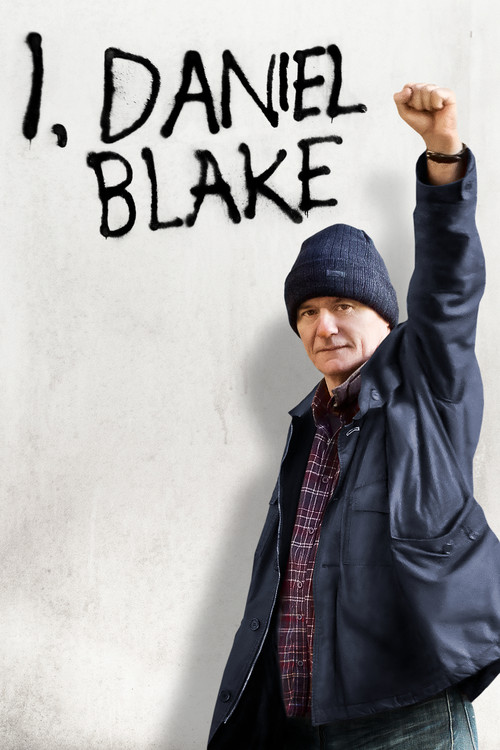
"My name is Daniel Blake. I am a man, not a dog."
Overview
Daniel Blake (Dave Johns) is a 59-year-old widowed carpenter in Newcastle who suffers a major heart attack. Although his cardiologist forbids him from returning to work, the Department for Work and Pensions (DWP) deems him "fit for work" after a tick-box assessment, denying him employment support allowance. Caught in a bureaucratic limbo, he must spend 35 hours a week looking for jobs he cannot take to receive any benefits.
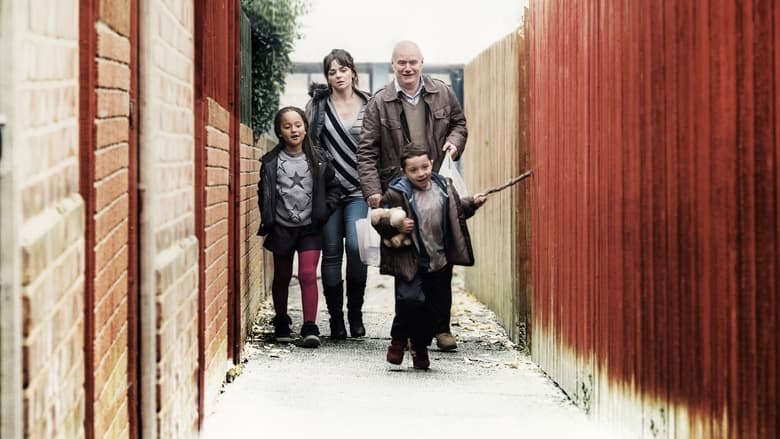
During a visit to the Jobcentre, Daniel defends Katie (Hayley Squires), a single mother of two who has been sanctioned for arriving late. A friendship blossoms as Daniel becomes a grandfather figure to her children, helping fix up their dilapidated flat. As Katie spirals into abject poverty and Daniel faces an impossible digital appeal process, the film exposes the cruelty of the austerity-era welfare state, culminating in a tragic final attempt for justice.
Core Meaning
The Dignity of the Common Man vs. The State Machinery.
Director Ken Loach and writer Paul Laverty crafted this film as a furious indictment of the British benefits system and the concept of "conscious cruelty" in bureaucracy. The film argues that the welfare state, originally designed to be a safety net, has been weaponized into a digital fortress that strips vulnerable citizens of their humanity. Its ultimate message is that every individual, regardless of economic status, deserves to be treated with respect and dignity—as a citizen, not a number or a "client."
Thematic DNA
Dehumanizing Bureaucracy
The film relentlessly depicts the "Kafkaesque" nightmare of the benefits system. Daniel is forced to navigate automated phone lines with endless hold music, fill out digital forms despite being computer illiterate, and answer standardized questions that ignore his actual medical reality. The system is shown as a faceless entity designed to wear people down until they give up.
Poverty and The Food Bank
Through Katie's arc, the film explores the humiliation of "food poverty" and the rise of food banks in the UK. The scene where Katie, overcome by hunger, rips open a can of beans and eats it cold with her hands is a visceral representation of how poverty strips away social niceties and reduces humans to survival instincts.
Solidarity and Community
In contrast to the cold state institutions, the film highlights the warmth of the working-class community. Daniel helps Katie without hesitation; neighbors share tips on how to survive; and even in the food bank, volunteers offer non-judgmental support. It suggests that while the state has failed, human compassion remains alive on the streets.
The Digital Divide
Daniel represents an older generation left behind by the "digital-by-default" government services. His struggle with the computer mouse and the assumption that everyone has internet access critique how technology can become a barrier to basic human rights rather than a tool for access.
Character Analysis
Daniel Blake
Dave Johns
Motivation
To retain his self-respect and secure the support he has paid into his whole life, while helping Katie survive.
Character Arc
A proud carpenter who starts with a belief in common sense and fairness. As he hits wall after wall, his frustration grows, but his integrity remains unshaken. He dies just moments before potentially winning his appeal, becoming a martyr for the cause of common decency.
Katie Morgan
Hayley Squires
Motivation
Survival and providing for her children, Daisy and Dylan.
Character Arc
Forced to move 300 miles from London to Newcastle to find housing, she starts as a determined protector of her children. The system grinds her down until she resorts to shoplifting and eventually sex work to feed her family, a choice that breaks Daniel's heart.
China
Kema Sikazwe
Motivation
To make money and avoid the trap of the system.
Character Arc
Daniel's young neighbor who understands the system is rigged and operates outside of it by selling knock-off sneakers. He represents the entrepreneurial spirit forced into the gray market to survive.
Symbols & Motifs
The Spray Paint Graffiti
An act of reclaiming identity and voice in a public space.
When all official channels fail, Daniel spray-paints "I, Daniel Blake, demand my appeal date before I starve" on the wall of the Jobcentre. It is a physical manifestation of his refusal to be invisible or silent.
The Can of Baked Beans
The loss of dignity and the primal reality of hunger.
At the food bank, Katie is so hungry she cannot wait to cook the food. She opens a can of beans and eats it with her fingers, then breaks down in shame. It serves as the film's emotional nadir, visualizing the physical pain of poverty.
Daniel's Toolbox
His past life, his skills, and his identity as a worker.
Daniel sells almost all his furniture to survive, but he refuses to sell his carpentry tools. They represent his hope of returning to work and his self-worth as a craftsman, which the system tries to invalidate.
Sanitary Products
The often-overlooked humiliations of poverty (period poverty).
Katie is caught shoplifting sanitary pads and a razor because she cannot afford them, highlighting how poverty affects basic hygiene and personal dignity specifically for women.
Memorable Quotes
I, Daniel Blake, am a citizen, nothing more, nothing less.
— Daniel Blake (read by Katie)
Context:
From the speech Daniel wrote for his appeal, which he never gets to deliver. Katie reads it at his pauper's funeral.
Meaning:
The film's thesis statement. It rejects all labels (client, service user, scrounger) in favor of the most fundamental political unit: the citizen, who holds inherent rights.
My name is Daniel Blake. I am a man, not a dog. As such, I demand my rights. I demand you treat me with respect.
— Daniel Blake
Context:
Part of the final eulogy/speech.
Meaning:
A demand for basic human dignity in the face of a system that treats people like animals or statistics.
When you lose your self-respect, you're done for.
— Daniel Blake
Context:
Daniel speaking to Katie after realizing she has turned to sex work to survive.
Meaning:
Highlights that the psychological toll of poverty is just as deadly as the physical toll.
We're digital by default.
— Jobcentre Advisor
Context:
Spoken dismissively to Daniel when he asks for a paper form because he cannot use a computer.
Meaning:
Epitomizes the exclusion of the elderly and poor who may not have computer skills or access.
Philosophical Questions
Is charity a failure of the state?
The film presents the food bank not as a heartwarming sign of community (though the volunteers are kind), but as a disgraceful symptom of a failed social contract. It asks whether the existence of charity lets the state off the hook for its duty to protect citizens.
Does bureaucracy function as violence?
Through the concept of "structural violence," the film explores how non-physical systems (forms, sanctions, wait times) can inflict physical harm and death just as effectively as a weapon. Daniel's death is presented not as natural causes, but as a killing by the state.
Alternative Interpretations
Propaganda vs. Truth. While the primary reading is a realistic critique of a broken system, some critics interpret the film as a melodramatic agitprop (agitation propaganda). From this view, the characters are seen as saintly martyrs (Daniel never drinks or smokes, is perfectly honest) and the antagonists (Jobcentre staff) as cartoonishly evil, designed solely to manipulate audience emotion for a socialist agenda. Conversely, defenders argue this "Manichean" structure is necessary to cut through the complexity of bureaucracy and reveal the moral binary of the situation.
Cultural Impact
Political Firestorm and Social Awakening. I, Daniel Blake transcended cinema to become a political event in the UK. It was cited in Parliament by Labour leader Jeremy Corbyn to criticize the Conservative government's austerity policies. The hashtag #WeAreAllDanielBlake trended, becoming a rallying cry for welfare reform activists. While right-wing critics and politicians (including then-Work and Pensions Secretary Damian Green) dismissed it as a "work of fiction" or "monstrously unfair," charity groups and food banks confirmed the film's accuracy. It is credited with changing the national conversation around the "fit for work" assessments and the shame associated with food bank usage.
Audience Reception
Universal Acclaim and Heartbreak. Audiences worldwide were deeply moved, with many reports of tears and standing ovations in cinemas. Viewers praised the raw authenticity of the performances and the film's ability to give a voice to the voiceless. However, some criticisms mirrored the political divide; a minority of viewers felt the film was "misery porn" or lacked nuance by not showing any "good" government employees. Despite this, it maintains a high rating (7.8 on IMDb, 92% on Rotten Tomatoes) and is regarded as a modern classic of British cinema.
Interesting Facts
- Director Ken Loach came out of retirement specifically to make this film after hearing stories about the changing welfare system.
- The film won the Palme d'Or at the 2016 Cannes Film Festival, making Loach one of the few directors to win the top prize twice.
- Dave Johns, who plays Daniel, was primarily known as a stand-up comedian and had never acted in a dramatic film role before.
- The scene where Katie eats the beans was filmed with the actress Hayley Squires genuinely hungry; she didn't eat much before the shoot to make the desperation real.
- The production team included real former Jobcentre staff to ensure the set design and procedures were accurate, though the DWP refused to cooperate.
- The hold music heard on the phone (Vivaldi's 'The Four Seasons') was the actual music used by the DWP helplines at the time.
- The 'China' character is played by Kema Sikazwe, who is also a rapper and wrote a song for the film.
Easter Eggs
The number 62
The number of Daniel's flat is 62. In the script/research phase, this reportedly matched the number of pages in the form one had to fill out for the sickness benefit appeal, symbolizing the weight of bureaucracy.
Real-life hunger strike reference
The graffiti scene references real-life protests, specifically a man who died outside a Jobcentre after being declared fit for work, whose story influenced the script.
⚠️ Spoiler Analysis
Click to reveal detailed analysis with spoilers
Frequently Asked Questions
Explore More About This Movie
Dive deeper into specific aspects of the movie with our detailed analysis pages
Comments (0)
No comments yet. Be the first to share your thoughts!