Skip to content
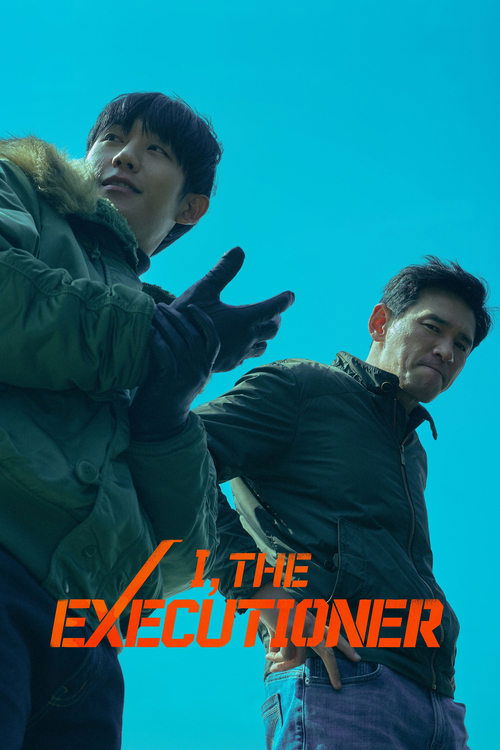
I, the Executioner
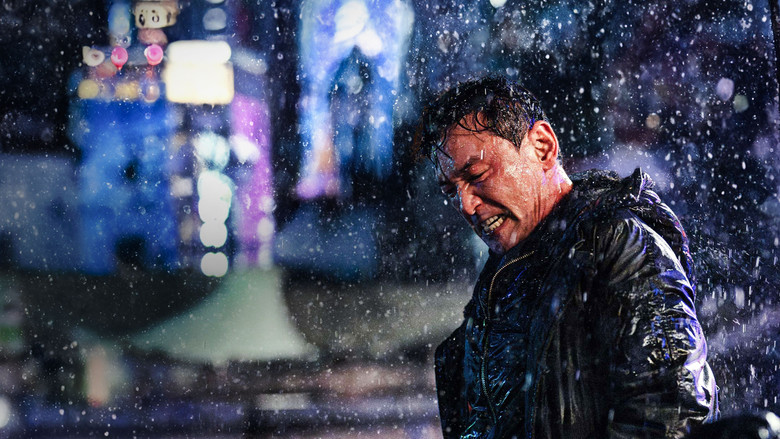
Drenched in rain, neon glare, and kinetic violence, this gritty crime thriller confronts the intoxicating poison of mob vengeance through the fractured mirror of a cop striving to preserve his humanity.
I, the Executioner

I, the Executioner

베테랑 2

"Don't cross the line."

13 September 2024 South Korea 118 min 7.0 (103)

Director: Ryoo Seung-wan

Cast: Hwang Jung-min, Jung Hae-in, Oh Dal-su, Oh Dae-hwan, Jang Yoon-ju

Crime Action Comedy Vigilantism vs. The Rule of Law Cyber-Wreckers, Social Media Outrage & Media Voyeurism The Moral & Psychological Toll of Police Work The Cycle of Retribution & The Illusion of "Good" Violence Fatherhood, Generational Legacy & Guilt
Box Office: $53,453,611

Overview

I, the Executioner (Korean: 베테랑 2, Veteran 2), directed by action cinema maestro Ryoo Seung-wan, is the direct sequel to the 2015 box-office smash hit Veteran. Nine years after bringing down the tyrannical chaebol heir Jo Tae-oh, veteran detective Seo Do-cheol and the Seoul Metropolitan Police Violent Crimes Investigation Division find themselves overwhelmed by the relentless grind of street-level crime, media scrutiny, and personal exhaustion.

The status quo shatters when a serial killer named "Haechi" (named after the mythical beast of justice) begins murdering convicted offenders who received lenient punishments or escaped the legal system through technicalities. Each murder mirrors the original crime committed by the victim, igniting a nationwide media frenzy. The public, radicalized by sensationalist cyber-wreckers and live-streamers, rallies around Haechi as a righteous folk hero, placing immense pressure on the police department to catch a killer half the nation actively supports.

To reinforce the Major Crime Investigation Division, Seo Do-cheol recruits Park Sun-woo, an exceptionally agile and seemingly upstanding young patrol officer whose martial prowess and composed demeanor catch the veteran's eye. Together, the unit plunges into an escalating cat-and-mouse game through urban alleyways, media circuses, and moral minefields, where the boundaries between law enforcement, personal righteousness, and mob rule steadily erode.
Core Meaning

The central message of I, the Executioner is an interrogation of modern vigilante justice and the societal thirst for retributive violence. Director Ryoo Seung-wan shifts away from the black-and-white underdog catharsis of the 2015 original to question what happens when citizens lose faith in institutional justice and trade due process for instant bloodlust.

The film warns that justice divorced from the rule of law is indistinguishable from sociopathic murder. By examining how digital media, algorithms, and outrage culture amplify cruelty under the guise of morality, Ryoo argues that the true measure of justice is not the satisfying destruction of the wicked, but the restraint, empathy, and institutional discipline required to protect humanity—even the humanity of the guilty.

Thematic DNA

Vigilantism vs. The Rule of Law 30%
Cyber-Wreckers, Social Media Outrage & Media Voyeurism 25%
The Moral & Psychological Toll of Police Work 20%
The Cycle of Retribution & The Illusion of "Good" Violence 15%
Fatherhood, Generational Legacy & Guilt 10%

Vigilantism vs. The Rule of Law

The narrative contrasts Haechi’s eye-for-an-eye execution method with Seo Do-cheol’s adherence to legal procedure. The film illustrates how societal frustration with lenient judicial verdicts fosters extremism, turning murder into entertainment and eroding the social contract.

Cyber-Wreckers, Social Media Outrage & Media Voyeurism

Through live-streaming bounty hunters, sensationalist YouTubers, and fake-news purveyors, the film critiques the digital ecosystem that profits from rage and witch-hunts, demonstrating how public opinion can be manufactured and weaponized overnight.

The Moral & Psychological Toll of Police Work

The film de-glamorizes detective life, highlighting physical injury, exhaustion, strained marriages, and bureaucratic cynicism.

The Cycle of Retribution & The Illusion of "Good" Violence

The plot deconstructs the idea that violence can be purely "righteous," showing how every act of extrajudicial vengeance creates collateral victims, collateral trauma, and endless retribution.

Fatherhood, Generational Legacy & Guilt

Do-cheol's struggle to connect with his bullied son mirrors his professional anxieties, exploring how absent authority figures and unprocessed juvenile trauma leave the next generation vulnerable to predatory ideologies.

Character Analysis

Seo Do-cheol

Hwang Jung-min

Archetype: The Weary Veteran / Principled Hero Key Trait: Tenacious, bruised resilience; unyielding moral compass.

Motivation

Protecting innocent lives and upholding justice within the boundaries of the law.

Character Arc

Evolves from an instinct-driven brawler into a mature protector who recognizes that holding back lethal rage is the ultimate duty of a police officer.

Park Sun-woo

Jung Hae-in

Archetype: The Wolf in Sheep's Clothing / Sociopathic Anti-Hero Key Trait: Cold, surgical combat precision; unnerving, dead-eyed focus.

Motivation

Satisfying his compulsive drive for control and absolute execution disguised as righteous retribution.

Character Arc

Appears as a polite, extraordinarily skilled rookie officer, only to be unmasked as Haechi, a chillingly calculated vigilante.

All 5 characters and cast

Symbols & Motifs

Haechi (해치 / The Mythical Beast)

Meaning:

In Korean mythology, Haechi is a guardian chimera that discerns good from evil and punishes the corrupt. In the film, the killer appropriates this sacred symbol of cosmic balance as a branded moniker, exposing how self-proclaimed arbiters of righteousness twist cultural icons of justice into justifications for slaughter.

Context:

Used as the moniker and calling card of the serial vigilante killer targeting unpunished criminals.

Rain and Slanted Rooftops

Meaning:

The unstable, muddy footing serves as a visual metaphor for the slippery moral slope between legitimate law enforcement and lawless brutality.

Context:

Prominently featured during the climactic chase and fight scenes across drenching, precarious rooftops.

The Smartphone Screen / Live-Stream Interface

Meaning:

Highlights society’s desensitization to suffering, where human lives are reduced to digital engagement metrics and monetizeable content.

Context:

Framing gruesome crime scenes with layered UI elements, live chat streams, and floating emoji hearts.

The Defibrillator / CPR (Resuscitation)

Meaning:

Breath and heartbeat become symbols of the detective's commitment: a true officer preserves life to uphold the legal process rather than giving in to the impulse to execute.

Context:

Occurs during the climax when Do-cheol frantically performs CPR on the very monster who endangered his family.

Memorable Quotes

죄짓고 살지 말라 그랬지?
— Seo Do-cheol (Hwang Jung-min)

Context

Spoken by Do-cheol as a recurring line throughout his confrontations with criminals.

Meaning

Do-cheol’s signature catchphrase carried over from the 2015 original. In the sequel, it carries a heavier, more somber weight, transitioning from a cocky one-liner into an exasperated plea against a world spiraling into gratuitous lawlessness.

사람 죽이는데 좋은 살인 있고 나쁜 살인 있어?
— Seo Do-cheol (Hwang Jung-min)

Context

Delivered during an interrogation confronting the public's celebration of Haechi.

Meaning

This line encapsulates the philosophical core of the movie: rejecting the moral relativism that elevates vigilante executions above standard homicide.

All 4 quotes

Philosophical Questions

Does the failure of judicial sentencing justify extrajudicial punishment?

The film explores whether individual retribution can ever produce genuine justice or if it inevitably devolves into mob tyranny.

Is moral outrage inherently corrupted when commodified by social media?

The story demonstrates how public anger is easily manipulated by algorithms and opportunists seeking profit rather than truth.

What defines the boundary between a law enforcement officer and an executioner?

Through the contrast between Do-cheol and Sun-woo, the narrative asks whether physical force is legitimate only when restrained by institutional accountability.

Alternative Interpretations

Park Sun-woo: Ideologue or Thrill-Seeking Sociopath? One prominent debate is whether Sun-woo genuinely believes his twisted moral dogma or if the "Haechi" vigilante persona is simply an excuse to inflict violence legally and illegally. His clinical lack of empathy suggests that moral justice was merely the stage for his psychopathy.

Full ending explanation

Cultural Impact

I, the Executioner arrived at a time of widespread real-world debate in South Korea regarding lenient sentencing for heinous crimes, digital doxxing campaigns, and the rise of online vigilantism. The narrative tapped directly into the collective frustration felt toward the judicial system while offering a cautionary critique of populism.

Premiering at Cannes and TIFF 2024, international and domestic critics praised Ryoo Seung-wan's masterclass in kinetic action choreography, the darker tonal pivot, and Jung Hae-in's chilling subversion of his gentle public persona. The film achieved massive commercial success during South Korea's Chuseok box office, dominating theaters with over 7.5 million admissions.

Audience Reception

Audience and critical reception highlighted several key strengths alongside some tonal debates:

  • Key Praises: Ryoo Seung-wan’s kinetic camera work, practical stunt execution, and rain-soaked parkour choreography received universal acclaim. There was widespread praise for Jung Hae-in's transformative, menacing portrayal of Park Sun-woo, as well as appreciation for tackling contemporary digital ethics and moral gray zones rather than repeating a predictable sequel formula.
  • Criticisms: The darker, more cynical atmosphere disappointed some viewers who preferred the buoyant comedy of the 2015 original. Some critics also noted that Sun-woo’s psychological origin and personal motivations could have been explored in greater depth.
  • Overall Verdict: An electrifying, morally complex crime sequel that trades breezy satire for relentless, hard-hitting thriller mechanics, standing out as a high-water mark for Korean action cinema in 2024.

Interesting Facts

  • Following the historic box-office success of Veteran in 2015 (13.4 million admissions in South Korea), director Ryoo Seung-wan spent nearly a decade developing the script with writer Lee Wong-jae to ensure the sequel did not simply repeat the chaebol-takedown formula.
  • I, the Executioner was invited to the 77th Cannes Film Festival in May 2024, premiering in the prestigious Midnight Screenings section alongside world-class genre cinema.
  • Known predominantly for romantic melodramas and television series, Jung Hae-in underwent rigorous, months-long martial arts, parkour, and close-quarters combat training to perform the vast majority of his high-impact stunt choreography without doubles.
  • Hwang Jung-min and the stunt team sustained multiple minor injuries during the rooftop chase sequence, which was filmed in real freezing rain over dozens of grueling night shoots.
  • Upon its domestic release in September 2024 during the Chuseok holiday, the film dominated the South Korean box office, surpassing 7.5 million admissions and securing its position as one of the highest-grossing Korean films of the year.

Easter Eggs

Reunion of the Violent Crimes Unit

The entire main police roster from the 2015 original—including Oh Dal-su (Team Leader Oh), Jang Yoon-ju (Detective Bong), Oh Dae-hwan (Detective Wang), and Kim Shi-hoo (Detective Yoon)—reprised their exact roles, retaining running gags such as Bong’s signature flying kicks.

Real-World "Cyber-Wrecker" (사이버 렉카) Culture

The film directly references South Korea's real-world phenomenon of predatory YouTubers who dox, harass, and exploit criminal suspects for ad revenue and algorithmic clout.

The "Jo Tae-oh" Shadow

Multiple subtle references are made to the infamous Jo Tae-oh case from the first film, contrasting the clear-cut corruption of that wealthy villain with the murky, populist danger of Haechi.

Homage to Hong Kong Action Cinema

The vertical stairwell and rain-soaked roof brawl explicitly pay homage to classic Hong Kong action choreography, reminiscent of Jackie Chan’s Police Story and Johnnie To’s gritty urban procedurals.

Frequently Asked Questions

Explore More About This Movie

Dive deeper into specific aspects of the movie with our detailed analysis pages

Comments (0)

Leave a comment

No comments yet. Be the first to share your thoughts!

Similar Movies