Officer Black Belt
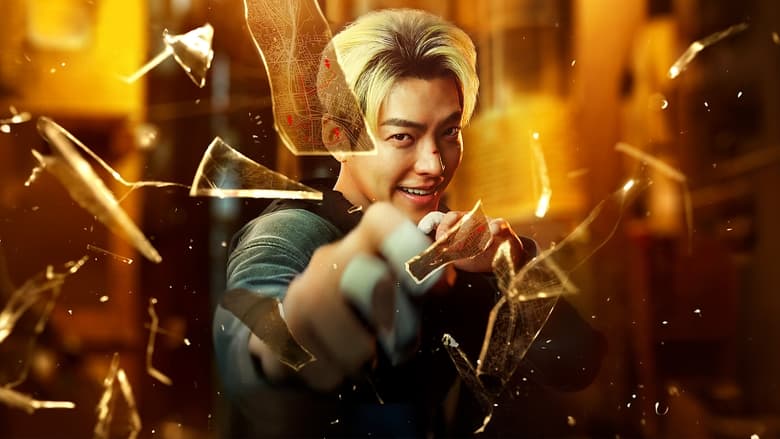
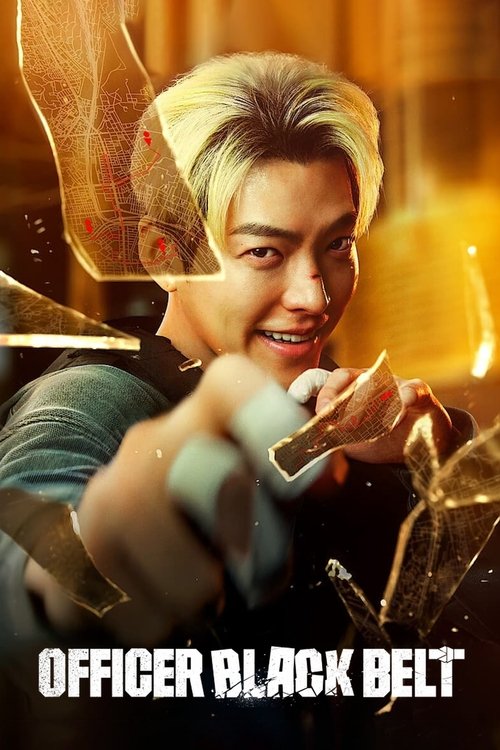
A high-octane blend of action and heart where a carefree martial arts prodigy transforms into a silent guardian. Amidst bone-crunching takedowns, it paints a poignant picture of everyday heroism, using a shift from bleached hair to somber tones to visualize a young man's maturation into a protector of the vulnerable.
Officer Black Belt

Officer Black Belt

무도실무관

"Strike crime before it strikes the world."

12 September 2024 South Korea 108 min ⭐ 7.7 (332)
Director: Jason Kim
Cast: Kim Woo-bin, Kim Sung-kyun, Lee Hyun-gul, Park Ji-yeol, Lee Jung-ok
Crime Action Comedy
The Transition from Youth to Adulthood The Inadequacy of the Justice System Everyday Heroism Brotherhood and Teamwork

Overview

Lee Jung-do is an ordinary young man with an extraordinary talent: he holds ninth-degree black belts in Taekwondo, Kendo, and Judo. Living a life guided solely by the pursuit of "fun," he spends his days delivering chicken for his father's restaurant and gaming with his friends. His life takes a sharp turn when he serendipitously saves a martial arts officer from an assault by a probationer, leading him to accept a temporary position as a martial arts officer (contract worker) for the Ministry of Justice.

Partnered with the dedicated but physically limited probation officer Kim Sun-min, Jung-do enters the high-stakes world of monitoring violent offenders who wear electronic ankle bracelets. What begins as a casual gig quickly becomes a trial by fire as they face Kang Ki-jung, a notorious child predator recently released from prison. Jung-do must shed his carefree attitude and harness his lethal skills to dismantle a child exploitation ring, realizing that true strength lies not in fighting for sport, but in protecting those who cannot protect themselves.
Core Meaning

At its heart, Officer Black Belt is a coming-of-age story wrapped in a crime thriller that explores the definition of true purpose. Director Jason Kim contrasts the protagonist's initial hedonistic philosophy—doing things only because they are "fun"—with the heavy, often unseen burden of maintaining societal safety. The film argues that heroism isn't about accolades but about the quiet, relentless willingness to stand between the innocent and the darkness. It also serves as a critique of the legal system's leniency toward sexual predators, suggesting that when the law falls short, the community's vigilance becomes the final line of defense.

Thematic DNA

The Transition from Youth to Adulthood 30%
The Inadequacy of the Justice System 25%
Everyday Heroism 25%
Brotherhood and Teamwork 20%

The Transition from Youth to Adulthood

Jung-do's journey is a clear metaphor for growing up. He starts as a "kid" chasing dopamine hits (gaming, sports) and evolves into a "man" bearing the weight of responsibility. This is visually tracked through his appearance and his shifting motivation from seeking pleasure to seeking justice.

The Inadequacy of the Justice System

The film acts as a social commentary on South Korea's handling of sex offenders. By showcasing a villain who reoffends immediately after a lenient 20-year sentence, the movie highlights the gaps in the legal framework that probation officers must dangerously fill.

Everyday Heroism

Unlike superhero movies, the heroes here are civil servants—probation officers and contract workers—who risk their lives daily without public recognition. The film elevates these overlooked roles, showing that protecting society is a grueling, thankless job.

Brotherhood and Teamwork

The bond between Jung-do and Sun-min evolves from a boss-employee dynamic to a brotherly partnership. Additionally, Jung-do's gamer friends using their tech skills to track the villain emphasizes that modern justice requires a diverse set of skills and community cooperation.

Character Analysis

Lee Jung-do

Kim Woo-bin

Archetype: The Reluctant Hero / The Prodigy
Key Trait: 9th Degree Black Belt (Sum of Taekwondo, Kendo, Judo)

Motivation

Initially 'Fun', later 'Justice' and 'Protection of the Innocent'.

Character Arc

Starts as an aimless slacker motivated only by fun. After witnessing the trauma of victims and the dedication of his mentor, he accepts the burden of being a protector, eventually becoming a full-time officer.

Kim Sun-min

Kim Sung-kyun

Archetype: The Mentor / The Compassionate Guardian
Key Trait: Unwavering Dedication

Motivation

To prevent recidivism and protect society from violent offenders.

Character Arc

Serves as the moral anchor. He recognizes Jung-do's potential and guides him not just in procedure, but in empathy. He suffers physical injury in the line of duty, reinforcing the stakes for Jung-do.

Kang Ki-jung

Lee Hyun-geol

Archetype: The Irredeemable Monster
Key Trait: Sociopathic Lack of Remorse

Motivation

Predatory Impulse and Greed.

Character Arc

A static force of evil. A serial child molester who uses his release to immediately return to predation, serving as the catalyst for Jung-do's transformation.

Symbols & Motifs

Hair Color (Blonde to Black)

Meaning: Symbolizes Jung-do's psychological maturation. His blonde hair represents his carefree, rebellious youth, while his return to natural black hair marks his acceptance of duty and the somber reality of his work.
Context: He starts the film with bleached hair but dyes it black after realizing the gravity of his role and the trauma inflicted on victims.

The Electronic Anklet

Meaning: Represents the tether between crime and society. For the criminals, it's a shackle; for the officers, it's a lifeline of information. It symbolizes the constant, invisible war waged to keep society safe.
Context: The device is the central plot mechanic, constantly beeping to drive the tension and action, reminding the characters that the threat is always present.

The Drone

Meaning: Symbolizes the modernization of vigilance and the power of friendship. It represents how Jung-do's old life (gaming/tech with friends) integrates with his new purpose.
Context: Used by Jung-do's friend 'Moisture' to track the villain when traditional police methods and physical pursuit fall short.

Memorable Quotes

Is it fun?

— Lee Jung-do

Context:

Asked when he is first offered the job of a martial arts officer, showing his reluctance to take on serious responsibility.

Meaning:

This question defines Jung-do's initial worldview. He refuses to engage in anything that doesn't provide immediate enjoyment, highlighting his immaturity at the start.
I want to do everything in my power. No regrets.

— Lee Jung-do

Context:

Spoken towards the climax when he decides to go all-in to catch the villain, despite the personal danger.

Meaning:

Marks the completion of his character arc. He no longer seeks fun, but fulfillment through duty. He understands that failure means innocent people suffer.
We protect the happiness of others.

— Kim Sun-min

Context:

Sun-min explaining the core value of their work to Jung-do during a quiet moment of mentorship.

Meaning:

Encapsulates the philosophy of the probation officer. It reframes their job not as 'catching bad guys' but as 'guarding the peace' of ordinary citizens.

Philosophical Questions

Does surveillance equal safety?

The film questions whether electronic anklets actually prevent crime or merely document it. It suggests that technology is useless without the human element—the officers willing to put their bodies on the line.

Can a person truly change?

The film presents a dichotomy: Jung-do changes for the better, finding purpose. However, the villains (especially Kang Ki-jung) are depicted as irredeemable monsters who reoffend immediately. This raises the question of whether rehabilitation is possible for all, or if some individuals are permanently broken.

Alternative Interpretations

While ostensibly a clear-cut "good vs. evil" story, the film can be interpreted as a critique of the state's monopoly on violence. Jung-do is effective not because he follows protocol, but because he is a "citizen hero" who initially operates on instinct. Some critics view the film's second half, where Jung-do and his gamer friends essentially act as vigilantes to capture the villain, as a cynical admission that the formal police force is too bureaucratic and slow to protect children effectively.

Cultural Impact

Officer Black Belt successfully shed light on the obscure but vital profession of "Martial Arts Officers" (Mudo-silmugwan) in South Korea. Before the film, many locals were unaware that specific civil servants were hired solely for their combat skills to partner with probation officers. Culturally, the film tapped into the intense national frustration regarding the recidivism of child sex offenders, echoing real-life outrages like the case of Cho Doo-soon. It sparked online discussions about the efficacy of electronic monitoring and the leniency of the Korean justice system towards sexual violence.

Audience Reception

The film was generally well-received, particularly for its action choreography and the charismatic performance of Kim Woo-bin. Audiences praised the "satisfying" takedowns and the wholesome "bromance" between the leads. However, a significant portion of critics and viewers noted a jarring tonal inconsistency. The shift from a lighthearted, comedic first half to a dark, disturbing second half involving child sexual exploitation was felt to be abrupt and sometimes tasteless. Despite this, it ranked highly on Netflix's global charts, resonating as an entertaining, if slightly uneven, popcorn thriller.

Interesting Facts

  • Kim Woo-bin gained 8kg (approx. 17 lbs) for the role to appear more physically imposing and 'swollen' like a real martial artist, rather than having a chiseled gym body.
  • The director, Jason Kim, was inspired to write the film after seeing a real person wearing an electronic ankle bracelet in his neighborhood.
  • The job of a 'Martial Arts Officer' (creates a two-person team with a probation officer) is a real profession in South Korea, distinct from regular police.
  • Kim Woo-bin trained in Taekwondo, Kendo, and Judo for three to four hours daily to convincingly portray a high-ranking master in all three disciplines.
  • This is the second collaboration between director Jason Kim and Kim Woo-bin, who was originally set to star in Kim's film 'Bloodhounds' before dropping out due to scheduling/health reasons (though he starred here later).

Easter Eggs

Ji Jin-hee Cameo

Actor Ji Jin-hee makes a surprise appearance as the President (or high-ranking official) at the commendation ceremony. He previously played the President in the Korean remake of Designated Survivor, creating a meta-reference for fans.

Midnight Runners Parallels

The film shares a director (Jason Kim) with Midnight Runners. The dynamic of two men running through the night to solve crimes the police can't handle is a direct stylistic nod to his previous hit.

Lee Yang-ho's 'Topographic' Pants

One of the criminals wears distinctive pants with topographic lines, which internet sleuths identified as a specific streetwear brand, adding a layer of realism to the costume design.

⚠️ Spoiler Analysis

Click to reveal detailed analysis with spoilers

Frequently Asked Questions

Explore More About This Movie

Dive deeper into specific aspects of the movie with our detailed analysis pages

Comments (0)

Leave a comment

No comments yet. Be the first to share your thoughts!