Skip to content
Ice Cream Man
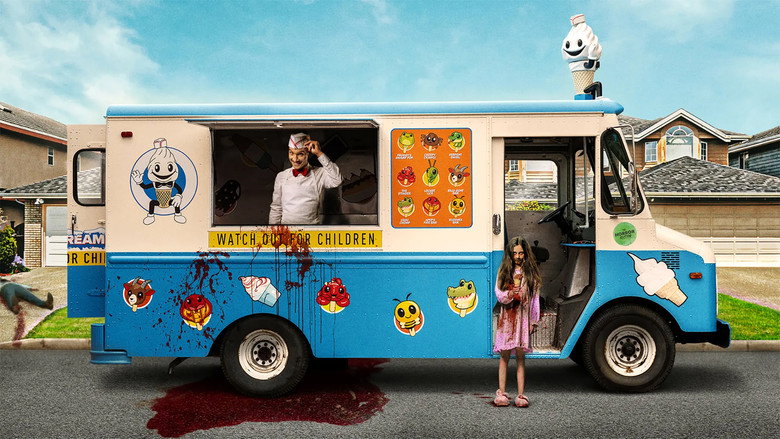
A sugar-bright splatter comedy where a Rockwell-pretty summer town curdles into carnage. Gleeful, nasty and absurd, it feels like a sunny playground drenched in strawberry-red syrup and lit by a jingle that won't stop playing.
Ice Cream Man

Ice Cream Man

"We all scream."

03 August 2026 United States of America 86 min 5.3 (232)

Director: Eli Roth

Cast: Ari Millen, Charlie Zeltzer, Shiloh O’Reilly, Kiori Mirza Waldman, Sarah Abbott

Thriller Comedy Horror Corrupted innocence Revenge and cyclical violence Kids versus adults Manipulation and false authority Gore as comedy
Budget: $5,500,000
Box Office: $7,788,193

Overview

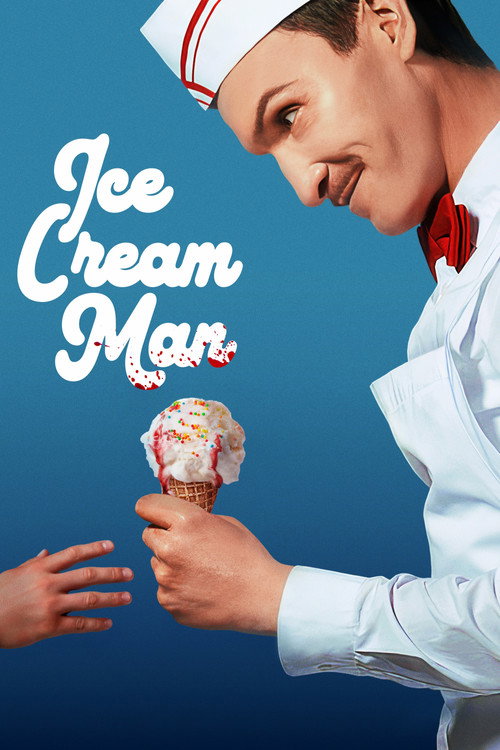
Ice Cream Man (2026) is a black-comedy slasher written by Eli Roth and Noah Belson and directed by Roth. It was the first film from Roth's indie label The Horror Section. A strange driver in a garishly decorated ice cream truck rolls into an idyllic small town and hands out frozen treats to the local kids. They quickly turn into blank-eyed, discolored-lipped little killers who go after the adults around them.

The story follows siblings Jared (Charlie Zeltzer) and Lizzie (Sarah Abbott), who see their friends and classmates become mindless murderers. Ari Millen plays the title character. Eli Roth himself plays their father, Marty. A local priest (Benjamin Byron Davis) tells a backstory about injustice, revenge and a necromancer. He gives the surviving kids a convoluted set of instructions for breaking the curse.

The film runs a lean 86 minutes and is unrated. It is built around a series of practical-effects set pieces, including a school massacre. The tone is closer to Looney Tunes than to dread, and the film is set almost entirely in bright daylight.
Core Meaning

The film is not a sober message movie. Roth has said he wanted something that "doesn't play by Hollywood's rules," and he made it independently, unrated and with no studio constraints. Its core idea is to turn the innocence of childhood and nostalgic Americana into a gleeful, cartoonish bloodbath. Roth describes the kids as manipulated innocents who think they are in a cartoon, not as evil.

Underneath the gore sits a cycle of revenge and inherited guilt. The past injustice, the manipulative adult figure and the final twist suggest that adults' sins and lies get paid for by children, and that trusted authority can be a con. Most critics found this subtext thin. Several called the film empty calories.

Thematic DNA

Corrupted innocence 30%
Revenge and cyclical violence 25%
Kids versus adults 20%
Manipulation and false authority 15%
Gore as comedy 10%

Corrupted innocence

Sunny suburbia, a jingle and ice cream are turned into instruments of slaughter. Kids who play with severed heads like toys are treated as cartoon-like, not evil.

Revenge and cyclical violence

The backstory involves a travesty of justice and revenge carried out through a necromancer. Breaking the curse requires more gore, so violence feeds on itself.

Kids versus adults

Parents, teachers and authority figures are mostly oblivious or condescending, and the children turn on them. Even the siblings' ultimate task involves their parents.

Manipulation and false authority

The kids are puppets of the Ice Cream Man, and the priest delivers instructions that turn out to serve another agenda.

Gore as comedy

Escalating shock turns into laughter. Roth says audiences 'give over to the violence', and the film treats carnage as slapstick.

Character Analysis

Jared Mayfair

Charlie Zeltzer

Archetype: Reluctant hero Key Trait: Resourceful

Motivation

To survive and save his sister and what remains of his community.

Character Arc

He starts as a teen in a family dispute over his summer plans, then becomes a survivor who has to fight a town of possessed children.

Lizzie Mayfair

Sarah Abbott

Archetype: Sharp-tongued sidekick/co-hero Key Trait: Sarcastic

Motivation

Survival and protecting her brother.

Character Arc

She is a sardonic sister who joins Jared in trying to complete the priest's ritual.

All 5 characters and cast

Symbols & Motifs

The ice cream and its discolored lips

Meaning:

Temptation and possession disguised as innocent pleasure.

Context:

Treats served by the truck turn kids into trance-like killers, leaving visible discoloration around their mouths.

The jingle

Meaning:

Nostalgia turned into a control signal.

Context:

The truck's tune accompanies the trance. The film ends on a Snoop Dogg ice cream song built on the 'I scream, you scream' chant.

The Norman Rockwell small town

Meaning:

The myth of American innocence hiding rot beneath.

Context:

Daylight, primary colors and a sunny setting contrast with the gore, in the manner of Pee-wee's Playhouse splattered with blood, as Roth described it.

The priest and the church

Meaning:

Institutional trust and false guidance.

Context:

The priest hides the kids and gives them a convoluted ritual to end the curse.

The school

Meaning:

Order and authority overrun by children.

Context:

The film's central massacre happens at an elementary school, including children pounding on a glass hallway wall.

Memorable Quotes

I Scream. You Scream. We Scream. ICE CREAM!
— Snoop Dogg (end-credits song)

Context

It plays in the post-credits rap written and sung by Snoop Dogg.

Meaning

The classic chant becomes the film's closing hook and signals its irreverent, self-aware tone.

He'll get what's coming to him. Bullies always do.
— A mother

Context

A mother reassures her son early on.

Meaning

A throwaway line that foreshadows the film's theme of comeuppance.

All 3 quotes

Philosophical Questions

Can children be held responsible when they are manipulated into violence?

Roth insists the kids are innocents who think it is a cartoon, so culpability falls on the manipulators.

Does breaking a cycle of revenge require more violence?

The ritual requires the heroes to commit gore themselves, which implicates them in the cycle.

Should we trust authority and received wisdom?

The priest's complicated instructions, and the twist behind them, invite suspicion of figures who claim to know the answer.

How It Ends

Alternative Interpretations

Viewers read it as pure, mindless splatter comedy to be consumed with beer. Others read it as an allegory about adult guilt, whether institutional (the priest's role) or inherited, falling on children. One Letterboxd reviewer went further and read it as xenophobic, since a foreign-accented villain controls children. That reading is contested and not the director's stated intent. The open ending, with its shocker twist, invites readings of a sequel setup or of a shaggy-dog joke on the audience.

Full ending explanation

Cultural Impact

The film launched The Horror Section, Roth's label that invites fans to invest and pursues unrated, studio-free horror. Roth pitched it as the sort of film no studio would touch. Critics compared it to Home Alone mixed with Hostel, and others to Weapons. Roth himself compared the school scene to a Spielbergian beach-storming set piece.

Reception was largely negative: Rotten Tomatoes showed roughly 25% across about 125 reviews at the time of research. Controversy centered on the generative AI use, a scene some critics found racially insensitive, and Roth's jokes. The Snoop Dogg end song was a talking point, and the two are developing a Snoop Dogg-starring project, Don't Go in That House, Bitch!.

Audience Reception

Reception was divided but mostly negative. Praised: the practical gore and makeup work, the commitment to absurdity, the school massacre set piece and the Snoop Dogg end credits. Several critics called it satisfying if empty. Criticised: thin story and dialogue, an unclear villain motive, cheap-looking effects, an uneven third act and a sidelined title character. Some called the ending anticlimactic. Controversial: the racially charged death scene, some jokes and the AI use. Verdict: a diehard-slasher-fans-only trifle, though some enjoyed it as a communal, drunken-night gore comedy.

Interesting Facts

  • Roth shot the entire feature in 19 days, and he said the school location was available for only about 10 of them.
  • The big school massacre had to be filmed in one day.
  • A shot of an army of children pounding on a glass hallway was done in one handheld take, because a scheduling snafu left him two minutes with about a hundred kids.
  • Roth has said he had the idea for over twenty years, and studios were too afraid of his early drafts.
  • Principal photography took place in mid-2025 in Hamilton, Ontario, and wrapped in September.
  • Roth and Noah Belson reportedly wrote the script back in 2002, after Cabin Fever.
  • The film was made for a reported $5.5 million and earned about $7.6 million.
  • In August 2026 Roth confirmed that generative AI was used in select scenes, after earlier saying several were hand-drawn.
  • Roth has said he wanted a movie that starts like an Amblin film and then is splattered with blood.
  • The film is unrelated to the 1995 Clint Howard film of the same name.

Frequently Asked Questions

Explore More About This Movie

Dive deeper into specific aspects of the movie with our detailed analysis pages

Comments (0)

Leave a comment

No comments yet. Be the first to share your thoughts!

Similar Movies