Captain Fantastic
"He prepared them for everything except the outside world."
Overview
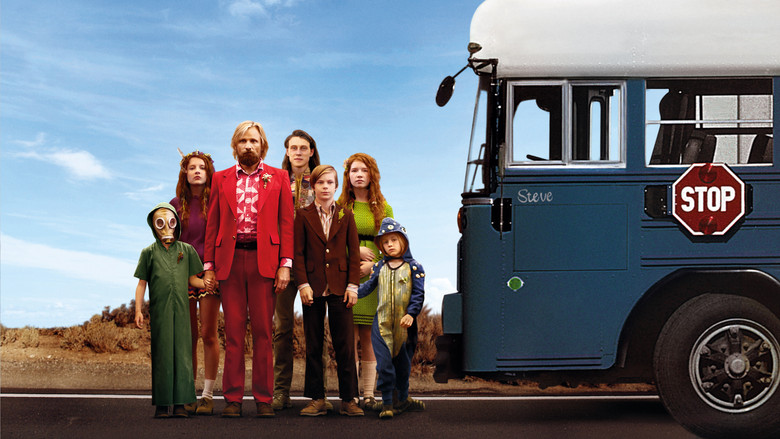
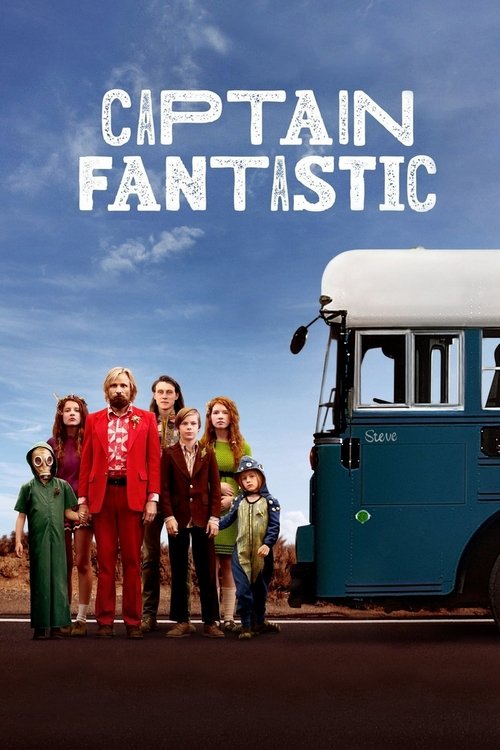
"Captain Fantastic" tells the story of Ben Cash (Viggo Mortensen), a father raising his six children off-the-grid in the dense forests of the Pacific Northwest. He and his wife, Leslie, have created a rigorous homeschooling curriculum that includes survival skills, advanced sciences, and radical political theory, all while shunning mainstream American society and consumerism. Their self-sufficient paradise is shattered when Leslie, who had been hospitalized for bipolar disorder, takes her own life. This tragedy forces Ben and his children to leave their isolated world and embark on a road trip to New Mexico to fulfill Leslie's final wishes, which are in direct conflict with her conventional parents' plans.
The journey exposes the children to the complexities and contradictions of the outside world for the first time, leading to both humorous and poignant culture clashes. The children, while intellectually brilliant, are socially inept, leading to awkward and challenging encounters. Ben's unwavering commitment to his ideals is tested by his children's burgeoning desires for a different life and the harsh judgment of his in-laws, forcing him to confront the potential flaws in his parenting philosophy.
Core Meaning
The central message of "Captain Fantastic" revolves around the complexities of parenting and the search for a balanced way of life. Director Matt Ross explores the inherent conflict between idealism and the practicalities of raising children in the modern world. The film doesn't offer easy answers but instead presents a nuanced critique of both counter-cultural extremism and mainstream societal norms. It questions what it truly means to be a good parent: Is it protecting children from the perceived ills of society, or preparing them to navigate its complexities? Ultimately, the film suggests that the best path lies in a synthesis of different approaches, embracing knowledge and critical thinking while also allowing for social integration and emotional growth.
Thematic DNA
Parenting and Education
The film is a deep exploration of unconventional parenting methods versus traditional upbringing. Ben's rigorous physical and intellectual training produces exceptionally intelligent and capable children, yet leaves them socially and emotionally unprepared for the outside world. This is starkly contrasted with their cousins, who are engrossed in video games and have a superficial understanding of concepts their youngest sibling can articulate with ease. The film poses critical questions about what constitutes a 'good' education and whether protecting children from societal norms ultimately helps or hinders them.
Society and Nonconformity
"Captain Fantastic" directly critiques capitalism, consumerism, and mainstream American culture. The Cash family's lifestyle is a deliberate rejection of these values, symbolized by their celebration of "Noam Chomsky Day" instead of Christmas. Their journey into the "real world" highlights the absurdity and hypocrisy they perceive in modern society. However, the film also exposes the limitations of their isolation, suggesting that complete withdrawal is not a sustainable or entirely healthy solution.
Grief and Family
The catalyst for the family's journey is the tragic suicide of Leslie, the mother. Her death forces the family to confront not only the outside world but also their own internal grief and fractured relationships. Ben's grief is compounded by his conflict with his father-in-law, who blames him for Leslie's death. The film portrays how this shared loss both tests and ultimately strengthens their family bond, forcing them to re-evaluate their way of life and find a new way forward together.
Idealism vs. Reality
Ben's character embodies a fierce and uncompromising idealism. He has built a utopia for his family based on his philosophical and political beliefs. However, the journey forces him to confront the reality that his paradise has its own set of problems and has, in some ways, failed his children. The film explores the painful but necessary process of tempering one's ideals with the complexities and compromises of the real world, culminating in Ben's decision to find a middle ground for his family's well-being.
Character Analysis
Ben Cash
Viggo Mortensen
Motivation
Ben is motivated by a deep love for his children and a profound disillusionment with modern society. He wants to raise them to be "philosopher kings"—critical thinkers who are physically strong and morally uncorrupted by capitalism and consumer culture. His actions are driven by the desire to honor his late wife's wishes and protect his family's unique way of life.
Character Arc
Ben begins as a confident, uncompromising patriarch who believes he has created a perfect world for his children. The journey forces him to confront the flaws in his ideology and the ways he has endangered and isolated his kids. His arc is one of painful self-realization, moving from rigid idealism to a more flexible and compassionate understanding of parenting, ultimately choosing a path of compromise for the well-being of his family.
Bodevan 'Bo' Cash
George MacKay
Motivation
Bo's motivation shifts from pleasing his father to seeking knowledge and experiences beyond what their isolated life can offer. He craves social interaction, particularly with people his own age, and yearns to test his intellect in a formal academic setting. His primary drive becomes the desire for a more 'normal' life and to understand a world he has only read about in books.
Character Arc
As the eldest son, Bo is the most accomplished product of his father's education, having been accepted into multiple Ivy League universities. However, he is also the first to acutely feel the social deficiencies of his upbringing. His arc involves challenging his father's authority and seeking his own path, which includes experiencing the outside world and pursuing higher education. He moves from being a loyal disciple to an independent young man forging his own identity.
Rellian Cash
Nicholas Hamilton
Motivation
Rellian is motivated by a desire for normalcy and resentment towards his father's controlling nature. He blames Ben for his mother's absence and death and rejects the rigorous, isolated lifestyle they lead. He is drawn to the comforts and social norms of mainstream society that he has been denied.
Character Arc
Rellian is the most openly rebellious of the children. He directly challenges Ben's authority and expresses a strong desire for a conventional life, even preferring to live with his conservative grandparents. His arc is one of dissent; he questions the family's lifestyle and is the first to articulate the feeling of being a "freak." He represents the cracks in Ben's utopian vision and pushes the family towards a necessary re-evaluation.
Jack Bertrang
Frank Langella
Motivation
Jack's motivations are rooted in grief, anger, and a deeply ingrained belief in societal norms. He genuinely believes Ben's lifestyle is dangerous and has harmed his grandchildren. His primary goal is to gain custody of the children to provide them with what he considers a stable, safe, and proper upbringing, and to honor his daughter's memory in a way he understands.
Character Arc
Jack is presented as the primary antagonist, a wealthy, conventional man who despises Ben and his lifestyle. He blames Ben for his daughter Leslie's death and wants to give her a traditional burial against her wishes. Throughout the film, his rigid opposition softens slightly as his genuine love and concern for his grandchildren become more apparent. He remains a foil to Ben but is shown to be acting from a place of grief and a desire to protect his family in the only way he knows how.
Symbols & Motifs
Steve the Bus
The family's converted school bus, named "Steve," symbolizes their self-contained, mobile world and their journey from isolation to engagement with society. It is their fortress and their vessel, carrying their counter-cultural ideals into the heart of mainstream America.
Steve is the primary setting for the family's road trip. It's filled with books, musical instruments, and survival gear, representing the unique culture Ben has created. The journey on Steve is both literal and metaphorical, as they travel across the country and navigate the challenging terrain of societal norms.
Hunting
The act of hunting, particularly the opening scene where Bo kills a deer, symbolizes a rite of passage into adulthood within the family's value system. It represents self-sufficiency, a connection to nature, and the raw, unsanitized reality of life and death that Ben exposes his children to.
The film opens with this ritualistic hunt. Ben's declaration, "Today the boy is dead, and in his place is a man," establishes the family's core values from the outset. This contrasts sharply with the pre-packaged, sanitized food they encounter later in the film.
Noam Chomsky Day
The celebration of Noam Chomsky's birthday instead of Christmas is a potent symbol of the family's rejection of mainstream cultural and religious traditions in favor of intellectual and political ideals. It highlights their commitment to critical thinking and anti-establishment principles.
This is mentioned as a core part of the family's unique culture. Rellian's frustration with this tradition—"Why can't we celebrate Christmas like the rest of the entire world?"—is an early sign of his desire for a more conventional life.
Ben's Beard
Ben's long, untamed beard is a visual signifier of his wilderness existence and his identity as a non-conformist patriarch. Shaving it off represents a significant turning point and a symbolic shedding of his rigid idealism in favor of a more compromised and integrated approach to life.
Towards the end of the film, after a series of crises that challenge his beliefs, Ben shaves his beard. This act coincides with his decision to allow his children to live with their grandparents, signifying his willingness to change for their sake.
Memorable Quotes
If you assume that there is no hope, you guarantee that there will be no hope. If you assume that there is an instinct for freedom, there are opportunities to change things, then there's a possibility you can contribute to making a better world.
— Ben Cash (quoting Noam Chomsky)
Context:
Ben and the children are discussing their ideals. This quote is used to articulate the intellectual and moral principles that guide their unconventional life in the wilderness.
Meaning:
This quote, attributed to Noam Chomsky, encapsulates the philosophical foundation of Ben's worldview. It speaks to a belief in human agency and the importance of maintaining hope and striving for a better future, even against overwhelming odds. It is the ideological core of his educational and parenting philosophy.
We're defined by our actions, not our words.
— Kielyr Cash
Context:
This line is spoken during a moment of decision for the family, highlighting their action-oriented philosophy as they prepare to challenge their grandfather's plans for their mother's funeral.
Meaning:
This simple, powerful statement reflects a core tenet of the family's upbringing. Ben has taught his children that what they do is more important than what they say, emphasizing self-reliance, capability, and integrity. It shows the depth of the philosophical education the children have received.
I know nothing! I am a freak because of you! You made us freaks! And mom knew that! She understood! Unless it comes out of a f***ing book, I don't know anything about anything!
— Bodevan 'Bo' Cash
Context:
Bo shouts this at Ben after a clumsy and failed attempt to connect with a girl in a trailer park. The experience makes him painfully aware of how his upbringing has isolated him socially.
Meaning:
This emotional outburst from Bo is a crucial turning point. It represents the culmination of his frustration with his social ineptitude despite his vast intellectual knowledge. It is a direct and painful critique of Ben's parenting, highlighting the significant gap between theoretical knowledge and practical social skills.
Live each day like it could be your last. Drink it in. Be adventurous, be bold, but savor it. It goes fast.
— Ben Cash
Context:
Ben says this to Bo as part of a series of life lessons, just before Bo is about to embark on a personal journey, showing a supportive and loving side of his character.
Meaning:
This piece of fatherly advice reveals the more tender and humanistic side of Ben's philosophy. Beyond the rigorous training and political theory, he wants his children to experience life fully and appreciate its fleeting nature. It's a moment of pure, heartfelt guidance.
Philosophical Questions
What is the ideal way to raise a child?
The film's central conflict is a direct exploration of this question. It contrasts Ben's radical, off-grid, intellectually rigorous approach with the mainstream, suburban, consumer-driven parenting style of his sister's family. Neither is presented as perfect. Ben's children are brilliant but socially crippled, while his nephews are socially adjusted but intellectually disengaged. The film forces the audience to question their own assumptions about education, socialization, and what it means to prepare a child for the world, ultimately suggesting that the answer lies in a balance between protection and exposure.
Is it possible to live authentically in a society you reject?
Ben and his family attempt to live a life of complete authenticity based on their anti-capitalist and anti-consumerist values by withdrawing from society. However, the death of Leslie forces them back into the world they despise, revealing the near-impossibility of complete separation. The film explores the inherent paradox of their situation: they rely on the very society they reject for certain goods and, ultimately, for their children's future (like college). It questions whether true authenticity comes from radical isolation or from finding a way to live by one's values within the flawed framework of society.
Where is the line between protecting children and harming them?
This question is at the heart of the debate surrounding Ben's parenting. He aims to protect his children from what he sees as the intellectual and moral poison of modern culture. However, this protection leads to a dangerous naivety about social interaction and physical risks (as seen when Vespyr falls from the roof). His father-in-law, Jack, argues that this 'protection' is actually a form of abuse. The film pushes the audience to consider when well-intentioned idealism crosses the line into dangerous neglect.
Alternative Interpretations
One interpretation of the film sees Ben as a deeply selfish and abusive father whose narcissism leads to his wife's death and endangers his children. This perspective views his rigorous training not as empowering but as a form of control, isolating his children to mold them into extensions of his own ideology. The children's social ineptitude and Rellian's rebellion are seen as clear evidence of the harm he has caused. The ending, in this view, is not a healthy compromise but a tragic capitulation where Ben only makes minor adjustments after nearly losing everything.
Another reading of the film frames it as a critique of modern masculinity. Ben's initial approach is hyper-masculine, focused on physical strength, survival, and intellectual dominance. His emotional journey can be seen as a deconstruction of this toxic masculinity, as he learns to embrace vulnerability, admit his mistakes, and prioritize his children's emotional needs over his rigid ideals. His act of shaving his beard symbolizes the shedding of this old identity. The final scene, showing a quieter, more collaborative family life, represents a more balanced and healthy form of fatherhood.
Cultural Impact
"Captain Fantastic" resonated with audiences and critics for its timely exploration of parenting in a hyper-connected, consumerist society. Released in 2016, it tapped into contemporary anxieties about technology's role in childhood and a growing interest in alternative lifestyles like 'off-grid' living and homeschooling. The film doesn't romanticize this choice but presents a balanced, thought-provoking debate, making it a frequent subject of discussion among parents and educators. It draws on a tradition of American literature and cinema that critiques societal norms and champions individualism, echoing works like Thoreau's "Walden" and films like "Into the Wild" and "The Mosquito Coast". Critics praised the film for its intelligent script and the powerful, nuanced performance by Viggo Mortensen, which earned him nominations for an Academy Award, a Golden Globe, and a BAFTA. While not a massive box office hit, the film became a beloved independent feature, celebrated for its heart, humor, and its willingness to tackle complex philosophical questions without providing easy answers.
Audience Reception
Audience reception for "Captain Fantastic" was largely positive, with many viewers praising its unique premise, emotional depth, and thought-provoking themes. Viewers frequently highlighted Viggo Mortensen's powerful performance as the film's anchor, finding his portrayal of Ben both inspiring and flawed. The humor derived from the family's culture-clash moments was a significant point of praise, as was the film's ability to balance comedy with genuine pathos. However, some viewers criticized the film for what they perceived as a somewhat idealized or unrealistic portrayal of the children's abilities. The ending sparked debate, with some finding the final compromise satisfying and hopeful, while others felt it was an overly neat resolution to the complex issues raised throughout the film.
Interesting Facts
- Writer-director Matt Ross drew from his own experiences growing up in 'alternative-living communities' when creating the film. The genesis of the story came from him questioning his own parenting choices.
- Viggo Mortensen was Matt Ross's first choice for the role of Ben. To prepare, Mortensen did not use a stunt double for the rock-climbing scenes, despite his fear of heights.
- The young actors went through a boot camp to learn the skills their characters possessed, including rock climbing, martial arts, and knife skills. Annalise Basso and Samantha Isler learned to butcher a sheep.
- Viggo Mortensen contributed many of his own personal items to the set, including books, clothes, and tools, to make the family's home, 'Steve' the bus, feel more authentic.
- The film received a ten-minute standing ovation at its premiere at the Cannes Film Festival, where Matt Ross won the Best Director prize in the Un Certain Regard section.
- George MacKay (Bo) did four hours of yoga a day to prepare for his role.
- The family bus was affectionately named 'Steve'.
⚠️ Spoiler Analysis
Click to reveal detailed analysis with spoilers
Frequently Asked Questions
Explore More About This Movie
Dive deeper into specific aspects of the movie with our detailed analysis pages
Comments (0)
No comments yet. Be the first to share your thoughts!