Skip to content
Inazuma Eleven
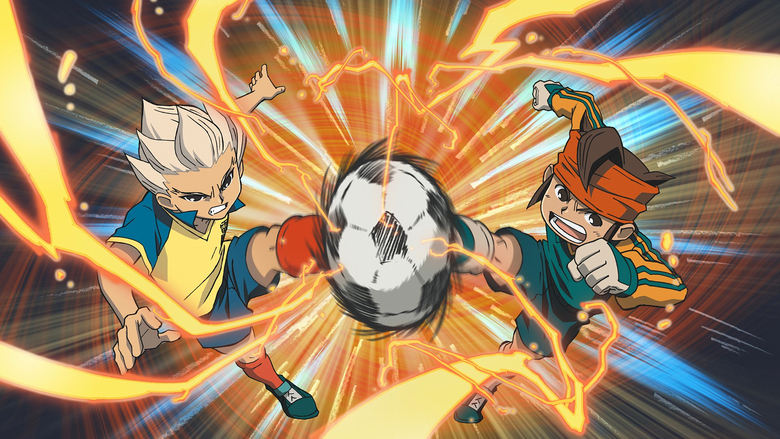
A high-octane sports fantasy radiating unyielding passion, where lightning bolts tear through crackling stadiums as fiercely loyal heartbeats forge an invincible bond upon the green canvas of the pitch.
Inazuma Eleven

Inazuma Eleven

イナズマイレブン

05 October 2008 — 19 March 2014 Japan 4 season 268 episode Ended 8.0 (314)

Cast: Haruka Tomatsu, Junko Takeuchi, Mitsuki Saiga, Hiroyuki Yoshino, Yu Kobayashi

Animation Sci-Fi & Fantasy Pure Passion vs. Utilitarian Exploitation Overcoming Psychological Trauma and Divided Identity Redemption and the Power of Friendship Continuous Self-Transcendence Beyond Limits Generational Legacy and Inherited Spirit

Overview

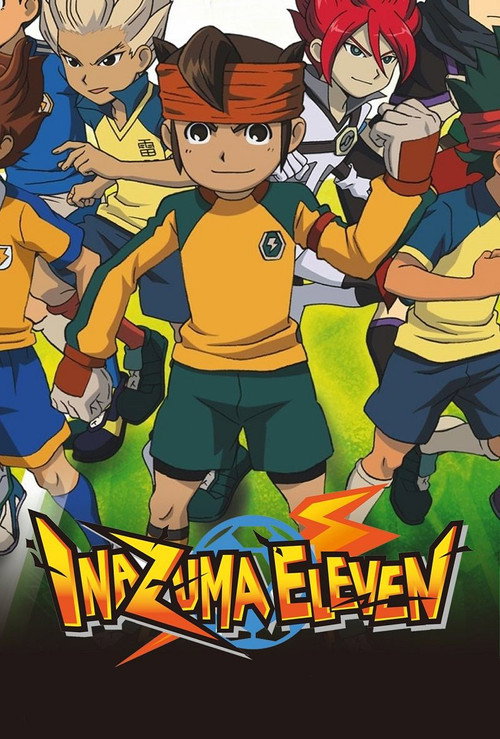
Inazuma Eleven is a sports-fantasy anime series created by Level-5 and animated by OLM. The saga begins at Raimon Junior High, where Mamoru Endou—a relentlessly cheerful goalkeeper—struggles to keep a neglected seven-member soccer club from being disbanded. The trajectory changes when elusive star striker Shuya Goenji transfers to Raimon. Driven by Endou's infectious determination, the team recruits new talent, battles tactical powerhouse Teikoku Academy, and competes in the prestigious Football Frontier tournament to claim national glory.

As the narrative expands beyond domestic high school competition, Raimon faces an apocalyptic crisis. Mysterious entities calling themselves "Aliea Gakuen" claim to be extraterrestrial soccer players and begin demolishing schools across Japan with super-powered soccer balls. To counter this threat, Raimon boards the mobile Inazuma Caravan, traveling across the nation to recruit Japan’s strongest youth players, face trauma and psychological burnout, and restore peace to the sport.

In the final major saga, the focus shifts to the global stage as Japan’s elite players unite to form Inazuma Japan in the Football Frontier International (FFI). Facing formidable teams from England, Italy, Argentina, Brazil, and Africa, the team uncovers global political military conspiracies and dark syndicates attempting to manipulate youth athletics. Through every trial, the series maintains an overarching narrative of growth, unity, and the pure, uncorrupted love of sports.
Core Meaning

The central philosophy of Inazuma Eleven is encapsulated in Endou’s iconic battle cry: "Sakka Yarouze!" ("Let's play soccer!"). Through its fantastical super-dimensional soccer matches, the creators at Level-5 express that genuine passion, emotional vulnerability, and collective bonds triumph over cold utilitarianism, military exploitation, and artificial power shortcuts.

The show demonstrates that sports are not merely about winning or military dominance; they serve as a universal language capable of healing personal trauma, redeeming former villains, and connecting people across cultures and generations. True strength stems not from isolation or artificial enhancement, but from trusting one's comrades and playing with pure heart.

Thematic DNA

Pure Passion vs. Utilitarian Exploitation 30%
Overcoming Psychological Trauma and Divided Identity 25%
Redemption and the Power of Friendship 20%
Continuous Self-Transcendence Beyond Limits 15%
Generational Legacy and Inherited Spirit 10%

Pure Passion vs. Utilitarian Exploitation

Throughout all seasons, the show contrasts Endou’s love for soccer with villains who view sports as a tool for political control, military dominance, or social engineering. Kageyama Reiji uses dirty tactics and drugs; Aliea Gakuen uses the Aliea Meteorite for power; Garshield Bayhan uses soccer to trigger global wars. Pure passion repeatedly dismantles these utilitarian schemes.

Overcoming Psychological Trauma and Divided Identity

Characters carry deep emotional wounds: Goenji’s guilt over his sister’s coma, Fubuki’s Dissociative Identity Disorder following his family's death in an avalanche, and Kidou’s pressure under Kageyama’s abuse. Growth occurs when characters confront their inner darkness, accept their vulnerabilities, and integrate their pasts.

Redemption and the Power of Friendship

Antagonists are rarely irredeemable. Opponents like Kidou, Fudou, Hiroto, and even Kageyama himself find emotional liberation through Endou’s unwavering empathy and refusal to give up on people. Rivals consistently transform into Raimon’s most loyal brothers-in-arms.

Continuous Self-Transcendence Beyond Limits

When facing seemingly impassable walls, characters do not rely on shortcuts; they evolve through physical grit and mental breakthroughs. This is visually represented by the evolution of Hissatsu techniques—moving from basic maneuvers to divine, super-dimensional creations.

Generational Legacy and Inherited Spirit

Endou’s journey is anchored by the secret training notebooks left by his grandfather, Daisuke Endou. As Endou deciphers his grandfather’s wisdom, he becomes a guiding light for his own peers, passing the torch of inspiration to future generations.

Character Analysis

Mamoru Endou

Junko Takeuchi

Archetype: Inspirational Hero / Pure-Hearted Captain Key Trait: Unshakeable optimism, grit, and charismatic leadership

Motivation

To play soccer with everyone and protect his teammates' joy, evolving into proving that genuine love for sports conquers all corruption.

Character Arc

Evolves from an enthusiastic kid struggling to field a seven-player team into a legendary international captain who leads Inazuma Japan to the world championship.

Shuya Goenji

Hirofumi Nojima

Archetype: Ace Striker / Lone Catalyst Key Trait: Cool composure, fierce loyalty, and explosive strike power

Motivation

Protecting his family and using his sharp kicks to wake up struggling teammates from psychological slumps.

Character Arc

Initially quit soccer due to grief and guilt over his sister Yuka's accident. Joins Raimon as their ultimate scoring weapon, undergoes forced exile during the Aliea arc, and returns as the team's unwavering emotional anchor.

All 5 characters and cast

Symbols & Motifs

Daisuke’s Notebook

Meaning:

Symbolizes inherited passion, secret wisdom, and unconventional perseverance.

Context:

Its scribbled drawings and cryptic instructions force Endou to think outside traditional training boundaries.

The Lightning Bolt (Inazuma)

Meaning:

The defining emblem of Raimon High, symbolizing electrifying kinetic energy, sudden illumination in darkness, and explosive power.

Context:

Serves as the emblem of Raimon High and represents the explosive power generated when team members synchronize.

The Soccer Ball

Meaning:

The universal bridge of communication and a truth-teller.

Context:

Acts by striking characters physically or metaphorically to snap them out of slumps, corruptions, or hesitation.

Goalkeeper Gloves & Hand Hissatsus (God Hand, Majin the Hand, God Catch)

Meaning:

Represent protection, duty, and carrying the heart and emotional hopes of the entire team on one's shoulders.

Context:

Used by Endou in crucial moments to shield the team and anchor their collective resolve.

The Inazuma Caravan

Meaning:

Symbolizes journey, resilience, cross-country unity, and finding family on the road.

Context:

Serves as the mobile sanctuary during Season 2 as Raimon travels across Japan recruiting allies.

Kageyama’s Shackles / Aliea Meteorite

Meaning:

Motifs representing dark shortcuts to power, artificial perfection, and toxic obsession.

Context:

Utilized by antagonists to enforce obedience and corrupt youth players, ultimately destroying the user's spirit.

Memorable Quotes

サッカーやろうぜ!
— Mamoru Endou

Context

Spoken repeatedly across all seasons when inviting allies, rivals, and enemies to connect on the field.

Meaning

The defining catchphrase of the entire franchise, epitomizing Endou's invitation to pure, unadulterated joy.

吹き荒れろ! エターナルブリザード!
— Shirou Fubuki / Atsuya

Context

Season 2 during match encounters against Aliea Gakuen teams like Gemini Storm and Epsilon.

Meaning

The aggressive chant accompanying Fubuki's signature ice shot, symbolizing Atsuya's dominant, fierce spirit.

All 5 quotes

Episode Highlights

The Final, Part Two: Divinity vs Magic!

S1E26

The dramatic finale of Football Frontier. Raimon overcomes Zeus's "Aqua of Gods" drug enhancement as Endou unleashes Majin the Hand.

Significance:

Concludes the Football Frontier tournament arc and establishes Raimon as national champions through pure effort.

The Explosive Flames of Revival!

S2E26

Goenji makes his triumphant return to Raimon in Okinawa, destroying Epsilon Kai with Fire Tornado and Bakunetsu Storm.

Significance:

Restores Raimon's ace striker and emotional core during their desperate conflict against Aliea Gakuen.

The Final Battle! The Genesis - Part 1

S2E35

Fubuki's psychological climax. He realizes he doesn't need Atsuya to be perfect, merges his identities, and unleashes Wolf Legend.

Significance:

Resolves Fubuki's psychological trauma, creating a unified player capable of leading Raimon to defeat Genesis.

The Dark Emperors

S2E39

Raimon returns home to find their former benched/injured teammates corrupted by the Aliea Meteorite. Endou reclaims their hearts through soccer.

Significance:

Serves as the climax of Season 2, demonstrating that genuine love for sports overcomes corruptive psychological trauma.

The Final Battle! Reiji Kageyama!

S3E39

Orpheus vs. Team Garshield. Kageyama experiences emotional redemption through Italian captain Fidio Ardena before his fatal tragic exit.

Significance:

Provides emotional resolution for the overarching antagonist Reiji Kageyama before his demise.

Final Truth! Number One in the World!!

S3E57

FFI World Championship Finals: Inazuma Japan vs. Little Gigant. Endou masters God Catch against his grandfather Daisuke's team to win the world title.

Significance:

Marks the culmination of Endou's global journey, proving his team's spirit matches his grandfather's legacy.

Graduation Ceremony / Kickoff to the Future

S3E60

The emotional original series finale. The original Raimon squad plays a nostalgic friendly match before graduating and looking toward the future.

Significance:

Concludes the original trilogy arc with a celebration of enduring friendship and future possibilities.

Philosophical Questions

Does the purity of an endeavor lie in the process or the result?

Explored through Raimon's refusal to use performance enhancements versus Zeus and Aliea Gakuen.

Can a person ever be fully redeemed from abusive patronage?

Explored through Kidou and Fudou breaking away from Kageyama's psychological conditioning.

Is individual perfection superior to harmonious imperfection?

Explored through Fubuki's reconciliation between his own defensive style and Atsuya's aggressive striking.

Alternative Interpretations

Sociopolitical Allegory: Critics note that Kageyama and Garshield's plots reflect adult military-industrial complexes exploiting youth sports for geopolitical influence and arms trade.

Full ending explanation

Cultural Impact

Launched in 2008 alongside the Nintendo DS game, Inazuma Eleven became a cultural juggernaut in Japan and across Europe (notably Spain, France, Italy, and the Netherlands). It revitalized interest in youth soccer, with millions of young viewers mimicking Hissatsu technique poses on real school playgrounds.

Critics praised the anime for taking youth emotional struggles seriously—handling themes of grief, expectations, and corruption without condescension. The show's legacy laid the groundwork for Level-5's future transmedia hits like Yo-kai Watch and birthed multiple sequel sagas (GO, Ares, Orion, Victory Road).

Audience Reception

Season 1 (Football Frontier): High praise for nostalgic storytelling, tight pacing, and classic sports-anime excitement.

Season 2 (Aliea Gakuen): Considered by many fans as the emotional peak due to high stakes, darker themes, character departures, and intense despair-to-hope arcs.

Season 3 (FFI World Championship): Praised for epic global scope, tactical depth, and satisfying character resolution, despite minor pacing bloat in early qualifying rounds.

Main Criticism: Occasional repetitive match structure, predictable last-minute Hissatsu unlocks, and eccentric filler episodes.

Overall Verdict: Widely regarded as a timeless, heartwarming sports-fantasy masterpiece of late-2000s anime.

Interesting Facts

  • Origin Concept: Created by Level-5 CEO Akihiro Hino, who envisioned an RPG-sports hybrid that combined the tactical charm of Dragon Quest with super-powered soccer homage to Captain Tsubasa.
  • Animation Studio: Animated by OLM, Inc. (famed for the Pokémon anime series), utilizing high-energy camera movements and dynamic hand-drawn/CGI hybrid shots for Hissatsu techniques.
  • Musical Score: The series music was composed by Yasunori Mitsuda, famous for scoring legendary JRPGs such as Chrono Trigger and Xenogears.
  • Music Band Cultural Boom: The band T-Pistonz+KMC composed and performed iconic openings like "Tachiagari-yo" and "Maji de Kansha!", which topped anime music charts in Japan.
  • Localization Strategy: European distributor Arait Multimedia heavily localized character names (Endou -> Mark Evans, Goenji -> Axel Blaze) to ease Western broadcasting, creating nostalgic regional identity across Europe and Latin America.
  • "Santa Claus" Design Philosophy: Akihiro Hino revealed in interviews that Inazuma Eleven works because it respects children's ability to "truly believe" in wild fantasy without questioning absurd physics, maintaining uncompromised earnestness.

Easter Eggs

Professor Layton Cameos

Level-5 inserted visual easter eggs of Professor Layton and Luke Triton in background crowds and promo shorts.

Mythological Naming Schemes

Zeus Junior High characters are named after Greek gods (Aphrodi/Aphrodite, Poseidon, Ares).

Folklore Homages

Season 3 Episode 100 features a dedicated storyline around the legendary Japanese Kappa, complete with quirky soccer encounters.

Danball Senki Crossover

The franchise later crossed over with Level-5's mecha-model anime Danball Senki W in a full-length theatrical movie.

Frequently Asked Questions

Explore More About This Movie

Dive deeper into specific aspects of the movie with our detailed analysis pages

Comments (0)

Leave a comment

No comments yet. Be the first to share your thoughts!

Similar Movies