Star Wars: The Clone Wars
A galactic tapestry of epic warfare and personal tragedy, woven with the vibrant threads of heroism and the encroaching shadows of inevitable darkness.
Star Wars: The Clone Wars

Star Wars: The Clone Wars

03 October 2008 — 04 May 2020 United States of America 7 season 133 episode Ended ⭐ 8.5 (2,202)
Cast: Tom Kane, Matt Lanter, James Arnold Taylor, Dee Bradley Baker, Ashley Eckstein
Animation Sci-Fi & Fantasy Action & Adventure
The Morality and Cost of War Identity and Individuality The Fall of the Jedi and the Republic Master and Apprentice

Overview

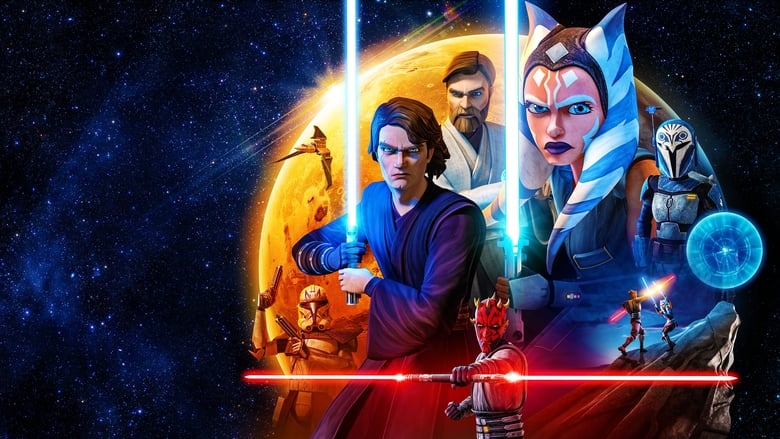
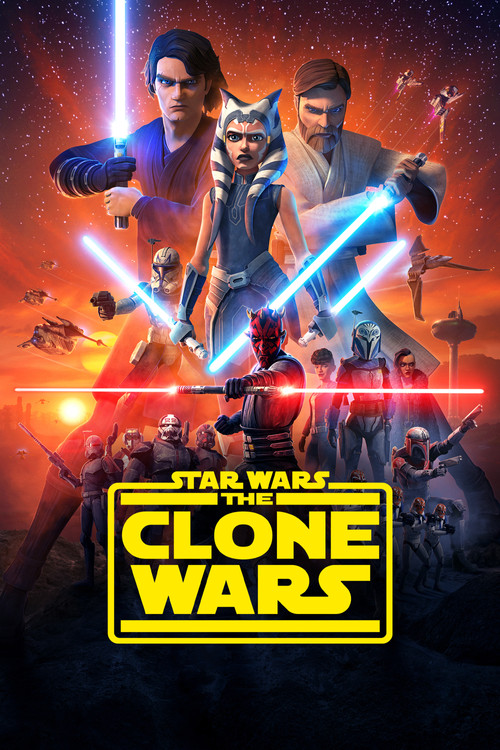
Set between Star Wars: Episode II – Attack of the Clones (2002) and Star Wars: Episode III – Revenge of the Sith (2005), Star Wars: The Clone Wars chronicles the expansive, galaxy-spanning conflict between the Galactic Republic and the Separatist Alliance. The series expands upon the events of the prequel trilogy, detailing the adventures of established heroes like Jedi Knight Anakin Skywalker, his master Obi-Wan Kenobi, and Senator Padmé Amidala. It also introduces crucial new characters, most notably Anakin's determined and resourceful Padawan, Ahsoka Tano, and the fiercely loyal clone trooper Captain Rex.

Through a series of interconnected story arcs, the show moves beyond simple tales of good versus evil to explore the moral ambiguities and immense costs of war. It delves into the daily lives and individual struggles of the clone troopers, humanizing them from faceless soldiers into distinct personalities with their own hopes and fears. The narrative covers a wide range of stories, from large-scale military campaigns and intricate political espionage to explorations of the mystical nature of the Force and the internal conflicts that plague both the Jedi and their enemies. As the war progresses, the series meticulously lays the groundwork for the tragic downfall of the Jedi Order and the rise of the Galactic Empire, making Anakin's eventual transformation into Darth Vader all the more poignant and devastating.
Core Meaning

The core meaning of Star Wars: The Clone Wars is an exploration of how war corrupts ideals and forges identities, often with tragic consequences. The series, created by George Lucas, serves as a bridge between the prequel films, aiming to show that the fall of a democracy is not a sudden event but a slow erosion of principles. It posits that even in a conflict with seemingly clear heroes and villains, the lines of morality become blurred, and the very act of fighting can compromise the values one seeks to defend. The show deeply examines the inherent tragedy of the Jedi's position as generals in an army of manufactured soldiers, forcing them to sacrifice their pacifist philosophies. Ultimately, it delivers a powerful message about the loss of innocence—for its characters like Ahsoka Tano, for the clone troopers who discover their individuality only to have it stripped away, and for the galaxy itself as it slides from a hopeful Republic into a tyrannical Empire.

Thematic DNA

The Morality and Cost of War 35%
Identity and Individuality 30%
The Fall of the Jedi and the Republic 25%
Master and Apprentice 10%

The Morality and Cost of War

Throughout its seven seasons, the series consistently explores the grim realities of conflict. It moves beyond the black-and-white perspective of the films to show the gray areas, emphasizing the opening crawl of Revenge of the Sith: "There are heroes on both sides. Evil is everywhere." Episodes often focus on the devastating impact of war on civilian populations, the moral compromises made by leaders, and the psychological toll it takes on soldiers. Story arcs like the Umbara campaign force clone troopers—and the audience—to question the nature of obedience and the morality of their orders, revealing that the true enemy is sometimes within their own ranks.

Identity and Individuality

A central theme is the humanization of the clone troopers. Initially presented as a disposable army, the series gives them names, distinct personalities, and individual desires. Characters like Captain Rex, Fives, Echo, and Hevy demonstrate that despite their identical origins, they are unique beings capable of loyalty, bravery, and independent thought. This theme culminates in the tragic discovery of the inhibitor chips, which forces the clones to confront the horrifying reality that their free will is an illusion, turning their struggle for identity into a fight for their very souls.

The Fall of the Jedi and the Republic

The series serves as an extended cautionary tale about the decay of the Jedi Order and the Galactic Republic. It portrays the Jedi not just as noble peacekeepers, but as an institution becoming dogmatic, arrogant, and blinded by tradition. Mace Windu, for example, embodies the hubris that contributes to their downfall. The Jedi's role as military commanders compromises their core principles, and their failure to see the growing darkness within their own ranks and in the political system they serve directly leads to their destruction. Ahsoka Tano's arc, where she is wrongly accused by the Jedi Council and chooses to walk away, powerfully symbolizes the Order's loss of integrity long before Order 66.

Master and Apprentice

The relationship between Anakin Skywalker and his Padawan, Ahsoka Tano, forms the emotional heart of the series. Their bond evolves from a playfully contentious dynamic to one of deep mutual respect and affection. Anakin's role as a teacher forces him to mature, yet his deep attachment to Ahsoka also foreshadows the possessiveness that will lead to his downfall. Her eventual departure from the Jedi Order is a critical turning point for Anakin, a profound loss that isolates him further and pushes him closer to Palpatine's influence.

Character Analysis

Ahsoka Tano

Ashley Eckstein

Archetype: The Protagonist/Hero
Key Trait: Resilient

Motivation

Initially, Ahsoka is motivated by a desire to prove herself worthy of being Anakin's apprentice and a true Jedi. As she witnesses the complexities and failures of the war and the Jedi Order, her motivation shifts towards doing what is right, regardless of dogma or affiliation. She becomes driven by a personal code of morality and loyalty to individuals like Captain Rex, rather than institutions.

Character Arc

Ahsoka begins the series as a brash, eager, and sometimes overconfident 14-year-old Padawan. Under Anakin's tutelage, she matures into a skilled warrior and a compassionate leader. Her arc is defined by her growing disillusionment with the Jedi Order. A pivotal moment comes during the Second Battle of Geonosis where she proves her merit as a warrior. Her journey culminates in Season 5 when she is framed for bombing the Jedi Temple. Though exonerated, the betrayal from the Jedi Council leads her to reject their offer to return, and she walks away from the Order entirely. In the final season, she returns as a capable, independent commander, no longer a Jedi but still a champion of justice, leading Republic forces during the Siege of Mandalore. Her survival of Order 66 cements her transformation into a solitary, resilient figure who must find a new path in a galaxy ruled by the Empire.

Anakin Skywalker

Matt Lanter

Archetype: The Tragic Hero
Key Trait: Impulsive

Motivation

Anakin's primary motivation is to protect the people he loves—Padmé, Ahsoka, Obi-Wan, and the Republic itself. He is driven by a desire to be the most powerful Jedi ever to ensure he can prevent loss, a fear that stems from his mother's death. This desire for power and control, combined with his impatience and distrust of authority, makes him susceptible to the dark side's allure.

Character Arc

The series profoundly deepens Anakin's character from the films, bridging the gap between the heroic Jedi Knight and the future Darth Vader. Taking on Ahsoka as his Padawan forces him to become more responsible and shows his capacity as a caring mentor. However, the show also highlights his recklessness, his deep-seated attachment issues, and his growing frustration with the Jedi Council's strictures. His relationships with Padmé and Ahsoka are central, revealing a vulnerability and a protective instinct that will later be twisted by the dark side. Ahsoka's departure from the Order is a significant blow, leaving him feeling abandoned and betrayed, which Palpatine exploits. The final season poignantly portrays his last heroic acts before his inevitable fall in Revenge of the Sith, making his transformation feel earned and utterly tragic.

Captain Rex (CT-7567)

Dee Bradley Baker

Archetype: The Loyal Soldier
Key Trait: Loyal

Motivation

Rex's initial motivation is simple: follow orders and win the war for the Republic. This evolves into a fierce loyalty to his men, his Jedi generals (Anakin and Ahsoka), and the ideals of the Republic, which he distinguishes from its flawed leadership. Ultimately, he is motivated by a desire to protect his friends and honor the memory of his fallen brothers by living a life of purpose beyond the war.

Character Arc

Captain Rex starts as the archetypal soldier: brave, loyal, and efficient, following orders without question. Throughout the series, he evolves into one of its most complex and morally centered characters. Serving alongside Anakin and Ahsoka, he develops a strong sense of individuality and a deep respect for his Jedi commanders. Key arcs, such as the Battle of Umbara, force him to grapple with the difference between being a good soldier and doing the right thing, even if it means defying a superior officer. The discovery of the inhibitor chips and the fate of his friend Fives solidify his belief that clones are more than just numbers. In the finale, his loyalty to Ahsoka allows him to resist Order 66 long enough for her to save him, marking the culmination of his journey from a programmed soldier to a man defined by his choices and friendships.

Obi-Wan Kenobi

James Arnold Taylor

Archetype: The Mentor/Idealist
Key Trait: Diplomatic

Motivation

Obi-Wan is motivated by his unwavering faith in the Jedi Order and the principles of the Republic. He is dedicated to ending the war and restoring peace to the galaxy. On a personal level, he is driven by his duty as Anakin's mentor and friend, constantly trying to guide him along the right path and temper his more dangerous impulses.

Character Arc

Obi-Wan's character is consistent with his film portrayal but gains significant depth. He is the quintessential Jedi Master: wise, patient, and a masterful diplomat. The series explores his unwavering commitment to the Jedi Code, often putting him at odds with Anakin's more impulsive methods. A significant part of his arc involves his tragic relationship with Duchess Satine Kryze of Mandalore. Their story reveals a past where Obi-Wan considered leaving the Jedi Order for love, adding a layer of personal sacrifice to his character. Satine's eventual death at the hands of Darth Maul is a profound loss that tests his Jedi detachment and strengthens his resolve to end the war, highlighting the personal cost he pays for his devotion to duty.

Symbols & Motifs

Clone Trooper Helmets

Meaning:

The helmets symbolize the tension between uniformity and individuality. Initially, they represent the clones' role as an anonymous, mass-produced army. As the series progresses, troopers customize their helmets with unique markings and colors, transforming them into expressions of personal identity, unit pride, and loyalty—such as the 332nd Company painting their helmets in honor of Ahsoka Tano. The final shot of the series, showing Darth Vader reflected in a discarded helmet, brings the symbol full circle, representing the death of that individuality and the faceless oppression of the new Empire.

Context:

Used throughout the entire series. In early seasons, the standard helmets emphasize their role as a uniform army. In later seasons, customized helmets become prevalent, particularly with Captain Rex and his 501st Legion. The symbol's meaning culminates in the final episode, "Victory and Death," where the helmets mark the graves of fallen troopers.

The Darksaber

Meaning:

The Darksaber symbolizes leadership and power within Mandalorian culture. Unlike a Jedi's lightsaber, which is a tool of peace, the Darksaber is a symbol of authority that must be won through combat. Its possession grants the wielder the right to rule Mandalore. It represents the turbulent political landscape of the planet, caught between its pacifist government and the warrior traditions of groups like Death Watch.

Context:

The Darksaber is introduced in Season 2 in the possession of Pre Vizsla, the leader of Death Watch. It plays a key role in the Mandalorian story arcs, eventually being claimed by Darth Maul in Season 5 when he defeats Vizsla, using it to seize control of the planet. Its journey continues into Star Wars Rebels and The Mandalorian.

The Mortis Monolith

Meaning:

The Mortis Monolith, a giant crystalline structure, symbolizes the mysteries of the Force and the concept of destiny versus free will. It is the conduit to a mystical realm where the cosmic Force is embodied by three powerful beings: the Father, the Son, and the Daughter. The events on Mortis serve as a microcosm of the entire Skywalker saga, forcing Anakin to confront his destiny as the Chosen One and the darkness that lies within him.

Context:

This symbol is central to the "Mortis Arc" in Season 3 (Episodes 15-17). Anakin, Obi-Wan, and Ahsoka are drawn into the monolith, where they undergo trials that test their connection to the Force and foreshadow Anakin's tragic future.

Memorable Quotes

In my book, experience outranks everything.

— Captain Rex

Context:

Said in the Star Wars: The Clone Wars theatrical film (2008). Rex says this to Ahsoka Tano, reassuring the young Padawan that her inexperience doesn't diminish her value in his eyes, establishing their mutual respect early on.

Meaning:

This quote encapsulates Captain Rex's philosophy and the core theme of the clones' individuality. It asserts that practical knowledge and personal history are more valuable than formal rank or programming, a belief that defines Rex's growth as a leader and a person.

They may be willing to die, but I am not the one who is going to kill them.

— Ahsoka Tano

Context:

Spoken during Season 7, Episode 11, "Shattered." Ahsoka says this to Rex as they are being cornered by clone troopers following the activation of Order 66. It is a pivotal moment that separates her path from the Jedi who were forced to kill their former comrades.

Meaning:

This powerful statement defines Ahsoka's moral compass at the climax of the series. Even when hunted by the brainwashed clone troopers she once led, she refuses to kill them, recognizing that they are victims of Palpatine's conspiracy. It demonstrates her evolution beyond the wartime mindset of a traditional Jedi general and solidifies her status as a true hero.

Remember, my dear Obi-Wan. I've loved you always. I always will.

— Duchess Satine Kryze

Context:

From Season 5, Episode 16, "The Lawless." Satine says this to Obi-Wan Kenobi just before she dies in his arms after being impaled by Darth Maul. It is the culmination of their long and complicated history.

Meaning:

These are the final words of Duchess Satine, and they represent the tragic intersection of love, duty, and the casualties of war. Her death is a heartbreaking moment for Obi-Wan, emphasizing the personal sacrifices he has made for the Jedi Order and adding a profound layer of sorrow to his character.

I am not just another number! None of us are!

— Hevy (CT-782)

Context:

From Season 1, Episode 5, "Rookies." Hevy shouts this as he manually triggers an explosion to destroy a Separatist outpost, saving his brothers at the cost of his own life.

Meaning:

This is a defining declaration for the clone troopers. Said by a rookie clone who sacrifices himself, it is one of the first times a trooper explicitly rejects their designation as a mere number and claims their humanity. It sets the stage for the series' deep exploration of clone individuality.

Episode Highlights

Rookies

S1E5

This episode is the first to truly focus on the lives of clone troopers. A small squad of inexperienced "shinies" on a remote outpost must defend their position against a surprise commando droid attack. It introduces key clones like Hevy, Echo, and Fives.

Significance:

"Rookies" was a landmark episode that established the series' commitment to humanizing the clones. It demonstrated that the show could tell compelling, character-driven stories about the common soldier, a theme that would become one of its greatest strengths.

The Mandalore Trilogy

S2E12

This three-episode arc ("The Mandalore Plot," "Voyage of Temptation," "Duchess of Mandalore") introduces Duchess Satine Kryze and the pacifist New Mandalorians, who are threatened by the terrorist group Death Watch. It reveals Obi-Wan Kenobi's complex past with Satine.

Significance:

This arc dramatically expanded the lore of Mandalore and introduced a fascinating political dimension to the war. The tragic, unrequited love story between Obi-Wan and Satine provided significant depth to Obi-Wan's character.

The Mortis Arc

S3E15

In this three-part story ("Overlords," "Altar of Mortis," "Ghosts of Mortis"), Anakin, Obi-Wan, and Ahsoka are drawn into a mysterious, ethereal realm inhabited by three god-like beings who represent different aspects of the Force. The arc explores Anakin's destiny as the Chosen One.

Significance:

The Mortis arc is one of the most important and enigmatic storylines in the series, delving into the deepest mythology of the Force. It provides a powerful, allegorical foreshadowing of Anakin's fall to the dark side and his ultimate redemption.

The Umbara Arc

S4E7

This four-episode arc ("Darkness on Umbara," "The General," "Plan of Dissent," "Carnage of Krell") follows Captain Rex and the 501st Legion under the command of a ruthless and reckless Jedi General, Pong Krell. The clones are forced to question their orders and their loyalty.

Significance:

Considered one of the darkest and most mature arcs, it is a masterclass in exploring the horrors of war and the moral complexities of soldiers. It is a pivotal moment for Captain Rex's character development, forcing him to define his morality outside of his programming.

The Wrong Jedi

S5E20

The finale of a four-part arc, this episode sees Ahsoka on trial for treason against the Republic. After Anakin uncovers the true culprit, the Jedi Council offers to welcome Ahsoka back, but she refuses and leaves the Order.

Significance:

This episode is the culmination of Ahsoka's character arc in the original run of the series. Her departure is a heartbreaking and pivotal moment that highlights the flaws of the Jedi Order and has profound consequences for Anakin, pushing him further down his dark path.

The Siege of Mandalore Arc

S7E9

The final four episodes of the series ("Old Friends Not Forgotten," "The Phantom Apprentice," "Shattered," "Victory and Death") run parallel to the events of Revenge of the Sith. Ahsoka and Rex lead a division of clone troopers to liberate Mandalore from Maul, only for Order 66 to be executed.

Significance:

This arc is widely regarded as the pinnacle of the series and some of the best Star Wars storytelling ever created. It provides a powerful, emotional, and devastating conclusion to the story, masterfully weaving together the fates of its central characters with the climax of the prequel trilogy.

Philosophical Questions

Are we defined by our origins or by our choices?

This question is the central philosophical conflict for the clone troopers. Created in a lab for the sole purpose of fighting and dying, they are initially seen as identical and disposable. However, through characters like Rex, Fives, and Echo, the series argues that one's creation does not dictate one's destiny. The clones make choices to be individuals—giving themselves names, adopting unique beliefs, and forming deep bonds of brotherhood. The tragic arc of Fives, who discovers the inhibitor chip conspiracy and dies trying to expose it, is the ultimate expression of this theme: he chooses to fight for his and his brothers' free will, proving that he is more than just his programming, even if the galaxy refuses to see it.

Can one uphold pacifist ideals while actively participating in war?

The series constantly places the Jedi in this philosophical bind. As keepers of the peace, their core philosophy is one of negotiation and defense, yet the war forces them into the role of generals leading an army. This contradiction is explored through the actions of many Jedi. Obi-Wan Kenobi clings to diplomacy wherever possible, while others, like Pong Krell, embrace the violence and lose their way. The entire conflict is shown to be a corrupting influence on the Jedi Order, forcing them to compromise their principles to achieve victory, a compromise that ultimately weakens them from within and makes them vulnerable to the Sith's machinations.

What is the nature of true loyalty?

The Clone Wars examines loyalty on multiple levels. Is it loyalty to an institution (the Jedi Order, the Republic), to an ideal, or to individuals? Ahsoka Tano's journey is a profound exploration of this question. Her loyalty to the Jedi Order is shattered when they betray her trust. She ultimately chooses loyalty to her own moral code and to the people she cares for, like Captain Rex. Similarly, Rex's arc shows him shifting his loyalty from the abstract concept of the Republic to the tangible well-being of his brothers and his Jedi friends. The series suggests that true loyalty is not blind obedience, but a conscious choice rooted in trust and personal connection.

Alternative Interpretations

One of the most discussed alternative interpretations revolves around the actions of the Jedi Council, particularly concerning Ahsoka Tano and Anakin Skywalker. While the primary narrative presents the Council as flawed but well-intentioned, an alternative view holds them as being willfully negligent and arrogant, directly responsible for Anakin's fall. In this reading, their harsh and unjust treatment of Ahsoka during her trial was not just a mistake but a symptom of an institution so blinded by its own dogma and fear that it actively pushed away one of its brightest members and alienated its most powerful Knight. Her departure is seen not as a personal choice but as the inevitable result of the Order's moral decay, making the Jedi's destruction less a tragedy and more a form of karmic justice.

Another interpretation focuses on the nature of the clone troopers' inhibitor chips. The main story treats the chips as a hidden switch that overrides the clones' personalities. However, some viewers interpret their effect as being more nuanced, suggesting that the chips didn't simply turn the clones into mindless puppets but rather amplified their latent aggression and suppressed their higher reasoning, twisting their loyalty into murderous fanaticism. This view makes their actions during Order 66 even more tragic, as it implies they may have been dimly aware of what they were doing but powerless to stop it, adding another layer to their victimhood.

Cultural Impact

Star Wars: The Clone Wars, created by George Lucas and guided by Dave Filoni, had a profound and lasting impact on the Star Wars franchise and television animation. Initially met with a lukewarm reception due to its 2008 theatrical film and an early focus on younger audiences, the series evolved dramatically over its run. It matured in tone and narrative complexity, eventually earning critical acclaim and a devoted fanbase. Its greatest legacy is arguably the introduction of Ahsoka Tano, who evolved from a controversial sidekick into one of the most beloved and essential characters in the entire saga.

The show redefined what was possible for television animation, pushing for cinematic quality in its visuals, sound design, and storytelling. It successfully filled the narrative gap between Episodes II and III, adding crucial depth and emotional weight to Anakin Skywalker's fall from grace. By humanizing the clone troopers, it introduced complex themes of identity, free will, and the ethics of war into the Star Wars universe. The series' success revitalized interest in the prequel era and paved the way for future animated shows like Star Wars Rebels and The Bad Batch, as well as influencing live-action projects like The Mandalorian and the standalone Ahsoka series, cementing its place as an indispensable piece of Star Wars lore.

Audience Reception

The reception for Star Wars: The Clone Wars evolved significantly over its run. The 2008 introductory film was widely panned by critics and audiences for its simplistic plot and clunky animation. The early seasons of the TV series received a mixed response, with many finding the tone too juvenile and the episodic, non-chronological storytelling confusing. However, as the series progressed, it garnered increasing praise. Viewers and critics lauded the darker, more mature themes, the complex character development—particularly for Ahsoka Tano and the clone troopers—and the vast improvement in animation quality.

By the time of its initial cancellation after Season 5, there was a massive fan outcry, leading to the release of a sixth season on Netflix. The show's popularity continued to grow, culminating in a highly anticipated final season on Disney+ in 2020. This seventh season, especially the final "Siege of Mandalore" arc, was met with universal critical acclaim, with many hailing it as some of the best Star Wars content ever produced, providing a deeply satisfying and emotionally resonant conclusion. The series went from being a divisive entry to an essential and beloved part of the Star Wars canon.

Interesting Facts

  • The 2008 theatrical film that kicked off the series was created by combining four planned television episodes. George Lucas, upon seeing the footage, felt it was cinematic enough for a theatrical release.
  • The show is not the first animated series about the conflict. A 2D micro-series, Star Wars: Clone Wars, directed by Genndy Tartakovsky, aired from 2003 to 2005.
  • Ahsoka Tano was originally going to be named "Ashla." George Lucas later changed it to "Ahsoka" in honor of the ancient Indian emperor Ashoka the Great.
  • Supervising Director Dave Filoni's favorite Jedi is Plo Koon. This is reflected in the character's frequent appearances and his strong, fatherly relationship with Ahsoka.
  • In 2010, the series was entered into the Guinness Book of World Records for being the "Highest Rated Animated Sci-Fi Television Series" at the time.
  • Jon Favreau, creator of The Mandalorian, got his start in Star Wars by voicing the Mandalorian terrorist leader Pre Vizsla in The Clone Wars.
  • Mark Hamill, the actor for Luke Skywalker, provided the voice for the ancient Sith Lord Darth Bane in the Season 6 episode "Sacrifice."
  • Despite their iconic rivalry in Revenge of the Sith, Anakin Skywalker and General Grievous never meet face-to-face during the entire 133-episode run of the series.

Easter Eggs

In the Season 1 episode "Downfall of a Droid," a ship designated "The Vulture's Claw" has a color scheme and design based on a real-world dump truck.

This is a small, humorous detail from the production team, showcasing how real-world objects often inspire the designs within the Star Wars universe.

During the citadel rescue arc in Season 3, the famous Wilhelm scream can be heard as a battle droid is destroyed.

The Wilhelm scream is a famous sound effect that has been used in hundreds of films since the 1950s. Its inclusion is a long-running inside joke in the film industry and a tradition within the Star Wars franchise itself.

The design for the Republic Medical Station seen in the first season is shaped like the Republic's official cog-like logo when viewed from directly above.

This is a clever design choice that visually reinforces the identity of the Galactic Republic in its architecture, adding a layer of subtle world-building.

In Season 7, Dryden Vos, the main antagonist from <i>Solo: A Star Wars Story</i>, makes a brief appearance as a member of the Shadow Collective under Maul.

This cameo helps to further connect the different eras and stories of the Star Wars universe, showing the early operations of the Crimson Dawn criminal syndicate that would become powerful during the reign of the Empire.

⚠️ Spoiler Analysis

Click to reveal detailed analysis with spoilers

Frequently Asked Questions

Explore More About This Movie

Dive deeper into specific aspects of the movie with our detailed analysis pages

Comments (0)

Leave a comment

No comments yet. Be the first to share your thoughts!