Skip to content
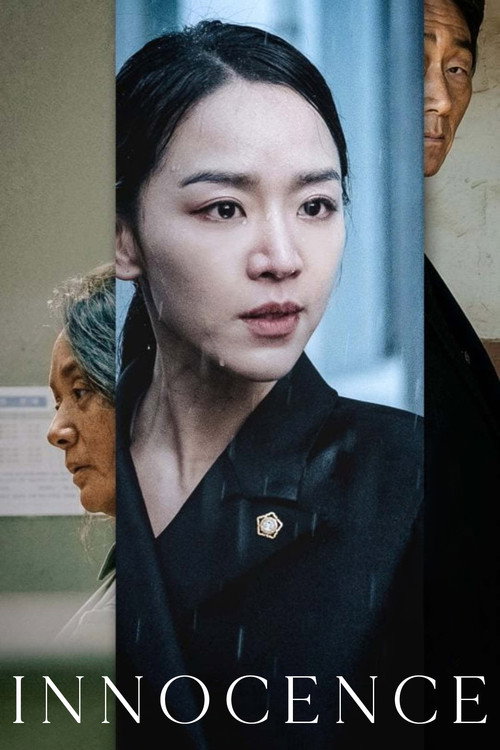
Innocence
A rural legal thriller steeped in village silence and dust, where grief and suspicion curdle like spoiled rice wine. A daughter's cold resolve slowly cracks to reveal the fragile love beneath, like a pale cup holding poison.
Innocence

Innocence

결백

"The truth behind the secret."

10 June 2020 South Korea 110 min 7.7 (112)

Director: Park Sang-hyeon

Cast: Shin Hye-sun, Bae Jong-ok, Huh Joon-ho, Hong Kyung, Tae Hang-ho

Crime Thriller Mother-daughter bond and reconciliation Truth versus justice Corruption and village power Trauma, memory and illness Guilt and sacrifice

Overview

Innocence (결백, 2020) is the debut commercial feature of writer-director Park Sang-hyun. Its heroine is Jung-in, a sharp, successful lawyer at a big Seoul firm. She left her rural hometown long ago and cut ties with her family, partly because of an abusive father. She learns from the TV news that makgeolli (rice wine) served at her father's funeral was laced with pesticide. One elder has died, and the village mayor and others are in critical condition. The police have arrested her mother, Hwa-ja.

Hwa-ja has severe dementia and no longer recognizes her own daughter. She cannot explain or defend herself, and the lawyer hired by her sister-in-law is incompetent. Jung-in goes home and takes over the defense. She faces a hostile village, an authoritative mayor and officials who seem keen to close the case quickly. As she investigates, she has to face her own childhood trauma and her younger brother, who has autism.

The film mixes courtroom procedural, investigative mystery and family drama. The director has said he wanted to focus on the complicated mother-daughter relationship rather than on suspense alone. The story was inspired by real poisoning cases in rural Korea.
Core Meaning

The title means both "innocence" and "purity", and the film asks what those words are worth. Legally, innocence means no reasonable doubt. Morally, it is murkier. Park Sang-hyun said he began with a story about a mother and daughter and merged it with a poisoning case. The mystery is therefore a vehicle for a story about estrangement, forgiveness and the lengths to which love will go.

The film suggests that family loyalty and justice can pull in opposite directions. A person who controls which truths come out holds a dangerous power. The village's corruption is exposed, but the heroine's own choices leave a moral ambiguity that lingers after the credits.

Thematic DNA

Mother-daughter bond and reconciliation 30%
Truth versus justice 25%
Corruption and village power 20%
Trauma, memory and illness 15%
Guilt and sacrifice 10%

Mother-daughter bond and reconciliation

Jung-in and Hwa-ja are estranged for over a decade. The mother's dementia means she cannot recognize her daughter, so the reconciliation happens without shared memory. The second half of the film moves the mother-daughter relationship to the center.

Truth versus justice

Jung-in is a lawyer who believes in proving the truth, but she faces choices about what to reveal and what to conceal. Some viewers see this as a troubling tension between legal innocence and moral truth.

Corruption and village power

Mayor Choo and the villagers hide an ugly truth and push for a quick resolution. The film shows how small communities and local authority can bury crimes and exploit friends and neighbors.

Trauma, memory and illness

Hwa-ja's dementia erases her ability to defend herself, while Jung-in's past violence at her father's hands drives her coldness. Her brother's autism makes him an observant but vulnerable figure, easily influenced by others.

Guilt and sacrifice

Characters are bound by secrets and by what they have done to protect each other. Reviews describe the film as a drama of greed, guilt and reconciliation.

Character Analysis

Ahn Jung-in

Shin Hye-sun

Archetype: Hero / morally ambiguous protagonist Key Trait: Razor-sharp confidence masking a deep inferiority complex

Motivation

To prove her mother's innocence, and eventually to protect her family and finally face her past.

Character Arc

She begins as a cold, confident lawyer who fled her past. As she defends her mother she is pulled back into the family she abandoned. By the end she has made a morally complicated choice for the sake of that family.

Chae Hwa-ja

Bae Jong-ok

Archetype: Tragic mother / keeper of secrets Key Trait: Fragile but fiercely protective

Motivation

To protect her children, even when she cannot remember who they are.

Character Arc

An accused woman whose mind has failed her, she holds more than one secret. Her story reveals a mother's love and sacrifice behind her silence.

All 5 characters and cast

Symbols & Motifs

The makgeolli

Meaning:

Communal warmth turned toxic: a symbol of tradition, mourning and hospitality poisoned from within.

Context:

The pesticide-laced rice wine at the funeral is the central crime. It triggers the investigation and the return of the estranged daughter.

Hwa-ja's dementia

Meaning:

Erased memory as both victimhood and a shield. It leaves the truth locked inside a person who cannot speak it.

Context:

She no longer recognizes her daughter or can control her body. Actress Bae Jong-ok reportedly wore aged make-up of over two hours for the role.

The courtroom

Meaning:

A stage where truth is shaped by evidence and narrative rather than simply revealed.

Context:

Jung-in builds her defense on weak circumstantial evidence from the prosecution. Reviewers note she creatively shapes the story to secure her desired outcome.

The hometown village

Meaning:

A closed society where everyone shares secrets and protects the powerful. It also stands for the childhood Jung-in fled.

Context:

Her return to the countryside forces her to confront both the village's concealed crimes and her own family past.

Memorable Quotes

내가 결백을 증명할게.
— Jung-in (Shin Hye-sun)

Context

Said in a conversation with Prosecutor Shin as her mother is taken away to the prosecutors' office amid a crowd.

Meaning

A vow that defines the heroine's resolve ('I will prove her innocence'). It was released in the main trailer and drew attention before the release.

나도 샥시 같은 딸이 하나 있는디, 이뻐유. 우리 딸 이름이 안정인이어유…
— Prosecutor Shin (as quoted by press)

Context

Part of a tense exchange in which the prosecutor goads Jung-in during the case.

Meaning

Press coverage cited this line as showing the prosecutor's attitude toward the poisoning case, with a sense of provocation.

Philosophical Questions

Is legal innocence the same as moral innocence?

Jung-in must show a court there is reasonable doubt, which is not the same as proving what truly happened. The film leaves open the gap between the two.

Does love justify concealing the truth?

The heroine's choices at the climax test whether protecting family can outweigh a lawyer's duty to truth, and no one is clearly punished at the end.

What remains of a relationship when memory is gone?

Hwa-ja cannot recognize her daughter, yet maternal instinct appears in her behavior, suggesting bonds may exist beyond conscious memory.

How It Ends

Alternative Interpretations

Some viewers read the ending as a satisfying act of family loyalty, noting how "thick blood is" compared to water. Others find it ethically troubling. One reviewer argues that the heroine wants the truth to come out while conveniently hiding part of it, and that deciding what comes to light is a dangerous position. A third perspective sees a film about a daughter's forgiveness, where legal justice is secondary to emotional repair.

Full ending explanation

Cultural Impact

The film arrived in June 2020, in the first months of the pandemic, and was released theatrically in South Korea and later in Taiwan. Critics responded positively, mainly praising the cast. The film fits a Korean tradition of rural mystery and legal dramas, but with a female-centered focus. Reviewers compared it with Korean films such as Mother. It later won acting honors, including Hong Kyung's Baeksang win for Best New Actor. Cine21 lists about 894,000 admissions in Korea. It is now available on streaming platforms including Netflix in Korea.

Audience Reception

Audiences praised the performances, particularly Shin Hye-sun, Bae Jong-ok and Huh Joon-ho, as well as the emotional mother-daughter core and the late twist. IMDb users rate it around 6.6/10, and many reviews call it suspenseful with touching family scenes. Criticism targeted the slow first half hour, the pacing (some felt it should be shorter), and formulaic plotting. One critic called the villains overly "villainous", found the twists less than revelatory, and called the courtroom climax merely passable. The ending drew some moral debate. Overall verdict: a solid, well-acted legal drama that is more family drama than puzzle.

Interesting Facts

  • Park Sang-hyun wrote and directed; it was his first commercial feature film.
  • The story's motif was inspired by a real-life poisoning case; IMDb dates a case to 2009, while AsianWiki points to a 2015 pesticide-laced soda incident in Sangju.
  • Park initially planned a mother-daughter story, then encountered a poisoning murder story and combined them into one screenplay.
  • It was Shin Hye-sun's first leading role on the big screen. She has said her father read the script and told her to take it.
  • Shin Hye-sun reportedly studied Elizabeth Sloane from the thriller Miss Sloane for her character, and the director wanted razor-sharp confidence and a cold smile.
  • Bae Jong-ok reportedly wore over two hours of aging make-up as the dementia-stricken mother, and Shin avoided seeing her in make-up before their first scene together to preserve the estranged feeling.
  • Shin reportedly did her own action work and driving, and once suffered a brief concussion from a mis-timed blow in a scene.
  • The film was released in South Korea on June 10, 2020, with a reported budget of ₩5.7 billion and box office of about US$6.7 million.
  • Hong Kyung won Best New Actor at the 57th Baeksang Arts Awards, and Bae Jong-ok won Best Supporting Actress at the 26th Chunsa Film Art Awards.

Easter Eggs

Director Park Sang-hyun reportedly makes a cameo as a police officer being ejected from the courtroom.

A small director's cameo, reported by one encyclopedia source.

Frequently Asked Questions

Explore More About This Movie

Dive deeper into specific aspects of the movie with our detailed analysis pages

Comments (0)

Leave a comment

No comments yet. Be the first to share your thoughts!

Similar Movies