Skip to content
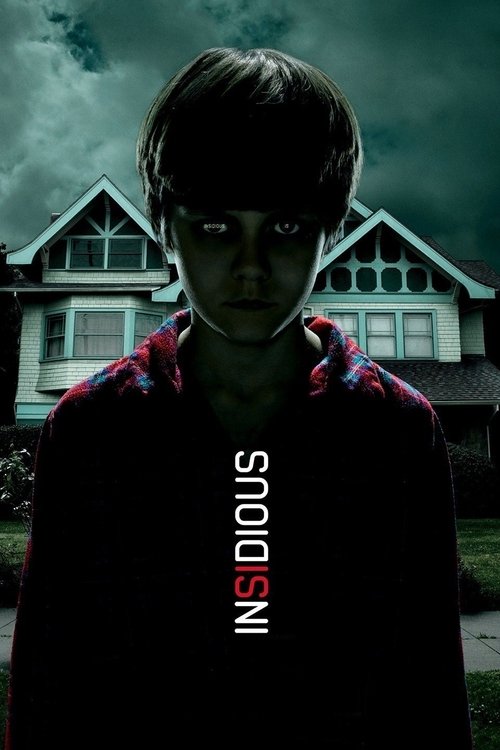
Insidious
A slow-burning descent into domestic dread, where the comforting shelter of family unravels into an antique carnival of nightmares, visualised as a lantern trembling against an encroaching, suffocating abyss.
Insidious

Insidious

"It's not the house that's haunted."

31 March 2011 Canada 102 min 6.9 (7,492)

Director: James Wan

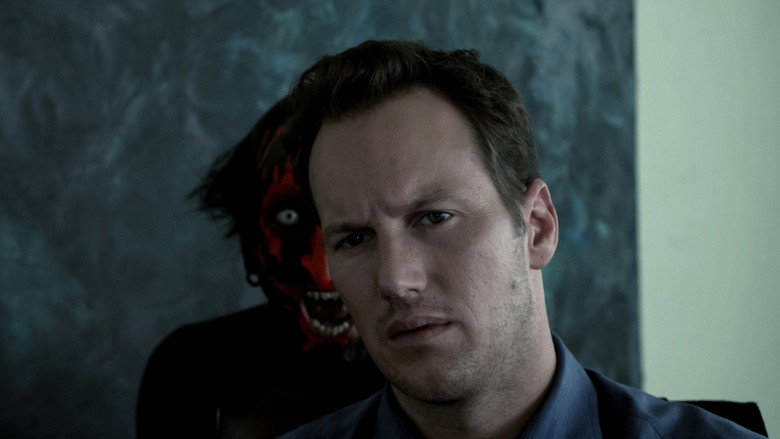
Cast: Patrick Wilson, Rose Byrne, Lin Shaye, Ty Simpkins, Barbara Hershey

Thriller Horror Generational Inheritance & Repression The Fragility of the Nuclear Family & Domestic Sanctuary Paternal Responsibility & Self-Sacrifice The Boundary Between Sleep, Death, and Purgatory Skepticism versus Intuition
Budget: $1,500,000
Box Office: $100,106,454

Overview

Insidious centers on Josh and Renai Lambert, a suburban couple who have recently relocated to a new two-story house with their three young children: Dalton, Foster, and infant daughter Cali. Shortly after settling in, inexplicable occurrences disrupt the household routine—unsettling noises transmit over the baby monitor, objects mysteriously change positions, and strange figures appear in peripheral vision. The escalating unease turns tragic when their eldest son, Dalton, explores the attic, falls from a ladder, and inexplicably slips into a profound, comatose state that leaves medical doctors baffled by the total absence of brain trauma or physical injury.

As months pass with Dalton hooked up to medical life support at home, the paranormal disturbances intensify into physical, violent manifestations. Convinced that their newly bought home is cursed by malevolent ghosts, Renai persuades a reluctant Josh to move to a completely different residence. However, relocating proves entirely useless when the terrifying anomalies follow them immediately into the new house.

Desperate for answers and safety, Josh’s mother Lorraine introduces the couple to parapsychologist and spiritual medium Elise Rainier and her quirky paranormal investigation assistants, Specs and Tucker. Elise quickly shatters the family's assumptions by revealing a terrifying truth: the house itself is not haunted. Instead, Dalton possesses an innate, unguided ability to project his consciousness beyond the physical plane—and while wandering too far into a shadowy purgatory, his empty body has become a beacon attracting ravenous demons and trapped spirits desperate to return to the mortal realm.
Core Meaning

At its core, Insidious is a modern subversion of traditional haunted house cinema, exploring the concept that horror is not rooted in geography or cursed architecture, but is inherently domestic, biological, and psychological.

The film’s central message investigates the inevitability of confronting repressed past trauma and inherited vulnerabilities. By concealing his own childhood encounters with the supernatural and refusing to accept the spiritual danger surrounding his son, Josh inadvertently leaves his child defenseless. The narrative demonstrates that unresolved generational burdens cannot be avoided by running away or suppressing memory; unacknowledged psychological or supernatural darkness will persistently seek entry through the cracks of familial denial.

Thematic DNA

Generational Inheritance & Repression 30%
The Fragility of the Nuclear Family & Domestic Sanctuary 25%
Paternal Responsibility & Self-Sacrifice 20%
The Boundary Between Sleep, Death, and Purgatory 15%
Skepticism versus Intuition 10%

Generational Inheritance & Repression

The core narrative reveals that Dalton’s gift and curse—astral projection—is an inherited trait passed down from Josh. Josh’s childhood memories were hypnotically buried to protect him, but this suppression leaves the family blind to the peril when the identical affliction manifests in the next generation.

The Fragility of the Nuclear Family & Domestic Sanctuary

The film systematically dismantles the illusion of suburban safety. A home is traditionally a sanctuary, but moving to a fresh environment fails because the vulnerability resides within the family members themselves. The stress of caregiving for an incapacitated child pushes marital bonds to a breaking point.

Paternal Responsibility & Self-Sacrifice

Josh starts as an emotionally detached father who stays late at work to avoid dealing with Dalton’s illness and Renai’s terror. His arc demands that he overcome skepticism and cowardice, actively diving into the spiritual abyss of The Further to pull his son back to safety.

The Boundary Between Sleep, Death, and Purgatory

Sleep is typically a restorative state, but Insidious frames it as a perilous threshold. Dreams are unmoored journeys into an intermediate plane where lost souls reside, emphasizing how thin the line is between consciousness, the spirit world, and eternal entrapment.

Skepticism versus Intuition

Renai relies on maternal instinct and sensory experience, recognizing the danger early, while Josh retreats behind rigid rationality and denial. The narrative demonstrates that intellectual skepticism can become a fatal liability when faced with realities beyond empirical science.

Character Analysis

Josh Lambert

Patrick Wilson

Archetype: The Skeptic / Reluctant Hero Key Trait: Repressed vulnerability masked by rationalist skepticism

Motivation

To save his son Dalton and preserve the safety of his family.

Character Arc

Begins as an emotionally distant husband who denies the paranormal events around him. He is forced to confront his buried childhood connection to the occult, accept his latent astral abilities, and venture into the dark realm of The Further to rescue his son.

Renai Lambert

Rose Byrne

Archetype: The Protector / Intuitive Anchor Key Trait: Empathetic vigilance and relentless maternal determination

Motivation

To shield her children from unseen harm and restore peace to her fractured home.

Character Arc

Initially isolated and terrified by the supernatural events while managing a sick child and a baby, Renai maintains conviction in her maternal instincts. She persistently forces Josh and the family to confront reality rather than hide from it.

All 5 characters and cast

Symbols & Motifs

The Red Door

Meaning:

The primary boundary separating the mortal astral path from the lair of the Lipstick-Face Demon. It serves as a visual gateway representing forbidden territory, ultimate peril, and the deepest chamber of primal demonic intent.

Context:

Located within the depths of The Further, marking the entrance to where Dalton is held captive.

The Metronome and Antique Grandfather Clock

Meaning:

Audible and visual representations of relentless time running out. They symbolize the finite window before malevolent forces permanently seize Dalton's physical body.

Context:

Ticking prominently in the household environment while Dalton lies comatose on life support.

Gas Mask and Séance Headgear

Meaning:

Visually bridges physical sensory isolation with psychic receptivity, representing the protective apparatus required to breathe and speak into the toxic atmosphere of the spiritual void.

Context:

Worn by Elise during the séance, modified with a hose and microphone to communicate while channeling the spiritual realm.

The Photograph / Camera

Meaning:

A technological motif used to capture truth invisible to the naked human eye, functioning as an unmasking tool of supernatural reality.

Context:

Flash photography illuminates the parasitic Old Woman spirit creeping closer to Josh across time, and exposes Josh's final possession at the film's climax.

Tiny Tim’s "Tiptoe Through the Tulips"

Meaning:

The cheerful falsetto creates an uncanny juxtaposition against grotesque demonic imagery, transforming nostalgic Americana into visceral dread.

Context:

Plays discordantly on a vintage record player inside the Lipstick-Face Demon's lair while it sharpens its talons.

The Black Veil / The Bride in Black (The Old Woman)

Meaning:

Symbolizes a lingering, parasitic death—an entity that does not merely want to torment, but to consume and inhabit Josh’s physical identity.

Context:

Appears in childhood photographs stalking young Josh and confronts him within The Further.

Memorable Quotes

It’s not the house that’s haunted. It’s your son.
— Elise Rainier

Context

Delivered in the Lambert living room after Elise completes her initial walkthrough of their new home.

Meaning

This is the central thematic turning point of the film, completely upending the traditional haunted house trope.

The Further is a world far beyond our own, yet it’s all around us, a place without time as we know it. It’s a dark realm filled with the tortured souls of the dead.
— Elise Rainier

Context

Elise explains the nature of the supernatural plane to Josh and Renai before the astral projection ritual.

Meaning

Establishes the lore, cosmology, and operational rules of the supernatural dimension for the franchise.

All 3 quotes

Philosophical Questions

Can we truly escape our ancestral and psychological inheritance?

The film explores whether individuals can ever truly sever themselves from family history and genetic or spiritual vulnerabilities, or if suppressed trauma inevitably surfaces to demand payment from the next generation.

What constitutes personal identity when the physical vessel is separated from the soul?

By presenting a living body as an empty vessel capable of being hijacked by foreign entities, Insidious touches on dualist philosophy—raising unsettling questions about what makes an individual "human" when consciousness is displaced.

Is willful ignorance a protective shield or a dangerous liability?

Josh’s life was normal only because his memories were artificially suppressed. The film asks whether burying terrifying truths preserves mental peace or simply guarantees catastrophe when those truths inevitably resurface.

Alternative Interpretations

Several distinct interpretations of the film exist:

Full ending explanation

Cultural Impact

Released in 2011, Insidious arrived at a crucial transitional moment in horror cinema. The mid-to-late 2000s had been dominated by graphic "torture porn" and the found-footage wave ignited by Paranormal Activity. Insidious marked a deliberate, highly calculated return to classical, theatrical, character-driven supernatural horror that relied on atmosphere, tension, framing, and orchestral dread rather than explicit gore.

The film was a major commercial hit, grossing over $100.1 million worldwide against a $1.5 million budget and earning a 66% "Fresh" rating on Rotten Tomatoes. It revitalized the modern supernatural genre, cemented the creative partnership between James Wan and Blumhouse Productions, and established the mythology of "The Further." Its success paved the way for an enduring multi-film franchise and directly laid the groundwork for James Wan's subsequent blockbuster universe, The Conjuring.

Audience Reception

Critical and audience reception for Insidious was largely positive, celebrating it as a modern horror classic that redefined haunted-house conventions:

  • Praise: Critics and viewers widely lauded James Wan’s masterful jump scares, camera placement, and restraint from digital gore. Joseph Bishara’s jarring, string-heavy score and inventive sound design were highlighted for elevating tension, while Patrick Wilson, Rose Byrne, and Lin Shaye received strong acclaim for grounding the supernatural premise with authentic emotional weight.
  • Criticism: Reviewers noted a jarring third-act tonal shift once the film entered The Further, arguing that the psychological dread gave way to a theatrical, dark-fantasy aesthetic. The full-light appearance of the Lipstick-Face Demon working at a grinding wheel was also noted by some as bordering on camp.
  • Controversial Elements: The inclusion of comic relief through Specs and Tucker initially polarized some viewers, though the duo subsequently became fan favorites.

Interesting Facts

  • The film was produced independently for approximately $1.5 million and went on to gross over $100.1 million worldwide, making it one of the most profitable films released in 2011.
  • Principal photography took place in Los Angeles over a remarkably brief schedule of just roughly three weeks (21–24 days).
  • The terrifying Lipstick-Face Demon was portrayed by Joseph Bishara, who was also the film’s composer responsible for its screeching, avant-garde musical score.
  • To prevent 10-year-old child actor Ty Simpkins from suffering nightmares or psychological trauma on set, director James Wan had him sit with Joseph Bishara during his multi-hour prosthetic makeup application so he could see firsthand that the demon was merely theatrical makeup.
  • Following the massive success of Paranormal Activity, producers Jason Blum, Oren Peli, and Steven Schneider offered James Wan and Leigh Whannell an extremely modest budget paired with 100% complete artistic freedom and final cut without studio interference.

Easter Eggs

Billy the Puppet Chalkboard Drawing

When Josh is working late in his high school classroom, a chalk drawing of Billy the Puppet from Wan and Whannell’s Saw franchise is clearly visible on the blackboard behind him, with the number "8" written beneath it.

Homage to Tobe Hooper’s Poltergeist (1982)

The structural arc of the film directly mirrors Poltergeist—an innocent child trapped in another realm, parents seeking help from eccentric medium investigators, and entering an astral dimension with a lifeline—which James Wan openly cited as a major inspiration.

David Lynch and Twin Peaks Echoes

The stylized staging of The Further, bathed in theatrical fog, vintage lamps, and uncanny, frozen smiling figures, draws deliberate aesthetic parallels to David Lynch’s Black Lodge and the ending of Twin Peaks.

Leigh Whannell’s Self-Inclusion

Screenwriter Leigh Whannell cast himself as Specs alongside Angus Sampson as Tucker, creating the iconic comic-relief paranormal investigator duo that recur throughout the franchise.

Frequently Asked Questions

Explore More About This Movie

Dive deeper into specific aspects of the movie with our detailed analysis pages

Comments (0)

Leave a comment

No comments yet. Be the first to share your thoughts!

Similar Movies