Skip to content
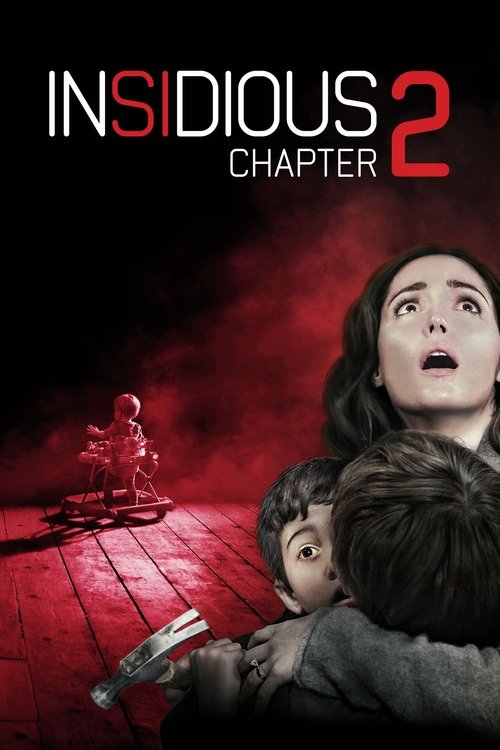
Insidious: Chapter 2
A feverish, vintage-tinted nightmare where intimate domestic sanctuary rots from within, unraveling as a desperate father's soul fractures across a shadowy purgatory while an unseen phantom puppeteers his flesh.
Insidious: Chapter 2

Insidious: Chapter 2

"It will take what you love most."

12 September 2013 United States of America 106 min 6.7 (4,693)

Director: James Wan

Cast: Patrick Wilson, Rose Byrne, Lin Shaye, Ty Simpkins, Barbara Hershey

Thriller Horror Generational Trauma & Toxic Motherhood Paternal Corruption & Loss of Safety The Burden of Repressed Memory Non-Linear Time & Interconnected Destiny Spiritual Loyalty & Fellowship
Budget: $5,000,000
Box Office: $161,921,515

Overview

Insidious: Chapter 2 picks up immediately after the harrowing climax of the 2010 original. Demonologist Elise Rainier has been found dead, and suspicion instantly looms over Josh Lambert, who has just returned from the spiritual void known as "The Further" to rescue his comatose son, Dalton. Seeking refuge from both police scrutiny and trauma, Josh, his wife Renai, and their children relocate to the home of Josh's mother, Lorraine.

However, peace remains agonizingly out of reach. Renai quickly notices disturbing alterations in Josh's temperament—he has grown emotionally detached, erratic, and physically deteriorated. Unexplained paranormal disturbances resurface with violent intensity: piano keys play on their own, spectral figures stalk the hallways, and infant Kali is repeatedly endangered by unseen forces.

Determined to protect her fractured family, Lorraine teams up with Elise's eccentric paranormal investigators, Specs and Tucker, alongside Carl, a medium who helped investigate Josh's suppressed childhood hauntings in 1986. Together, they race through forgotten archives, abandoned medical wards, and haunted pasts to decipher the sinister identity of the entity pursuing them before the household descends into complete ruin.
Core Meaning

At its core, Insidious: Chapter 2 explores generational trauma, abusive upbringing, and the erosion of paternal safety. The central message argues that unaddressed childhood trauma and repressed memories do not vanish; they linger like malignant spirits, metastasizing until they threaten to devour entire family lineages. True salvation requires confronting buried historical truths, breaking cycles of psychological abuse, and reclaiming bodily and spiritual autonomy through collective familial love and sacrifice.

Thematic DNA

Generational Trauma & Toxic Motherhood 35%
Paternal Corruption & Loss of Safety 25%
The Burden of Repressed Memory 20%
Non-Linear Time & Interconnected Destiny 10%
Spiritual Loyalty & Fellowship 10%

Generational Trauma & Toxic Motherhood

Explored through the tragic villain Parker Crane, whose sadistic mother forced him to erase his gender and identity, driving him to madness. This contrasts directly with Lorraine's protective maternal instincts.

Paternal Corruption & Loss of Safety

The ultimate horror is not an external ghost, but the father figure becoming the predator inside the home. Josh's hijacked body forces Renai and the children to fear the person sworn to protect them.

The Burden of Repressed Memory

Flashbacks to 1986 reveal that amnesia was used as a temporary bandage for young Josh. The film demonstrates that merely forgetting spiritual vulnerability only delays an inevitable, violent reckoning.

Non-Linear Time & Interconnected Destiny

The Further functions outside standard chronology, turning Josh's desperate spiritual wanderings into the very source of the supernatural anomalies experienced in the past.

Spiritual Loyalty & Fellowship

Even beyond physical death, Elise and Carl continue to act as benevolent guides, showing that spiritual courage and loyalty transcend mortality.

Character Analysis

Josh Lambert / The Possessed Shell

Patrick Wilson

Archetype: The Corrupted Protector / Antihero (by possession) Key Trait: Vulnerable resilience

Motivation

To reclaim his physical body and protect his wife and children.

Character Arc

Struggles inside the timeless void of The Further while watching his physical body decay and terrorize his beloved family, ultimately regaining strength through paternal resolve.

Renai Lambert

Rose Byrne

Archetype: The Steadfast Survivor / Matriarchal Shield Key Trait: Emotional endurance under extreme psychological pressure

Motivation

Ensuring the physical and emotional survival of her children.

Character Arc

Moves from grief-stricken confusion and denial into terrifying realization, defending her children against a husband who is physically present but spiritually hollowed out.

All 5 characters and cast

Symbols & Motifs

The White Lace Bridal Gown & Veil ("Bride in Black")

Meaning:

Symbolizes forced identity, maternal emasculation, and stolen femininity.

Context:

Parker Crane was coerced into wearing feminine garments by his mother, transforming the bridal dress into a shroud of serial murder and psychological subjugation.

The Tin Can Telephone (String Phone)

Meaning:

A childhood artifact representing psychic tethering and interdimensional communication.

Context:

It bridges the physical world and The Further, allowing Dalton to guide his lost father across spatial and temporal planes.

The Self-Playing Piano

Meaning:

Symbolizes Josh's trapped consciousness trying to communicate his love for Renai from the ethereal void.

Context:

Used to subvert early fears that the haunting was purely malevolent, proving to be an attempt at spiritual connection.

The Rocking Horse & Crane Nursery

Meaning:

A motif of frozen, weaponized childhood innocence.

Context:

The shrine-like bedroom in the Crane manor encapsulates Parker's eternal entrapment under his mother's domineering shadow.

Dice with Letters (Carl's Divination Tool)

Meaning:

Represents fate, cryptic communication with the dead, and the fragile boundary between mortal intent and spiritual interference.

Context:

Used by Carl during séances to contact the spiritual realm and uncover cryptic truths from deceased souls.

Memorable Quotes

He doesn't have your son. He has your husband.
— Elise Rainier (via Carl's séance)

Context

Spoken through Carl's spiritual communication dice during a séance to reveal the nature of the entity occupying Josh.

Meaning

The pivotal narrative turning point delivering the chilling truth to Renai and Lorraine that Dalton is safe, but Josh's physical body is an imposter.

You have to be quiet, Renai. The baby is sleeping.
— Josh Lambert (Parker Crane possessed)

Context

Delivered in a chillingly soft, psychotic cadence right before Josh attacks Renai inside the house.

Meaning

Illustrates the monstrous perversion of domestic calm into acute, predatory horror.

All 4 quotes

Philosophical Questions

Is Identity Defined by the Body or the Spirit?

Explored through Josh's spiritual eviction; his physical body performs violent actions under Parker Crane's command, yet his true moral self is trapped powerless in the ethereal realm of The Further.

Can an Abused Individual Escape Inherited Monstrosity?

Through Parker Crane, the film asks whether childhood victims of severe psychological abuse and maternal conditioning bear full moral culpability for becoming monsters themselves.

Is Willful Ignorance a Valid Defense Against Reality?

The decision to hypnotically erase Josh and Dalton's memories of astral projection raises the ethical question of whether blissful amnesia is superior to painful, dangerous awareness.

Alternative Interpretations

Several alternative readings have emerged from the film's narrative structure:

Full ending explanation

Cultural Impact

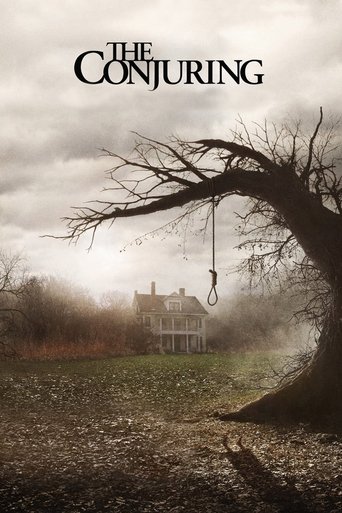
Released in September 2013, Insidious: Chapter 2 cemented James Wan's status as the commercial king of 2010s mainstream horror. Alongside The Conjuring and Sinister, the film revitalized traditional, PG-13/R supernatural ghost stories, shifting mainstream studio focus away from late-2000s "torture porn" and found-footage trends back toward atmospheric, haunted-house cinema. While critics were more divided compared to the first installment—criticizing its dense lore and exposition—audiences embraced the movie fervently, turning the franchise into a cornerstone of modern horror pop culture and validating Blumhouse's low-cost, high-yield production formula.

Audience Reception

Audience and critical reception showed strong appreciation for specific elements while remaining divided on narrative density:

  • Praised Aspects: Critics and viewers lauded Patrick Wilson's energetic, terrifying dual performance as both heroic Josh and unhinged Parker. The clever, time-loop puzzle integration connecting events directly back into the 2010 original was celebrated as an ambitious narrative triumph.
  • Key Criticisms: Some reviewers felt the movie over-explained the mystery of the "Bride in Black," stripping away the cosmic dread that made the original spirit terrifying. Others argued that the tonal shifts between Specs and Tucker's comedic antics and gruesome serial killer lore diluted the horror tension.
  • Overall Consensus: A kinetic, creatively structured sequel that leans heavily into lore expansion and camp-tinged gothic thrills, delivering a satisfying, puzzle-box resolution for fans of the Lambert saga.

Interesting Facts

  • Produced by Blumhouse Productions on a lean budget of just $5 million, the film grossed an astounding $161.9 million worldwide, scoring a massive $41 million opening weekend.
  • Major sequences—including the hospital investigation scenes—were shot inside Los Angeles' notorious abandoned Linda Vista Hospital, a location renowned for alleged real-life paranormal activity.
  • For the 1986 opening flashback sequence featuring a young Elise Rainier (played by actress Lindsay Seim), Lin Shaye fully dubbed all of Seim's spoken dialogue in post-production to maintain auditory continuity.
  • Director James Wan directed Insidious: Chapter 2 in early 2013, releasing two massive horror blockbusters (The Conjuring and Insidious: Chapter 2) in the same calendar year just months apart.
  • Wan deliberately minimized computer-generated imagery, relying on physical sets, fog machines, vintage theatrical lighting, and practical make-up effects to craft The Further.

Easter Eggs

The Shining Homage

The climactic sequence where a possessed Josh breaks down doors to reach Renai and the children directly mimics Jack Torrance's iconic assault in Stanley Kubrick's The Shining (1980).

Specs and Tucker's Saw / Blumhouse Nods

The laptops and equipment handled by Specs and Tucker feature subtle nods to James Wan and Leigh Whannell's earlier work, including stickers and logos reminiscent of the Saw universe.

Temporal Crossover with Insidious (2010)

In a brilliant puzzle-box narrative mechanic, Josh moving through The Further in Chapter 2 is revealed to be the unseen entity that knocked on the front door, triggered the alarm, and played the piano during key scenes in the first movie.

Carnival of Souls Aesthetic

The design of The Further's vacant, smiling spirits in formal wear draws heavily on Herk Harvey's 1962 indie horror classic Carnival of Souls.

Jenna Ortega Cameo

A young Jenna Ortega appears briefly as Annie, a young girl in the film's final scene where Specs and Tucker continue Elise's investigative work.

Frequently Asked Questions

Explore More About This Movie

Dive deeper into specific aspects of the movie with our detailed analysis pages

Comments (0)

Leave a comment

No comments yet. Be the first to share your thoughts!

Similar Movies