Skip to content
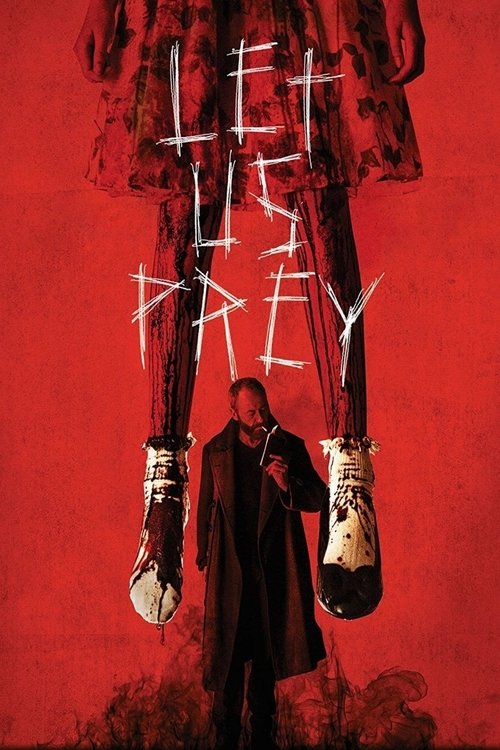
Let Us Prey
A storm-lashed Scottish siege horror in which a silent stranger walks out of the crashing sea and into a small-town police station, turning its cells into a confessional lit by hellfire.
Let Us Prey

Let Us Prey

"Darkness Shall Rise"

17 April 2014 Ireland 92 min 5.7 (377)

Director: Brian O'Malley

Cast: Liam Cunningham, Niall Greig Fulton, Pollyanna McIntosh, Douglas Russell, Bryan Larkin

Thriller Horror Sin and Divine Judgment Corruption of Authority Hidden Pasts and Buried Secrets Witnessing vs. Causing Evil Isolation and Siege

Overview

On a quiet road in a remote Scottish coastal town, a young man named Caesar speeds through the streets and hits a pedestrian. Constable Rachel Heggie, on her first day on the job, sees it happen and makes her first arrest. The victim has vanished, though, until officers find him and bring him to the station. He is a mysterious drifter who calls himself only Six.

That night the small station fills up with the stranger, the prisoners and the officers on duty, and it soon becomes clear that Six knows far more about each of them than he should. He tells people their secrets calmly and quietly, and the town's hidden sins start to come out. The station stops feeling like a place of law and order and starts to feel like a courtroom where everyone is on trial.

Director Brian O'Malley wrote the film with Fiona Watson and David Cairns. It opens with sweeping coastal landscapes and a stranger who seems to rise out of the waves. From there it tightens into a claustrophobic siege thriller driven by a synth score in the style of John Carpenter, with Liam Cunningham giving an unsettling, magnetic lead performance.
Core Meaning

Let Us Prey is about judgment and guilt. It puts a supernatural figure in the one place built to judge people, a police station, and shows that the people enforcing the law are often as corrupt as the people they lock up. Six calls himself "just a witness" and not the cause of evil, which shifts responsibility onto the humans. The film suggests that the worst horrors are the sins ordinary people hide: adultery, betrayal, hypocrisy, perversion and cowardice.

The pun in the title turns a prayer ("let us pray") into predation ("let us prey"). It hints that religious ideas of sin and damnation can be turned into weapons, and that anyone who takes it on themselves to "weigh justice in their own hands" may end up judged too.

Thematic DNA

Sin and Divine Judgment 30%
Corruption of Authority 20%
Hidden Pasts and Buried Secrets 20%
Witnessing vs. Causing Evil 15%
Isolation and Siege 15%

Sin and Divine Judgment

Six condemns the characters one by one. He names them adulterers and betrayers, a hypocrite, a pervert, and someone cowardly and vicious. The night turns into a Last Judgment played out in miniature.

Corruption of Authority

The police station should be a refuge of law, but it turns out to be full of people who "dare to weigh justice in their own hands." The film questions whether uniforms and rank have any moral authority at all.

Hidden Pasts and Buried Secrets

Six's quiet, knowing presence brings out what each character has hidden. Pollyanna McIntosh has described her character Rachel as strong but carrying darkness, vulnerability and a complex history.

Witnessing vs. Causing Evil

Six insists, "People like to blame me, but I'm just a witness." The film keeps asking whether evil comes from outside or whether it is only revealed in people who already carry it.

Isolation and Siege

The story is set in a remote coastal town during one night inside a single station. The Carpenter-style siege setup makes the characters' moral isolation feel physical and claustrophobic.

Character Analysis

Six

Liam Cunningham

Archetype: Mysterious stranger / supernatural judge Key Trait: Calm, omniscient menace

Motivation

To witness and judge. He claims he is not the cause of evil and has only come to see, and punish, what people have done.

Character Arc

He arrives as a nameless, apparently injured accident victim and turns out to be the station's real authority, calmly exposing and condemning its occupants. Critics note that Cunningham plays him so that "he tells you everything and nothing at the same time."

PC Rachel Heggie

Pollyanna McIntosh

Archetype: Reluctant heroine / final girl Key Trait: Strength mixed with vulnerability

Motivation

To do her job properly and survive the night, while dealing with a painful past.

Character Arc

A constable on her first day, she makes her first arrest when she sees Caesar hit a pedestrian. Over the night she has to face both Six and her own dark, complicated history.

All 3 characters and cast

Symbols & Motifs

The Sea

Meaning:

An otherworldly origin: something ancient and elemental arriving to settle accounts.

Context:

In the opening landscape shots, Six seems to appear out of the ocean among wildly crashing waves.

The Name "Six"

Meaning:

A hint of a devilish identity, echoing the number of the beast, though the film never confirms it.

Context:

The stranger gives only this name. Critics list it among the clues that he might be the Devil, Death, or even God.

The Pale Horse

Meaning:

A reference to the Book of Revelation, where the rider of the pale horse is Death. It announces Six as an apocalyptic figure.

Context:

When someone calls the place a one-horse town, Six replies that now it is a "pale fucking horse."

Hellfire

Meaning:

Damnation and the punishment Six hands out.

Context:

Reviewers point to the imagery of judgment and hellfire as one of the main signs of Six's infernal nature.

The Police Station

Meaning:

An earthly court that becomes a divine one, where the judges are judged in turn.

Context:

Nearly all of the film takes place inside the station, where officers and prisoners alike face Six.

Memorable Quotes

And now it's a pale fucking horse.
— Six

Context

Six says it in reply to a remark that this is a one-horse town.

Meaning

A darkly funny reference to Revelation's Pale Horse, whose rider is Death. It is one of the clearest hints about what Six really is.

People like to blame me, but I'm just a witness. The things that I see would make angels weep.
— Six

Context

Six explains his role as the station's secrets start to come out.

Meaning

This is the film's main statement of theme: evil lives in humans, and Six only observes and records it.

Philosophical Questions

Is evil caused, or only revealed?

Six says he is "just a witness." The film leaves open whether his arrival causes the violence or just exposes violence that was already in people's hearts.

Who has the right to judge?

The police officers who administer human justice are condemned for daring "to weigh justice in their own hands." The film asks whether any human authority can claim moral legitimacy.

Can a person escape their past?

Rachel's complicated history and the buried secrets of the other characters come out over the night. The film suggests the past always demands to be reckoned with.

Does punishment without mercy count as justice?

Six condemns people without offering redemption. That raises the question of whether retribution alone deserves to be called justice.

How It Ends

Alternative Interpretations

Six as the Devil: the judgment, the hellfire, the supernatural powers and the number six all point to a satanic figure collecting souls.

Full ending explanation

Cultural Impact

Let Us Prey came out of a small-scale revival of Irish and Scottish genre filmmaking and was Brian O'Malley's feature debut. Winning the Méliès d'Argent at BIFFF 2014 and screening at Sitges and the Edinburgh International Film Festival gave it strong standing on the festival circuit.

It was also part of the mid-2010s wave of retro horror that looked back to John Carpenter's synth scores and tight siege structures. The film adds explicitly biblical ideas to that template: the Last Judgment, the Pale Horse and hellfire. Liam Cunningham, who was then well known as Davos Seaworth on Game of Thrones, got a rare menacing lead role, and the film helped cement Pollyanna McIntosh's reputation in horror.

Critics were divided but mostly respectful. Some called the plot derivative and predictable, yet praised the film as compelling, brutal and sinisterly atmospheric. Others described it as an idiosyncratic indie oddity, "inventive, pretentious, trippy, mis-structured," whose dark mood "lingers in the mind." It has since become a cult pick among fans of religious and folk horror.

Audience Reception

What viewers praised: Liam Cunningham's commanding, enigmatic performance; Pollyanna McIntosh's strong lead turn; the atmosphere; the striking coastal photography; the brutal violence; and the retro Carpenter-style synth score.

What they criticized: a derivative and predictable plot, pretension, uneven structure, and a story that explains Six too little for some tastes.

Verdict: a divisive but memorable indie horror. Genre fans tend to value its mood and ambition, while viewers who want clear answers or fresh storytelling are often left cold.

Interesting Facts

  • Brian O'Malley directed the film from a screenplay by Fiona Watson and David Cairns.
  • It was produced by Brendan McCarthy, John McDonnell and Eddie Dick as an Irish-Scottish co-production and shot in Scotland and Ireland.
  • The world premiere was on April 17, 2014, at the Brussels International Fantastic Film Festival (BIFFF), where it won the Méliès d'Argent (Silver Méliès) for Best European Fantastic Feature Film.
  • The Méliès d'Argent win earned it a nomination for the Méliès d'Or for Best Film.
  • It was selected for the Panorama section of the 2014 Sitges Film Festival.
  • Its UK premiere was at the 2014 Edinburgh International Film Festival.
  • O'Malley wanted to make a timeless horror film that could not be dated, with a synthesizer score in the style of John Carpenter's 1970s and 80s films.
  • Pollyanna McIntosh promoted the film at Grimmfest, and she and O'Malley gave an interview to Fangoria for the US release.

Easter Eggs

John Carpenter-style synth score and siege setup

O'Malley deliberately modeled the score on John Carpenter's 1970s and 80s films. A small police station under siege through one night also recalls Carpenter's siege thrillers.

The "pale horse" line

It refers directly to Revelation 6:8, where the rider of the pale horse is named Death.

The name "Six"

It suggests the biblical number of the beast and adds to the hints about the Devil without ever confirming them.

Frequently Asked Questions

Explore More About This Movie

Dive deeper into specific aspects of the movie with our detailed analysis pages

Comments (0)

Leave a comment

No comments yet. Be the first to share your thoughts!

Similar Movies