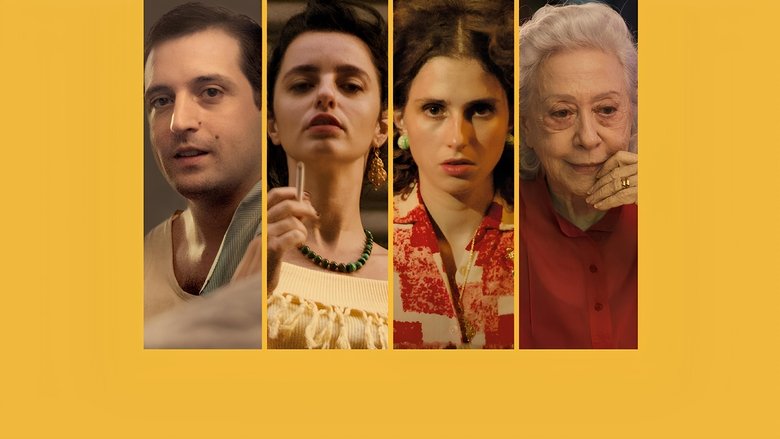
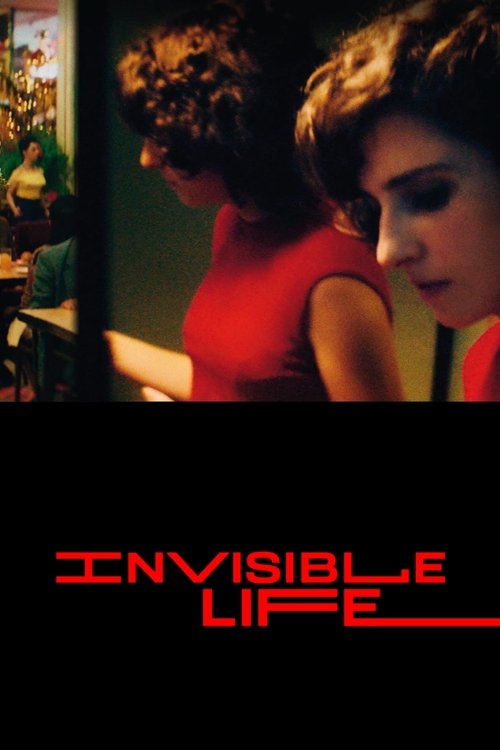
Invisible Life
A lush tropical melodrama drenched in saturated colors, tracing the parallel, stifling lives of two sisters separated by a father's lie and the suffocating shadows of a patriarchal 1950s Rio de Janeiro.
Invisible Life

Invisible Life

A Vida Invisível

"A tropical melodrama"

30 August 2019 Brazil 140 min ⭐ 7.8 (334)
Director: Karim Aïnouz
Cast: Carol Duarte, Julia Stockler, Fernanda Montenegro, Gregório Duvivier, Bárbara Santos
Drama
The Oppression of Patriarchy Sisterhood as a Sanctuary The Stifling of Female Ambition Chosen Family vs. Biological Family

Overview

Set in 1950s Rio de Janeiro, Invisible Life tells the heartrending story of two sisters, Eurídice and Guida Gusmão, who are inseparable until a cruel deception tears them apart. Guida, the rebellious romantic, elopes with a Greek sailor, while the studious Eurídice dreams of becoming a professional pianist in Vienna. When Guida returns home pregnant and alone, her conservative father, Manoel, disowns her and tells a malicious lie: he informs Guida that Eurídice has moved to Europe, and tells Eurídice that Guida has disappeared forever.

For the next several decades, the sisters live parallel lives within the same city, just miles apart but entirely invisible to one another. Eurídice remains trapped in a hollow, mediocre marriage to the boorish Antenor, her musical ambitions slowly fading into domestic mundanity. Meanwhile, Guida navigates the hardships of poverty as a single mother, finding a surrogate family among the working-class outcasts of Rio. They both spend their lives writing letters and searching for a reunion that is constantly thwarted by the men who control their worlds.

Core Meaning

The core meaning of the film lies in its critique of patriarchal systemic violence and the erasure of women's identities. Director Karim Aïnouz uses the "invisible" lives of these sisters to symbolize an entire generation of women whose talents, desires, and bonds were suppressed by a society that valued male honor over female humanity. The film suggests that while the men in their lives physically and emotionally separate them, the internal bond of sisterhood remains the only authentic truth, even when it is reduced to a haunting echo in the dark.

Thematic DNA

The Oppression of Patriarchy 35%
Sisterhood as a Sanctuary 25%
The Stifling of Female Ambition 20%
Chosen Family vs. Biological Family 20%

The Oppression of Patriarchy

The film illustrates how male authority—embodied by the father, Manoel, and the husband, Antenor—functions as a cage. Their control over information and the sisters' bodies (notably in the stark, unromantic wedding night scene) effectively renders the women's true selves invisible to the world.

Sisterhood as a Sanctuary

Despite their physical separation, the bond between Eurídice and Guida is the film's emotional anchor. Their shared memories and the letters they write (even if unread) serve as a mental sanctuary, proving that their connection is more resilient than the walls built by men.

The Stifling of Female Ambition

Eurídice’s struggle to maintain her piano practice despite the demands of marriage and motherhood represents the historical loss of female genius. Her music is her only escape, yet it is constantly dismissed as a mere hobby by her husband.

Chosen Family vs. Biological Family

While biological family (the father) is the source of trauma, the film highlights Guida's relationship with Filomena, a former prostitute who becomes her surrogate mother. This reflects how marginalized women create their own support systems in the absence of traditional family structures.

Character Analysis

Eurídice Gusmão

Carol Duarte / Fernanda Montenegro

Archetype: The Tragic Dreamer
Key Trait: Diligence

Motivation

To attend the Vienna Conservatory and to find her sister, who she believes is living a glamorous life in Europe.

Character Arc

Starts as a gifted pianist full of hope, transitions into a resigned housewife whose fire is slowly extinguished by domestic duty, only to experience a devastating realization in her old age.

Guida Gusmão

Julia Stockler

Archetype: The Rebellious Survivor
Key Trait: Resilience

Motivation

To find the love she was promised and to reunite with Eurídice, the only person who ever truly saw her.

Character Arc

Evolves from a naive romantic who elopes for love into a hardened, independent woman who builds a life from nothing and never stops searching for her sister.

Antenor

Gregório Duvivier

Archetype: The Banality of Evil
Key Trait: Obliviousness

Motivation

To maintain a traditional, "respectable" household and fulfill his physical and social desires as a man of his time.

Character Arc

Remains largely static as a representative of the average 1950s patriarch—not a monster in his own eyes, but a man whose entitlement makes him a primary obstacle to Eurídice's happiness.

Symbols & Motifs

The Piano

Meaning:

Symbolizes Eurídice’s voice and her suppressed potential. When she plays, she "disappears" into her true self, but the instrument also becomes a source of friction in her marriage, representing her desire for an identity outside of domesticity.

Context:

Used throughout the film, notably in the scene where her husband initiates sex while she is trying to practice, visually showing her talent being interrupted by male desire.

The Letters

Meaning:

Represent the "invisible" dialogue between the sisters and the hope that sustains them. They are physical evidence of a connection that exists in the mind but is denied in reality.

Context:

Guida writes letters to Eurídice throughout the decades; they are kept in a safe by Eurídice’s husband, effectively locking away the sisters' chance at a shared life.

The Tropical Jungle

Meaning:

Symbolizes both the untamed vitality of the sisters and the isolation of Rio. It is a place of primal connection that is quickly lost as they enter the rigid structures of the city.

Context:

The opening scene features the sisters losing each other in the lush greenery of the Tijuca Forest, foreshadowing their lifelong separation.

Memorable Quotes

Quando eu toco, eu desapareço.

— Eurídice

Context:

Said to Guida in their bedroom early in the film while discussing their futures.

Meaning:

Reflects the transcendence of art and how music is the only space where Eurídice feels she can shed the weight of her expected social role.

Que a Eurídice nunca saiba que ela aqui esteve.

— Manoel

Context:

Said by the father to himself/the mother after he disowns the pregnant Guida and hides her return from Eurídice.

Meaning:

The definitive moment of betrayal that seals the sisters' fates, prioritizing the father's pride over his daughters' lives.

Querida irmã, não perco a esperança de que você volte ao Brasil e que nos encontraremos.

— Guida

Context:

The recurring narration from Guida's unread letters to her sister.

Meaning:

Highlights the tragic irony of their situation; Guida believes Eurídice is the one who left, while she herself is just miles away.

Philosophical Questions

Can an identity exist if it is never witnessed?

The film explores the ontological tragedy of 'invisibility.' If Eurídice is a pianist but no one recognizes her as one, and if Guida is a sister but has no sister to acknowledge her, do those parts of them truly exist? The film suggests they exist only in the 'invisible' space of memory and longing.

To what extent is silence a form of violence?

The violence in the film is rarely loud; it is the silence of the mother who doesn't speak up, the father who hides the letters, and the husband who ignores his wife's needs. The film posits that systemic silence is as destructive as physical blows.

Alternative Interpretations

While primarily a story of sisterhood, some critics have offered a Queer Reading of the film. Director Karim Aïnouz, an openly gay filmmaker, often explores themes of 'chosen family' (like Guida and Filomena) and the performance of gender. In this view, Eurídice's marriage is a performance of heteronormativity that masks her true internal self, which can only be expressed through her music. Another interpretation views the film as a Political Allegory for Brazil’s own 'invisible' history, suggesting that the truth of the nation (the letters) is often hidden in the safes of the powerful (the patriarchs), and can only be recovered through the persistence of the younger generation.

Cultural Impact

Invisible Life had a significant cultural impact in Brazil and internationally for its unflinching portrayal of female domestic servitude. It challenged the nostalgic, 'golden age' view of 1950s Rio by exposing the toxic masculinity and classism that underpinned it. Critics praised it for reviving the 'melodrama' genre with a modern, feminist lens, showing that the struggles of these women were not merely 'soap opera' plots but systemic human rights issues. The film also sparked discussions about the 'invisible' labor of women in Brazilian history—the grandmothers and mothers whose personal dreams were sacrificed to sustain the family unit.

Audience Reception

Audience reception was overwhelmingly positive, particularly regarding the emotional depth and the chemistry between Carol Duarte and Julia Stockler. Many viewers were moved to tears by the 'missed connection' scenes, such as the one in the restaurant where the sisters are inches apart but never see each other. While some found the film’s 140-minute runtime and its 'slog of misfortune' difficult to watch, most praised the ending for its profound emotional payoff. On Rotten Tomatoes, it holds a high critical rating, with praise for its 'lush, dreamlike impression.'

Interesting Facts

  • The film is based on the 2016 novel 'The Invisible Life of Eurídice Gusmão' by Martha Batalha.
  • It won the Un Certain Regard prize at the 2019 Cannes Film Festival.
  • Fernanda Montenegro, who plays the older Eurídice, is considered the 'First Lady' of Brazilian theater and cinema and was an Oscar nominee for 'Central Station'.
  • Director Karim Aïnouz described the film's visual style as 'tropical melodrama' to distinguish it from European or North American melodrama.
  • The film was Brazil's official entry for the 2020 Academy Awards but did not make the final nomination list.
  • Cinematographer Hélène Louvart used specific lighting and color grading to make the Rio humidity feel tactile and 'sweaty' on screen.

Easter Eggs

The use of mirrors and 'frames within frames'

Cinematographer Hélène Louvart and Aïnouz frequently shoot the sisters through doorways, windows, or reflected in mirrors to visually reinforce their sense of entrapment and the 'fragmented' nature of their lives.

Fernanda Montenegro's casting

The appearance of Montenegro in the coda serves as a meta-textual bridge to the history of Brazilian cinema, grounding the fictional 'invisible' life in the very real cultural memory of Brazil.

⚠️ Spoiler Analysis

Click to reveal detailed analysis with spoilers

Frequently Asked Questions

Explore More About This Movie

Dive deeper into specific aspects of the movie with our detailed analysis pages

Comments (0)

Leave a comment

No comments yet. Be the first to share your thoughts!