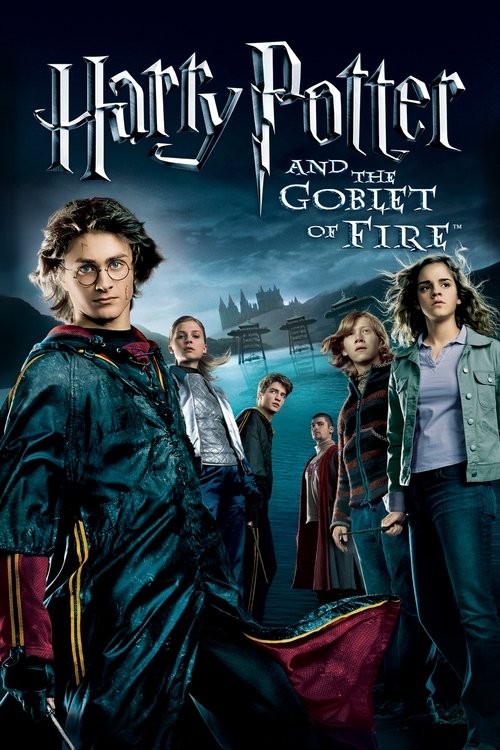
Harry Potter and the Goblet of Fire
A high-stakes magical tournament becomes a haunting rite of passage as teenage turmoil collides with the icy touch of mortality, painting a dark, competitive landscape where the shadows of the past finally take flesh.
Harry Potter and the Goblet of Fire

Harry Potter and the Goblet of Fire

"Dark and difficult times lie ahead."

16 November 2005 United Kingdom 157 min ⭐ 7.8 (21,660)
Director: Mike Newell
Cast: Daniel Radcliffe, Rupert Grint, Emma Watson, Brendan Gleeson, Michael Gambon
Fantasy Adventure
Adolescence and Romantic Turmoil The Return of Mortality Fate vs. Institutional Failure Deception and Hidden Identity
Budget: $150,000,000
Box Office: $895,921,036

Overview

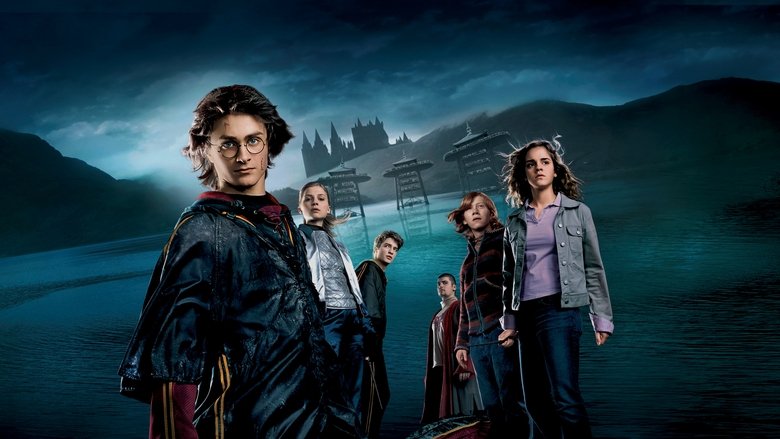
Harry Potter's fourth year at Hogwarts is disrupted when he is mysteriously selected as the fourth champion in the Triwizard Tournament, a dangerous international competition between three magic schools. Despite being underage and unwilling, Harry must compete in three grueling tasks—battling a fire-breathing dragon, navigating the treacherous depths of the Black Lake, and surviving a sentient hedge maze—while dealing with the skepticism and hostility of his peers.

As the tournament progresses, the atmosphere grows increasingly heavy as Harry navigates the complexities of adolescence, including the social pressures of the Yule Ball and a painful rift with his best friend, Ron. Meanwhile, ominous signs point toward a dark conspiracy within the school, leading to a chilling climax that marks the end of safety for the wizarding world and the beginning of a second war.
Core Meaning

The core of the film is the shattering of childhood safety and the transition into a world where choices have life-altering consequences. Director Mike Newell emphasizes the awkward, often painful reality of growing up, where the monsters are no longer just under the bed but are tangible, lethal entities. It explores the idea that innocence is a casualty of war, and that even the most protected environments, like a school, cannot shield one from the arrival of systemic evil and mortality.

Thematic DNA

Adolescence and Romantic Turmoil 30%
The Return of Mortality 30%
Fate vs. Institutional Failure 20%
Deception and Hidden Identity 20%

Adolescence and Romantic Turmoil

The film highlights the hormonal shifts of its protagonists, moving away from childhood adventure toward the awkwardness of the Yule Ball. This is revealed through Ron's jealousy, Hermione's frustration at being overlooked, and Harry's social anxiety, framing growing up as a challenge equal to any magical monster.

The Return of Mortality

Unlike previous entries where death was a mystery or a memory, here it becomes a visceral reality. The death of Cedric Diggory serves as a pivot point for the franchise, signaling that the stakes are now absolute and the protection of the 'Golden Boy' archetype has failed.

Fate vs. Institutional Failure

Harry is bound by a "magical contract" he did not sign. The theme explores how institutions (The Ministry of Magic and Hogwarts) prioritize tradition and protocol over the safety of the individual, effectively delivering Harry into the hands of his enemy through their own rigid rules.

Deception and Hidden Identity

The presence of Barty Crouch Jr. disguised as Mad-Eye Moody reveals how easily evil can infiltrate the most trusted circles. It underscores the theme that appearances are deceptive and that mentors can be the primary source of danger.

Character Analysis

Harry Potter

Daniel Radcliffe

Archetype: The Unwilling Hero
Key Trait: Resilience

Motivation

Initially, he just wants to survive the tournament he was forced into; later, his motivation shifts to protecting those around him and honoring Cedric's memory.

Character Arc

Harry moves from a student trying to enjoy a normal school year to a haunted survivor. By the film's end, he has witnessed the rebirth of his nemesis and the death of a friend, losing his last vestiges of childhood ignorance.

Lord Voldemort

Ralph Fiennes

Archetype: The Shadow Self
Key Trait: Malevolence

Motivation

To reclaim his physical form, kill the "Boy Who Lived," and prove his superiority over death itself.

Character Arc

Transitioning from a weak, spectral creature to a physical, terrifying presence. He regains his body and his followers, establishing himself as a tangible threat to the world.

Alastor 'Mad-Eye' Moody

Brendan Gleeson

Archetype: The False Mentor
Key Trait: Paranoia

Motivation

To deliver Harry to Voldemort while maintaining his cover within Hogwarts.

Character Arc

Appears to be a gruff, protective teacher who helps Harry survive, but is revealed to be Barty Crouch Jr., an impostor who was manipulating Harry's victory to ensure his capture.

Hermione Granger

Emma Watson

Archetype: The Voice of Reason
Key Trait: Perceptiveness

Motivation

To protect Harry from the tournament's dangers and navigate her own complicated social entry into adolescence.

Character Arc

She transitions from purely academic support to emotional maturity, dealing with the realization that her friends (particularly Ron) do not yet understand her as a young woman.

Ron Weasley

Rupert Grint

Archetype: The Everyman
Key Trait: Loyalty

Motivation

To step out of Harry's shadow and be recognized for his own merits, though this is hampered by his insecurities.

Character Arc

Struggles with inferiority and jealousy, leading to a temporary falling out with Harry. He eventually reconciles, recognizing the true danger Harry faces.

Symbols & Motifs

The Goblet of Fire

Meaning:

Symbolizes the fickle and binding nature of fate. It represents an impartial judge that disregards age and consent, acting as the mechanism that forces Harry out of his childhood role and into a dangerous destiny.

Context:

Used at the start of the tournament to select the champions; its blue flames turn red when spitting out Harry's name, signaling the corruption of the event.

The Hedge Maze

Meaning:

Represents the psychological transition to adulthood and the loss of direction. As the maze becomes darker and more claustrophobic, it reflects the characters' internal fears and the breakdown of sportsmanship into survivalism.

Context:

The location of the third and final task where the champions lose sight of each other and their moral compasses are tested.

The Dark Mark

Meaning:

A symbol of rising terror and fascist ideology. It serves as a visual herald for the end of the peace that had lasted since Voldemort's first fall.

Context:

Cast into the sky by Barty Crouch Jr. using Harry's stolen wand after the Quidditch World Cup riot.

Harry's Scar

Meaning:

A physical link to evil and a barometer for Voldemort's proximity and power. It symbolizes the inescapable connection between the hero and the antagonist.

Context:

Harry experiences burning pain in his scar throughout the film, particularly in the opening dream and during the graveyard duel.

Memorable Quotes

Dark and difficult times lie ahead. Soon we must all face the choice between what is right and what is easy.

— Albus Dumbledore

Context:

Spoken during the memorial service for Cedric Diggory at the end of the film.

Meaning:

This quote serves as the thematic thesis for the remainder of the series, emphasizing that moral integrity requires active effort in the face of convenience.

I love magic!

— Harry Potter

Context:

Harry exclaims this upon entering the magically expanded tent at the Quidditch World Cup.

Meaning:

Captures a final moment of childlike wonder before the tournament's horrors begin. It highlights the contrast between the joy of magic and its potential for evil.

Kill the spare.

— Lord Voldemort

Context:

Voldemort's cold command to Peter Pettigrew upon seeing Cedric Diggory in the graveyard.

Meaning:

Demonstrates Voldemort's utter lack of empathy and the dehumanization of those who aren't part of his grand plan. It is one of the darkest lines in the franchise.

I'm not a owl!

— Hermione Granger

Context:

Spoken to Harry and Ron in the Great Hall during their period of estrangement.

Meaning:

Reflects the frustration of adolescent social dynamics, as she refuses to be used as a mere messenger between the feuding Harry and Ron.

Philosophical Questions

Can fate be avoided if it's magically 'binding'?

The film questions whether the 'binding magical contract' of the Goblet is a literal force of nature or a societal construct used by the Ministry to avoid responsibility. It asks if Harry's participation was truly inevitable or if the adults chose law over life.

What defines the 'Right' choice vs. the 'Easy' choice?

Through Cedric's death and Harry's survival, the film explores the moral weight of competition. Harry chooses to help his competitors, which is 'right' but ultimately leads to a disaster he could have avoided if he had played 'easily' or selfishly.

Alternative Interpretations

Critics and fans have often debated the 'Anger of Dumbledore' in this film. While some see Michael Gambon's more aggressive portrayal (famously yelling "Did you put your name in the Goblet of Fire?!") as a directorial misstep, others interpret it as a deliberate choice to show Dumbledore's growing fallibility and panic as he realizes he can no longer protect Harry. Another interpretation suggests the entire Triwizard Tournament is a satire of institutional bureaucracy, where the adults are so obsessed with 'binding contracts' and 'international cooperation' that they become blind to the obvious kidnapping and murder plot unfolding under their noses.

Cultural Impact

Harry Potter and the Goblet of Fire was a landmark moment for the franchise, being the first entry to receive a PG-13 rating in the United States. This rating change signaled to the public that the series was maturing alongside its audience, moving away from children's fantasy toward 'Young Adult' dark drama. It solidified the 'Potter' films as a serious cinematic endeavor rather than just family entertainment. The introduction of Ralph Fiennes as Voldemort became an iconic piece of pop culture iconography, frequently cited as one of the most effective villain reveals in modern cinema. Additionally, the film's success ($897.5 million worldwide) proved that the franchise's momentum was only increasing as it entered its darker half.

Audience Reception

The film was largely praised for its tonal shift and action set-pieces, particularly the dragon chase and the graveyard climax. Critics at Metacritic and Rotten Tomatoes noted that Mike Newell successfully 'humanized' the characters by focusing on their dorky adolescent interactions. However, a significant point of criticism from book fans was the aggressive pacing and the removal of fan-favorite subplots like S.P.E.W. and the backstory of Barty Crouch. Despite these complaints, the overall verdict remains that it is one of the most 'exciting' and 'cinematic' entries in the series.

Interesting Facts

  • Mike Newell was the first British director to be hired for the Harry Potter film series.
  • Daniel Radcliffe spent a cumulative total of approximately 41 hours underwater during the filming of the second task.
  • The crew used a real, fire-breathing animatronic dragon for some of the close-up shots in the first task.
  • Ralph Fiennes' nose was digitally removed in every frame of the film to give Voldemort a snake-like appearance.
  • The underwater tank used for filming held 500,000 gallons of water and was one of the largest of its kind at the time.
  • A Basilisk puppet from the second film was repurposed and modified to create the dragon used in this film.
  • The actors had to take ballroom dancing lessons for the Yule Ball, though Daniel Radcliffe only had four days to learn due to his heavy filming schedule.

Easter Eggs

Dobby and Winky Cameo

While their major subplots from the book were cut, the house-elves Dobby and Winky can be seen briefly riding llamas at the Quidditch World Cup camp.

Nagini in the Warner Bros. Logo

In the very first shot, the snake Nagini can be seen reflected in the metallic surface of the Warner Bros. logo, foreshadowing her role in the opening scene.

Jarvis Cocker Cameo

The lead singer of the Britpop band Pulp, Jarvis Cocker, appears as the lead singer of the wizarding band 'The Weird Sisters' during the Yule Ball.

The Angel of Death Statue

The statue in the Little Hangleton graveyard that traps Harry is a recreation of a real-life statue from Highgate Cemetery in London.

⚠️ Spoiler Analysis

Click to reveal detailed analysis with spoilers

Frequently Asked Questions

Explore More About This Movie

Dive deeper into specific aspects of the movie with our detailed analysis pages

Comments (0)

Leave a comment

No comments yet. Be the first to share your thoughts!