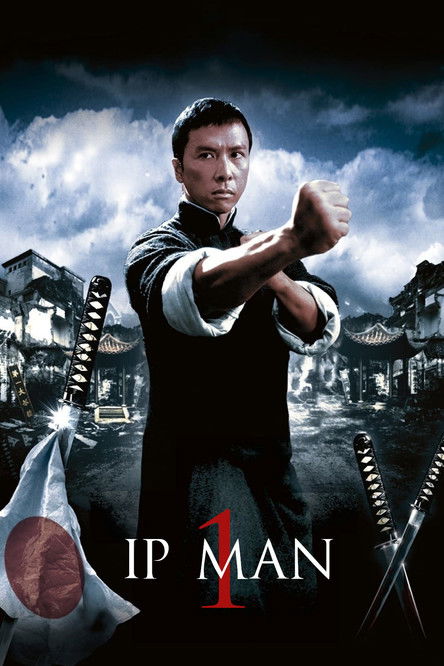
Ip Man
葉問
"The celebrated Kung Fu master of Bruce Lee."
Overview
In 1930s Foshan, a hub of Southern Chinese martial arts, Ip Man lives a wealthy and peaceful life, respected by the community but maintaining a low profile. He occasionally spars with local masters and an aggressive Northern challenger, Jin Shanzhao, always demonstrating the superiority of his Wing Chun style with restraint and humility. His life revolves around tea, training, and his family, despite his wife's subtle disapproval of his martial arts obsession.
The film's tone shifts drastically with the 1937 Japanese invasion of China. Stripped of his home and wealth, Ip Man and his family are plunged into destitution, forcing him to work in a coal mine to survive. When a sadistic Japanese general, Miura, establishes an arena where Chinese martial artists fight for bags of rice, Ip Man initially refuses to participate until a senseless tragedy compels him to step into the ring. His subsequent journey transforms him from a private martial artist into a reluctant symbol of national defiance.
Core Meaning
The film argues that true strength lies not in the capacity for violence, but in the preservation of dignity and humanity. While martial arts can be a tool for combat, its higher purpose is the cultivation of benevolence and character. Ip Man's journey illustrates that external oppression can strip a man of his material wealth, but it cannot conquer a spirit grounded in moral rectitude and cultural pride.
Thematic DNA
Dignity in Adversity
Ip Man loses his mansion, fortune, and social status, yet he never loses his composure or self-respect. Whether dining in luxury or sharing a meager sweet potato, his demeanor remains unchanged, suggesting that nobility is an internal state of being unassailable by external circumstances.
Nationalism and Resistance
The film frames Kung Fu as a vessel for Chinese identity. The Japanese occupiers see martial arts as merely a tool for violence and dominance, whereas Ip Man uses it to defend the weak and uphold the spirit of the Chinese people, turning his physical prowess into a metaphor for the nation's refusal to be broken.
Humility vs. Aggression
Contrasting Ip Man with the brash Jin Shanzhao and the brutal General Miura, the film posits that true mastery is quiet. Jin fights for fame and Miura for dominance; Ip Man fights only when necessary, embodying the Confucian ideal that the virtue of martial arts is benevolence.
Family and Duty
Initially, Ip Man's training creates tension with his wife, who sees it as a distraction. However, as the war destroys their comfort, his martial arts become the only shield for his family's survival, reconciling his passion with his duty as a husband and father.
Character Analysis
Ip Man
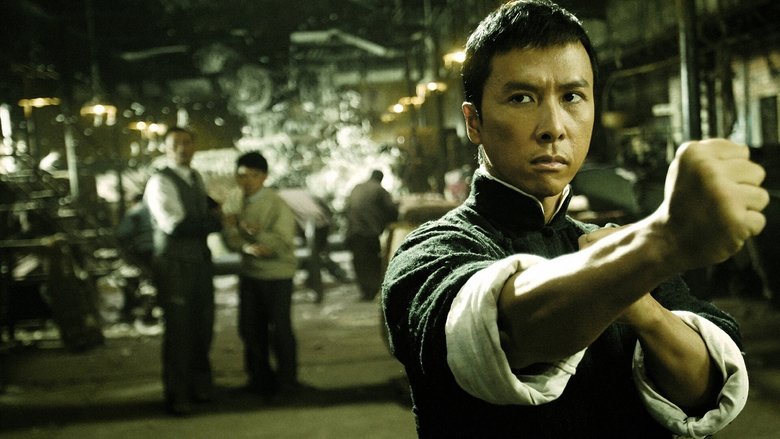
Donnie Yen
Motivation
To protect his family and uphold the dignity of Chinese martial arts against foreign oppressors.
Character Arc
Starts as a wealthy, somewhat detached patrician who treats martial arts as a refined hobby. The war forces him to descend into the mud of reality, where he must weaponize his art not for sport, but for the survival of his people and his own soul.
General Miura
Hiroyuki Ikeuchi
Motivation
To prove the supremacy of Japanese martial spirit and conquer the Chinese will through combat.
Character Arc
A Japanese general obsessed with the purity of martial arts. He seeks to prove the superiority of Japanese Karate over Chinese Kung Fu but finds himself intellectually and physically challenged by Ip Man's skill.
Jin Shanzhao
Fan Siu-wong
Motivation
To establish his own school and gain fame by dominating others.
Character Arc
Arrives as a rude, arrogant bully seeking fame by beating local masters. After being humbled by Ip Man, he later returns (in this or subsequent films) with a newfound respect, having learned that brute force is not true power.
Cheung Wing-sing
Lynn Hung
Motivation
To keep her family safe and together.
Character Arc
Initially resentful of her husband's fighting, seeing it as neglect of the family. The war shifts her perspective as she witnesses his strength becoming their only protection, leading to a silent, deep support.
Symbols & Motifs
The Sweet Potato
It symbolizes the drastic fall from grace and the sheer struggle for survival. It represents the meager sustenance that replaces the lavish banquets of the first act, highlighting the fragility of privilege.
Ip Man shares a roasted sweet potato with his family in their destitute apartment, and later attempts to give it to his friend, emphasizing his generosity even when he has nothing.
The Wooden Dummy
A symbol of dedication, stability, and the enduring nature of Ip Man's practice. It stands as a silent witness to his life, from times of peace to the chaos of war.
Used for rhythmic training in his mansion, and later, stripped of his equipment, Ip Man practices on a makeshift pile of coal/wood, showing that the spirit of the art exists within the practitioner, not the equipment.
Rice
Life, survival, and the commodification of human dignity. It represents the desperate bargain the martial artists make—trading their bodies and pride for basic sustenance.
Martial artists fight Japanese soldiers in the arena to win bags of rice. Ip Man picks up the blood-stained rice bag of his fallen friend, reclaiming the dignity that was stolen.
Memorable Quotes
I want to fight ten!
— Ip Man
Context:
Standing in the Japanese dojo arena after witnessing his friend brutally executed, Ip Man demands to fight ten karate black belts simultaneously.
Meaning:
The film's most iconic line. It marks the breaking point of Ip Man's restraint. It is not a boast, but a cry of rage and grief over the senseless death of Master Liu, demanding justice through the only language the oppressors understand.
There are no men who fear their wives, only men who respect them.
— Ip Man
Context:
Said to Master Liu and Jin Shanzhao when taunted about asking his wife's permission to fight.
Meaning:
Reveals Ip Man's progressive and gentle nature. He reframes the perceived weakness of being 'henpecked' into a virtue of mutual respect, disarming a challenger with wisdom rather than fists.
The virtue of martial arts is benevolence. This is something the Japanese will never understand.
— Ip Man
Context:
Spoken to General Miura during their final confrontation, rejecting the General's offer to teach the Japanese troops.
Meaning:
Defines the core philosophical conflict. Ip Man asserts that violence without morality is merely brutality, and that true power comes from the heart, not the fist.
Philosophical Questions
Is violence ever justified?
The film explores this through Ip Man's reluctance. He initially fights only for sport or defense. However, the film suggests that when dignity and the survival of a people are at stake, violence becomes a moral imperative—a tool for justice rather than oppression.
What is the true purpose of martial arts?
General Miura views martial arts as a means of domination and military strength. Ip Man views it as a path to personal cultivation and benevolence. The film posits that martial arts without 'De' (virtue) is merely brutality.
Can dignity survive without material power?
Ip Man loses everything material but retains his status and respect. The film asks if a man's worth is defined by his possessions or his internal character, concluding that true nobility survives even in the coal mines.
Alternative Interpretations
While ostensibly a biopic, many critics view the film as historical revisionism/myth-making. The real Ip Man never fought a Japanese general in a public duel, nor did he work as a coolie in a coal mine (he was a police officer). Thus, the film can be interpreted less as a biography and more as a nationalist allegory, where Ip Man's body represents the resilience of the Chinese nation—initially passive and wealthy, then humiliated and battered, and finally rising to reclaim its dignity. Some also read the film as a critique of passive pacifism; Ip Man's initial refusal to get involved or teach others is shown to be insufficient when true evil (fascism) arrives, suggesting that good men must eventually fight.
Cultural Impact
Ip Man (2008) revitalized the Hong Kong martial arts genre, which had been flagging in the late 2000s. It sparked a massive global resurgence of interest in Wing Chun, with schools worldwide reporting a surge in enrollment. Culturally, it successfully rebranded the 'nationalist Kung Fu hero' archetype (previously popularized by Jet Li as Wong Fei-hung) for a new generation, blending modern, gritty fight choreography with traditional Confucian values. The film launched a successful franchise and solidified Donnie Yen's status as the premier martial arts star of his era. Critics praised it as one of the best martial arts films of the 21st century, noting how it balanced visceral action with genuine emotional weight.
Audience Reception
The film received universal acclaim from action fans and strong positive reviews from general critics. Audiences praised the fight choreography (specifically the rapid-fire 'chain punching') as visceral and groundbreaking. Donnie Yen's performance was lauded for its subtlety and gravitas, a departure from his usual hot-headed roles. Criticism was largely directed at the one-dimensional portrayal of the Japanese villains and the historical inaccuracies, which some felt bordered on jingoistic propaganda. However, the emotional payoff and the '1 vs 10' scene are widely regarded as legendary moments in action cinema history.
Interesting Facts
- Donnie Yen was injured near his eye by an axe wielder during a fight scene; the wound required medical attention but he finished the shoot.
- Ip Man's eldest son, Ip Chun, served as a major consultant on the film to ensure authenticity in the portrayal of Wing Chun and his father's character.
- The film was originally titled 'Grandmaster Ip Man', but the title was changed to resolve a dispute with Wong Kar-wai, who was developing 'The Grandmaster' at the same time.
- The fight scene where Ip Man fights 10 black belts is a direct thematic homage to Bruce Lee's 'Fist of Fury', where Lee's character Chen Zhen fights an entire Japanese dojo.
- Donnie Yen lost significant weight to portray the malnourished Ip Man during the wartime segments, adhering to a strict diet of one meal a day.
- The cotton mill set was built in an abandoned warehouse in Shanghai because modern Foshan had changed too much to be used for filming.
- Sammo Hung, the action choreographer, designed the fights to reflect the character's emotional state—controlled and precise in peace, brutal and efficient in war.
Easter Eggs
The 'One vs Ten' Dojo Fight
This sequence mirrors the iconic scene in Fist of Fury (1972) where Bruce Lee (Ip Man's real-life student) fights an entire Japanese dojo. It creates a cinematic lineage between master and student.
End Credits Text
The film ends with text explicitly stating that Ip Man began teaching a young Bruce Lee in 1953, cementing the film's connection to the global icon of martial arts.
Northern vs. Southern Style
The rivalry between Jin (Northern style) and Ip Man (Southern style) references a historical divide in Chinese martial arts culture, often depicted in Wuxia films as a clash between 'hard/external' (North) and 'soft/internal' (South) techniques.
⚠️ Spoiler Analysis
Click to reveal detailed analysis with spoilers
Frequently Asked Questions
Explore More About This Movie
Dive deeper into specific aspects of the movie with our detailed analysis pages
Comments (0)
No comments yet. Be the first to share your thoughts!