Ernest & Celestine
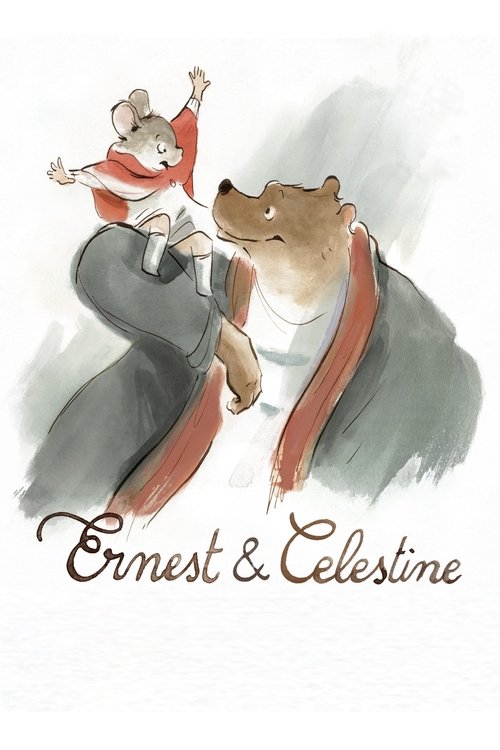
A tender, watercolor-drenched fable where a gruff bear and a spirited mouse defy a segregated world. Amidst snow and subterranean tunnels, their forbidden bond blossoms into a quiet revolution of art, music, and unconditional love.
Ernest & Celestine

Ernest & Celestine

Ernest et Célestine

"Bonnie and Clyde, Sid and Nancy..."

12 December 2012 Belgium 80 min ⭐ 7.8 (657)
Director: Vincent Patar Stéphane Aubier Benjamin Renner
Cast: Anne-Marie Loop, Lambert Wilson, Pauline Brunner, Patrice Melennec, Brigitte Virtudes
Crime Animation Family Adventure
Prejudice and Segregation Unlikely Friendship Art vs. Utility Fear as Control
Budget: $12,500,000
Box Office: $8,170,333

Overview

In a world strictly divided by fear and prejudice, bears live in the city above ground while mice dwell in the sewers below. Celestine, an orphan mouse with an artistic soul, is forced to collect bear teeth for her society's dental industry but dreams of drawing. She constantly questions the terrifying tales told about bears. Meanwhile, Ernest, a destitute and solitary bear living on the fringes of society, wakes up from hibernation starving and grumpy.

Their paths collide when Ernest finds Celestine in a trash can. Instead of eating her, as social norms dictate, he strikes a bargain: she helps him break into a candy shop, and he helps her steal a sack of teeth. This crime spree turns them into fugitives hunted by the police of both worlds. Taking refuge in Ernest's secluded cabin during the winter, they overcome their mutual prejudices and bond over their shared love for music and art, forming an unlikely family.
Core Meaning

Ernest & Celestine is a poignant critique of social prejudice and the artificial barriers constructed by fear. The film posits that hatred is learned, not innate, and that art and empathy have the power to dismantle systemic segregation. By showing two outcasts who refuse to conform to their species' expected roles, the directors illustrate that individual connection is stronger than collective dogma.

Thematic DNA

Prejudice and Segregation 30%
Unlikely Friendship 25%
Art vs. Utility 25%
Fear as Control 20%

Prejudice and Segregation

The film establishes a binary world: 'Bears above, mice below.' This segregation is maintained through fearmongering (scary bedtime stories) and rigid social rules. The characters' journey exposes the absurdity of these arbitrary divisions.

Unlikely Friendship

Ernest and Celestine find kindred spirits in each other despite their size and species differences. Their bond evolves from transactional necessity to a deep, familial love that defies the 'natural order' dictated by their societies.

Art vs. Utility

Both protagonists are artists in utilitarian societies. Celestine draws instead of studying dentistry; Ernest plays music instead of being a judge. The film champions creative expression as a vital, rebellious act against a soul-crushing system.

Fear as Control

The orphanage headmistress, The Grey One, uses terror to control the mice children, just as the bears fear the 'vermin' mice. The film shows how authority figures manufacture fear to maintain power and social order.

Character Analysis

Ernest

Lambert Wilson (French) / Forest Whitaker (English)

Archetype: The Gentle Giant / Outcast
Key Trait: Impulsive kindness

Motivation

Initially hunger and survival; later, the desire to protect Celestine and live freely as a musician.

Character Arc

Starts as a grumpy, starving loner motivated only by food. Through Celestine's influence, he taps into his paternal instincts and artistic passion, transforming from a 'wild beast' into a loving protector.

Celestine

Pauline Brunner (French) / Mackenzie Foy (English)

Archetype: The Spirited Dreamer
Key Trait: Unwavering optimism

Motivation

To draw, to express herself, and to find a kindred spirit who understands her art.

Character Arc

Begins as an orphan stifled by her society's expectations. She courageously breaks taboos to prove that bears and mice can be friends, eventually challenging the highest courts of law to defend her truth.

The Grey One (La Grise)

Anne-Marie Loop (French) / Lauren Bacall (English)

Archetype: The Enforcer
Key Trait: Dogmatic severity

Motivation

Maintaining order through fear and tradition.

Character Arc

Remains a static symbol of the old guard. She perpetuates the cycle of fear by terrifying the mouse children with stories of the 'Big Bad Bear'.

Symbols & Motifs

Teeth

Meaning:

Strength and Currency. In the mouse world, the physical strength of incisors is the ultimate value, representing a society obsessed with utility and productivity over emotion.

Context:

Mice build their entire economy and infrastructure around stolen bear teeth; losing a tooth is a shameful loss of social standing.

The Green Umbrella

Meaning:

Protection and Connection. It symbolizes Celestine's distinct identity and later becomes a shared object of care between her and Ernest.

Context:

Celestine carries it when she ventures above ground; it is one of the few items that transitions with her into Ernest's world.

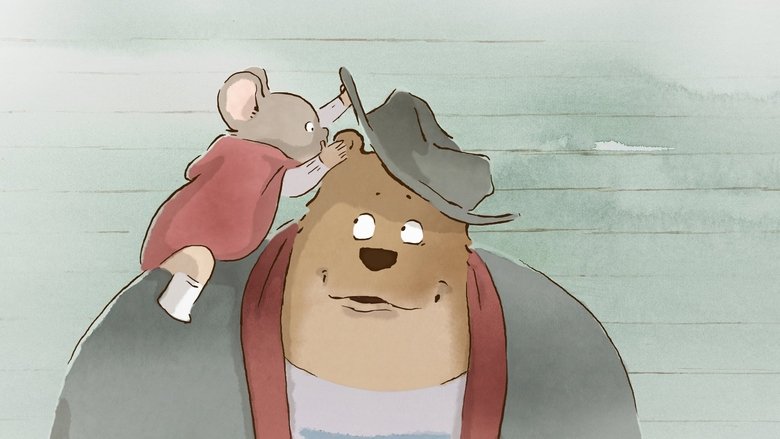
Watercolor Aesthetics

Meaning:

Softness and Humanity. The visual style itself symbolizes the fluidity of boundaries and the warmth of their relationship, contrasting with the rigid, hard lines of their societies' laws.

Context:

The entire film is rendered to look like a living painting, but the effect is most pronounced in moments of emotional intimacy and during the dream sequences.

Memorable Quotes

Ernest, I'm hungry!

— Celestine

Context:

Spoken when they are hiding in the van, mirroring Ernest's earlier complaints about his own hunger.

Meaning:

A reversal of roles where the tiny mouse demands care from the predator, establishing their equality and shared basic needs.

Bears eat mice. That's how it is.

— Ernest

Context:

When Ernest first finds Celestine in the trash and contemplates eating her for breakfast.

Meaning:

Reflects the internalized social dogma that Ernest initially accepts before Celestine challenges his worldview.

I am not a nightmare!

— Ernest

Context:

During the trial when the mouse judge accuses him of being the monster from their fairy tales.

Meaning:

Ernest's plea for his own humanity (or bear-manity), rejecting the monstrous projection placed upon him by mouse society.

Philosophical Questions

Is prejudice innate or learned?

The film argues it is learned. The 'Big Bad Bear' is a story told to children to manufacture fear. Celestine's refusal to believe it without evidence suggests that hatred is a social construct, not a biological reality.

Does law equate to morality?

Both the bear and mouse judges enforce laws that perpetuate segregation. The protagonists break these laws (theft, vandalism) but act with higher moral integrity (compassion, rescue), questioning the legitimacy of unjust laws.

Alternative Interpretations

While primarily a story of friendship, the film invites several deeper readings:

  • The Anti-Capitalist Allegory: The mouse society's obsession with teeth can be seen as a critique of capitalism, where biological imperatives (chewing/strength) are twisted into a commodity-based economy.
  • Queer Theory/Chosen Family: Ernest and Celestine's relationship, which defies biological and social norms to form a domestic unit, is often interpreted as a metaphor for queer kinship or 'chosen family' in the face of a heteronormative society.
  • The Artist as Revolutionary: The film suggests that artists are inherently dangerous to authoritarian regimes because they imagine alternatives to the status quo.

Cultural Impact

Ernest & Celestine is celebrated as a triumph of traditional 2D animation in an era dominated by 3D CGI. Its release was met with universal critical acclaim for its gentle yet subversive storytelling.

  • Cinematic Influence: It proved that hand-drawn, watercolor aesthetics could sustain a feature-length narrative, influencing subsequent European animation styles (like The Big Bad Fox and Other Tales).
  • Social Commentary: Critics widely analyzed the film as an allegory for class struggle, racism, and xenophobia, making it a staple in discussions about how children's media can handle complex political themes.
  • Recognition: It holds a rare 100% or near-perfect rating on many review aggregators and brought global attention to the original Belgian book series.

Audience Reception

The film received universal acclaim from both audiences and critics.

  • Praised: Viewers fell in love with the "cozy" visual style, the genuine chemistry between the leads, and the lack of cynical pop-culture references common in modern animation.
  • Criticism: Negative reviews are virtually non-existent, though some parents noted that the "nightmare sequences" and the intensity of the police chase might be frightening for very young toddlers.
  • Verdict: It is widely regarded as a modern classic of animation, often described as "healing" and "pure."

Interesting Facts

  • The film is based on a series of Belgian children's books by Gabrielle Vincent.
  • Gabrielle Vincent refused to sell the adaptation rights during her lifetime; the film was only made after her death with her family's permission.
  • It was the first animated film to win the Magritte Award for Best Film (the Belgian equivalent of the Oscars).
  • The animation was created using Flash software, but special proprietary tools were developed to give it the texture and bleeding edges of traditional watercolor painting.
  • Lambert Wilson, who voices Ernest in French, is a prominent actor known internationally (e.g., The Merovingian in The Matrix sequels).
  • The English dub features a star-studded cast including Forest Whitaker, Lauren Bacall, Paul Giamatti, and William H. Macy.
  • Author Daniel Pennac, who wrote the screenplay, was a personal friend of Gabrielle Vincent.
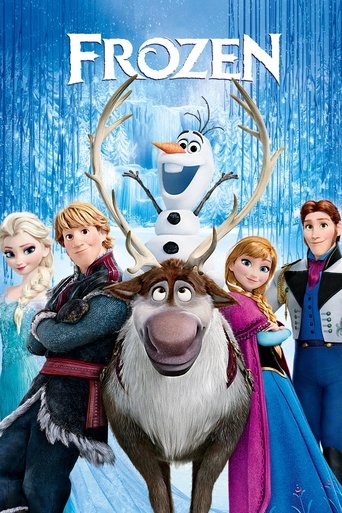
  • The film was nominated for Best Animated Feature at the 86th Academy Awards but lost to Frozen.

Easter Eggs

Paintings in the Museum

When the characters visit the museum, some of the paintings on the walls are direct recreations of illustrations from Gabrielle Vincent's original book series.

Simeon the Toy

Celestine's stuffed bird toy is named Simeon, which is a reference to a specific character/book in the original series, Ernest et Célestine ont perdu Siméon.

⚠️ Spoiler Analysis

Click to reveal detailed analysis with spoilers

Frequently Asked Questions

Explore More About This Movie

Dive deeper into specific aspects of the movie with our detailed analysis pages

Comments (0)

Leave a comment

No comments yet. Be the first to share your thoughts!