Skip to content
Island
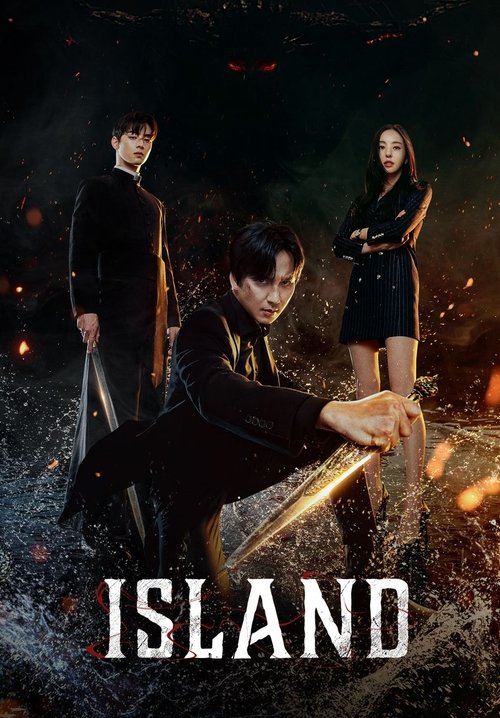
A grim supernatural epic drenched in ancient sorrow, where fractured souls collide against a tempestuous Jeju coastline, wielding bloodstained blades and holy fire to seal away primordial darkness.
Island

Island

아일랜드

30 December 2022 — 10 March 2023 South Korea 1 season 12 episode Ended 8.0 (243)

Cast: Kim Nam-gil, Lee Da-hee, Cha Eun-woo, Sung Joon, Heo Jung-hee

Drama Sci-Fi & Fantasy Action & Adventure Fate, Karma, and the Cycle of Reincarnation Humanity vs. Monstrosity (The Cost of Weaponization) Guilt, Atonement, and Self-Forgiveness Faith, Loss, and Existential Despair Spiritual Syncretism and Solidarity

Overview

Island (아일랜드) is a dark fantasy action thriller set against the windswept, myth-steeped landscape of Jeju Island. The overarching narrative follows Won Mi-ho, an arrogant and wealthy chaebol heiress who is exiled to Jeju following a high-profile public scandal arranged by her scheming family. Upon arrival, Mi-ho discovers that the island is an epicenter of malevolent forces infested by Jungyeomgwi—ravenous lust demons that feed on negative human emotion and seek to annihilate the mortal realm. Unbeknownst to her, Mi-ho is the modern reincarnation of Wonjeong, a legendary saint destined to establish an ethereal protective barrier across the island.

To survive the demonic onslaught targeting her dormant spirit, Mi-ho forms a precarious alliance with Van, an immortal half-human, half-demon warrior cursed centuries ago to slaughter evil spirits, and Priest Johan, a prodigiously gifted Catholic exorcist sent by the Vatican to safeguard the prophesied savior. As the trio confronts escalating supernatural threats, ancient betrayals and forgotten karmic debts resurface. They find themselves hunted not only by wild demons but by Goong-tan, Van’s former demon-slayer brother-in-arms, who has embraced malice to destroy humanity as vengeance for their shared exploitation.

Spanning 12 tightly packed episodes across two parts, the series charts a harrowing journey from reluctant survival to self-sacrificial duty. As Mi-ho works to awaken her spiritual memories and powers, the team must confront deep personal traumas, systemic historical atrocities, and the existential price required to restore cosmic equilibrium.
Core Meaning

At its philosophical core, Island investigates whether beings weaponized and broken by institutional cruelty can retain their intrinsic humanity. Through the tragedy of Van and Goong-tan—orphans forcibly infused with demon blood by ancient monks to create expendable protectors—the show delivers a profound critique of sacrificial utilitarianism.

The series posits that while trauma and systemic abuse foster resentment capable of corrupting the soul into a literal monster, redemption and moral agency remain active choices. True salvation requires confronting past guilt, bridging cultural and spiritual divides, and choosing protective sacrifice over self-serving vengeance.

Thematic DNA

Fate, Karma, and the Cycle of Reincarnation 30%
Humanity vs. Monstrosity (The Cost of Weaponization) 25%
Guilt, Atonement, and Self-Forgiveness 20%
Faith, Loss, and Existential Despair 15%
Spiritual Syncretism and Solidarity 10%

Fate, Karma, and the Cycle of Reincarnation

The narrative is propelled by an unresolved tragedy from ancient Tamra (Jeju). Mi-ho's journey is not merely about surviving demonic attacks, but confronting a predetermined destiny she did not ask for. Her spiritual evolution from an indifferent modern corporate heiress into the enlightened guardian Wonjeong illustrates the weight of karmic responsibility across lifetimes.

Humanity vs. Monstrosity (The Cost of Weaponization)

Both Van and Goong-tan were stripped of their innocence and turned into living weapons (Slayer Monks). The drama contrasts their divergent paths: Goong-tan succumbs to resentment and demonizes all humanity, whereas Van actively suppresses his demonic instincts at great physical and spiritual agony to safeguard human life.

Guilt, Atonement, and Self-Forgiveness

Van spends centuries in torment, burdened by the agony of having struck down Wonjeong in his berserk demon state centuries prior. His drive to protect Mi-ho is rooted in a desperate pursuit of atonement, proving that moral worth is defined not by the darkness within one's blood, but by one's choices.

Faith, Loss, and Existential Despair

Exemplified through Priest Johan, the narrative interrogates religious devotion in the face of profound personal tragedy. When Johan is forced to exorcise and ultimately kill his demonic brother, his faith undergoes a brutal trial by fire, questioning why a benevolent deity permits the innocent to suffer.

Spiritual Syncretism and Solidarity

The series uniquely synthesizes Korean indigenous shamanism, Buddhist esotericism, Jeju island mythologies (Seolmundae Halmang folklore), and Western Roman Catholic demonology. No single tradition holds all the answers; only mutual collaboration between Eastern ritualists and Western exorcists enables the sealing of ultimate evil.

Character Analysis

Van

Kim Nam-gil

Archetype: Tragic Antihero / Reluctant Protector Key Trait: Relentless self-control amidst agonizing internal demon bloodlust.

Motivation

A desperate pursuit of atonement for killing Wonjeong and safeguarding Mi-ho from demonic destruction.

Character Arc

Created in the ancient Tamra era as a hybrid demon-slayer weapon, Van has lived in self-imposed isolation and guilt for over a millennium after fatally stabbing Wonjeong in a berserk state. Cold, stoic, and weary of existence, he views himself purely as a monster. Meeting Mi-ho rekindles his suppressed emotions; he shifts from viewing her as a burdensome debt of atonement to genuinely valuing her present existence, ultimately sacrificing himself to eradicate Goong-tan and seal the demon realm forever.

Won Mi-ho / Wonjeong

Lee Da-hee

Archetype: Reincarnated Savior / The Reluctant Chosen One Key Trait: Uncompromising resilience, strategic courage, and innate empathy.

Motivation

Surviving supernatural attacks, discovering her true purpose, and protecting the innocent by awakening her barrier powers.

Character Arc

Begins as a spoiled, fiercely defensive corporate heiress banished to Jeju as an ethics teacher after falling into a family trap. When confronted by demonic threats, she refuses to remain a passive victim. Throughout the series, she grapples with the realization that her life belongs to a larger cosmic purpose, successfully mastering her latent spiritual barrier abilities while fighting to retain her individual identity as Mi-ho.

All 5 characters and cast

Symbols & Motifs

Dol Hareubang (Stone Grandfathers)

Meaning:

Symbolizes ancient protection and the mystical boundary preserving human safety from demonic realms.

Context:

Traditionally Jeju's basalt guardian statues, within the series they serve as mystical anchoring totems enclosing ancient evil. Their corruption and destruction by Goong-tan signify the erosion of spiritual boundaries protecting the mortal realm.

The Geumgangjeo (Vajra Dagger)

Meaning:

Symbolizes righteous wrath, the destruction of illusion, and the harsh discipline required to vanquish inner and outer demons.

Context:

Used as Van's signature weapon, forged with sacred Buddhist iconography and imbued with spiritual lightning during combat against demonic entities.

Benjulle (The Sacred Wish Tree)

Meaning:

Serves as a motif for corrupted justice, demonstrating how unresolved human trauma transforms into monstrous vengeance.

Context:

An ancient arboreal deity in Jeju's forest that absorbs the sorrow and vengeance of abused youths.

The Catholic Rosary and Glowing Stole / Holy Sword

Meaning:

Represents steadfast youthful faith, spiritual purity, and the active struggle to purge demonic corruption.

Context:

Wielded by Priest Johan, illuminating with brilliant blue-white holy energy during exorcism rites and demonic battles.

The Barrier Marble (Barrier Relic)

Meaning:

Symbolizes self-sacrifice, universal protection, and the dormant divinity inside Mi-ho that must be awakened to restore cosmic balance.

Context:

The crystallized spiritual core belonging to Wonjeong, required to establish the protective barrier sealing demons away from Jeju Island.

Memorable Quotes

너는 절대 사람이 될 수 없다. 괴물로 태어나 괴물로 죽는 것이다.
— Head Monk of Taejang Sect

Context

Spoken to young Van during his brutal conditioning in the ancient Tamra era (Part 1, Episode 1 / Backstory).

Meaning

Establishes the core psychological wound and existential curse driving Van's centuries of self-hatred.

내가 널 죽이지 않게 해 줘. 날 막아줘.
— Van

Context

Van speaking to Won Mi-ho when struggling with his demonic bloodlust (Part 1, Episode 6).

Meaning

Highlights Van’s desperation as his demon side threatens to overwhelm his consciousness, revealing his deep trust in Mi-ho’s ability to anchor his humanity.

All 5 quotes

Episode Highlights

The Exile to Tamra

S1E1

Sets up the modern lore, establishing Won Mi-ho's banishment to Jeju and her first lethal encounters with the lust demons (Jungyeomgwi). Features the debut of Kim Nam-gil’s Van in explosive combat, laying the foundation of the bodyguard contract.

Significance:

Establishes the core premise, character dynamics, and supernatural threat driving the series.

The Young Exorcist Arrives

S1E3

Introduces Priest Johan into the main household dynamic, establishing the high-tempo collaboration between Catholic exorcism and Eastern demon-slaying. Also introduces the Benjulle school storyline.

Significance:

Integrates the Western exorcism element with Korean shamanic and Buddhist lore, cementing the core trio.

Reunion and the Shadow of Goong-tan

S1E5

Bridges the past and present by showcasing ancient Tamra’s brutal origins. Reveals Goong-tan's survival and awakening, while Van nearly loses control of his demonic form in front of Mi-ho.

Significance:

Deepens the lore behind the half-demon slayers and introduces the primary antagonist into the present-day timeline.

Fratricide and Broken Faith

S1E6

The tragic midpoint climax where Johan attempts to save his corrupted brother Chan-hee, only to realize he must kill him to end the demon's reign. Serves as Johan's profound emotional transformation.

Significance:

Catalyzes Johan's evolution from an idealistic youth to a resolute, battle-hardened spiritual warrior.

The Fall of the Shaman

S2E9

Goong-tan’s demonic offensive ramps up as he breaks the protective wards of Jeju and executes key guardians. Granny Geum Baek-ju’s past secrets regarding Yeom-ji and the Dol Hareubang are exposed.

Significance:

Dismantles the remaining ancestral protection of Jeju, setting the stage for the final apocalypse.

Centuries of Atonement

S2E12

The epic showdown between Van and Goong-tan. Mi-ho successfully raises the ultimate spiritual barrier around Jeju Island. Van sacrifices himself to kill Goong-tan, finding final peace, while a one-year time-skip reveals Mi-ho and Johan establishing an international demon-monitoring network.

Significance:

Concludes the overarching karmic cycle of Tamra, granting Van absolution and setting up a global demon-hunting infrastructure.

Philosophical Questions

Can an entity engineered solely for destruction choose to embody salvation?

Explored through Van's persistent battle against his intrinsic demonic bloodlust to protect humans who once treated him as a monster.

Does institutional evil justify total nihilistic retaliation?

Explored through Goong-tan's campaign to slaughter humanity due to the betrayal of ancient religious leaders.

Where is divine intervention when the innocent suffer?

Explored through Johan’s agonizing crisis of faith when God fails to save his brother from possession.

Does destiny negate individual free will?

Explored through Mi-ho resisting the loss of her modern personality while accepting the sacred duty of Wonjeong.

Alternative Interpretations

The Tragedy of Systemic Exploitation vs. Individual Choice: Critics interpret Van and Goong-tan as allegories for marginalized child victims weaponized by dogmatic religious institutions. Goong-tan’s villainy is not inherent evil, but the natural outcome of unresolved systemic trauma. Van’s sacrifice is seen as an act of breaking that cycle—refusing to let the monks' cruelty dictate how his life concludes.

Full ending explanation

Cultural Impact

Island stands out in modern K-drama television by centering the unique cultural and spiritual identity of Jeju Island (historically the kingdom of Tamra). Mainland Korean dramas frequently rely on Joseon-era shamanism or Joseon ghost stories; Island instead spotlights Jeju’s distinctive animistic heritage, including Dol Hareubang totems, local female divers (Haenyeo), and volcanic folklore.

The drama contributed significantly to the evolving "K-Exorcism" subgenre (seen in shows like The Guest and Priest), seamlessly integrating high-gothic Vatican exorcism rites with Buddhist mudras, Sanskrit dharanis, and Taoist talismanic warding.

Broadcast domestically on CJ ENM’s streaming service TVING and distributed globally across 240+ countries via Amazon Prime Video, Island reached Top 10 rankings across numerous Southeast Asian and Latin American markets. Its presentation at Canneseries 2023 further cemented the international prestige and technical ambitions of Korean high-budget streaming fantasy.

Audience Reception

For Part 1 (Episodes 1–6), the series was universally lauded for its cinematic action sequences, atmospheric depiction of Jeju, and strong casting. Kim Nam-gil’s brooding intensity and Cha Eun-woo’s charismatic performance as the stylish young priest received viral acclaim. However, some viewers criticized the rapid tonal shifts between high-stakes horror and high-school drama subplots, along with occasional pacing lulls.

For Part 2 (Episodes 7–12), reception celebrated the emotional depth, particularly the tragic backstories, Johan’s emotional maturity, and the visual scale of the finale. Criticisms centered on the multi-week broadcast split between Part 1 and Part 2, which frustrated binge-watchers, and certain CGI-heavy demon battles that divided audiences regarding VFX polish.

Overall, Island is regarded as a bold, visually striking webtoon adaptation that successfully brought dark Korean folklore to the international stage.

Interesting Facts

  • Based on the classic 1997 manhwa and subsequent Naver Webtoon Island written by Yoon In-wan and illustrated by Yang Kyung-il, one of Korea’s most foundational dark fantasy comic IPs.
  • The series was directed by acclaimed film director Bae Jong (Park Kwang-hyun), who previously directed the Korean box-office hit film Welcome to Dongmakgol (2005).
  • The role of Won Mi-ho was initially offered to and accepted by Seo Yea-ji, but she departed the project before filming commenced; Lee Da-hee was subsequently cast and earned praise for her commanding performance.
  • To portray Priest Johan convincingly, Cha Eun-woo took intensive Latin and Italian pronunciation lessons and attended stunt action academy for knife and sword choreography.
  • Island achieved significant global recognition when its premiere episode was officially selected and screened at the 2023 Cannes International Series Festival (Canneseries) in the Rendez-vous Out of Competition category.
  • Kim Nam-gil’s own comprehensive management and production banner, Gilstory Ent, participated as an official co-producer alongside Studio Dragon and YLab.
  • Shot extensively on location across Jeju Island to capture its rugged volcanic topography, ancient forests (Gotjawal), and authentic coastal atmosphere.

Easter Eggs

YLab Super String Universe Ties

The manhwa Island is a cornerstone of YLab’s interconnected comic franchise, the Super String Universe. While the live-action series focuses on a self-contained narrative, small design motifs on ancient talismans, organizations, and the post-credits demon tracker pay subtle homage to wider Super String lore.

Choi Tae-joon's Tragic Cameo

Actor Choi Tae-joon makes a pivotal special appearance in Part 1 as Kang Chan-hee, Johan's long-lost older brother, delivering the catalyst that shatters Johan's innocence.

Jeju Creation Myth Invocations

The incantations used by Granny Geum Baek-ju and Wonjeong explicitly evoke Seolmundae Halmang (the creator giantess goddess of Jeju) and ancient Tamra kingdom state rituals.

Post-Credits Season Setup / Super String Network

In the epilogue of Episode 12, Won Mi-ho is seen managing a specialized crisis-response center in Seoul monitoring supernatural anomalies worldwide, directly referencing her webtoon trajectory as the financier of monster-hunting forces.

Frequently Asked Questions

Explore More About This Movie

Dive deeper into specific aspects of the movie with our detailed analysis pages

Comments (0)

Leave a comment

No comments yet. Be the first to share your thoughts!

Similar Movies