It's Okay to Not Be Okay
사이코지만 괜찮아
"When you can't control yourself, count to three."
Overview
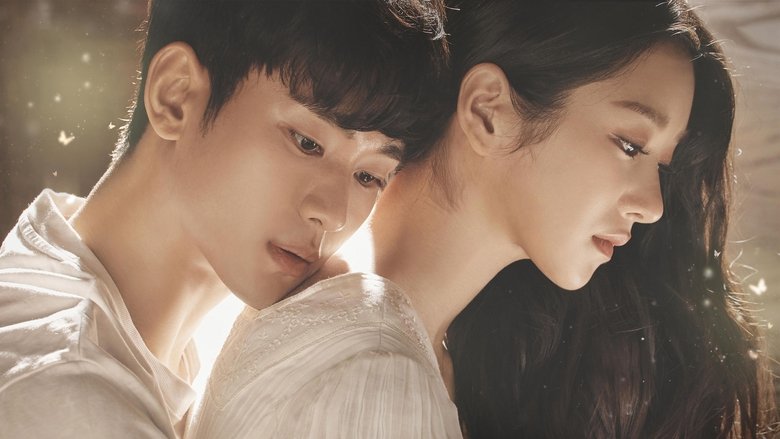
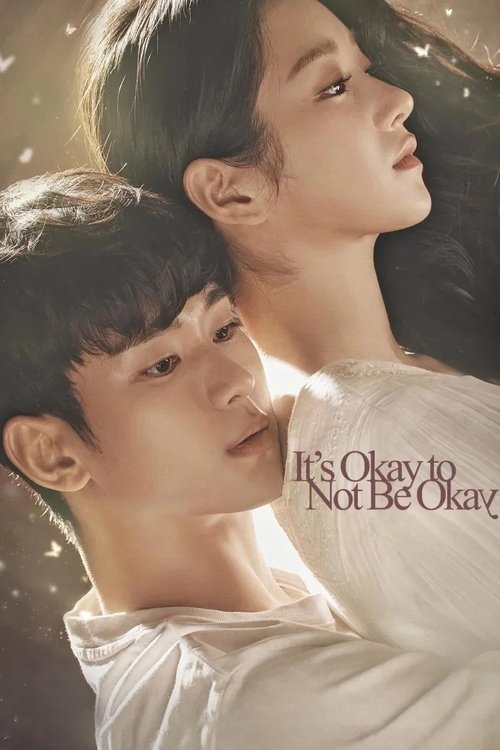
"It's Okay to Not Be Okay" follows Moon Gang-tae (Kim Soo-hyun), a compassionate health worker in a psychiatric ward who has dedicated his life to caring for his older brother, Moon Sang-tae (Oh Jung-se), who is on the autism spectrum. Haunted by a shared childhood trauma, they move frequently. Their lives take an unexpected turn when they cross paths with Ko Mun-yeong (Seo Yea-ji), a wildly successful but emotionally detached children's book author with an antisocial personality disorder.
Drawn to Gang-tae, the abrasive and unpredictable Mun-yeong forces her way into the brothers' lives, leading them back to their hometown. As their intertwined, traumatic pasts begin to unravel, the trio forms an unlikely family. Together, they confront their demons, challenge their definitions of love and family, and learn that healing begins when you acknowledge that it's okay to not be okay.
Core Meaning
The core meaning of "It's Okay to Not Be Okay" is that healing from deep-seated trauma is a painful but necessary journey that cannot be undertaken alone. It posits that true recovery comes from confronting painful memories rather than suppressing them. The series champions the idea that emotional wounds and mental health struggles are not weaknesses, and that accepting one's vulnerabilities is the first step toward genuine happiness. Through the formation of a 'found family,' the show argues that love, empathy, and mutual support can mend even the most broken individuals, creating a space where everyone's scars are acknowledged and accepted.
Thematic DNA
Trauma and Healing
This is the central theme of the series. Each main character is shaped by profound childhood trauma: the Moon brothers by their mother's murder and the subsequent emotional neglect, and Ko Mun-yeong by severe psychological abuse from her mother. The series portrays healing not as a simple, linear process, but as a difficult, often messy journey of confronting suppressed memories. The narrative emphasizes that one must face their nightmares head-on to overcome them, as symbolized by Mun-yeong's fairy tales like 'The Boy Who Fed On Nightmares'. The healing process is shown to be communal, as the characters find solace and strength in each other's shared wounds.
Mental Health and Neurodiversity
The drama directly addresses mental health, destigmatizing conditions like Autism Spectrum Disorder (through Sang-tae) and Antisocial Personality Disorder (through Mun-yeong). Set primarily in the OK Psychiatric Hospital, the series presents a compassionate view of various mental health struggles through its supporting characters. Sang-tae's character, in particular, was praised for its sensitive and nuanced portrayal of autism. The show's title itself is a powerful statement of acceptance, encouraging viewers to acknowledge their emotional and psychological struggles without shame.
The Nature of Family
"It's Okay to Not Be Okay" challenges conventional definitions of family. The bond between the Moon brothers is the initial emotional anchor, defined by Gang-tae's immense sense of responsibility. This dynamic is disrupted and ultimately expanded by Mun-yeong's arrival. The trio evolves into a 'found family,' demonstrating that family is forged through shared experience, mutual care, and emotional connection, not just blood ties. This is beautifully symbolized by the moment they decide to take a family portrait together.
Fairy Tales as Reflections of Reality
The series uses fairy tales, both classic and original ones written by Ko Mun-yeong, as a narrative framework. Each episode is titled after a specific tale that mirrors the characters' psychological states and plot developments. However, the drama subverts traditional fairy tale tropes, presenting them not as escapist fantasies but as grim, honest reflections of human fears and traumas. Mun-yeong explicitly states that fairy tales are 'stimulants that make us face reality,' a philosophy that guides the entire series.
Character Analysis
Moon Gang-tae
Kim Soo-hyun
Motivation
His primary motivation is to protect and care for his autistic brother, Sang-tae, a responsibility drilled into him since childhood. This evolves into a desire to protect his new-found family, including Ko Mun-yeong, and ultimately, to find his own identity and happiness separate from his role as a caretaker.
Character Arc
Initially, Gang-tae is a selfless caregiver who completely suppresses his own needs and desires for the sake of his brother, Sang-tae. He wears a metaphorical mask, hiding his exhaustion and longing for a normal life. His encounter with Ko Mun-yeong forces him to confront his deep-seated resentment and the trauma of feeling unloved by his own mother. Over the series, he learns to acknowledge his own pain and desires, transitioning from someone who exists only for others to an individual who can accept love and pursue his own happiness. His arc is about learning that it's okay to be 'selfish' and that he deserves to have a life of his own.
Ko Mun-yeong
Seo Yea-ji
Motivation
Initially, her motivation is a selfish desire to possess Gang-tae, whom she sees as a 'safety pin' to her 'bomb'. This possessiveness slowly transforms into a genuine desire for connection and family. Her ultimate motivation becomes breaking free from her mother's psychological torment and protecting the new family she has built with the Moon brothers.
Character Arc
Ko Mun-yeong begins as a classic antihero, presenting a cold, arrogant, and selfish exterior due to what is described as an antisocial personality disorder, stemming from a deeply abusive childhood. She is emotionally stunted and doesn't understand social conventions or empathy. Through her persistent, almost obsessive relationship with the Moon brothers, she gradually learns about warmth, connection, and vulnerability. Her journey is one of thawing her frozen emotions, learning to trust and love, and transforming from a 'monster' created by her mother into a human capable of genuine connection and empathy.
Moon Sang-tae
Oh Jung-se
Motivation
His initial motivation is safety and stability, which he relies on Gang-tae to provide. This broadens to include his desire to protect his younger brother, a role he eventually embraces fully. His ultimate motivation is to become his own person, an artist who is no longer defined solely by his trauma or his disability.
Character Arc
Sang-tae, who is on the autism spectrum, starts the series completely dependent on his younger brother, Gang-tae, and trapped by his trauma from witnessing their mother's murder. His world is rigid, governed by routine and his love for dinosaurs and Ko Mun-yeong's books. His arc is a powerful journey toward independence and self-actualization. He learns to confront his greatest fear (butterflies), distinguish his role as an older brother from a dependent, and pursue his own dream of becoming a professional illustrator. He evolves from being the person who needs protection to becoming a protector himself, ultimately declaring his independence from Gang-tae to find his own identity.
Symbols & Motifs
Fairy Tale Books
The dark, gothic fairy tale books written by Ko Mun-yeong symbolize the suppressed traumas and uncomfortable truths that the characters must face. They are not meant to be comforting but are therapeutic tools for confronting reality.
Each episode is structured around a fairy tale, such as 'The Boy Who Fed On Nightmares,' 'Zombie Kid,' and 'The Cheerful Dog,' which directly relate to the characters' emotional journeys and backstories. These stories serve as metaphors for their inner struggles with pain, loneliness, and the need for emotional warmth.
Butterflies
Butterflies are a multifaceted symbol representing trauma, fear, and ultimately, healing and metamorphosis. For Sang-tae, they are a terrifying reminder of his mother's murder. For Mun-yeong, they are a symbol of her mother's psychopathic control. Ultimately, the characters reclaim the symbol to represent their transformation and freedom from the past.
Sang-tae's phobia of butterflies is a core plot point, driving the brothers to move every spring. The revelation that the killer wore a distinctive butterfly brooch connects this fear to Mun-yeong's mother. Sang-tae's final arc involves him overcoming this fear by learning to draw butterflies, signifying his growth.
Mang-tae the Nightmare Doll
A handmade doll given by Gang-tae to Sang-tae, and later coveted by Mun-yeong. Mang-tae symbolizes a tool for confronting and processing nightmares. The doll is meant to absorb bad dreams, representing the act of externalizing and dealing with one's fears instead of letting them fester inside.
The doll becomes a point of contention and bonding between Sang-tae and Mun-yeong. Their fight over it and eventual decision to share it signifies their growing connection and shared need to process their respective traumas. It is a physical manifestation of the show's core message of facing one's demons.
Ko Mun-yeong's Long Hair and the Cursed Castle
Mun-yeong's long hair and her isolated, gothic family home (the 'Cursed Castle') are symbols of her mother's suffocating control and her trapped, lonely existence, drawing parallels to the tale of Rapunzel.
Throughout the first half of the series, Mun-yeong is confined by the psychological prison her mother created, represented by the castle. A pivotal moment of liberation occurs when Gang-tae cuts her hair, an act that symbolizes him freeing her from her mother's 'leash' and the trauma that has kept her chained.
Memorable Quotes
Hurtful, painful memories. Only those with such memories buried in their hearts can become stronger, more passionate, and emotionally flexible. And only those can attain happiness.
— Ko Mun-yeong (narrating 'The Boy Who Fed On Nightmares')
Context:
This is the moral of the first fairy tale presented in Episode 1, setting the thematic stage for the entire drama. It explains why the boy in the story is unhappy after a witch erases his bad memories.
Meaning:
This quote encapsulates the central philosophy of the series: that trauma should not be forgotten but confronted. It suggests that true strength and happiness are born from acknowledging and overcoming pain, rather than erasing it.
If you want to make people around you happy, you have to find your own happiness first. Being selfish isn't always a bad thing.
— Nam Joo-ri
Context:
Nam Joo-ri says this to Gang-tae when he is overwhelmed with guilt and responsibility. Her words encourage him to think about his own well-being, which is a novel concept for him.
Meaning:
This line is a crucial piece of advice for Moon Gang-tae, whose entire identity is built on self-sacrifice. It gives him permission to consider his own needs and is a turning point in his character arc, challenging his belief that he must always put his brother first.
Your body is honest. When you're in physical pain, you cry. But the heart is a liar. It stays quiet even if it's hurting.
— Moon Gang-tae
Context:
Gang-tae says this early in the series, revealing his deep understanding of hidden emotional suffering, which is a direct reflection of his own life experience.
Meaning:
This quote highlights the theme of emotional repression. Gang-tae, who is an expert at hiding his emotional pain, explains the dangerous tendency of the heart to suffer in silence. It speaks to the invisible wounds that all the main characters carry.
A fairy tale isn't a hallucinogen that gives us hopes and dreams. It's a stimulant that makes us face reality.
— Ko Mun-yeong
Context:
Ko Mun-yeong says this during a literature class she holds at the OK Psychiatric Hospital, explaining her dark and unconventional approach to storytelling to the patients.
Meaning:
This quote defines the unique role of fairy tales within the show. It rejects the Disney-fied notion of fairy tales as escapism and reframes them as allegorical tools for confronting life's harsh truths and one's own psychology.
If we've taken family photos together, we're family.
— Moon Gang-tae
Context:
Gang-tae says this to a hesitant Ko Mun-yeong in Episode 13, right before they are about to take a formal family portrait with Sang-tae, solidifying their unconventional family unit.
Meaning:
This simple declaration redefines the concept of family, moving it beyond blood relations to one of choice and shared experience. It signifies Gang-tae's full acceptance of Ko Mun-yeong into his and his brother's lives, cementing their status as a found family.
Episode Highlights
The Boy Who Fed On Nightmares
The first episode masterfully introduces the main characters and their deep-seated traumas through a stunning stop-motion animated opening. It establishes the core dynamic between the selfless Gang-tae and his autistic brother Sang-tae, and introduces the magnetic but volatile author Ko Mun-yeong, whose fairy tale provides the episode's thematic framework.
This episode sets the dark, fairy-tale tone of the series. It lays the foundation for the central conflict and the intertwined pasts of the three leads, immediately hooking the audience with its unique visual style and psychological depth.
Zombie Kid
This episode features Ko Mun-yeong's fairy tale, 'Zombie Kid,' a poignant story about a boy who had no emotions and was seen as a monster by his mother, who only fed him to keep him alive. The story is a direct, heartbreaking metaphor for Gang-tae's own childhood, where he felt he was only born to be a caretaker for his brother.
This is a major turning point in Gang-tae and Mun-yeong's relationship. Mun-yeong's story makes Gang-tae feel seen and understood for the first time in his life, creating a deep emotional connection between them and revealing the profound loneliness he has hidden.
King Donkey Ears
The episode centers on Sang-tae's explosive emotional breakdown after feeling betrayed by Gang-tae. All the resentment and fear he has kept bottled up for years erupts in a painful confrontation. The title refers to a fairy tale about a man who couldn't keep a secret and had to shout it into a forest—mirroring Sang-tae's need to finally voice his deepest fears.
This episode forces the brothers to confront the toxic aspects of their codependent relationship. It's a raw and powerful depiction of their shared trauma and marks the beginning of Sang-tae's journey toward emotional honesty and independence.
The Hand, The Monkfish
Following the shocking reveal about their mothers' pasts, Gang-tae and Mun-yeong are torn apart. This episode explores their deep grief and the seeming impossibility of their relationship. The title refers to a fairy tale about a mother who over-feeds her daughter until she is useless, a metaphor for Mun-yeong's mother's destructive 'love'.
This episode pushes the characters to their lowest point, testing the strength of their bond against the weight of their inherited trauma. It highlights the central question of whether they can overcome a past that was not their fault.
Finding The Real Face
In the finale, the trio confronts their ultimate demon, Mun-yeong's mother. After the climax, the episode focuses on the aftermath and their new beginning. Sang-tae finally achieves his dream and asserts his independence, while Gang-tae and Mun-yeong are free to be together, embarking on a journey in their camping van.
The finale provides a deeply satisfying and emotionally earned conclusion. It beautifully illustrates the theme of healing and growth, showing that each character has successfully broken free from their past. The ending is not a 'happily ever after' but a hopeful 'happy enough,' emphasizing that their journey of healing continues, but now they are free.
Philosophical Questions
Is it better to forget trauma or to confront it?
The series argues strongly for confrontation. The first fairy tale, 'The Boy Who Fed On Nightmares,' serves as a foundational allegory. The boy who has his bad memories erased is not happy; he is empty. The narrative posits that memories, both good and bad, constitute one's identity. Healing isn't about erasure but about integration—acknowledging the pain and learning to live with it, which in turn builds resilience and emotional depth. Sang-tae's arc perfectly illustrates this: he doesn't forget the butterflies, he learns to face them and overcome his fear, turning a symbol of trauma into one of growth.
What constitutes a 'real' family?
The show deconstructs the traditional idea of a family bound by blood and reconstructs it around emotional connection and mutual support. Both Mun-yeong and the Moon brothers come from broken, biological families defined by abuse and neglect. Their healing begins when they form a new 'found family.' The act of taking a family photo is a pivotal moment that solidifies this new, chosen bond, suggesting that the conscious decision to care for and protect one another is what truly defines a family.
Can people truly change?
The series is fundamentally optimistic about the human capacity for growth and change. All three protagonists undergo profound transformations. Mun-yeong learns empathy, Gang-tae learns self-love, and Sang-tae learns independence. Their journeys suggest that while the past shapes us, it does not have to be a life sentence. Change is portrayed as a difficult, non-linear process that requires courage, vulnerability, and the help of others, but is ultimately possible for anyone willing to do the work.
Alternative Interpretations
One alternative interpretation focuses on Ko Mun-yeong's characterization. While the show presents her as having Antisocial Personality Disorder, some critics and viewers have argued that her behavior is more indicative of Complex PTSD stemming from extreme childhood abuse. This perspective suggests her 'antisocial' traits are learned survival mechanisms rather than an inherent personality disorder. Her dramatic emotional growth and ability to form deep attachments by the end of the series align more closely with healing from trauma than with the typical prognosis for ASPD.
Another point of discussion is the nature of the relationship between Gang-tae and Mun-yeong. Some viewers have pointed out that Mun-yeong's initial pursuit of Gang-tae involves actions that are coercive and cross boundaries, such as walking in on him changing. While the show frames this as part of her disorder and a step in their journey towards mutual healing, this interpretation raises questions about the romanticization of toxic relationship dynamics, even if they are eventually resolved.
Cultural Impact
"It's Okay to Not Be Okay" made a significant cultural impact both domestically and internationally for its frank and compassionate portrayal of mental health. Premiering in 2020, during a global pandemic that heightened mental health awareness, the series resonated with audiences worldwide. It was lauded for helping to destigmatize mental illness in South Korea, a society where such topics have often been considered taboo. The nuanced and respectful portrayal of Autism Spectrum Disorder by Oh Jung-se was particularly praised, earning critical acclaim and contributing to a more positive public conversation.
The series was a critical success, named one of the best international shows of 2020 by The New York Times and receiving a nomination for Best TV Movie/Mini-Series at the 49th International Emmy Awards. Its unique visual style, incorporating gothic fairy-tale aesthetics and stop-motion animation, set a new standard for visual storytelling in K-dramas. The show's success on Netflix broadened the international audience for K-dramas that tackle complex psychological themes, demonstrating a global appetite for stories that go beyond typical romance. Its legacy lies in its bold storytelling, its contribution to mental health advocacy, and its artistic, cinematic quality that pushed the boundaries of television.
Audience Reception
"It's Okay to Not Be Okay" received overwhelmingly positive reviews from both critics and audiences, particularly on an international scale via Netflix. Viewers widely praised the stellar performances of the main cast, with Oh Jung-se's portrayal of Moon Sang-tae receiving universal acclaim for its sensitivity and authenticity. The on-screen chemistry between Kim Soo-hyun and Seo Yea-ji was also a major highlight for fans. The drama was celebrated for its bold and compassionate handling of mental health, its stunning cinematography, unique fairy-tale narrative structure, and stylish costume design.
However, there was some criticism. A minority of viewers found the pacing slow, particularly in the first half. Some also criticized the depiction of Ko Mun-yeong's Antisocial Personality Disorder, questioning its clinical accuracy and noting that her early actions toward Gang-tae could be seen as harassment. The mystery subplot involving Mun-yeong's mother in the latter half of the series was considered by some to be a weaker, more conventional element compared to the strength of the character-driven psychological drama. Despite these minor critiques, the overall verdict from audiences was that it was a unique, poignant, and visually stunning masterpiece that left a lasting emotional impact.
Interesting Facts
- The series was written by Jo Yong, who based the story on her past relationship with a man who had a personality disorder. She wanted to explore the themes of recognition and acceptance that she felt she couldn't provide at the time.
- Actor Oh Jung-se, who played Moon Sang-tae, did extensive research to portray autism authentically and respectfully. He studied the stories of people with autistic brothers and consulted with experts. His performance was widely acclaimed and won him the Best Supporting Actor award at the 57th Baeksang Arts Awards.
- The gothic and elaborate dresses worn by Ko Mun-yeong were designed by fashion designer Minju Kim, whose work helped define the character's unique, fairy-tale-like visual identity.
- The beautifully illustrated fairy tale books featured in the show, written by Jo Yong and illustrated by Jam San, were actually published in South Korea and became bestsellers.
- The New York Times named "It's Okay to Not Be Okay" one of 'The Best International Shows of 2020'.
- The stunning stop-motion animated opening sequence was created using traditional techniques, not just CGI designed to look like stop-motion, adding to the show's unique and artistic visual language.
Easter Eggs
In Episode 8, during a hilarious pillow fight, the camera arcs around Moon Gang-tae in a way that is stylistically similar to a famous shot transition in Bong Joon-ho's Oscar-winning film 'Parasite'.
This appears to be a subtle cinematic homage by director Park Shin-woo to one of South Korea's most acclaimed films, showcasing a high level of visual craft and awareness within the Korean film and drama industry.
Actor Kwak Dong-yeon makes a memorable guest appearance in Episodes 3 and 4 as Kwon Ki-do, a patient diagnosed with manic disorder.
His short but impactful performance was praised for bringing both humor and pathos to the character, offering a powerful look at the human stories within the psychiatric hospital and highlighting the theme of parental neglect.
⚠️ Spoiler Analysis
Click to reveal detailed analysis with spoilers
Frequently Asked Questions
Explore More About This Movie
Dive deeper into specific aspects of the movie with our detailed analysis pages
Comments (0)
No comments yet. Be the first to share your thoughts!