JoJo's Bizarre Adventure
ジョジョの奇妙な冒険
Overview
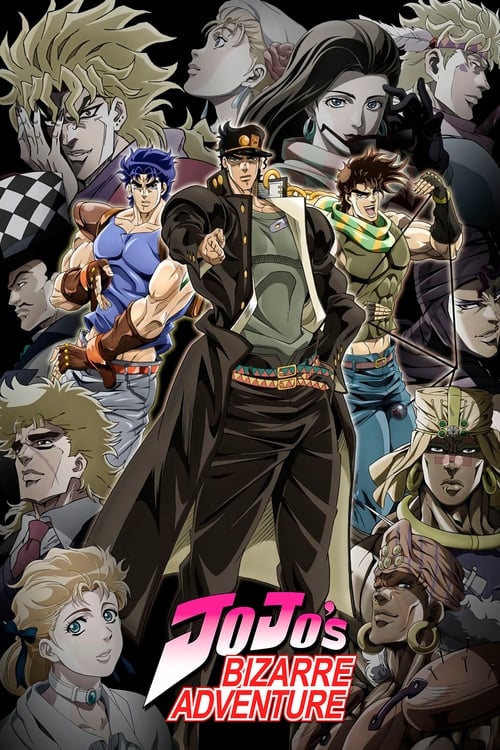
"JoJo's Bizarre Adventure" chronicles the multi-generational struggle of the Joestar family against forces of evil. Each distinct part of the series introduces a new descendant of the Joestar lineage, each bearing the nickname "JoJo," as they discover their destiny to confront supernatural threats. The saga begins in 19th-century England with Jonathan Joestar's fated clash against his adopted brother, the vampiric Dio Brando, a conflict rooted in a mystical Stone Mask.
As the story progresses through time, the nature of the conflict and the powers wielded by the heroes and villains evolve dramatically. The initial parts focus on "Hamon" (or the Ripple), a martial arts technique that utilizes controlled breathing to channel solar energy. Later, the series introduces the iconic concept of "Stands," powerful psychic manifestations of a person's fighting spirit, which become the central power system. From the streets of New York in the 1930s to a journey across Egypt in the 1980s and beyond, each Joestar protagonist confronts a new, formidable antagonist whose ambitions threaten the world, all while carrying the weight of their family's legacy and unyielding spirit.
Core Meaning
At its heart, "JoJo's Bizarre Adventure" is a celebration of humanity's resilience and the enduring power of legacy. The series explores the idea that courage, honor, and the will to fight for justice are passed down through generations, creating an unbreakable chain against encroaching darkness. The creator, Hirohiko Araki, emphasizes themes of fate and the mysterious connections that bind the Joestar family together in their perpetual war against evil. It's a narrative that posits that while evil may be cunning and persistent, the human spirit, fortified by bonds of family and friendship, possesses an even greater, more explosive power to overcome any adversity, no matter how bizarre.
Thematic DNA
Fate and Destiny
The concept of fate is the central pillar of the entire series. The Joestar bloodline is depicted as being inexorably linked by destiny to confront evil, particularly Dio Brando and his successors. This is symbolized by the Joestar birthmark, a star-shaped mark that signifies their shared destiny. Each "JoJo" is born into a conflict they did not choose but must face, suggesting that certain battles are preordained. The narrative repeatedly questions whether characters are masters of their own destiny or merely players in a larger cosmic game, a theme that becomes especially prominent in later parts of the story.
Legacy and Inheritance
"JoJo's Bizarre Adventure" is structured as a generational saga, with the torch of responsibility being passed from one protagonist to the next. The actions, sacrifices, and spirit of one generation directly impact and empower the next. Jonathan Joestar's initial battle sets a precedent, and his descendants inherit his will to fight. This theme is not just about bloodlines but also about the inheritance of ideals, techniques (like Hamon), and even rivalries. The series shows how the past is never truly gone and how the legacy of one's ancestors provides the strength to face present and future challenges.
The Nature of Humanity
The series constantly contrasts the noble potential of humanity with its capacity for corruption. The central villain, Dio Brando, literally rejects his humanity in his quest for power. Conversely, the Joestar heroes, despite their flaws and eccentricities, consistently demonstrate courage, self-sacrifice, and love. They champion the strength found in human connection and spirit. The series suggests that true power lies not in abandoning humanity for supernatural abilities but in embracing the virtues that define it, turning them into a source of indomitable strength.
Friendship and Alliance
No JoJo fights alone. A recurring theme throughout every part of the series is the crucial role of allies and companions. From Robert E. O. Speedwagon's unwavering loyalty to Jonathan to the tightly-knit groups in "Stardust Crusaders" and "Golden Wind," the narrative emphasizes that strength comes from teamwork and trust. These bonds are often forged in the heat of battle, creating powerful emotional cores for each story arc and demonstrating that victory is impossible without relying on the unique strengths of others.
Character Analysis
Jonathan Joestar
Kazuyuki Okitsu
Motivation
Initially motivated by a desire to live up to his family's code of honor and protect those he loves, especially his sweetheart Erina. After Dio's transformation into a vampire and the murder of his father, his motivation becomes a righteous quest for vengeance and the eradication of Dio's evil, seeing it as his personal responsibility to end the horror he feels he inadvertently helped create.
Character Arc
Jonathan begins as a somewhat naive but earnest young nobleman striving to be a "true gentleman." His life is a crucible, forged by the relentless cruelty of his adopted brother, Dio Brando. This torment forces Jonathan to develop an "explosive power" and unwavering resolve. He evolves from a privileged boy into a courageous warrior who masters Hamon to protect his loved ones and the world. His arc is one of tragic heroism; he finds strength not for personal gain but out of a profound sense of duty and love, culminating in his ultimate sacrifice, which sets the stage for the entire Joestar legacy.
Dio Brando
Takehito Koyasu
Motivation
Dio's primary motivation is to rise above all others and seize ultimate power. He craves control, wealth, and immortality, believing them to be his birthright. His actions are driven by a profound hatred for the Joestar family, whom he sees as naive and undeserving of their fortune. He seeks to create a world where he is the undisputed ruler, a literal god.
Character Arc
Dio's arc is a relentless ascent to power fueled by a deep-seated resentment of his impoverished upbringing and an insatiable desire for dominance. He starts as a cunning and cruel young man who methodically destroys Jonathan Joestar's life. His transformation via the Stone Mask is not a change in character but an amplification of his inherent nature. He "rejects his humanity" to become a being of pure evil and ambition. Across the series (returning in Part 3), his arc is not one of change but of escalation. He goes from a vampire to a powerful Stand user, consistently embodying the ultimate, charismatic, and megalomaniacal threat to the Joestar lineage and the world itself.
Jotaro Kujo
Daisuke Ono
Motivation
Jotaro's initial motivation is simple and deeply personal: to save his mother, Holly, whose body cannot handle the awakening of her own Stand. This singular goal drives him on the perilous journey to Egypt to kill Dio. In later years, his motivation broadens to encompass the protection of his family (including his daughter, Jolyne) and the world from emerging Stand-related threats that Dio's legacy continues to create.
Character Arc
Introduced in Part 3, Jotaro begins as a rebellious, delinquent teenager who is gruff and seemingly uncaring. The awakening of his Stand, Star Platinum, and the threat to his mother's life forces him onto a hero's journey. Throughout "Stardust Crusaders," he evolves from a solitary tough guy into a capable leader and a loyal friend, though he maintains his stoic exterior. In his subsequent appearances in later parts, Jotaro matures into a wise, albeit distant, mentor figure. His arc is about a man who learns to channel his immense power and quiet intensity for the sake of others, becoming the reliable pillar of the Joestar family for a new generation.
Joseph Joestar
Tomokazu Sugita
Motivation
Joseph is initially motivated by a desire to protect his family and friends, particularly his grandmother Erina and mentor Lisa Lisa. He is thrust into the fight against the Pillar Men after his friend Speedwagon is captured. His core motivation is often reactive, but he possesses a fierce loyalty and a knack for rising to the occasion, using his cleverness and penchant for predicting his enemy's next line to turn any desperate situation to his advantage.
Character Arc
As the protagonist of Part 2, the young Joseph is the antithesis of his grandfather Jonathan: he is a brash, cocky, and irreverent brawler who prefers to outsmart his opponents rather than overpower them. His journey to defeat the Pillar Men forces him to mature and master Hamon in his own unique, unconventional way. When he returns as an old man in Part 3 and 4, his trickster nature remains, but it's tempered with the wisdom and experience of age. He transitions from the hot-headed hero to the wily, supportive elder, serving as a vital link between the generations of Joestars.
Symbols & Motifs
The Joestar Birthmark
The star-shaped birthmark, present on every member of the Joestar bloodline, symbolizes their shared destiny and unbreakable connection to the family's fate. It serves as a physical manifestation of their inherited duty to confront supernatural evil and signifies their place within the epic lineage.
The birthmark appears on the back of the neck/shoulder area of each JoJo protagonist. It becomes particularly significant when Dio Brando, having stolen Jonathan Joestar's body, also possesses this birthmark, physically linking him to the family he seeks to destroy and marking his descendants as part of the Joestar curse.
The Stone Mask
The Stone Mask represents the allure of forbidden power and the act of forsaking one's humanity. It is the catalyst for the entire saga, symbolizing a path to immortality and strength at the cost of one's soul. It is the ultimate symbol of unnatural evil.
Introduced in Part 1, "Phantom Blood," the mask is an ancient artifact that turns its wearer into a vampire when activated by blood. Dio Brando uses it to achieve his vampiric powers, kicking off his century-long conflict with the Joestar family. Its legacy leads to the creation of the Pillar Men, the antagonists of Part 2.
Stands
Introduced in Part 3, "Stardust Crusaders," Stands are a physical manifestation of a person's life force, willpower, and fighting spirit. They symbolize the unique, innate power that resides within an individual. Their varied and often bizarre abilities represent the multifaceted nature of the human psyche and potential.
Stands become the primary power system from Part 3 onwards. Each Stand is unique to its user, with abilities ranging from stopping time (Dio's "The World") to healing and restoration (Josuke's "Crazy Diamond"). They are invisible to non-Stand users and are central to the strategic and often reality-bending battles of the series.
Memorable Quotes
俺は人間をやめるぞ! ジョジョ―――ッ!! (Ore wa ningen o yameru zo! JoJo!)
— Dio Brando
Context:
This is said in Part 1, "Phantom Blood," just before Dio dons the Stone Mask for the first time, cornered by Jonathan and the police. It is his ultimate act of defiance and transformation.
Meaning:
Translated as "I reject my humanity, JoJo!", this line is Dio's defining moment. It signifies his complete surrender to his ambition, casting aside morality and his very being for the sake of power. It perfectly encapsulates his character and sets the stage for his role as a supernatural, inhuman villain.
てめーは俺を怒らせた (Temē wa ore o okoraseta)
— Jotaro Kujo
Context:
Jotaro uses variations of this phrase throughout Part 3, "Stardust Crusaders," typically before unleashing a decisive and brutal beatdown with his Stand, Star Platinum. One of its most famous uses is during the final climactic battle against Dio.
Meaning:
Commonly translated to the more famous "Yare Yare Daze" ("Good grief") followed by a threat, the essence is "You've really pissed me off." This phrase captures Jotaro's stoic yet volatile nature. He is a man of few words, but when pushed, his wrath is absolute. It became his iconic catchphrase, signaling that an enemy has crossed a line and their defeat is imminent.
おまえは次に「______」と言う (Omae wa tsugi ni '______' to iu)
— Joseph Joestar
Context:
Joseph uses this trick multiple times throughout Part 2, "Battle Tendency," against various opponents. It unnerves his enemies and establishes his character as a clever trickster rather than just a brute force fighter.
Meaning:
"Your next line is..." This is Joseph's signature taunt, showcasing his brilliant tactical mind and ability to read his opponents. By predicting their words right before they say them, he demonstrates that he is always one step ahead, turning the battle into a psychological game that he has already won.
このジョルノ・ジョバァーナには夢がある (Kono Giorno Giovanna niwa yume ga aru)
— Giorno Giovanna
Context:
Giorno states this early in "Golden Wind" when explaining his goals to Bruno Bucciarati. It becomes his recurring mantra, reaffirming his commitment to his seemingly impossible ambition throughout his struggles.
Meaning:
"I, Giorno Giovanna, have a dream." This declaration is the driving force of Part 5, "Golden Wind." It encapsulates Giorno's unwavering resolve and ambition to reform the mafia from within, creating a gang that protects the innocent rather than exploiting them. It is a statement of purpose that inspires loyalty and defines his entire journey.
Episode Highlights
Dio the Invader
The very first episode establishes the core conflict of the entire franchise. It introduces the noble Jonathan Joestar and the cunning, cruel Dio Brando. The episode masterfully builds a sense of dread as Dio systematically dismantles Jonathan's life, from stealing his friends' respect to a horrific act against his beloved dog, Danny.
This episode is the foundation of the Joestar-Brando feud. It sets up the themes of good versus evil, the nature of humanity, and the tragic destiny that will ripple through generations. It is the genesis of one of anime's most iconic rivalries.
The Final Hamon!
The climactic conclusion of "Phantom Blood." Jonathan faces Dio in a fiery final battle. The episode features the tragic sacrifice of Will A. Zeppeli and Jonathan's ultimate, desperate attack against his vampiric brother. The fight culminates in Jonathan's seeming victory at the cost of his own life on a burning ship.
This episode concludes the first major arc and establishes the theme of heroic sacrifice. Jonathan's death was a shocking and bold narrative choice that cemented the series' generational nature, proving that no protagonist was safe and that the story was larger than any single "JoJo."
The Ascendant One
The finale of "Battle Tendency." Joseph Joestar confronts Kars, the ultimate Pillar Man who has achieved a seemingly invincible form by using the Red Stone of Aja and the Stone Mask. The battle is a showcase of Joseph's signature cunning and luck, leading to a spectacular and absurd climax involving a volcano and the vacuum of space.
This episode perfectly encapsulates the "bizarre" aspect of the series. The out-of-this-world resolution to an impossible fight defined the creative, unpredictable nature of Araki's storytelling and solidified Joseph's status as a fan-favorite trickster hero.
D'Arby the Gambler, Part 2
Jotaro Kujo engages in a high-stakes poker game against Daniel J. D'Arby, a gambler who steals the souls of those he defeats. With the souls of his grandfather and friend on the line, Jotaro must win through sheer intimidation and bluffing, as D'Arby is an expert cheater.
This episode is a masterclass in tension and showcases that battles in JoJo are not just about physical strength but also about psychological warfare. It perfectly highlights Jotaro's unflappable, cool-headed nature under extreme pressure and remains one of the most memorable non-combat confrontations in the series.
DIO's World, Part 2
The penultimate battle against Dio begins. This episode reveals the terrifying true nature of Dio's Stand, "The World," which can stop time. It features the tragic and pivotal death of Kakyoin, who uses his final moments to expose Dio's ability. Joseph Joestar also has his final, direct confrontation with his family's immortal nemesis.
A crucial turning point in the final battle. Kakyoin's sacrifice is one of the most emotional moments in the series and is instrumental to the heroes' eventual victory. The reveal of time-stop set a new precedent for overpowered and reality-bending Stand abilities.
Goodbye, Morioh - The Golden Heart
The finale of "Diamond Is Unbreakable." The combined forces of Morioh's heroes face off against the serial killer Yoshikage Kira in a final, desperate confrontation. The episode sees Josuke, Jotaro, and Koichi working together to finally corner and defeat the seemingly unstoppable villain.
This episode brings a satisfying conclusion to the slice-of-life-turned-murder-mystery arc. It emphasizes the theme of community and the collective power of friends standing together to protect their home, and provides a uniquely fitting end for its complex villain.
Golden Wind
The finale of "Golden Wind" (also known as "Sleeping Slaves"). It depicts the aftermath of the battle against Diavolo and Giorno's ascension to the head of the Passione mafia. The episode uniquely explores the nature of fate through a flashback story involving the Rolling Stones Stand, showing how destiny cannot be avoided.
The episode provides a philosophical and bittersweet conclusion to the part, focusing more on the thematic weight of the characters' actions and fates rather than a traditional final fight. It solidifies the series' recurring exploration of destiny and sacrifice.
What a Wonderful World
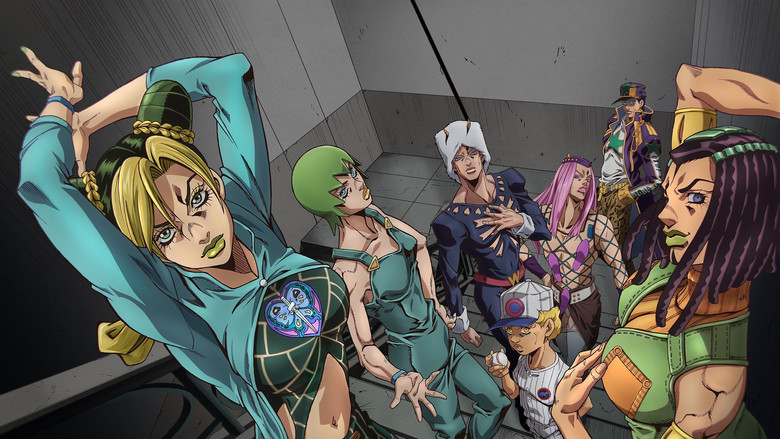
The shocking and universe-altering finale of "Stone Ocean." The priest Enrico Pucci succeeds in accelerating time to the point of creating a new universe. The episode features the heroic final stand and deaths of the main cast, including Jolyne Cujoh and Jotaro Kujo, before a final, desperate move by the young Emporio leads to Pucci's ultimate defeat.
This episode represents the most audacious and large-scale climax in the series, effectively rebooting the original JoJo universe. The deaths of the main characters are both tragic and heroic, and the resolution provides a bittersweet, poignant end to the 100+ year saga of the Joestar family's struggle against Dio's legacy.
Philosophical Questions
To what extent is our destiny predetermined?
This is the central philosophical question of the series. The Joestar family seems bound by fate to a perpetual conflict. Characters often speak of destiny, gravity, and preordained encounters. Later parts, particularly "Golden Wind" and "Stone Ocean," explore this explicitly. Giorno's battle is against a villain who can see and erase moments in time, effectively controlling fate, while the climax of "Stone Ocean" involves a villain who can accelerate time to reset the universe and lock everyone into a known destiny. The series seems to argue that while a certain fate may be laid out, the courage and choices made in the face of that destiny are what truly define a person's spirit and can, in some cases, create a new future.
What is the true nature of power and humanity?
The series constantly juxtaposes different sources of power. Villains like Dio Brando and Kars seek power by transcending humanity, viewing it as a weakness to be discarded. They become vampires or ultimate beings, believing this makes them superior. In contrast, the Joestars derive their strength from their humanity: from their willpower (which manifests as Stands), their bonds with allies, their capacity for self-sacrifice, and their ingenuity. The series repeatedly suggests that true, lasting strength is not born from forsaking humanity, but from embracing its virtues and potential.
Alternative Interpretations
One of the most discussed alternative interpretations revolves around the nature of fate and the ending of Part 6, "Stone Ocean." One reading suggests that the new universe created at the end is a positive outcome, a "heaven" where the main characters are freed from the Joestar curse and can live happy lives, albeit as different people (Irene instead of Jolyne). This interpretation views the ending as a bittersweet reward for generations of sacrifice.
A more fatalistic interpretation posits that the ending is tragic. It argues that the original characters did, in fact, die and were erased, and their replacements in the new universe are merely echoes. From this perspective, the villain Pucci technically won by achieving his goal of resetting the universe, and Emporio's final victory only prevents Pucci from controlling the new reality; it doesn't bring back the fallen heroes. This reading emphasizes the themes of loss and the irreversible consequences of the fated battle, suggesting that even in victory, the cost was the existence of the characters the audience followed.
Cultural Impact
"JoJo's Bizarre Adventure" has had a profound and lasting impact on pop culture, both in Japan and internationally. Its influence extends far beyond typical anime and manga fandom. The series is renowned for its unique and flamboyant art style, which has influenced countless other artists and series. One of its most recognizable contributions is the phenomenon of "JoJo Posing," where fans replicate the characters' dramatic, physically improbable poses. These poses have become a widespread internet meme and are frequently referenced in other anime, video games, and even by celebrities.
The series' constant and overt references to Western music have created a unique cultural bridge, introducing new generations of fans to classic rock and pop artists like Queen, Pink Floyd, and Prince. This has also led to a massive online culture of cataloging and explaining the hundreds of musical references embedded in the narrative. The term "Stand," referring to the psychic manifestations, has entered the anime lexicon, with its creative and strategic battles influencing the power systems of many subsequent shonen series. "JoJo's" has been credited with revitalizing interest in multi-generational storytelling and has maintained its popularity for over three decades, cementing its legacy as a pillar of the manga and anime world, celebrated for its unapologetic creativity and refusal to adhere to convention.
Audience Reception
"JoJo's Bizarre Adventure" has enjoyed a unique and evolving reception. Initially a long-running but somewhat niche manga in the West, the 2012 anime adaptation by David Production caused a massive surge in international popularity. Audience reception is generally overwhelmingly positive, with praise directed at its unique art style, creative battles, intricate plot, and unapologetic weirdness. The series is often celebrated for breaking shonen conventions with its generational structure, frequently changing protagonists, settings, and even genres from part to part.
Different seasons have been received in different ways. Part 1, "Phantom Blood," is sometimes seen by newer fans as slower and more conventional compared to later parts. Part 2, "Battle Tendency," is often praised for its charismatic and clever protagonist, Joseph Joestar. Part 3, "Stardust Crusaders," is arguably the most iconic, introducing Stands and defining the "monster-of-the-week" adventure format for the series. However, some critics point to its pacing as a weakness. Part 4, "Diamond Is Unbreakable," is lauded for its unique slice-of-life meets murder-mystery tone, while Part 5, "Golden Wind," is acclaimed for its darker themes, stylish characters, and intense action. The primary points of criticism are sometimes directed at Araki's occasional plot inconsistencies (often referred to lovingly by fans as "Araki forgot") and the formulaic structure of some arcs. Despite this, the series has cultivated a passionate and massive cult following, known for its creative memes and deep appreciation of the series' bizarre and brilliant world.
Interesting Facts
- Creator Hirohiko Araki is a huge fan of Western music, and has named hundreds of characters, abilities, and locations after bands, songs, and albums. Examples include REO Speedwagon, Dio, AC/DC, Queen, Killer Queen, Red Hot Chili Pepper, and King Crimson.
- The iconic, dramatic poses used by characters, known as "JoJo-dachi" or "JoJo Posing," were inspired by Araki's trip to Italy in his 20s, where he studied the sculptures of Michelangelo.
- The fictional town of Morioh, the setting for Part 4's "Diamond Is Unbreakable," is based on Araki's own hometown of Sendai, Japan.
- Araki originally planned for the series to be a trilogy, with the final confrontation happening in modern-day Japan.
- The animation studio David Production made the decision to be extremely faithful to the original manga, including incorporating the manga's unique on-screen sound effects (onomatopoeia) directly into the animation to preserve the source material's distinct style.
- The character of Jotaro Kujo was modeled after the legendary actor Clint Eastwood.
- According to Araki, Jonathan Joestar was intentionally written to be a more straightforward, symbolic "first Joestar" representing purity and dignity, rather than a complex character, in order to serve as a strong foundation for the generations to come.
Easter Eggs
Numerous characters and their abilities (Stands) are direct references to Western popular music.
This is the most prominent and pervasive 'easter egg' in the series. Examples include: Josuke's Stand "Crazy Diamond" is a reference to the Pink Floyd song "Shine On You Crazy Diamond." Yoshikage Kira's Stand "Killer Queen" and its abilities "Sheer Heart Attack" and "Bites the Dust" are all named after Queen songs/albums. Entire character names are references, such as Robert E.O. Speedwagon (REO Speedwagon), Will A. Zeppeli (Led Zeppelin), and Dio Brando (Ronnie James Dio/the band Dio).
Foreshadowing in the Opening Animations
Each season's opening sequence is filled with subtle hints about future plot points. For example, in the second opening for "Stardust Crusaders," Dio's Stand "The World" appears as a shadowy figure behind him for a single frame, long before it is revealed in the story. In the final episode's version of the opening, Dio is defeated and Star Platinum takes his place, signifying the turning of the tables.
The manga artist character Rohan Kishibe is a self-insert of the series creator.
Rohan Kishibe, introduced in Part 4, is a highly successful and eccentric manga artist obsessed with realism for his work. He is widely considered to be a self-insert or an author avatar for Hirohiko Araki himself. This is further supported by the spin-off series "Thus Spoke Kishibe Rohan," where Rohan takes the role of a narrator exploring various supernatural phenomena, similar to Araki's own role as the storyteller of the bizarre.
⚠️ Spoiler Analysis
Click to reveal detailed analysis with spoilers
Frequently Asked Questions
Explore More About This Movie
Dive deeper into specific aspects of the movie with our detailed analysis pages
Comments (0)
No comments yet. Be the first to share your thoughts!