X-Men '97
A vibrant animated saga of poignant loss and fierce hope, unfolding like a bolt of optic energy against a backdrop of simmering societal prejudice.
X-Men '97

X-Men '97

"New episodes. New era."

20 March 2024 — 15 May 2024 United States of America 1 season 10 episode Returning Series ⭐ 8.6 (574)
Cast: Holly Chou, George Buza, Ray Chase, Alison Sealy-Smith, Jennifer Hale
Animation Sci-Fi & Fantasy Action & Adventure
Prejudice and Acceptance Grief, Loss, and Trauma Legacy and The Future Family and Found Family

Overview

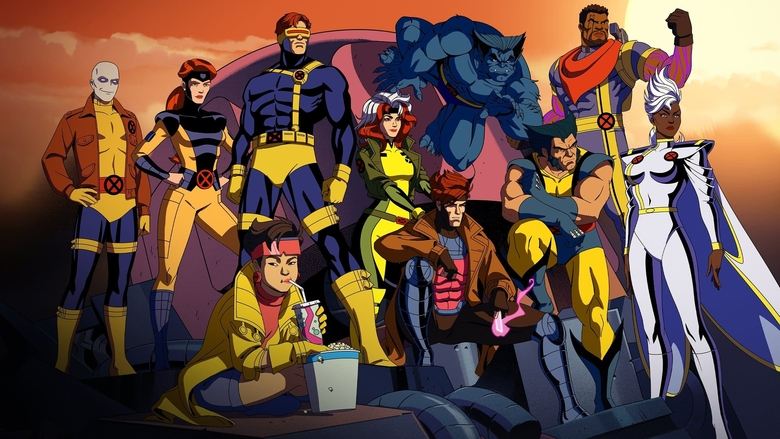
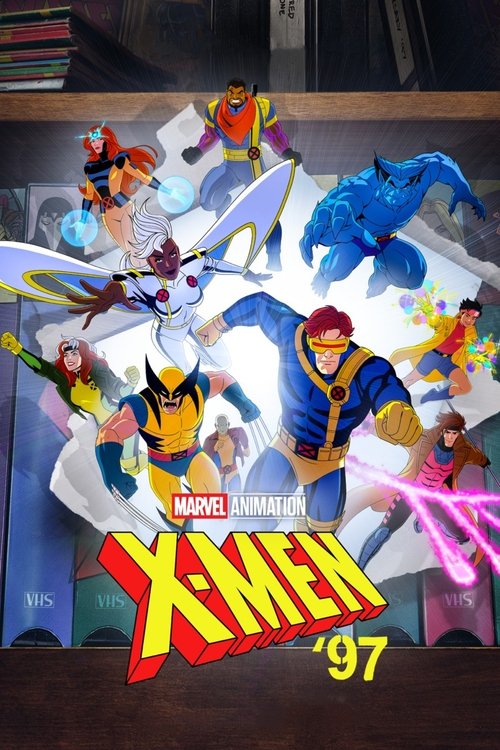
A direct continuation of the beloved 1990s animated series, X-Men '97 picks up roughly a year after the apparent death of Professor Charles Xavier. The X-Men, now grappling with their mentor's absence and a world that both celebrates and fears them, find themselves under the shocking new leadership of their former adversary, Magneto, as per Xavier's last will. This new dynamic forces the team—led by a weary but resolute Cyclops—to navigate a world of escalating anti-mutant sentiment, personal betrayals, and devastating losses that test their faith in Xavier's dream of peaceful coexistence.

The season's primary arc introduces Bastion, a formidable new villain with a personal vendetta against mutants, who orchestrates a cataclysmic attack on the mutant sanctuary of Genosha. This act of genocide serves as a turning point, forcing the X-Men to confront the highest stakes they have ever faced. The narrative weaves together complex character relationships, including the fraught love triangle of Cyclops, Jean Grey, and Wolverine, and the tragic romance of Rogue and Gambit, all while exploring the philosophical divide between Xavier's pacifism and Magneto's militancy. The season culminates in a desperate battle to save Earth from Bastion's 'Operation: Zero Tolerance,' leading to a cliffhanger that scatters the team across time.

Core Meaning

The core meaning of X-Men '97 is a powerful exploration of whether a dream of peace can survive in a world committed to hatred. The series questions the cost of tolerance and the cyclical nature of prejudice and violence. It posits that true progress isn't just about fighting villains, but about confronting the internal demons of grief, rage, and despair without losing one's humanity. The creators wanted to convey that family is not defined by blood, but by choice and shared struggle, and that even in the face of unimaginable loss, the fight for a better future is a burden that must be carried together. Ultimately, the series is a testament to the resilience of hope and the difficult, painful, yet necessary act of forgiving and choosing love over hate.

Thematic DNA

Prejudice and Acceptance 35%
Grief, Loss, and Trauma 30%
Legacy and The Future 20%
Family and Found Family 15%

Prejudice and Acceptance

This is the foundational theme of the X-Men, amplified in X-Men '97. The series explores the deep-seated, irrational hatred for mutants through the actions of groups like the Friends of Humanity and the master plan of Bastion. The devastating attack on Genosha is the ultimate manifestation of this prejudice, moving beyond social commentary to depict outright genocide. The theme is also explored through the internal struggles of the X-Men, who must constantly reaffirm their commitment to protecting a world that fears and despises them, pushing the very concept of tolerance to its breaking point.

Grief, Loss, and Trauma

The series is saturated with a profound sense of loss, beginning with the absence of Professor X. This is brutally escalated by the Genosha massacre, which claims the lives of thousands, including the beloved teammate Gambit. Subsequent episodes meticulously explore the varying stages of grief among the survivors. Rogue is consumed by a vengeful rage, Cyclops is weighed down by the burden of leadership amidst sorrow, and Jean Grey grapples with the loss of a life she thought was hers. The show treats trauma not as a single event, but as a lingering poison that characters must learn to live with, shaping their actions and testing their resolve.

Legacy and The Future

With Professor X gone, his dream of peaceful coexistence is a legacy that the X-Men struggle to uphold. Magneto's inheritance of this legacy creates a central conflict: can the dream survive when championed by someone with a fundamentally different ideology? The theme is made literal through the character of Nathan Summers (Cable), Cyclops and Madelyne Pryor's son from a dystopian future, who represents a potential dark outcome they are all fighting to prevent. The series constantly forces its characters to stop fearing the future and to face it, no matter how painful, suggesting that legacy is an active, ongoing struggle, not a static monument.

Family and Found Family

X-Men '97 emphasizes that the X-Men are a family, bound by shared experience and choice rather than blood. This is tested by internal conflicts, such as the revelation of Jean Grey's clone, Madelyne Pryor, and Rogue's secret past with Magneto. However, in the face of tragedy, these bonds are what ultimately hold them together. Professor X reminds a grief-stricken Magneto that the X-Men are his family too. The complex, sprawling Summers-Grey family tree, spanning across time, becomes a central element, illustrating that family is a source of both immense pain and profound strength.

Character Analysis

Scott Summers / Cyclops

Ray Chase

Archetype: The Burdened Leader
Key Trait: Resolute

Motivation

Cyclops is driven by an unwavering, almost painful, devotion to Professor X's dream of peaceful coexistence. His primary motivation is protecting his family—both his wife and son, and the X-Men themselves. After the Genosha attack, this motivation becomes fiercely protective, focused on ensuring such a loss never happens again and holding onto hope in the face of utter despair.

Character Arc

At the start of the series, Cyclops is thrust into the sole leadership role following Xavier's departure, a position he accepts with heavy reluctance. He is immediately tested by Magneto's arrival and the complex revelation of his wife, Jean, being a clone. His arc is about moving beyond the shadow of his mentor and becoming his own man. The Genosha tragedy forces him to mature rapidly, channeling his grief into a steely resolve. He learns to temper his rigid, by-the-book approach, ultimately offering compassion to his greatest enemy, Bastion, proving he has truly inherited the best parts of Xavier's dream while forging his own path as a leader.

Jean Grey

Jennifer Hale

Archetype: The Phoenix
Key Trait: Empathetic

Motivation

Jean's motivation is centered on family and control. She is driven by a deep love for Scott and her son, Nathan, and a desire to protect them from the forces that have plagued their lives, primarily Mister Sinister. She also struggles to control the cosmic power of the Phoenix Force within her, striving to use it for good without being consumed by it.

Character Arc

Jean's arc is one of rediscovery and immense power. Initially believing herself to be the original, she is shattered by the revelation that she is a clone (Madelyne Pryor was the original who gave birth, before the real Jean returned). After Madelyne's tragic turn and death, Jean must integrate these traumatic events and step into her role as a mother to Nathan. Her journey culminates in the season finale when she, with the help of the lingering Phoenix Force, mentally dismantles Mister Sinister, the man who tormented her and her family for years. This act signifies her acceptance of her full power and her role as the formidable protector of her family's future.

Erik Lehnsherr / Magneto

Matthew Waterson

Archetype: The Redeemer
Key Trait: Idealistic

Motivation

Magneto's core motivation is the protection and survival of mutantkind, born from the trauma of his past as a Holocaust survivor. Initially, he tries to achieve this through Xavier's methods. After Genosha, his motivation reverts to ensuring mutant survival through dominance. His final act in the season is driven by his deep, complicated friendship with Charles, who reminds him of his capacity for good.

Character Arc

Magneto begins the series attempting to honor Xavier's last wish by leading the X-Men and pursuing a path of peace. He genuinely tries to reform, seeking UN recognition for Genosha and using his powers to help humanity. However, the genocide at Genosha shatters his faith in coexistence, causing him to revert to his old, militant ideology that mutants are superior. In the finale, through a psychic intervention by Xavier, he is forced to confront his lifetime of grief. He ultimately chooses to save the world he was moments from destroying, finding a path that is neither Xavier's nor his old self's, but a synthesis of both.

Ororo Munroe / Storm

Alison Sealy-Smith

Archetype: The Fallen Goddess
Key Trait: Regal

Motivation

Initially motivated by her role as a powerful protector and a revered figure among the X-Men, her motivation shifts after she is depowered. It becomes a deeply personal quest to reclaim her identity and overcome her fears and insecurities. Her love for Forge and her bond with the X-Men fuel her determination to return to the fight, not just as a powerhouse, but as a complete person.

Character Arc

Storm's arc is a journey through powerlessness and self-discovery. After losing her mutant abilities in an attack, the formidable weather goddess is rendered mortal and vulnerable. This forces her to confront her own identity outside of her powers. She finds strength not in godhood, but in her resilience and her connection to her teammates. Her quest to regain her powers, with the help of Forge, is both a physical and spiritual journey. When she finally reclaims her abilities, she returns more powerful and self-aware than before, having learned what it means to be strong without being a goddess.

Symbols & Motifs

The X-Mansion

Meaning:

The X-Mansion symbolizes both a sanctuary and a battleground. It is the physical embodiment of Xavier's dream—a safe haven for mutants to learn and grow. However, it is also constantly under attack, representing the fragility of that dream in a hostile world. It is the heart of the X-Men's found family.

Context:

Throughout the series, the mansion serves as the team's headquarters and home. Key moments of both peace and turmoil occur within its walls, from Jean Grey giving birth to Madelyne Pryor's psychic attack turning it into a hellscape in the episode "Fire Made Flesh."

Genosha

Meaning:

Genosha symbolizes the promise of a mutant paradise and the ultimate price of hatred. Initially presented as a sovereign nation where mutants can live in peace and be recognized by the UN, its complete annihilation represents the death of a particular kind of dream and the horrifying extent of human prejudice.

Context:

The nation is a focal point mid-season, particularly in the episode "Remember It." The X-Men visit for a gala celebrating its acceptance into the UN, only for it to be utterly destroyed by Bastion's Wild Sentinel, resulting in mass casualties and Gambit's death. Its ruins later become a memorial and a key location for Apocalypse's introduction.

Gambit's Playing Card

Meaning:

A single playing card, typically the Queen of Hearts or an Ace, symbolizes Gambit's charm, his roguish nature, and ultimately, his sacrifice. After his death, a burnt card found in the rubble becomes a symbol of loss, grief, and the potential for a dark resurrection.

Context:

Gambit uses his kinetic energy-charged cards as his primary weapon throughout the series. His final act is to charge himself to destroy a Wild Sentinel. In the post-credits scene of the season finale, Apocalypse finds one of Gambit's charred cards in the ruins of Genosha, foreshadowing his return as the Horseman of Death.

Memorable Quotes

To me, my X-Men.

— Cyclops

Context:

Cyclops first proclaims this in Season 1, Episode 1, "To Me, My X-Men," as the team reassembles during a battle, solidifying his role as their new field commander.

Meaning:

This is the iconic rallying cry of the X-Men, traditionally spoken by Professor X. In the revival, its use by Cyclops signifies his acceptance of the leadership mantle and the passing of the torch. It's a call to unity and action that resonates with the team's history and signals the beginning of a new era.

The name's Gambit, mon ami. Remember it.

— Gambit

Context:

Spoken in Season 1, Episode 5, "Remember It," as Gambit sacrifices himself by using his powers to overload and destroy a massive Wild Sentinel that is devastating Genosha.

Meaning:

This quote tragically becomes Gambit's final words. What is typically a charming, roguish introduction is transformed into a defiant, heroic, and heartbreaking last stand. It ensures that his sacrifice, a defining moment of the series, will not be forgotten by the characters or the audience.

I can't feel you.

— Rogue

Context:

Rogue says this in the final moments of Season 1, Episode 5, "Remember It," as she cradles Gambit's lifeless body in the ruins of Genosha.

Meaning:

These three words are devastating in their simplicity. For Rogue, whose power prevents her from physically touching others without harming them, Gambit was one of the few she could never truly feel. Her cry upon his death is a literal and metaphorical expression of her ultimate loss—she can no longer even feel his presence in the world. It is the culmination of their tragic romance.

Tolerance is extinction.

— Bastion

Context:

This is the core belief of Bastion and his "Operation: Zero Tolerance" program, repeated throughout the final arc of the season, beginning in Episode 8, "Tolerance Is Extinction - Part 1."

Meaning:

This chilling phrase encapsulates the villain's genocidal philosophy. Bastion twists the concept of tolerance, reframing it as a zero-sum game where humanity's survival depends on the eradication of mutants. It's a powerful and disturbing distillation of extremist ideology, serving as the title for the three-part season finale.

There is no love without sin. For love is best measured in what we forgive.

— Nightcrawler

Context:

Nightcrawler offers this advice to Gambit in Season 1, Episode 5, "Remember It," during a conversation about Gambit's complicated relationship with Rogue, shortly before the tragic attack on Genosha.

Meaning:

This piece of wisdom from the devout Nightcrawler speaks to the show's mature exploration of relationships. It acknowledges that love and family are imperfect and often messy. The quote suggests that true connection isn't found in flawlessness, but in the grace of forgiveness, a theme that resonates deeply with the X-Men's constant struggle to forgive humanity and each other.

Episode Highlights

To Me, My X-Men

S1E1

This episode masterfully reintroduces the world and characters, establishing the new status quo following Professor X's departure. It successfully balances nostalgia with fresh storytelling, setting up key conflicts like Cyclops and Jean's impending parenthood and the team's unease with Magneto's new role. It proves the series can honor its roots while moving in a more mature direction.

Significance:

It sets the stage for the entire season's thematic and narrative arcs: the burden of legacy, the challenge of leadership, and the arrival of Magneto as a complex, central figure. It serves as a perfect entry point for both old fans and new viewers.

Mutant Liberation Begins

S1E2

The episode raises the stakes significantly by having Magneto stand trial at the UN, while Storm tragically loses her powers. It showcases Magneto's genuine attempt at reform and the deep-seated prejudice that makes his path so difficult. The loss of Storm's powers is a shocking development that launches one of the season's most compelling character arcs.

Significance:

This episode establishes the central political conflict of the season and introduces a major personal crisis for a core character. It demonstrates the show's willingness to make bold choices and fundamentally alter its characters' lives.

Remember It

S1E5

Widely regarded as the season's high point and a landmark piece of animated television. The episode lulls the audience into a false sense of security with a celebration of mutant progress in Genosha, only to pivot into a horrific, large-scale massacre. The shocking deaths of Magneto (seemingly) and Gambit are executed with devastating emotional impact.

Significance:

This episode is the series' turning point. It irrevocably shatters the status quo, introduces the true scale of the threat posed by Bastion, and infuses the rest of the season with a profound sense of grief and urgency. It proved that this revival was not afraid to explore genuinely dark and tragic territory.

Tolerance Is Extinction - Part 1

S1E8

The beginning of the three-part finale sees the world descend into chaos as Bastion activates his Prime Sentinels, turning humans into mutant-hunting weapons. A newly returned Magneto, radicalized by the Genosha tragedy, unleashes a global EMP, declaring war on humanity. The episode expertly builds tension and splits the X-Men along ideological lines.

Significance:

It kicks off the season's climactic conflict, putting Magneto and the X-Men in direct opposition and showcasing the terrifying effectiveness of Bastion's master plan. It brings the season's core philosophical debate—Xavier's dream vs. Magneto's ideology—to a violent head.

Tolerance Is Extinction - Part 3

S1E10

The season concludes with an epic, emotionally charged finale. Professor X mentally confronts Magneto, helping him find peace and inspiring him to save the Earth. Jean Grey, empowered by the Phoenix, defeats Mr. Sinister. In a final twist, the X-Men's victory comes at the cost of being lost in time, with different members scattered to ancient Egypt and the distant future.

Significance:

The finale provides a satisfying, albeit bittersweet, conclusion to the season's main storyline while brilliantly setting up future seasons. It resolves the immediate threat of Bastion but introduces the larger, time-spanning menace of Apocalypse, leaving the fate of the X-Men completely uncertain.

Philosophical Questions

Is peaceful coexistence possible in the face of absolute hatred?

The series constantly tests Professor X's dream. The unprovoked, genocidal attack on Genosha serves as the ultimate argument against its feasibility. Magneto's subsequent rage and global attack are presented as a direct, and perhaps understandable, consequence. However, the X-Men's refusal to give up, and Cyclops's final offer of peace to Bastion, suggest that while coexistence may seem impossible, the alternative—a perpetual cycle of violence—is unacceptable. The series doesn't provide an easy answer, portraying the pursuit of peace as a painful, necessary, and perhaps endless struggle.

What is the appropriate response to systemic oppression and violence?

This question is embodied by the ideological clash between Professor X (and by extension, the X-Men) and Magneto. Xavier's philosophy advocates for integration, education, and leading by heroic example, believing in the eventual goodness of humanity. Magneto, shaped by his experience in the Holocaust, believes that such oppression must be met with strength, separation, and, if necessary, preemptive force. The series gives weight to both arguments. The X-Men's heroism does win some public sympathy, but Magneto's warnings of humanity's capacity for evil are tragically validated by the Genosha massacre, forcing the characters and the audience to constantly re-evaluate which path holds the key to survival.

Alternative Interpretations

One of the most debated phrases from the series is Valerie Cooper's declaration, "Magneto was right." This has been interpreted in several ways. Some see it as a straightforward admission that, in the face of humanity's genocidal actions, Magneto's militant stance was justified and Xavier's dream was naive. Others view it as a cry of despair from a human character witnessing the absolute worst of her own kind, a momentary lapse of faith in humanity rather than a full endorsement of Magneto's philosophy. A third interpretation suggests the show itself doesn't fully endorse the statement, but uses it to challenge the audience and the X-Men to prove it wrong—to find a third path that isn't naive pacifism or violent supremacy.

Cultural Impact

X-Men '97 arrived at a time of perceived "superhero fatigue" and amidst mixed reception for recent Marvel Studios projects. Its release was met with near-universal critical acclaim and fervent audience enthusiasm, making it a cultural phenomenon and, according to many, Marvel's best release in years. The show succeeded by weaponizing nostalgia not as a crutch, but as a foundation for telling mature, emotionally complex stories that resonated with both the original 90s audience and a new generation of viewers.

Its unflinching depiction of the Genosha massacre in the episode "Remember It" became a major talking point, praised for its narrative bravery and emotional weight, and drew comparisons to prestige television dramas. The series revitalized interest in the X-Men property and in 2D animation as a powerful medium for dramatic storytelling. It demonstrated a blueprint for how to successfully revive a beloved property: by respecting the source material while deepening its themes of prejudice, grief, and hope to reflect a contemporary understanding of those issues. The show's success has sparked broader conversations about the potential of animated superhero adaptations and has set an incredibly high bar for the eventual live-action introduction of the X-Men into the Marvel Cinematic Universe.

Audience Reception

Audience reception for X-Men '97 was overwhelmingly positive, bordering on rapturous. Fans of the original 1992 series praised its faithfulness to the characters and tone, while celebrating its more mature and complex storytelling. Newer viewers were drawn in by the compelling character drama and high-stakes plot. The series garnered exceptionally high audience scores on review aggregate sites like Rotten Tomatoes and IMDb. The fifth episode, "Remember It," was singled out for widespread praise as a shocking and emotionally devastating masterpiece. Criticism was minimal, with some reviewers noting that the plot moved very quickly, condensing comic storylines that spanned years into single episodes. Despite this, the overall verdict from audiences was that the series was a triumphant return for the characters and a high point for Marvel Studios animation.

Interesting Facts

  • The series is a direct continuation of X-Men: The Animated Series (1992–1997), picking up the story about a year after the original show's finale.
  • Many of the original voice actors reprised their roles, including Cal Dodd as Wolverine, Lenore Zann as Rogue, George Buza as Beast, and Alison Sealy-Smith as Storm.
  • The animation was handled by Studio Mir, the South Korean studio also known for its work on The Legend of Korra and Voltron: Legendary Defender.
  • Beau DeMayo, the series creator and head writer for the first two seasons, was abruptly fired by Marvel Studios shortly before the show's premiere. The reasons remain contentious, with Marvel citing an internal investigation and DeMayo making other claims.
  • The critically acclaimed fifth episode, "Remember It," was the centerpiece of Beau DeMayo's original pitch to Marvel in 2020.
  • The series quickly became one of Marvel Studios' highest-rated projects on Rotten Tomatoes, earning near-universal acclaim from critics and audiences.

Easter Eggs

Cameos from other '90s Marvel animated characters

In various crowd scenes and background shots, eagle-eyed viewers can spot characters from other contemporary Marvel cartoons, most notably Spider-Man from his own 1994 animated series. This suggests a shared universe, just as the original shows occasionally hinted at.

Absorbing Man and a Captain America screen

In the episode "Mutant Liberation Begins," when Magneto is on trial at the UN, a news broadcast shows the villain Absorbing Man being apprehended. The news ticker on the screen also mentions events related to Captain America, further connecting the series to the wider Marvel universe.

Apocalypse's Horsemen Foreshadowing

In Episode 6, "Lifedeath - Part 2," when Professor X is psychically battling the Shi'ar, he has a brief, nightmarish vision of the X-Men's future. In it, Gambit is seen transforming into a skeletal figure resembling Death, one of Apocalypse's Four Horsemen, directly foreshadowing the post-credits scene of the finale.

Mojo's Video Game World

The episode "Motendo/Lifedeath - Part 1" features the return of the villain Mojo, who traps Jubilee and Roberto in a deadly video game world. The games are filled with parodies and references to classic 16-bit video games from the 1990s, complete with era-appropriate graphics and sound design.

Cloak and Dagger Cameo

During the chaos of the Prime Sentinel attack in the finale, the superhero duo Cloak and Dagger can be briefly seen helping civilians, a nod to other street-level Marvel heroes.

⚠️ Spoiler Analysis

Click to reveal detailed analysis with spoilers

Frequently Asked Questions

Explore More About This Movie

Dive deeper into specific aspects of the movie with our detailed analysis pages

Comments (0)

Leave a comment

No comments yet. Be the first to share your thoughts!