Kenichi: The Mightiest Disciple
史上最強の弟子ケンイチ
"From Wimp To Warrior. Sort of."
Overview
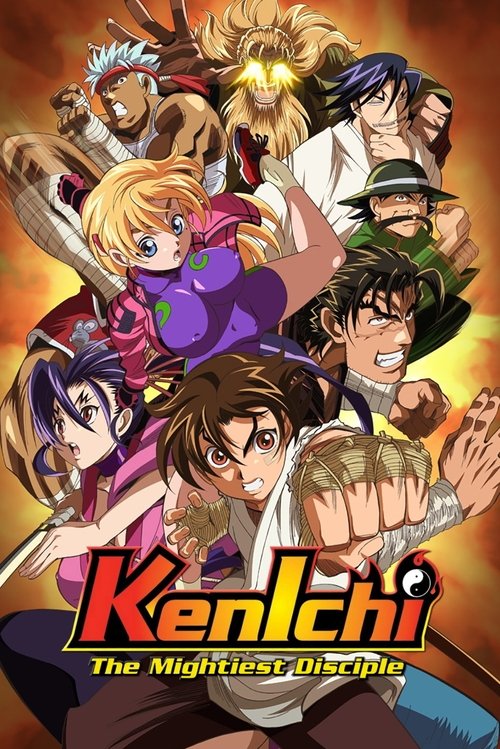
"Kenichi: The Mightiest Disciple" follows Kenichi Shirahama, a timid and frequently bullied high school student who is considered a weakling by his peers. His life takes a dramatic turn when he befriends the beautiful and skilled transfer student, Miu Fūrinji. To gain the strength to protect himself and others, Kenichi follows Miu to her home, the Ryōzanpaku dojo, a haven for grand masters of various martial arts disciplines. Under the grueling, and often comical, tutelage of these eccentric masters—specialists in Karate, Jujutsu, Chinese Kenpō, and Muay Thai—Kenichi begins a punishing regimen to transform his body and spirit.
As Kenichi's skills grow, he inadvertently attracts the attention of the city's strongest delinquents and a formidable gang known as Ragnarok. The series chronicles his reluctant but courageous battles against increasingly powerful opponents, forcing him to apply his harsh training in real-world fights. It is a classic underdog story that blends intense martial arts action, slapstick comedy, and a touch of romance, as Kenichi evolves from a coward into a true martial artist, making friends out of former enemies and discovering the true meaning of strength.

Core Meaning
The core meaning of "Kenichi: The Mightiest Disciple" is that true strength is not an innate gift but a quality forged through relentless perseverance, courage, and the will to protect others. The series champions the idea that anyone, no matter how weak or lacking in talent, can achieve greatness through hard work and determination. It explores the philosophy of Katsujin-ken, the "life-saving fist," which posits that the ultimate purpose of martial arts is not to destroy, but to defend the innocent and uphold justice. This stands in stark contrast to the antagonists' philosophy of Satsujin-ken, the "killing fist," which seeks power for its own sake. The narrative is a testament to the power of mentorship and finding a righteous path, suggesting that the journey of self-improvement is as important as the destination.
Thematic DNA
The Journey from Weakness to Strength
This is the central theme of the series, embodied by the protagonist, Kenichi. He starts as a bookworm with no athletic talent, known derisively as "Weak Legs Kenichi." His transformation is not instantaneous; it's a slow, painful process filled with brutal training, setbacks, and fear. Each fight, whether won or lost, serves as a lesson, pushing him to overcome his physical and mental limitations. The series meticulously details his growth, showing that strength is a product of unwavering effort and the courage to face one's fears, making his journey relatable and inspiring.
Perseverance and Hard Work
Closely tied to Kenichi's journey, this theme emphasizes that talent is secondary to dedication. Kenichi is explicitly shown to have no natural gift for martial arts. His progress is solely the result of enduring his masters' torturous training regimens day after day. The series repeatedly highlights that his victories are earned through sheer grit. This theme serves as a powerful message that persistence can overcome a lack of natural ability, celebrating the virtue of hard work above all else.
The Philosophy of Martial Arts
The series presents a core conflict between two opposing martial arts philosophies: Katsujin-ken (the life-saving fist) and Satsujin-ken (the killing fist). Ryōzanpaku's masters teach Kenichi that the purpose of their art is to protect life, not to take it. Kenichi internalizes this, always fighting to defend others and refusing to seriously injure his opponents. This contrasts with the antagonists from Ragnarok and later Yami, who believe in crushing their opponents completely. This thematic conflict explores the ethics of power and the responsibility that comes with great strength.
Friendship and Mentorship
Kenichi's growth is heavily dependent on the support system around him. His masters at Ryōzanpaku are not just trainers but also mentors and a surrogate family, offering life lessons alongside fighting techniques. Furthermore, his journey is marked by the friendships he forges, often with former adversaries like Takeda and Ukita. These bonds give him a reason to fight and the strength to continue. The relationship with Miu is central, as she is his initial inspiration and a constant source of support and motivation.
Character Analysis
Kenichi Shirahama
Tomokazu Seki
Motivation
Initially, his motivation is self-preservation and a desire to overcome his weakness. This quickly evolves into a powerful drive to protect his friends and especially Miu. He adheres strictly to the philosophy of Katsujin-ken, believing that martial arts should be used to save people, not to harm them. This moral conviction becomes his primary motivation, giving him the strength to face opponents far more powerful than himself.
Character Arc
Kenichi's arc is a classic zero-to-hero journey. He begins as a timid, physically weak high schooler who prefers reading self-help books to confrontation. His initial motivation is simply to stop being bullied. Upon joining Ryōzanpaku, he is subjected to inhuman training that slowly forges him into a capable fighter. His arc is defined by his struggle to overcome fear. In early fights, he is often terrified, but his courage grows as he finds things worth protecting—his friends, Miu, and his moral code. He evolves from someone who fights out of necessity to a true martial artist who actively stands up for justice, all while retaining his kind and gentle nature.
Miu Fūrinji
Tomoko Kawakami
Motivation
Miu is motivated by a deep-seated kindness and a sense of justice. She has a strong desire to protect the innocent and has a particular fondness for kittens. She is also driven by her love for her grandfather and the other masters at Ryōzanpaku. She supports Kenichi's training because she sees his good heart and believes in his potential to become a true protector. Her primary motivation is to live up to the legacy of her family while also finding her own place in the world.
Character Arc
Miu is introduced as a seemingly perfect martial arts prodigy, possessing immense skill from a young age due to being the granddaughter of the dojo's Elder. However, her arc reveals her own vulnerabilities. Having moved frequently and been isolated with martial arts masters, she is socially awkward and struggles to make normal friends. Her relationship with Kenichi helps her open up and experience a normal school life. While she is always Kenichi's superior in skill, her arc involves learning to trust others and finding a balance between her life as a martial artist and a regular teenage girl.
Hayato Fūrinji
Hiroshi Arikawa
Motivation
Hayato's motivation is to preserve true martial arts and counter the dark influence of the Satsujin-ken philosophy. He gathered the masters at Ryōzanpaku to create a bastion for his ideals. He is also deeply motivated by his love for his granddaughter, Miu, and his desire to see her safe and happy. He sees Kenichi's potential not just as a fighter, but as someone worthy of carrying on their legacy and, potentially, of being with Miu, famously declaring Kenichi can only marry her if he can defeat him.
Character Arc
Known as the "Invincible Superman," Hayato is the legendary elder of Ryōzanpaku who has never lost a fight. His arc is that of a seemingly untouchable figure who takes on the responsibility of guiding the next generation. While his power is absolute, his character is revealed through his interactions with Kenichi and Miu. He is kind and grandfatherly, often apologizing to Kenichi for the harsh training, yet possesses a reckless and arrogant streak. His arc is less about personal growth and more about imparting his wisdom and ensuring the philosophy of the "life-saving fist" is passed down correctly.
Akisame Kōetsuji
Jurota Kosugi
Motivation
Akisame is motivated by the pursuit of perfection in all things, whether it be art or martial arts. He believes in the harmony of mind, body, and technique. His primary motivation as a teacher is to mold Kenichi into a true disciple of the Katsujin-ken, not just by making him strong, but by making him wise. He takes a profound and personal interest in Kenichi's development, seeing him as his most challenging and rewarding creation.
Character Arc
Akisame is the first master to seriously train Kenichi and serves as his primary mentor in strategy and philosophy. A master of Jujutsu, he is also a polymath skilled in sculpture, calligraphy, medicine, and engineering. His arc is one of a patient and insightful teacher. He understands Kenichi's weaknesses better than anyone and designs his training specifically to overcome them. While always a master, his interactions with Kenichi show his deep commitment to the nurturing of potential, believing in a scientific and philosophical approach to martial arts mastery.
Shio Sakaki
Unsho Ishizuka
Motivation
Sakaki is motivated by the spirit of a true fighter. He seeks worthy challenges and respects strength and courage. Initially, he has no interest in teaching, but he is moved by Kenichi's unwavering determination. His motivation becomes to see his disciple grow into a man who can stand on his own, often placing bets on Kenichi's success as a gruff way of showing his faith in him.
Character Arc
The 100-dan Karate master, Sakaki is initially reluctant to train Kenichi, viewing him as a weakling. His arc is about warming up to his role as a teacher and developing a strong, almost paternal, bond with Kenichi. He is often depicted as short-tempered, loves to drink and gamble, and quarrels with the other masters. However, beneath his fierce exterior lies a deeply caring individual who consistently shows up to protect Kenichi when he is in mortal danger, often giving him crucial advice about the realities of a fight.
Symbols & Motifs
Ryōzanpaku Dojo
The dojo symbolizes a sanctuary for growth and the convergence of different strengths. It is a place where masters of vastly different disciplines and personalities come together for the common goal of preserving their arts. For Kenichi, it represents a second home where he is forged from a weak boy into a capable fighter, symbolizing the potential for transformation when one is in the right environment with proper guidance.
The dojo is the central location of the series. It's where all of Kenichi's training takes place and where he lives alongside his masters. Its name, Ryōzanpaku, is a reference to the Liangshan Marsh from the classic Chinese novel Water Margin, a base for 108 heroic outlaws, mirroring how the dojo houses a group of powerful, unconventional masters.
Katsujin-ken vs. Satsujin-ken
These two opposing philosophies symbolize the duality of power and the moral choices that come with it. Katsujin-ken (The Life-Saving Fist) represents the righteous use of strength for protection and justice, while Satsujin-ken (The Killing Fist) symbolizes the corrupting nature of power sought for domination and destruction.
This philosophical clash is the central conflict of the entire series. Kenichi is a practitioner of the life-saving fist, taught by the masters of Ryōzanpaku. His primary antagonists, first from the gang Ragnarok and later from the organization Yami, are all followers of the killing fist. Every major battle is not just a physical contest but a clash of these fundamental ideologies.
Episode Highlights
The Place Where the Heroes Gather
The first episode introduces Kenichi as a perpetual victim of bullying and his fateful encounter with the enigmatic and powerful Miu Fūrinji. Desperate to become strong after being challenged by a karate club bully, Kenichi follows Miu's advice and visits the imposing Ryōzanpaku dojo, setting the stage for his entire journey.
This episode is crucial as it establishes the series' core premise, introduces the main characters, and sets up the central conflict of Kenichi's desire to transform himself. It perfectly captures his initial weakness and the glimmer of hope that Miu and Ryōzanpaku represent.
Strength and Courage! For the Sake of Justice!
After his first victory, Kenichi is targeted by a stronger member of the karate club, Tsukuba. He is soundly defeated, a humbling experience that makes him question his path. Witnessing his despair, the Jujutsu master Akisame Kōetsuji officially takes him on as a disciple, beginning his formal, torturous training at Ryōzanpaku.
This episode marks the true beginning of Kenichi's martial arts education. His defeat is a pivotal moment that solidifies his resolve, and Akisame's decision to train him signifies his acceptance into the strange family of Ryōzanpaku masters.
Apapapa! Apachai's Training!
The gentle giant and Muay Thai master, Apachai Hopachai, finally gets his turn to train Kenichi. Known as the "God of Death" of the Muay Thai underworld, Apachai has difficulty holding back, making his training incredibly dangerous but effective. The episode balances humor with the introduction of a new, deadly fighting style for Kenichi to learn.
This episode is significant for introducing Kenichi to the principles of Muay Thai and showcasing the unique (and hilarious) teaching style of Apachai. It expands Kenichi's arsenal and deepens his relationship with another of his eclectic masters.
The Mask Removed! Hermit's Real Identity!
One of the most anticipated episodes, it reveals the true identity of Hermit, the Sixth Fist of Ragnarok. He is revealed to be Natsu Tanimoto, a handsome and popular student in Kenichi's school who leads a double life. The episode culminates in a dramatic and emotionally charged confrontation between Kenichi and Tanimoto.
This episode is a major turning point in the Ragnarok arc. The reveal of Hermit's identity creates a personal and complex rivalry for Kenichi, as his enemy is someone he knows from his daily life. The fight is considered one of the best in the series, clashing not just fighting styles but also ideals.
The Mightiest Transformation! The Ryozanpaku Rhythm!
In his climactic battle against Odin, the leader of Ragnarok, Kenichi finds that his every move is being predicted. In a brilliant strategic move, he stops fighting like himself and begins to perfectly imitate the unique rhythms and stances of each of his six Ryōzanpaku masters, one by one. This unpredictable strategy throws his opponent off and showcases the depth of his training.
This episode represents the culmination of all of Kenichi's training up to this point. It's a visual and thematic representation of how he has internalized the teachings of all his masters. His ability to channel them demonstrates his growth from a mere student to a true disciple, embodying the spirit of Ryōzanpaku.
Philosophical Questions
What is the true purpose of strength?
The series constantly explores this question through the central conflict between the 'Life-Saving Fist' (Katsujin-ken) and the 'Killing Fist' (Satsujin-ken). Kenichi learns that the ultimate goal of his grueling training is not to defeat enemies, but to gain the power to protect the weak and uphold justice. The antagonists, in contrast, seek power for personal gain, control, and destruction. The narrative argues that strength without a moral compass is meaningless and destructive, while true mastery is achieved when power is wielded with compassion and for the good of others.
Can anyone become strong, regardless of natural talent?
"Kenichi" is a powerful argument for the primacy of hard work over innate talent. The protagonist is explicitly defined by his lack of any natural gift for martial arts. His masters often comment on his clumsiness and slow learning. Yet, he consistently overcomes prodigies and geniuses through sheer, unadulterated perseverance. The series suggests that while talent can provide a head start, it is the relentless dedication to self-improvement and the willingness to endure hardship that ultimately forges a true master.
Cultural Impact
"Kenichi: The Mightiest Disciple" emerged in the mid-2000s as a significant entry in the shōnen and martial arts anime genres. While not reaching the global mega-fame of series like 'Naruto' or 'Dragon Ball Z', it carved out a substantial and dedicated fanbase. Its primary influence lies in its detailed and grounded portrayal of martial arts training. Unlike many contemporaries that focused on supernatural powers, Kenichi's strength came from believable (if exaggerated) physical conditioning and learning real-world fighting styles like Karate, Muay Thai, and Jujutsu, inspiring interest in traditional martial arts among its viewers.
Critically, the series was often praised for its excellent character development, particularly Kenichi's satisfying and well-paced journey from weakling to warrior. The dynamic between Kenichi and his diverse set of masters was a standout element, blending intense action with heartfelt mentorship and comedy. However, it also faced criticism, with some reviewers finding the humor repetitive and the level of 'fan service' (sexualized depictions of female characters) to be excessive and distracting at times. The animation was generally considered standard for its time, effective in fight scenes but not groundbreaking.
The anime's 50-episode run concluded at a natural stopping point but only adapted a fraction of the lengthy manga. This led to a lasting demand for a continuation, partially met by a series of OVAs years later. The series remains a beloved classic for many anime fans, remembered as a quintessential underdog story that perfectly balanced action, comedy, and character growth, leaving a legacy as one of the most entertaining martial arts-focused anime of its era.
Audience Reception
"Kenichi: The Mightiest Disciple" has garnered a generally positive and loyal audience reception since its release. It is widely praised for its engaging story of an underdog's journey, which viewers found highly relatable and inspiring. Kenichi's character development from a bullied weakling to a confident martial artist is almost universally cited as the show's greatest strength. The supporting cast, especially the eccentric and powerful masters of the Ryōzanpaku dojo, are also fan favorites, lauded for their blend of humor, wisdom, and incredible fighting prowess.
The main points of criticism often revolve around two aspects: the animation quality and the use of fan service. Some viewers felt the animation was inconsistent or dated, particularly for a 50-episode series, though many concede that the fight choreography was still exciting. The fan service, particularly the focus on the female characters' physiques, was a divisive element; some found it a harmless and humorous part of the shōnen formula, while others felt it was excessive and sometimes detracted from the more serious moments. Despite these critiques, the overall verdict from the audience is overwhelmingly favorable. The series is remembered fondly as a fun, action-packed, and heartfelt anime that perfectly balances comedy, martial arts, and an uplifting message.
Interesting Facts
- The creator of the original manga, Syun Matsuena, first published a prototype series called 'Tatakae! Ryōzanpaku Shijō Saikyō no Deshi' from 1999 to 2002 before remaking it into the more famous series.
- In episode 6, a scene where Kenichi trains by protecting his food is a parody of a similar training sequence from the classic Jackie Chan movie 'Drunken Master'.
- In episode 17, one of the gang members shouts "it's over 9,000!" after witnessing Sakaki's power, a direct and famous reference to the English dub of 'Dragon Ball Z'.
- The character Niijima Haruo, an alien-obsessed informant, often makes the Vulcan "Live Long and Prosper" hand sign from 'Star Trek', fitting his quirky personality.
- The anime series only covers the first major arc of the manga, the Ragnarok saga. The manga continues the story for several hundred more chapters, introducing a much larger antagonist organization called Yami.
- Due to the passing of Miu's original voice actress, Tomoko Kawakami, her role was taken over by Rie Kugimiya for the later OVA (Original Video Animation) series that continued the story.
Easter Eggs
In episode 5, a movie poster in the background is for a film titled "Mirai Tantei Conan Saikyo." The poster features a character resembling the protagonist from 'Detective Conan' (also animated by TMS Entertainment), but topless and wearing sunglasses.
This is a direct and humorous parody of 'Detective Conan' (Meitantei Conan), another highly successful manga and anime series. It serves as a fun inside joke from the animation studio, TMS Entertainment, which produced both shows.
In episode 43, during a moment of extreme fear, Kenichi visualizes Elder Hayato Fūrinji parodying Joe Shimamura from the classic anime 'Cyborg 009,' complete with a different colored suit and a ray gun.
This is a visual homage to another iconic anime series, 'Cyborg 009.' These kinds of references highlight the influences on the creators and serve as a nod to fans of classic anime.
⚠️ Spoiler Analysis
Click to reveal detailed analysis with spoilers
Frequently Asked Questions
Explore More About This Movie
Dive deeper into specific aspects of the movie with our detailed analysis pages
Comments (0)
No comments yet. Be the first to share your thoughts!