Skip to content
Kingdom
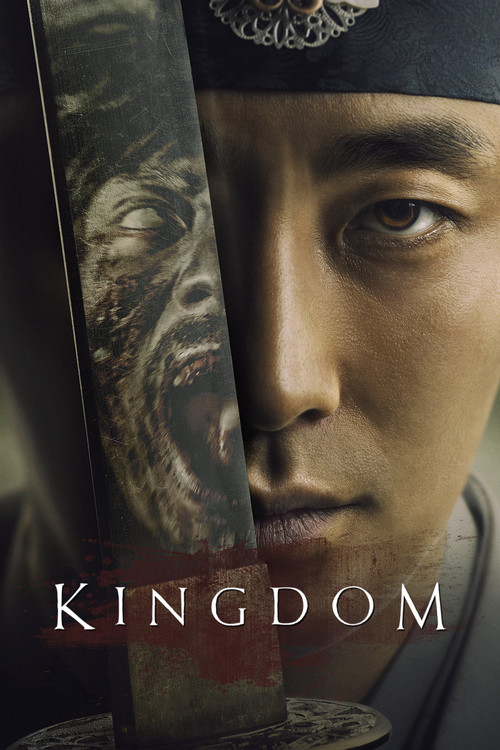
A chilling Joseon-era political horror filled with relentless desperation, where blood-soaked silk robes and icy shadow-draped palaces mirror a rotting kingdom consumed by human greed.
Kingdom

Kingdom

킹덤

25 January 2019 — 13 March 2020 South Korea 2 season 12 episode Ended 8.2 (1,239)

Cast: Ju Ji-hoon, Ryu Seung-ryong, Bae Doona, Kim Sang-ho, Kim Sung-kyu

Drama Mystery Hunger and Class Oppression Corrupt Lineage vs. Legitimate Leadership / "Blood" Political Greed as the True Epidemic Survival, Sacrifice, and Moral Responsibility Human Hubris vs. Uncontrollable Nature

Overview

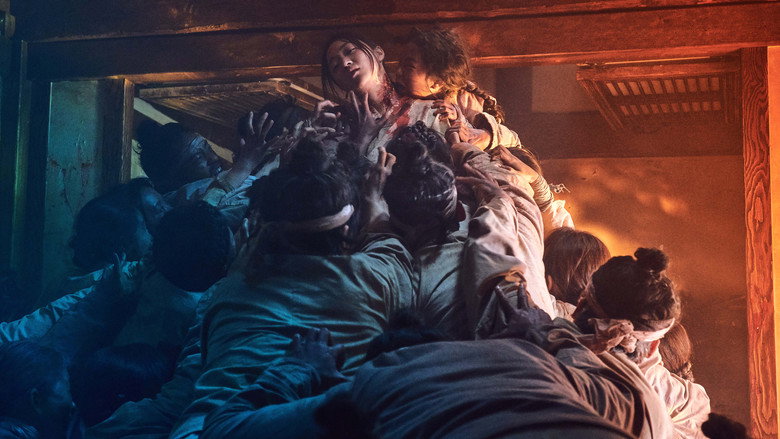
Kingdom (킹덤) is Netflix’s pioneering original South Korean period horror thriller. Set in medieval Korea’s Joseon period shortly after the Imjin War, the narrative unfolds across two tightly plotted six-episode seasons. The story opens amidst whispers of the King’s sudden illness and death. As Crown Prince Lee Chang attempts to uncover the truth behind his father’s hidden condition, he becomes framed for treason by the powerful Haewon Cho clan, who effectively control the royal court. Forced to flee the capital, Prince Chang journeys to the southern provinces, only to encounter a horrific plague that resurrects the dead as fast, flesh-hungry monsters.

Across its overarching narrative, Kingdom seamlessly weaves high-stakes political conspiracy with visceral zombie survival horror. While Prince Chang fights alongside dedicated allies to contain the rapidly expanding epidemic, Chief State Councillor Cho Hak-ju and his daughter, the Queen Consort, manipulate the outbreak to consolidate absolute control over the throne. The crisis forces the characters to traverse a devastated landscape of famine and corruption, moving from rural provinces back toward the royal heart of Hanyang.

Rather than relying purely on shock horror, the series treats the plague as both a biological threat and a direct consequence of socio-political corruption. As the characters uncover the biological origin of the resurrection plant, Prince Chang evolves from an endangered, naive royal into a compassionate, tactical leader. The two-season arc culminates in a high-stakes struggle for the future of the nation, determining whether Joseon will be saved by true leadership or consumed by its own ruling class.


Core Meaning

The central thesis of Kingdom is that the true monster plaguing society is not the mindless, hungry undead, but the boundless greed and moral bankruptcy of human rulers. Creators Kim Eun-hee and Kim Seong-hun use the zombie epidemic as a visceral allegory for systemic inequality, class oppression, and the catastrophic failures of totalitarian leadership. The series demonstrates that when those in power treat ordinary citizens as disposable commodities, society inevitably collapses into chaos.

Furthermore, Kingdom redefines the concept of legitimate monarchy. Through Crown Prince Lee Chang's evolution, the show argues that true leadership is not inherited through royal bloodlines or maintained through political terror, but earned through empathy, self-sacrifice, and an unwavering obligation to protect the vulnerable.

Thematic DNA

Hunger and Class Oppression 30%
Corrupt Lineage vs. Legitimate Leadership / "Blood" 25%
Political Greed as the True Epidemic 20%
Survival, Sacrifice, and Moral Responsibility 15%
Human Hubris vs. Uncontrollable Nature 10%

Hunger and Class Oppression

In Season 1, hunger is both literal and thematic. The lower classes are driven to extreme famine by government neglect, leading to cannibalism that unwittingly triggers the widespread plague. In Season 2, hunger evolves into a structural metaphor showing how systemic poverty turns the masses into a destructive force that eventually threatens the ruling elite.

Corrupt Lineage vs. Legitimate Leadership / "Blood"

While Season 1 focuses on physical hunger, writer Kim Eun-hee designed Season 2 around the theme of blood. This encompasses bloodlines, lineage anxiety, fake pregnancies, and literal bloodshed. The theme explores how the aristocracy’s obsession with noble birth creates toxic power struggles, contrasting Lee Chang's moral legitimacy with the corrupt bloodline claims of the Haewon Cho Clan.

Political Greed as the True Epidemic

Throughout both seasons, human political maneuvers prove far more calculating and ruthless than the instincts of the infected. Lord Cho Hak-ju and Queen Consort Cho repeatedly exploit the plague, sacrifice innocent subjects, and weaponize the undead to maintain power, illustrating that tyranny is more dangerous than disease.

Survival, Sacrifice, and Moral Responsibility

Characters are continuously tested by choices between self-preservation and duty. Noble figures like Lord An Hyun choose honorable death over living with past guilt, while commoners and guards face tragic choices between protecting their families and serving the greater good.

Human Hubris vs. Uncontrollable Nature

The series exposes humanity's failure to control biological forces. The attempt to conquer death using the resurrection plant unleashes a nightmare that rapidly defies human expectations, shifting from a localized outbreak to a seasonal, climate-driven disaster.

Character Analysis

Crown Prince Lee Chang

Ju Ji-hoon

Archetype: Hero / Ideal Ruler Key Trait: Empathic moral courage

Motivation

Initially surviving his political enemies; later, protecting the people of Joseon and restoring rightful governance.

Character Arc

Begins as an illegitimate, vulnerable prince seeking self-preservation against court intrigue. Through his journey across the stricken provinces, he witnesses peasant suffering and evolves into a selfless military strategist and compassionate leader. In the Season 2 finale, he willingly abdicates the throne to preserve peace and eradicate the plague's root cause.

Lord Cho Hak-ju

Ryu Seung-ryong

Archetype: Chief Antagonist / Tyrant Key Trait: Cold, unyielding tyranny

Motivation

Absolute political power and total dominion for the Haewon Cho clan.

Character Arc

Operates as the untouchable, calculating Chief State Councillor who resurrected the King to maintain clan supremacy. His absolute faith in his ability to control everyone leads to his ultimate downfall when he is poisoned by his own ruthless daughter.

All 5 characters and cast

Symbols & Motifs

The Resurrection Plant (Saengsacho)

Meaning:

Symbolizes man’s arrogant attempt to play God and manipulate life and death. It represents toxic ambition that appears restorative on the surface but breeds destruction beneath.

Context:

Used throughout the series as the biological catalyst for the zombie outbreak, originally utilized by Cho Hak-ju and An Hyun during the Imjin War and later on King Donggun.

The Gat (Traditional Korean Hat)

Meaning:

Symbolizes social standing, class hierarchy, and noble identity in Joseon society.

Context:

Worn by nobles throughout the series; the meticulous preservation of hats by aristocrats—even during zombie attacks—highlights the rigid class boundaries of the era.

Cold / Ice and Freezing Water

Meaning:

Symbolizes dormant danger, shifting rules of survival, and eventual purification.

Context:

Temperature dictates the infected's behavior, while submersion in cold water serves as the sole mechanism to expel the parasitic worms before infection takes root in the brain.

The Cannibalistic Stew

Meaning:

Symbolizes the absolute degradation of humanity under extreme state-driven poverty.

Context:

Featured in Season 1 at Jiyulheon clinic, where soup made from a dead boy's corpse is fed to starving patients, inadvertently mutating and spreading the plague.

Bloodstains on Royal Silk

Meaning:

Visually contrasts the immaculate, pristine facades of the royal court with the hidden violence and moral decay sustaining the regime.

Context:

Displayed in court scenes where regal garments become soiled during violent purges and zombie breaches.

Memorable Quotes

난 다르다. 난 이들을 버리고 간 이들과도 다르고 해원 조 씨와도 다르다. 난 절대로 이들을 버리지 않을 것이다.
— Crown Prince Lee Chang

Context

Season 1, Episode 4 – Spoken in Dongnae as corrupt officials flee on rescue ships, leaving the common folk behind to face the approaching horde.

Meaning

Marks Lee Chang’s defining ideological transition from a fleeing fugitive into a compassionate sovereign.

이 안에 시신 몇 구가 있건, 몇십 구가 있건 그 누구도 내게 아무 말도 못 하게 만드는 것. 그것이 권력이다.
— Chief State Councillor Cho Hak-ju

Context

Season 1, Episode 3 – Spoken to his daughter, Queen Consort Cho, while standing above the royal garden pond where murdered palace servant bodies are submerged.

Meaning

Defines the terrifying core philosophy of Joseon’s political tyranny, where human slaughter is reduced to a demonstration of political dominance.

All 4 quotes

Episode Highlights

Season 1, Episode 1

S1E1

Establishes the dual narrative axis—political treason in Hanyang Palace and the mysterious hidden illness of the King. Sets Prince Chang on his journey south.

Significance:

Initiates the overarching quest of Crown Prince Lee Chang and sets the core political and horror conflicts in motion.

Season 1, Episode 2

S1E2

Features the catastrophic outbreak at Jiyulheon clinic triggered by the cannibalistic stew. Introduces the terrifying physical speed and mechanics of the infected.

Significance:

Establishes the mutated, secondary spread of the plague and introduces key characters Seo-bi and Yeong-sin.

Season 1, Episode 4

S1E4

Features the siege of Dongnae. Highlights the moral bankruptcy of the ruling class as aristocrats abandon peasants on escape boats, prompting Prince Chang to take command.

Significance:

Serves as Prince Chang's defining moment where he embraces leadership over the common people.

Season 1, Episode 6

S1E6

Features the cliffhanger finale at Sangju. Unveils that cold temperature—not daylight—dictates zombie activity, leaving defenders exposed as dawn breaks on an active horde.

Significance:

Reverses the established rules of the infected and sets up the immediate crisis of Season 2.

Season 2, Episode 1

S2E1

Delivers the battle of Sangju under daytime conditions. Establishes the relentless pacing of Season 2 and shifts focus toward winter survival tactics.

Significance:

Opens Season 2 with high action and resets the tactical rules of engagement against the daytime horde.

Season 2, Episode 2

S2E2

The battle at Mungyeong Saejae gate. Forces Prince Chang to commit the tragic act of decapitating his own zombified father, breaking the Cho clan's hold over the King.

Significance:

Severs Cho Hak-ju's primary leverage by ending the zombified King's existence.

Season 2, Episode 3

S2E3

Features Lord An Hyun’s intentional resurrection via saengsacho as a weaponized zombie, exposing Cho Hak-ju’s historic crimes during the Imjin War to the royal army.

Significance:

Exposes Lord Cho Hak-ju's treason publicly and shifts the loyalty of the royal guards to Prince Chang.

Season 2, Episode 4

S2E4

Resolves the informant narrative through Mu-yeong’s tragic death in Lee Chang's arms. Contains Queen Consort Cho’s secret lethal poisoning of her father, Lord Cho Hak-ju.

Significance:

Eliminates the main antagonist Cho Hak-ju and shifts ultimate villainy to Queen Consort Cho.

Season 2, Episode 6

S2E6

The series finale featuring the ice pond battle at Hanyang Palace, Prince Chang's abdication, a seven-year jump showing the surviving parasite worm in the child King, and the teaser introducing Ashin.

Significance:

Concludes the Haewon Cho conflict, resolves the primary outbreak, and sets up future narrative arcs in the universe.

Philosophical Questions

What constitutes a legitimate ruler?

Explored through Crown Prince Lee Chang's evolution and contrast with the Haewon Cho clan, debating whether a sovereign is defined by legal lineage or by active dedication to preserving human life.

Does national survival justify moral atrocity?

Explored through Lord An Hyun's secret past during the Imjin War, questioning if he was justified in turning dying peasants into monsters to repel foreign military invaders.

At what point does systemic neglect strip humanity of its moral nature?

Explored through the famine scenes and Jiyulheon clinic outbreak, examining whether citizens or rulers bear the moral guilt when a state starves its people into cannibalism.

Alternative Interpretations

The series supports multiple analytical lenses:

Full ending explanation

Cultural Impact

Kingdom debuted at an inflection point for South Korean media, bridging Eastern period drama (sageuk) aesthetic with Western zombie horror traditions. Released shortly before the global outbreak of the COVID-19 pandemic, the show gained unintentional real-world resonance due to its depiction of quarantine failures, official cover-ups, and regional outbreaks.

Critics universally lauded both seasons. Season 1 holds a 93% approval rating on Rotten Tomatoes, while Season 2 achieved a rare 100% score. Critics praised its cinematic scope, set design, fast-paced storytelling, and social commentary. Along with the movie Train to Busan (2016), Kingdom solidified the global "K-Zombie" movement, proving that Korean storytellers could innovate within established horror genres while embedding sharp critiques of class and power.

Audience Reception

Praised Aspects:

  • Pacing and Scale: Audiences praised the show for avoiding typical 16-episode K-drama padding, delivering condensed, breathless 6-episode seasons.
  • Visual Craftsmanship: High praise for costume accuracy, historical sets, cinematography, and realistic zombie choreography.
  • Intelligent Villains: Cho Hak-ju and Queen Consort Cho were celebrated as terrifyingly competent antagonists.

Main Criticisms:

  • Early Season 1 Performance: Initial local Korean audience reviews briefly criticized actress Kim Hye-jun's early performance as Queen Consort Cho, calling her vocal delivery in early episodes unnatural for a period drama. However, her performance in Season 2 won widespread acclaim as her character's villainy expanded.
  • Season 1 Cliffhanger: Some viewers expressed frustration at Season 1's abrupt cliffhanger ending, though this was resolved by Season 2's immediate continuation.

Interesting Facts

  • Kingdom was Netflix's very first original South Korean series production, laying the groundwork for global K-content expansion.
  • Screenwriter Kim Eun-hee originally conceptualized the project in 2011. Because traditional Korean broadcast networks rejected the script due to violent gore and dark political themes, she released it as the 2015 webtoon The Kingdom of the Gods before Netflix picked up the live-action adaptation.
  • The series original budget was set at roughly ₩1.2 billion per episode, but production complexity expanded it to over ₩2.0 billion ($1.7 million) per episode, driving total costs for 12 episodes past ₩35 billion (~$30 million).
  • Production on Season 1 was halted in January 2018 when an art crew member collapsed and died from overwork, drawing intense public scrutiny to labor standards in Korean television production.
  • Director Kim Seong-hun (A Hard Day, The Tunnel) directed all six episodes of Season 1. To manage scale and quality for Season 2, he directed Episode 1 and handed off episodes 2–6 to director Park In-je.
  • Following the global premiere, Western audiences became fascinated by the elaborate historical headwear worn by Joseon men, creating viral social media trends and earning the series the nickname "the show about amazing hats".

Easter Eggs

Jun Ji-hyun (Gianna Jun) Cameo

In Season 2, Episode 6, top Hallyu actress Jun Ji-hyun makes a surprise, wordless end-scene appearance as Ashin, directly setting up the special prequel episode Kingdom: Ashin of the North (2021).

Real Historical Records (Joseon Wangjo Sillok)

Screenwriter Kim Eun-hee cited real 19th-century entries in the Annals of the Joseon Dynasty recording tens of thousands of unexplained deaths during epidemics as the primary historical inspiration for the plot.

Imjin War Historical Framing

The backstory regarding An Hyun and Cho Hak-ju using saengsacho three years prior directly connects to the real-world Japanese invasions of Korea (1592–1598).

Ahn Jae-hong Cameo

Popular actor Ahn Jae-hong makes a cameo in Season 2, Episode 6 as Eunuch Moon-soo, who watches over the young King seven years after the siege.

Frequently Asked Questions

Explore More About This Movie

Dive deeper into specific aspects of the movie with our detailed analysis pages

Comments (0)

Leave a comment

No comments yet. Be the first to share your thoughts!

Similar Movies