Skip to content
Kong: Skull Island
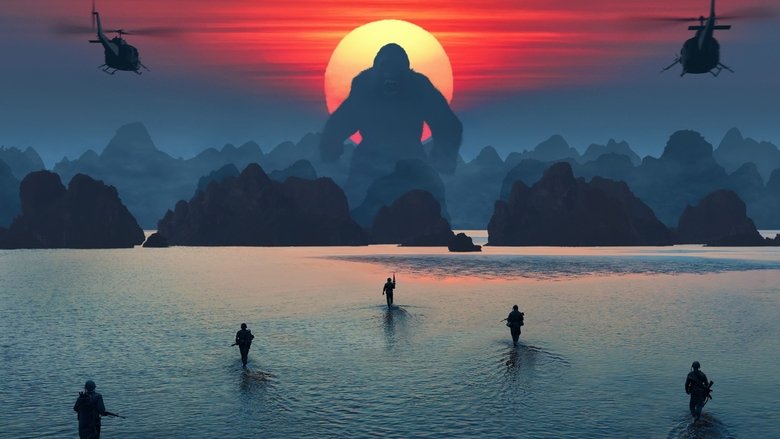
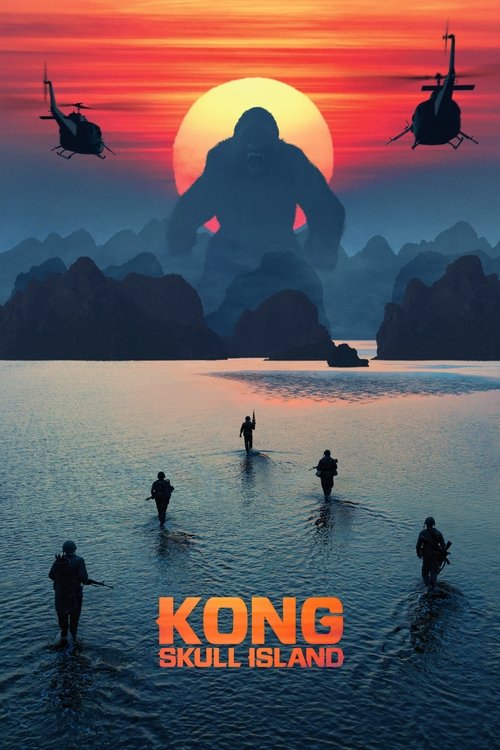
A pulpy, napalm-orange monster adventure that mixes awe with dread, as small human ambitions are dwarfed by a god-sized ape rising from a fog-wrapped jungle like a fever dream of war.
Kong: Skull Island

Kong: Skull Island

"All hail the king."

08 March 2017 China 118 min 6.6 (11,437)

Director: Jordan Vogt-Roberts

Cast: Tom Hiddleston, Samuel L. Jackson, John Goodman, Brie Larson, Jing Tian

Fantasy Action Adventure War, trauma and the need for an enemy Human arrogance versus nature Myth, godhood and guardianship Disillusionment and redemption Cold War paranoia and secrecy
Budget: $185,000,000
Box Office: $566,652,812

Overview

Kong: Skull Island (2017) is the second film in Legendary's MonsterVerse. It is set in 1973, as the Vietnam War ends. A team of scientists and soldiers is sent to a newly discovered, uncharted island in the Pacific. Government man Bill Randa leads the expedition. He is joined by ex-British Special Air Service tracker James Conrad, anti-war photographer Mason Weaver, and a helicopter squadron under Colonel Preston Packard, which is fresh from Da Nang.

The mission is presented as geological survey work, and the team drops seismic charges as it arrives. The island answers back, and the group is scattered. Some of the survivors want to reach the rendezvous point to be extracted. Others, led by Packard, want revenge on the giant creature that attacked them. Along the way they meet a World War II pilot who has been stranded on the island for decades, and the native Iwi people.

The film dropped the familiar "Beauty and the Beast" structure. Reviewers noted that it is the first Kong film set entirely on the island, and that it has no ape fixation on a blonde woman. It works as a war movie, a creature feature and an origin story, in the style of Apocalypse Now with monsters.

Core Meaning

The film argues that the real danger on Skull Island is human hubris: the urge to treat anything unfamiliar as an enemy, and to invade a home that is not yours. One of its central lines is that you don't go into someone's house and drop bombs unless you are picking a fight. Packard's obsession with beating Kong stands in for a nation that "abandoned" a war and never found closure. Kong is a guardian, not a villain. The film frames him as a god-like protector who keeps larger threats in check, and humans as guests who should have known better.

The director pitched the project as a 1970s Vietnam-era "Apocalypse Now with Kong". Critics were split on how deeply it explores that comparison, but the anti-war, anti-imperial message is plain.

Thematic DNA

War, trauma and the need for an enemy 30%
Human arrogance versus nature 28%
Myth, godhood and guardianship 17%
Disillusionment and redemption 15%
Cold War paranoia and secrecy 10%

War, trauma and the need for an enemy

Packard cannot accept the Vietnam War's lack of resolution, so he fixes on Kong as a target he can beat. Marlow's line that there is no enemy until you look for one sums up the film's view. Collider read the soldiers as men who want an ending that feels like justice.

Human arrogance versus nature

The expedition arrives with bombs and treats the island as territory to survey and conquer. The bombing wakes the Skullcrawlers and triggers the catastrophe. Kong and the Iwi live in balance with the island, and the visitors do not.

Myth, godhood and guardianship

Kong is a god to the Iwi and a protector of the island and, by extension, the wider world. Vogt-Roberts has said he made Kong larger than usual so that he would feel like a god to the audience. The devils below are the Skullcrawlers.

Disillusionment and redemption

Conrad, Weaver and Marlow each find a purpose beyond the war. Marlow's decades of isolation end with a hoped-for return to his wife and son.

Cold War paranoia and secrecy

Monarch, the secretive agency behind the expedition, hides what it knows about monsters. The government's motives are suspect from the start, and the post-credits scene hints at a wider world of Titans.

Character Analysis

Preston Packard

Samuel L. Jackson

Archetype: Antagonist / obsessive soldier Key Trait: Obsessive need for an enemy

Motivation

He wants a victory to replace the war he feels was abandoned, and he wants revenge for his men.

Character Arc

He starts as a commander resentful that the war is ending, becomes consumed by vengeance after Kong kills his men, and dies trying to prove man is king.

James Conrad

Tom Hiddleston

Archetype: Reluctant hero Key Trait: Skilled and pragmatic

Motivation

Survival, and after the encounter, doing the right thing.

Character Arc

A hired tracker who is disillusioned with war, he turns from survival to protecting Kong and the group.

All 5 characters and cast

Symbols & Motifs

Helicopters and napalm

Meaning:

American technological and military might, and its misuse.

Context:

The helicopter assault with rock music on the soundtrack echoes Apocalypse Now, but here it goes badly for the soldiers. Napalm is also used against Kong, and critics noted the Vietnam parallel.

Photographer's camera

Meaning:

Witness and truth, set against the gun as an instrument of violence.

Context:

Weaver is an anti-war photographer. Packard says a camera is more dangerous than a gun. Her photographs record the encounter with Kong.

Kong as god and king

Meaning:

Natural order and protection rather than tyranny.

Context:

Marlow calls Kong a good king who keeps to himself. Packard vows to show Kong that man is king. His failure answers that boast.

Skull Island and the Skullcrawlers beneath

Meaning:

The hidden, subterranean dangers that human aggression stirs up. They also stand for the unconscious darkness that Conrad and Marlow's namesakes explored in the novella.

Context:

The bombing wakes the Skullcrawlers, which killed Kong's family. The Iwi believe a larger Skullcrawler will wake if Kong dies.

The hazy orange sun and vivid colours

Meaning:

A fever-dream view of war and the strangeness of the island.

Context:

The filmmakers chose unexpected colours to give a Vietnam War fever-dream feel. Reviews also noted the orange sun.

Memorable Quotes

Kong's god on the island, but the devils live below us.
— Hank Marlow

Context

Marlow explains the island's ecology to the group while pointing at a painting.

Meaning

It sets up the film's moral map: Kong is the protector, and the real threat lies elsewhere.

Sometime's there's no enemy until you look for one.
— Hank Marlow

Context

Said to Randa, according to IMDb's quote page.

Meaning

It sums up the film's anti-war message about manufactured enemies.

All 6 quotes

Philosophical Questions

Does humanity need an enemy to give meaning to its suffering?

Packard needs Kong to justify his losses, while Marlow warns that enemies are found because we look for them.

What do we owe the places we explore?

The film casts humans as guests whose actions have consequences.

Who is the real monster?

Kong is shown as a protector, and the human aggressors do the most damage.

How It Ends

Alternative Interpretations

Some critics read the Vietnam setting as a serious allegory of American failure. Others, such as Collider, argued it is only a backdrop for action. A third reading, from The Escapist, treats it as a statement about the primal nature of war.

Full ending explanation

Cultural Impact

The film was released on March 10, 2017 to generally positive reviews. It became the second MonsterVerse film and led to Godzilla vs. Kong (2021) and an animated series, Skull Island (2023). Its 1973 setting reflects a generation that grew up in an era of perpetual, abstract war, according to The Escapist. Metacritic gives it a score of 62.

It reframed Kong as a protector rather than a captive, and moved the franchise away from the beauty-and-beast story.

Audience Reception

Reviewers praised the spectacle, the creature action and the cast's performances, particularly John C. Reilly, as well as the 1970s soundtrack and Larry Fong's visuals. They described it as great big dumb fun. Critics were less taken with its thin characters and its underdeveloped Vietnam metaphor, and some called it a derivative mix of Jurassic Park and Apocalypse Now. Others found the tone over the top and comedic, and the ending anticlimactic. Overall it was generally positive.

Interesting Facts

  • It was the first major feature film to shoot extensively in Vietnam, with locations including Ninh Binh and Ha Long Bay.
  • Filming spanned three continents over six months: Oahu in Hawaii, Australia's Gold Coast, and Vietnam.
  • Vogt-Roberts pitched the film as a 1970s Vietnam-era Apocalypse Now with Kong, and the studio accepted it. The first script he read was set in 1917.
  • Vogt-Roberts has said he made Kong larger than usual to feel like a god, and the design was meant to differ from Peter Jackson's 2005 version.
  • Terry Notary did the motion capture for Kong, and Toby Kebbell did the facial capture.
  • In the film Kong is scaled to 104 feet tall, which was the largest American Kong in the series until Godzilla vs. Kong.
  • Vogt-Roberts has cited the video game Okami as an influence on a creature design, and he once wanted to call the Skullcrawlers "MacArthur".
  • Chronologically it is the first entry in the MonsterVerse timeline, though the second released.
  • It is the only MonsterVerse film to date without a monster decapitation, according to Wikizilla.

Easter Eggs

Hank Marlow and James Conrad are named after the author and narrator of Joseph Conrad's novella Heart of Darkness.

It is a tribute to the book that inspired Apocalypse Now.

Samuel L. Jackson says "Hold on to your butts".

It echoes his line in Jurassic Park.

A Nixon figurine appears on a helicopter.

It is a small period detail noted in reviews.

A patch resembling the King Kong Company patch from Taxi Driver.

Screen Rant reports that the patch is a nod to Travis Bickle's fictional Vietnam unit.

The post-credits scene shows cave paintings of monsters.

It sets up the MonsterVerse and the Godzilla crossover.

Frequently Asked Questions

Explore More About This Movie

Dive deeper into specific aspects of the movie with our detailed analysis pages

Comments (0)

Leave a comment

No comments yet. Be the first to share your thoughts!

Similar Movies