Skip to content
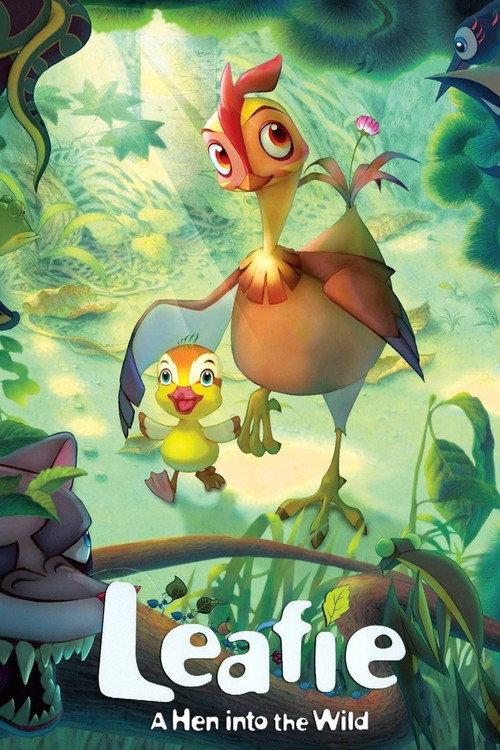
Leafie, a Hen Into the Wild
A tender animated odyssey in watercolor-soft greens, where a caged hen's longing for motherhood becomes a leap into wilderness. Wistful, heartfelt and fierce, like a single egg glowing against a vast, indifferent sky.
Leafie, a Hen Into the Wild

Leafie, a Hen Into the Wild

마당을 나온 암탉

"A story of love, sacrifice and courage"

28 July 2011 South Korea 93 min 7.8 (147)

Director: Oh Sung-yoon

Cast: Moon So-ri, Yoo Seung-ho, Choi Min-sik, Park Cheol-min, Kim Sang-hyun

Drama Animation Family Adventure Freedom and its cost Motherhood and chosen family Belonging and exclusion Nature, survival and the cycle of life Sacrifice
Box Office: $13,131,714

Overview

Leafie, a Hen Into the Wild (2011) is a South Korean animated family drama directed by Oh Sung-yoon, based on Hwang Sun-mi's popular novel. It follows Sprout, a hen who spends her days in a cramped battery cage on an egg farm and dreams of the open yard outside. She finally escapes, and learns that freedom is not automatically kind.

Outside, the other farm animals reject her, and the wilderness holds hunger, cold and predators. Sprout survives among the creatures of the marsh and forest, and she gradually finds a purpose she never imagined: caring for an egg that is not her own.

The voice cast includes Moon So-ri, Yoo Seung-ho, Choi Min-sik, Park Cheol-min and Kim Sang-hyun. The film blends adventure with a quiet meditation on belonging and parenthood.
Core Meaning

The film argues that a meaningful life is defined less by escaping confinement than by what we choose to love and protect. Sprout wants freedom, but she finds fulfilment in motherhood, an act of care that crosses the lines of species and origin.

It also suggests that family is made, not inherited, and that every living being has a claim to dignity and to a life of its own choosing. Freedom, in the end, carries responsibility and a cost.

Thematic DNA

Freedom and its cost 30%
Motherhood and chosen family 30%
Belonging and exclusion 15%
Nature, survival and the cycle of life 15%
Sacrifice 10%

Freedom and its cost

Sprout's escape from the cage is only the beginning. The wild offers liberty but also hunger, danger and loneliness.

Motherhood and chosen family

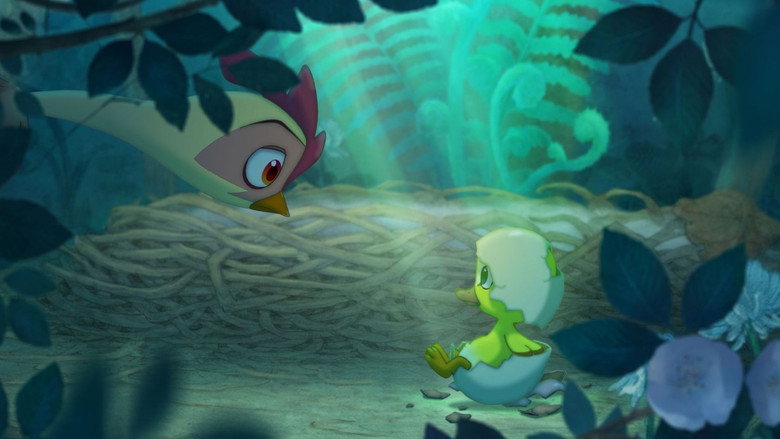
Sprout raises a duckling that is not her own offspring. Love, not blood, makes her its mother.

Belonging and exclusion

Both the yard animals and the wild creatures treat Sprout as an outsider. She has to earn a place among them, or make one herself.

Nature, survival and the cycle of life

Predator and prey, and the harshness of seasons, are shown as part of life's cycle, not as simple villainy.

Sacrifice

Parenthood demands giving things up, and the story shows love as the willingness to let go.

Character Analysis

Sprout (Leafie)

Moon So-ri

Archetype: Hero / nurturing mother Key Trait: Determined, tender courage

Motivation

First to escape and hatch an egg; later to protect her adopted child.

Character Arc

She moves from a caged, dreaming hen to a resourceful survivor and finally a selfless mother.

The duckling (Greentop)

Yoo Seung-ho (per cast list)

Archetype: Child / innocent Key Trait: Curious and loyal

Motivation

To belong and to understand what he is.

Character Arc

He grows from a tiny hatchling who thinks Sprout is his mother into a young bird who must find his own place in the sky.

All 3 characters and cast

Symbols & Motifs

The egg

Meaning:

Hope, purpose and the possibility of a life lived for another.

Context:

Sprout's wish to hatch an egg drives her escape and shapes her bond with the duckling.

The battery cage and the farm yard

Meaning:

Confinement and the illusion of safety, and the social hierarchies that limit individuals.

Context:

The cage is where Sprout begins; the yard she dreams of proves to be unwelcoming.

The open sky and flight

Meaning:

Freedom and the independence a child must eventually claim.

Context:

Flight is tied to the young duck's growth and to the question of letting go.

The changing seasons

Meaning:

Time, growth and mortality.

Context:

The passing of seasons marks the duckling's growth and the pressures on Sprout's survival.

Philosophical Questions

Is freedom worth its dangers?

Sprout trades the safety of the cage for hunger and peril, and the film suggests that liberty gives life meaning even when it is costly.

What makes someone a parent?

Sprout's devotion to a duckling not her own presents care as the foundation of parenthood, above biology.

How It Ends

Alternative Interpretations

Some viewers read the story as an allegory of social outsiders and of mothers who give up themselves for their children. Others read it as a critique of industrial farming and a plea for animal dignity. A third reading treats it as a fable about the way every parent must let a child go.

Full ending explanation

Frequently Asked Questions

Explore More About This Movie

Dive deeper into specific aspects of the movie with our detailed analysis pages

Comments (0)

Leave a comment

No comments yet. Be the first to share your thoughts!

Similar Movies