
Skip to content
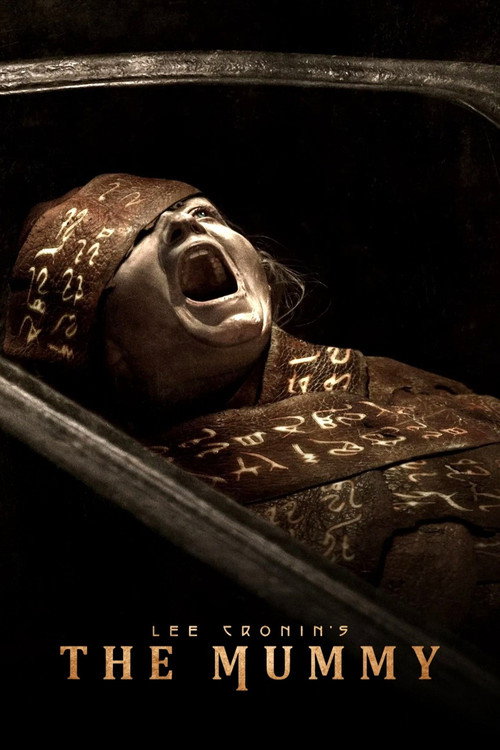
Lee Cronin's The Mummy
A grueling supernatural horror that subverts ancient Egyptian lore, portraying a shattered family unwrapping the suffocating layers of a demonic curse. It is a chilling descent where a miraculous reunion transforms into a claustrophobic, flesh-tearing nightmare.
Lee Cronin's The Mummy

"What happened to Katie?"

15 April 2026 United States of America 133 min 8.0 (2,240)

Director: Lee Cronin

Cast: Jack Reynor, Laia Costa, May Calamawy, Natalie Grace, Shylo Molina

Mystery Horror The Rot of Grief and Trauma Sacrifice and the Cycle of Containment Corruption of the Domestic Space Grave Desecration and Cultural Consequences
Budget: $22,000,000
Box Office: $90,552,113

Lee Cronin's The Mummy — Ending Explained

⚠️ Spoiler Analysis

The central twist reveals that Katie's mummification wasn't an ancient curse she stumbled upon, but a deliberate, horrific ritual performed by the cultist known as the Magician. The Magician used Katie as a living vessel to contain the Nasmaranian, embedding binding spells into layers of the young girl's skin to trap the demon.

As the demon begins to tear through Katie to infect her siblings, Charlie learns that the entity cannot be killed, only contained in a new host. In the film's climax, Charlie willingly undergoes the ritual, absorbing the demon from his daughter. He is subsequently mummified alive and locked in a sarcophagus in the basement to protect his family, managing only to tap I love you in Morse code.

However, the theatrical ending features a dark final twist: Larissa and Detective Zaki smuggle the mummified Charlie back to Cairo. They infiltrate the Magician's prison cell and begin the ritual chant, intending to forcibly transfer the Nasmaranian into the woman who started it all, choosing a path of terrifying vengeance over peaceful resolution.

Alternative Interpretations

The Cycle of Abuse: While the theatrical ending frames Larissa and Dalia's revenge against the Magician as a cathartic, dark victory, many critics interpret it as a tragedy. By performing the ritual to force the demon into another human, Larissa and Dalia succumb to the exact evil they were fighting. They become the new abusers, proving that the Nasmaranian—the Destroyer of Family—ultimately won by stripping them of their morality.

Metaphor for Terminal Illness: Some audiences read Katie's sudden, changed return and the subsequent rot in the house as a grounded allegory for a family dealing with a child's terminal or severe mental illness. The horror stems from the parents' helplessness, the strain it places on the siblings, and the excruciating guilt of realizing that their child is trapped in a body that is actively destroying itself.

Explore More About This Movie

Dive deeper into specific aspects of the movie with our detailed analysis pages

Similar Movies