
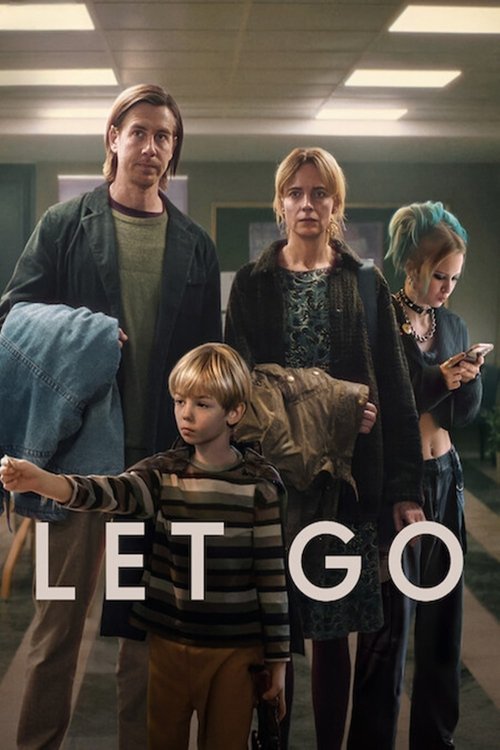
Let Go
A poignant family drama's quiet desperation unfolds on a tense road trip, visually capturing the emotional distance before a heart-wrenching revelation redefines love and loss.
Let Go

Let Go

Släpp taget

"Sometimes, letting go is the only way to hold on."

01 November 2024 Sweden 110 min ⭐ 7.8 (349)
Director: Josephine Bornebusch
Cast: Josephine Bornebusch, Pål Sverre Hagen, Sigrid Johnson, Olle Tikkakoski Lundström, Leon Mentori
Drama
The Fragility of Family Bonds Sacrifice and Unconditional Love Communication and Misunderstanding Letting Go

Overview

"Let Go" (original title: "Släpp taget") is a Swedish drama that follows Stella, a mother desperately trying to hold her fracturing family together. Her husband, Gustav, a couples therapist who is emotionally distant from his own family, asks for a divorce. In a last-ditch effort to reconnect, Stella insists on a family road trip to their teenage daughter Anna's pole dancing competition.

The journey is fraught with tension, unspoken resentments, and the chaotic energy of their two children, the rebellious Anna and the young, attention-seeking Manne. As Gustav is forced to confront the parental responsibilities he has long abdicated, the film meticulously details the painful realities of a broken marriage, where communication has failed and emotional needs have been unmet.

However, the film introduces a significant twist: Stella is not just fighting for her marriage, but for the future of her family in the face of her own terminal illness. This revelation shifts the narrative from a simple divorce drama to a profound exploration of love, sacrifice, and the urgency of connection when time is running out. Stella's true motive is to ensure her husband is prepared to be the father her children will need when she is gone.


Core Meaning

The core meaning of "Let Go" revolves around the dual and seemingly contradictory ideas of holding on and letting go. Director Josephine Bornebusch explores the immense effort required to maintain a family unit, even when it appears broken. The film suggests that true love and responsibility are not just about romantic feelings, but about commitment and showing up, especially in the face of life's greatest challenges.

The central message is a poignant commentary on appreciating loved ones before it's too late. Stella's illness forces the family to confront the truths they've been avoiding. Her desperate act of forcing one last trip together is not about saving her marriage in a traditional sense, but about salvaging the family's future. It is a film about a mother's ultimate sacrifice, preparing her family to let her go while ensuring they will be able to hold onto each other.

Thematic DNA

The Fragility of Family Bonds 35%
Sacrifice and Unconditional Love 30%
Communication and Misunderstanding 20%
Letting Go 15%

The Fragility of Family Bonds

The film opens with a family in a state of crisis. The communication between Stella and Gustav has completely broken down, and the tension affects their children. Gustav is emotionally absent, leading him to seek a divorce. The road trip serves as a pressure cooker, forcing them to interact and revealing the deep cracks in their relationships. Stella's secret illness underscores the theme, highlighting how quickly the foundations of a family can be threatened by unforeseen circumstances.

Sacrifice and Unconditional Love

Stella's actions are driven by a profound, selfless love for her children. Knowing she is dying, her insistence on the family trip is not for her own sake, but to re-engage Gustav as a father. She endures his anger and detachment to ensure that he will be capable of caring for their children after she is gone. The film reframes the idea of a "nagging wife" into a portrait of a mother making the ultimate sacrifice.

Communication and Misunderstanding

The central conflict stems from a lack of honest communication. Gustav feels unseen and unappreciated, while Stella is overwhelmed by the mental and emotional load of managing the family. The irony of Gustav being a marriage counselor who cannot communicate with his own wife is a key element. The film shows how their reconciliation only begins when they start to honestly express their feelings and shortcomings to one another.

Letting Go

The title's theme is multifaceted. Stella must prepare her family to let her go. Gustav must let go of his anger and his plans for a new life to embrace his responsibilities. Anna must let go of her teenage angst to see her parents as flawed individuals. The film ultimately suggests that letting go is not about giving up, but about acceptance and finding a new way to move forward.

Character Analysis

Stella

Josephine Bornebusch

Archetype: The Martyr
Key Trait: Resilient

Motivation

Her primary motivation is to prepare her husband, Gustav, to be a capable and present single parent to their children after she dies from cancer. She hides her illness to force a genuine transformation in him, rather than one born from pity.

Character Arc

Stella begins as an exhausted, seemingly controlling mother who is desperately trying to prevent her family from falling apart. Her insistence on the trip appears stubborn and irrational. However, with the revelation of her terminal cancer, her arc is re-contextualized as one of profound sacrifice. She orchestrates a final lesson for her family, pushing her emotionally absent husband to become the father her children will need. She moves from a position of quiet desperation to one of peaceful acceptance, knowing she has secured her family's future.

Gustav

Pål Sverre Hagen

Archetype: The Absent Father
Key Trait: Detached

Motivation

Initially, his motivation is to get a divorce and start a new life with his lover. This shifts dramatically during the trip as he is forced to confront the consequences of his absence, and his motivation becomes to reconnect with his family and understand his wife.

Character Arc

Gustav starts as an emotionally detached and neglectful husband and father, a therapist who ironically fails his own family. He seeks a divorce to escape his responsibilities. Forced on the road trip, he is initially resistant but is gradually compelled to engage with his children and wife. Through a series of mishaps and emotional confrontations, he rediscovers his love and sense of duty. His arc is one of awakening, moving from selfish disinterest to becoming the responsible, loving partner and father Stella needs him to be.

Anna

Sigrid Johnson

Archetype: The Rebel
Key Trait: Spirited

Motivation

Her main motivation is her desire for independence and to be understood, particularly through her passion for pole dancing, which she feels her parents dismiss. She is also motivated by a deep, though often hidden, love for her family.

Character Arc

Anna is introduced as a spirited but stereotypical moody teenager, constantly clashing with her mother and embarrassed by her family. Her passion for pole dancing is a source of conflict. Throughout the journey, as she witnesses her parents' vulnerability and eventual reconciliation, her anger softens. Her final dance performance is a testament to her maturity and a tribute to her family's newfound strength, showing she has moved from adolescent rebellion to a deeper understanding of her family's love and struggles.

Symbols & Motifs

The Road Trip

Meaning:

The road trip symbolizes the family's tumultuous journey back to each other. It's a forced period of confinement where they cannot escape their issues, representing the difficult path of reconciliation and confronting hard truths before reaching their final destination, both literally and emotionally.

Context:

The majority of the film's narrative unfolds during the family's car journey to Skåne for Anna's pole dancing competition. This setting physically brings the estranged family members together and acts as the catalyst for both conflict and resolution.

Anna's Pole Dancing

Meaning:

Pole dancing represents Anna's burgeoning independence and a form of self-expression that her parents initially misunderstand. Her final performance, dedicated to her mother with the words "Strong Together," symbolizes the family's rediscovered unity and strength in the face of adversity.

Context:

The entire road trip is organized around attending Anna's pole dancing competition. The event serves as the film's climax, where the emotional journey of the family culminates in Anna's powerful performance.

Gustav's Profession as a Therapist

Meaning:

Gustav's job as a couples therapist is deeply ironic. He can advise others on communication and connection but is emotionally unavailable and disconnected in his own home. This symbolizes the disconnect between intellectual understanding and emotional practice, and the blindness one can have to their own faults.

Context:

The film opens with Gustav expertly counseling a couple, using a calm, knowing tone. This scene is immediately contrasted with the chaos and lack of communication in his own family life, establishing his character's central hypocrisy.

Memorable Quotes

Till death do us part.

— Stella

Context:

Said early in the film when Gustav asks for a divorce, and Stella refuses, insisting they first go on the family trip.

Meaning:

This line, delivered by Stella to Gustav after he asks for a divorce, is deeply ironic and foreshadows the film's tragic twist. What initially sounds like a stubborn, almost clichéd refusal to accept the end of her marriage is later revealed to be a literal statement of intent, as she knows she is dying and wants to remain married until the end for the sake of her family's stability.

What happened to us?

— Gustav

Context:

During a quiet, emotional conversation between Stella and Gustav on the trip, after the intense friction has begun to give way to introspection.

Meaning:

This tearful question from Gustav marks a turning point in his character arc. It is the first moment he shows genuine vulnerability and a desire to understand the breakdown of his marriage, moving beyond blame and beginning to self-reflect. It signifies the start of the couple's honest communication.

Every time you say you love me, I double it.

— Stella

Context:

A tender moment between Stella and her young son, Manne, during the family trip.

Meaning:

This quote encapsulates the deep, enduring love Stella has for her son, Manne, and by extension, her family. It's a moment of pure maternal tenderness amidst the overwhelming family drama and her silent suffering, highlighting what she is fighting to protect.

Philosophical Questions

Is it justifiable to manipulate loved ones for their own good?

The film explores this question through Stella's decision to hide her cancer from her family. She believes that for Gustav's transformation into a capable father to be genuine, it cannot be motivated by pity. The film presents the positive outcome of her manipulation: Gustav steps up and the family reconnects. However, it implicitly asks the viewer to consider the emotional cost of her deception and whether the ends truly justify the means in such a deeply personal family matter.

What is the true nature of love within a long-term partnership?

"Let Go" challenges the idea that love is merely a feeling. When the romantic spark between Stella and Gustav is gone, the film posits that a deeper form of love exists in commitment, shared history, and the unwavering dedication to their children's well-being. It suggests that the hard work of marriage and co-parenting is, in itself, a profound act of love, especially when faced with the ultimate test of mortality.

Alternative Interpretations

While the film's narrative is largely straightforward, a key area of alternative interpretation lies in the perception of Stella's actions. The primary reading presents her as a selfless martyr, orchestrating events for the good of her family. However, an alternative view could interpret her manipulation as a form of cruelty. By hiding her illness, she forces her husband through an intense emotional gauntlet without the context of her impending death. This perspective questions the ethics of her methods, suggesting that her desire for control—even with good intentions—led her to be emotionally dishonest with her family at a critical time. Some critics have pointed out that using a terminal illness as a plot device to force character change can feel manipulative, regardless of the protagonist's motivations.

Cultural Impact

"Let Go" was released globally on Netflix on November 1, 2024, achieving significant viewership in its initial weeks, with over 21 million households watching it worldwide shortly after its premiere. As a Swedish film, its international success highlights the global appeal of character-driven, emotionally resonant family dramas. The film was praised by many critics for its realistic and heart-wrenching portrayal of a family in crisis, with particularly strong acclaim for the lead performances by Josephine Bornebusch and Pål Sverre Hagen.

The film contributes to a tradition of Scandinavian cinema that excels at exploring domestic turmoil with unflinching honesty and emotional depth, sometimes being compared to a Scandinavian version of "Little Miss Sunshine" due to its road-trip premise centered on a youth competition. However, its pivot into a story about terminal illness has also drawn criticism from some reviewers who found the plot twist emotionally manipulative. Overall, the film has sparked conversations about marital roles, parental responsibility, and the profound sacrifices made within a family, resonating with audiences who see their own struggles reflected in the story's depiction of everyday life.

Audience Reception

Audience reception for "Let Go" has been largely positive, with many viewers finding it to be a deeply moving and emotionally resonant experience. The performances of Josephine Bornebusch and Pål Sverre Hagen are frequently cited as highlights, with viewers praising their realistic portrayal of a marriage in its death throes. Many audiences found the story's depiction of family chaos, teenage angst, and marital strain to be highly relatable. The film's emotional weight, particularly after the reveal of Stella's illness, was noted for being heart-wrenching, with many viewers admitting it moved them to tears.

The main point of criticism, echoed by some viewers and critics, revolves around the plot twist of Stella's illness. Some found it to be an overly manipulative and unnecessarily cruel narrative device used to force an emotional reaction. Despite this, the overall verdict from audiences tends to be that "Let Go" is a powerful, well-acted, and thought-provoking drama that encourages appreciation for one's loved ones.

Interesting Facts

  • The film was written and directed by its lead actress, Josephine Bornebusch.
  • The initial idea for the film came to Josephine Bornebusch when she was working in England. Her husband was home with the children, and during a phone call to check on them, he told her to "let go" ("släpp taget"). This phrase sparked the inspiration for the story.
  • Before directing "Let Go", Josephine Bornebusch directed episodes for the internationally acclaimed and sensational series "Baby Reindeer" and the Apple TV+ series "Bad Sisters".
  • The film's original working title was "Allt blir bra," which translates to "Everything will be alright."

⚠️ Spoiler Analysis

Click to reveal detailed analysis with spoilers

Frequently Asked Questions

Explore More About This Movie

Dive deeper into specific aspects of the movie with our detailed analysis pages

Comments (0)

Leave a comment

No comments yet. Be the first to share your thoughts!