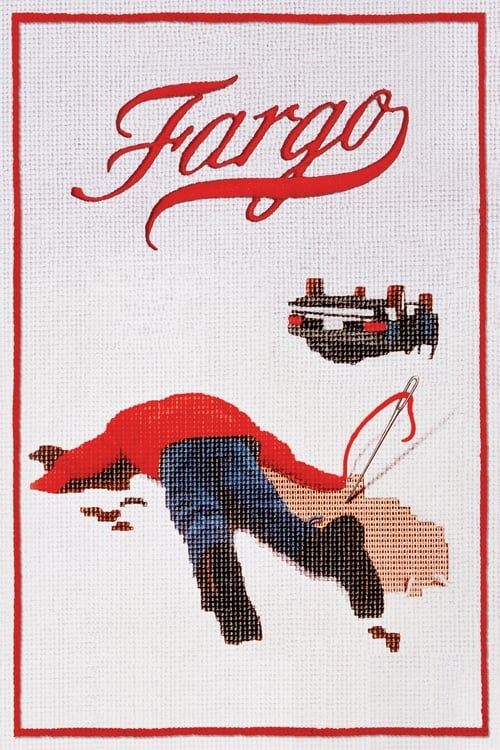
Fargo
"A homespun murder story."
Overview
In 1987 Minneapolis, car salesman Jerry Lundegaard (William H. Macy) is drowning in debt. He devises a seemingly simple plan: hire two criminals, Carl Showalter (Steve Buscemi) and Gaear Grimsrud (Peter Stormare), to kidnap his own wife, Jean (Kristin Rudrüd). Jerry intends to collect a hefty ransom from her wealthy father, Wade Gustafson (Harve Presnell), paying the kidnappers a small fraction and keeping the rest to solve his financial woes.
The plan, however, immediately spirals out of control. The hired thugs are a volatile and incompetent pair. During their getaway, a routine traffic stop escalates into the murder of a state trooper and two innocent witnesses. This brings the crime onto the radar of the unflappable and very pregnant Brainerd Police Chief, Marge Gunderson (Frances McDormand).
As Marge meticulously and cheerfully follows the trail of clues, Jerry's desperation mounts. The kidnapping becomes more violent, the criminals more demanding, and Jerry's web of lies begins to unravel. Marge's steady, methodical police work stands in stark contrast to the chaotic and bloody mess created by Jerry's ill-conceived scheme.
Core Meaning
At its heart, Fargo is a darkly comedic morality play exploring the corrupting nature of greed and the chaos that erupts when ordinary desperation meets violent incompetence. The film contrasts the banal, everyday goodness and decency represented by Marge Gunderson with the senseless, brutal evil of the criminals and the pathetic, self-serving weakness of Jerry Lundegaard. The directors seem to suggest that evil is not grand or sophisticated, but often pathetic and absurd. Ultimately, the film champions a simple, quiet decency, suggesting that true contentment is found not in wealth or elaborate schemes, but in the warmth of family and community, as embodied by Marge and her husband, Norm.
Thematic DNA
Greed
Greed is the primary catalyst for the entire plot. Jerry Lundegaard's desperate need for money—to solve a debt he is never clear about—drives him to orchestrate his wife's kidnapping. This single act of greed snowballs into multiple murders, betrayal, and the complete destruction of his family. The theme is echoed in Carl, who becomes obsessed with getting the entire ransom, leading him to bury a large sum of money and ultimately resulting in his own demise. Marge articulates the film's counterpoint to this theme when she tells the captured Gaear, "There's more to life than a little money, you know. Don't you know that?".
The Banality of Evil
Fargo portrays violence and evil not as the product of masterminds, but of bumbling, irritable, and ultimately ordinary men. Jerry isn't a monster; he's a desperate, ineffectual car salesman. Carl and Gaear are not sophisticated criminals but a chatty malcontent and a silent sociopath who commit horrific acts with a shocking casualness. The film contrasts their brutal actions with their mundane conversations and desires (like finding pancakes). This juxtaposition highlights the unsettling idea that horrific evil can stem from simple, pathetic human failings like weakness and incompetence.
Midwestern Values vs. Chaos
The film creates a stark contrast between the polite, decent, and orderly world of Marge Gunderson and the violent, chaotic intrusion of the crime. Marge embodies Midwestern goodness: she is cheerful, polite ("You betcha!"), and deeply connected to her community and family. Her calm, methodical investigation is the force of order that eventually contains the chaos unleashed by Jerry's plan. The ending, with Marge and Norm cozily in bed, reinforces the triumph of these simple, decent values over the senseless violence that temporarily disrupted their world.
Absurdity and Irony
The Coen Brothers infuse the film with a deep sense of the absurd. There's an ironic distance between the horrific violence taking place and the characters' mundane, folksy reactions. Examples include a killer complaining about second-hand smoke, Marge feeling hungry after examining a gruesome crime scene, and the entire premise of a man hiring kidnappers who are far more dangerous than he could ever imagine. This absurdist tone underscores the film's dark humor and its philosophical exploration of a seemingly meaningless universe where terrible things happen for foolish reasons.
Character Analysis
Marge Gunderson
Frances McDormand
Motivation
Marge is motivated by a simple, powerful sense of duty and a desire to restore order and justice. She is a professional doing her job thoroughly and intelligently. Her pregnancy adds a layer of motivation: she is not just protecting her community but also the future she is bringing into the world. Her core drive is to solve the crime and make sense of the senseless.
Character Arc
Marge's character does not have a traditional arc of change; rather, she is a constant force of decency and competence whose steadfastness is reaffirmed. She begins as a smart, cheerful, and capable police chief and ends the same way. Her journey through the gruesome case challenges her understanding of human nature, but it does not break her moral compass. Her final lines to Gaear reveal her disbelief at the senselessness of the violence, but her spirit remains intact, finding solace and meaning in her simple domestic life.
Jerry Lundegaard
William H. Macy
Motivation
Jerry is driven by a desperate and poorly-defined need for a large sum of money, presumably to cover up a fraudulent car loan scheme. More deeply, he is motivated by a profound sense of inadequacy and resentment, particularly towards his wealthy and domineering father-in-law, Wade. The kidnapping is a misguided attempt to finally gain control and respect.
Character Arc
Jerry's arc is a downward spiral from desperation to total ruin. He begins as a man in over his head, believing he can control a criminal scheme. As events escalate beyond his control, he devolves from a nervous liar into a pathetic, whimpering wreck. He loses his wife, his father-in-law, his job, his freedom, and any semblance of dignity. He never takes responsibility, remaining a symbol of weak, self-pitying greed until his capture.
Carl Showalter
Steve Buscemi
Motivation
Carl is motivated by money and a deluded sense of being a savvy, experienced criminal. He is constantly trying to assert control, whether by demanding more money from Jerry, trying to bribe the state trooper, or arguing with Gaear. His primary goal is to get paid and get away, but his greed and short temper constantly undermine him.
Character Arc
Carl's arc is one of escalating frustration and greed that leads directly to his death. He starts as the more professional-seeming of the two kidnappers, trying to manage the plan. However, his arrogance, impatience, and constant talking create friction and lead to mistakes. After discovering the ransom is a million dollars, his greed overtakes any sense of caution. He buries most of the money, which ultimately costs him his life when he argues with Gaear over their small getaway car.
Gaear Grimsrud
Peter Stormare
Motivation
Gaear's motivations are primal and opaque. He is driven by immediate impulse and a complete lack of empathy. He kills when he is annoyed (Jean), when he is threatened (the trooper), or when he is inconvenienced (Carl). Unlike Carl, he doesn't seem particularly driven by the money itself, but by a chillingly simple and sociopathic worldview. He just wants his pancakes.
Character Arc
Gaear is a static character, a force of pure, amoral violence from beginning to end. He doesn't develop or change. His arc is simply a path of destruction. He commits murder with chilling indifference and has very little dialogue. His violence escalates from killing a state trooper to murdering his own partner over a car. His final scene, feeding Carl into a wood chipper, is the logical conclusion of his inhuman nature.
Symbols & Motifs
Snow / Whiteness
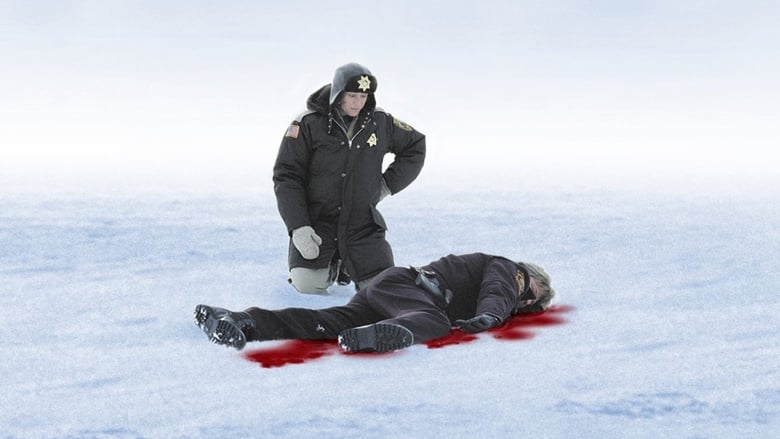
The pervasive snow and white landscapes symbolize multiple concepts. On one hand, the whiteness represents a veneer of purity, innocence, and moral clarity, embodied by Marge. On the other, the vast, empty, and blindingly white landscape reflects the characters' isolation, the bleakness of their situation, and a kind of moral void. Blood starkly contrasts against the snow, visually emphasizing the violence that disrupts this seemingly pure world. The snow can conceal crimes (like the buried money) but also reveals them (tracks, bodies).
From the opening shot, the film is dominated by snowy, flat landscapes. Key scenes, like the discovery of the murdered state trooper and the infamous wood-chipper finale, are set against a stark white backdrop, making the red of the blood incredibly vivid and shocking. Carl buries the briefcase of money in a vast, anonymous field of snow, a location that becomes significant in the related TV series.
The Wood Chipper
The wood chipper represents the ultimate, horrifying, and absurd finality of the film's violence. It is a piece of mundane yard equipment turned into an instrument of grotesque disposal, perfectly encapsulating the film's theme of the banality of evil. It symbolizes the complete dehumanization of a person into mere matter to be mechanically erased. The scene was inspired by the real-life 1986 murder of Helle Crafts.
In the film's climax, Marge arrives at the remote cabin to find Gaear Grimsrud casually feeding Carl Showalter's dismembered body into a wood chipper. The image of a human leg being shoved into the machine is one of the most shocking and iconic in modern cinema.
Paul Bunyan Statue
The giant, smiling statue of folk hero Paul Bunyan serves as a piece of ominous, absurd Americana. It's a cheerful, folksy landmark that watches over a landscape where brutal crimes are about to unfold. It can be interpreted as a symbol of the kitschy, superficial wholesomeness of the region, which hides a darker potential for violence. For Gaear, it becomes an omen of his downfall.
The kidnappers' car passes the towering statue on the road into Brainerd, the town where Marge Gunderson is police chief and where their crimes will be investigated. The camera lingers on the statue's fixed, slightly menacing grin, juxtaposing regional kitsch with the grim narrative.
Memorable Quotes
There's more to life than a little money, you know. Don't you know that? And here ya are, and it's a beautiful day. Well, I just don't understand it.
— Marge Gunderson
Context:
Marge says this to a silent Gaear Grimsrud in the back of her police car after arresting him at the site of the wood chipper. She is genuinely baffled by his actions and expresses a simple, humane philosophy that he cannot comprehend.
Meaning:
This quote encapsulates the film's central moral thesis. It is Marge's simple, powerful statement on the absurdity of the greed and violence she has witnessed. It contrasts the profound beauty of life with the pathetic, destructive pursuit of money, highlighting her fundamental decency and the film's core message.
Oh, geez.
— Various characters, most notably Jerry Lundegaard
Context:
Jerry utters this frequently as his plan unravels, for instance, after learning that three people have been killed in Brainerd. Other characters use it as well, making it a verbal motif for the escalating, out-of-control situation.
Meaning:
This recurring phrase is the quintessential Midwestern expression of dismay and being overwhelmed. It's a comically understated reaction to horrific or stressful events, perfectly capturing the film's tone of dark humor and regional flavor. It represents the characters' inability to process the chaos that has engulfed them.
Sir, you have no call to get snippy with me. I'm just doing my job here.
— Marge Gunderson
Context:
Marge says this to Jerry at the car dealership when he becomes defensive and evasive during her questioning. Her calm but unyielding response immediately shuts down his blustering attempts to dismiss her.
Meaning:
This line reveals the steel beneath Marge's cheerful, polite exterior. When pushed, she is firm, professional, and completely in control. It demonstrates that her 'Minnesota nice' demeanor is not a weakness but a choice, and she will not be intimidated. It confirms that she is a highly competent officer of the law.
He was a little guy... kinda funny-lookin'.
— A prostitute interviewed by Marge
Context:
Marge is interviewing two prostitutes who had an encounter with Carl and Gaear. When asked for a description, this is the simple, unglamorous, and comically accurate assessment she provides of Carl Showalter.
Meaning:
This is a classic piece of Coen Brothers dialogue, delivering a humorous and brutally honest description that perfectly captures Steve Buscemi's character, Carl. It's an example of how the film finds comedy in the mundane details surrounding the horrific crimes.
Philosophical Questions
What is the nature of good and evil?
Fargo explores the idea that evil is not a grand, diabolical force, but something banal, pathetic, and often incompetent. Jerry's scheme is born of weakness, not malice, yet it unleashes horrific consequences. Gaear's violence is casual and motiveless. In contrast, good, as embodied by Marge, is simple, diligent, and decent. It's not flashy or heroic in a traditional sense, but it is steadfast. The film seems to ask if evil is simply an absence of empathy and intelligence, and if good is the quiet, daily commitment to order and kindness.
Can there be meaning in a seemingly absurd world?
The film is filled with absurd juxtapositions and events that defy easy explanation, reflecting an existentialist viewpoint. The universe of Fargo appears indifferent to human suffering. In the face of this absurdity, the film presents two paths. One is the path of Jerry, Carl, and Gaear, who chase meaningless goals (money, a car) through violence, leading to their own destruction. The other is Marge's path. She confronts the absurdity and chaos but finds profound meaning and happiness in the simple, tangible things: her duty, her loving husband, and their unborn child. The film's final scene argues that meaning is not found in grand schemes but is created through decency, love, and community.
Alternative Interpretations
While the film's main themes are quite direct, the strange and seemingly disconnected scene where Marge meets with her old high school acquaintance, Mike Yanagita, has sparked various interpretations. On the surface, it seems to go nowhere. However, a popular interpretation is that this encounter is a crucial turning point for Marge's investigation. After Mike lies to her about his wife dying and she later finds out he was completely fabricating a story of a sad, lonely life, she realizes that people are capable of constructing elaborate lies for pathetic reasons. This realization prompts her to reconsider Jerry Lundegaard's story, leading her to return to the car dealership and ultimately break the case. The scene serves as a microcosm of the film's theme: ordinary people telling lies that spiral out of control.
Another area of interpretation lies in the film's philosophical underpinnings. Some see it as an existentialist text, where the stark, empty landscape represents a meaningless, absurd universe. In this void, characters must create their own meaning. Marge finds it in her work, her family, and her fundamental decency, while Jerry and the criminals pursue a meaningless and destructive path for "a little bit of money." Marge's final speech to Gaear, "I just don't understand it," can be seen as the response of a moral person confronting the sheer absurdity of evil in a godless world.
Cultural Impact
Fargo was a critical and commercial success upon its release in 1996, earning seven Academy Award nominations and winning two: Best Actress for Frances McDormand and Best Original Screenplay for the Coens. Critics praised its unique blend of brutal violence, dark comedy, and regional quirkiness. Roger Ebert famously called it "one of the best films I've ever seen."
The film had a significant influence on independent cinema in the 1990s, solidifying the Coen Brothers' reputation as master auteurs and showcasing a new kind of neo-noir, dubbed "film blanc" by some critics for its snowy setting. Its deadpan humor and depiction of the 'banality of evil' have been widely imitated. The character of Marge Gunderson is considered an iconic cinematic hero, a refreshing depiction of a competent, decent, and unconventional female protagonist.
Fargo has deeply permeated pop culture. The distinctive "Minnesota nice" accent and phrases like "You betcha" and "Oh, geez" became widely recognized and parodied. The infamous wood-chipper scene has become one of the most iconic and shocking moments in film history. The film's success and enduring legacy led to the creation of the acclaimed FX anthology television series of the same name, which premiered in 2014. The series, executive produced by the Coens, adopts the film's tone, style, and thematic concerns, with each season telling a new "true" crime story in the Midwest.
Audience Reception
Audiences generally responded very positively to Fargo, contributing to its box office success. It holds a high audience score on review aggregators like Rotten Tomatoes. Viewers praised its unique blend of dark humor, shocking violence, and quirky characters. The performance by Frances McDormand as Marge Gunderson was particularly lauded as the heart of the film. The distinctive regional accents and dialogue were found to be both hilarious and endearing. The main points of criticism from some viewers centered on the very aspects others praised: some found the folksy accents grating or the violence too jarring in contrast with the comedy. A few viewers found the plot slow or the characters unlikable, but this was a minority opinion. Overall, it is regarded by audiences as a highly original and masterfully executed film that is both entertaining and thought-provoking.
Interesting Facts
- Despite the opening claim that "This is a true story," the film is almost entirely fictional. The Coens later admitted this was a stylistic choice to set a certain tone. However, two real-life crimes served as loose inspiration: the 1986 murder of Helle Crafts by her husband, who disposed of her body with a wood chipper, and a case of a General Motors employee committing serial number fraud.
- None of the film was actually shot in Fargo, North Dakota. The Coens felt the name was more evocative than 'Brainerd,' where most of the story is set.
- William H. Macy's stuttering, nervous performance as Jerry was almost entirely scripted. Every "yah" and stammer was written by the Coen Brothers.
- Frances McDormand's prosthetic pregnant belly was filled with birdseed to give it a realistic weight and feel.
- Peter Stormare's character, Gaear Grimsrud, has only 16 lines of dialogue in the entire film, while his partner Carl (Steve Buscemi) has over 150.
- The film was shot during one of Minnesota's warmest winters on record, forcing the crew to use snow machines for many scenes.
- The editor credited on the film, Roderick Jaynes, is a pseudonym for Joel and Ethan Coen themselves.
- A 1997 TV pilot based on the film was made, starring Edie Falco as Marge Gunderson, but it was not picked up.
⚠️ Spoiler Analysis
Click to reveal detailed analysis with spoilers
Frequently Asked Questions
Explore More About This Movie
Dive deeper into specific aspects of the movie with our detailed analysis pages
Comments (0)
No comments yet. Be the first to share your thoughts!