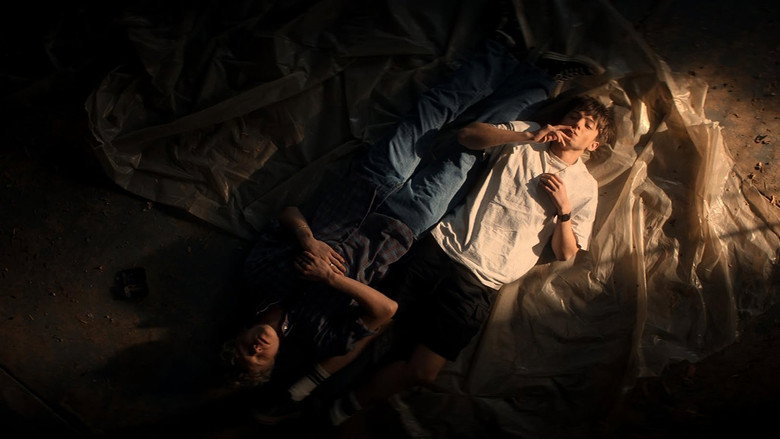
A tender, dread-soaked Australian horror romance where first love is hunted by the thing it summoned — a monster wearing the face of the boy you cannot stop wanting.
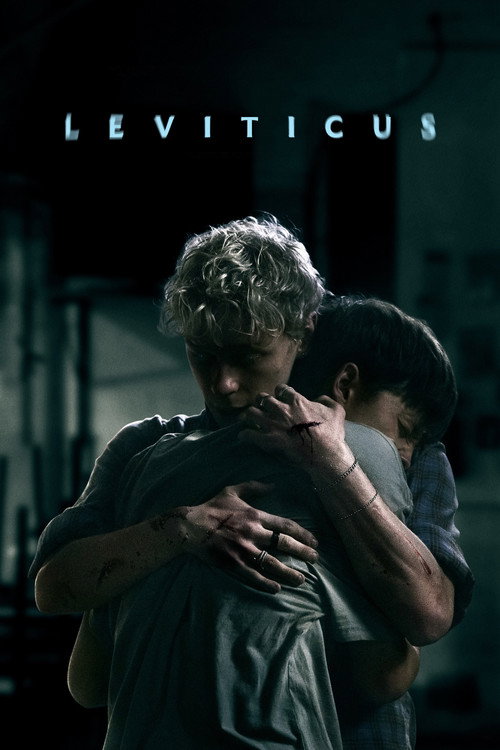
Leviticus
"It will never stop."
17 June 2026
Australia
88 min
6.6
(233)
Director: Adrian Chiarella
Cast: Joe Bird, Stacy Clausen, Mia Wasikowska, Nicholas Hope, Tyallah Bullock
Romance
Horror
Religious coercion and conversion practices
First love as survival
Shame, secrecy and the closet
The small town as organism
Parenthood and imperfect protection
Budget:
$3,500,000
Box Office:
$8,493,480
Leviticus — Ending Explained
⚠️ Spoiler Analysis
<p><strong>Full spoilers.</strong> The film opens with Naim and Ryan breaking into an abandoned mill — the private world their romance depends on. Naim has recently moved to the pious industrial town of Leviticus with his mother Arlene, and his relationship with the closeted local boy Ryan develops in secret.</p><p><strong>The turn:</strong> the boys are outed. The local church responds by bringing in a "deliverance healer" to perform a ritual designed to remove their lust. The ritual backfires and summons an entity that manifests as each boy's deepest desire — meaning it appears to Naim as Ryan and to Ryan as Naim — and it attacks whenever one of them is alone. The horror engine is therefore an exact inversion of the church's intent: the ceremony meant to separate them makes separation lethal, and the desire it meant to erase becomes the only thing keeping them alive.</p><p><strong>The ending:</strong> the film closes with the boys on a bus leaving town. As it pulls away, Naim sees what appears to be Ryan standing outside the window — while the real Ryan is sitting right beside him. The film does not confirm whether the entity has been destroyed; the image is deliberately unresolved. Crucially, though, it is staged with hope rather than dread: the shot is an escape, not a jump scare.</p><p><strong>What clarifies in retrospect:</strong> the creature was never the antagonist. The real threat was the community that summoned it — the congregation, the healer, the surveillance of a small town. Once that is understood, the boys' survival is not defined by killing a monster but by getting out of range of the people who made one. The doubled Ryan at the window reads best as the town's residue: the doubt planted by the ritual, which may follow them but no longer has jurisdiction. The last thing the film asserts is simply that Ryan is the one in the seat, and Naim looks away from the window.</p>
Alternative Interpretations
<p><strong>The literal reading.</strong> The ritual genuinely conjures a supernatural predator; the film is a monster movie in which two boys must survive a demon that hunts them in the shape of their beloved. The final glimpse of a second Ryan outside the bus window means the entity survived and has followed them — an unresolved threat rather than a defeated one.</p><p><strong>The psychological reading.</strong> The creature is the internalized doctrine the deliverance ritual installed. It attacks only in isolation because shame only operates in isolation, and it wears the beloved's face because that is precisely what the boys were taught: that their desire is the thing coming to kill them. In this reading the doubled Ryan at the end is not a monster at all but the permanent residue of trauma — the reflex to distrust love, carried out of town with them.</p><p><strong>The social reading, which the film itself favours.</strong> The entity is almost incidental; the antagonist is the community that summoned it. Under this interpretation the ambiguity of the ending barely matters, because whether or not the creature is destroyed, the boys' actual escape is geographic — they have left the place that produced it, and the closing image is coded with hope rather than dread.</p><p><strong>The romance reading.</strong> Some critics received the film as a love story that borrows horror's grammar, in which the supernatural exists to test and prove the bond between Naim and Ryan. Here the ending's second figure is a final ambiguity the couple simply chooses to look away from — the point is who is sitting next to whom.</p>
Explore More About This Movie
Dive deeper into specific aspects of the movie with our detailed analysis pages