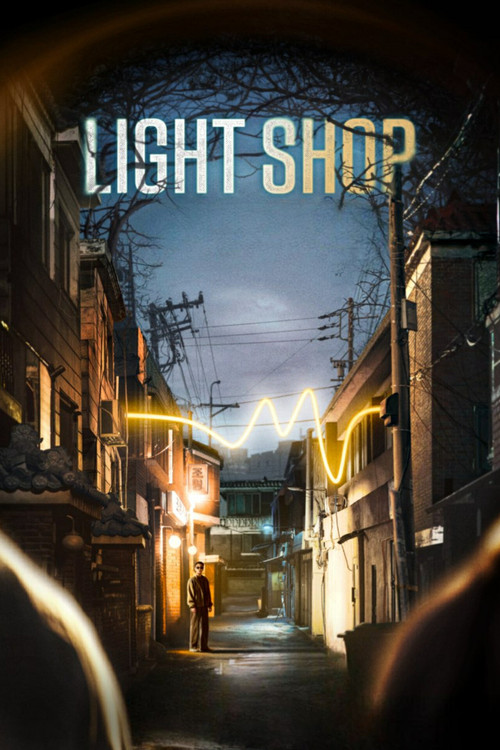
Light Shop
조명가게
"A destination where life and death meet."
Overview
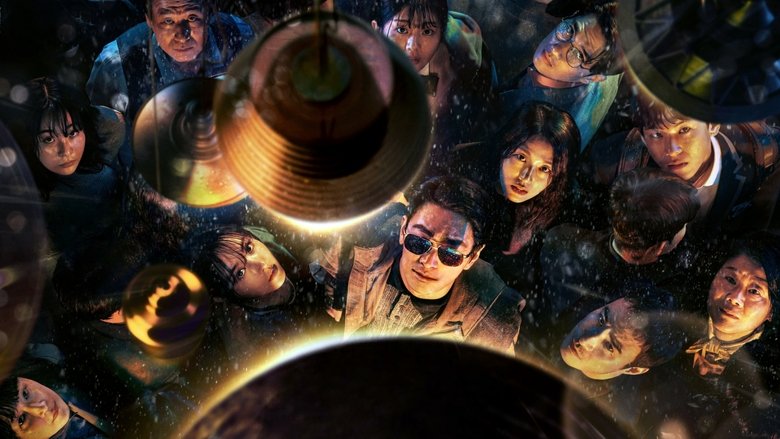
"Light Shop" follows a group of disparate strangers, each burdened by a traumatic past and grappling with their present reality. Their lives, seemingly separate, begin to converge as they are inexplicably drawn to a mysterious light shop that stands as the sole beacon in a dark, desolate alley. The shop is run by the enigmatic Jung Won-young, a cautious guardian who may hold the key to their pasts, presents, and futures.
As the characters frequent the shop, the narrative masterfully weaves their individual stories together, revealing that they are all connected by a catastrophic bus crash. The series explores the liminal space between life and death, as it becomes clear that the shop's visitors are spirits of coma patients hovering between worlds. The story, which begins as a tense psychological horror, gradually unfolds into a deeply emotional human drama about grief, connection, sacrifice, and the profound will to live.

Core Meaning
The core message of "Light Shop" is a profound exploration of human connection, grief, and the significance of willpower in the face of mortality. Written by Kang Full, the series posits that the boundary between life and death is not a final end but a transitional space where unresolved emotions and regrets keep souls tethered. The creators wanted to convey that even in the darkest of circumstances, the choices individuals make and the sacrifices they endure for loved ones create a powerful, enduring light. The light shop itself serves as a metaphorical purgatory, where souls are given a final chance to confront their past and choose their path—either toward the finality of the afterlife or back to the world of the living, guided by their own will and the love of others. The story ultimately transforms from a chilling mystery into a humanistic tale about healing and the enduring impact people have on one another.
Thematic DNA
The Boundary Between Life and Death
The series constantly blurs the lines between the living and the dead. The light shop acts as a literal and metaphorical gateway between these two realms, a liminal space where coma patients' souls wander. This theme is explored through characters who don't realize they are spirits and interact with the world in subtle, strange ways. The narrative forces both characters and the audience to question who is truly alive and what it means to exist, presenting the afterlife not as an endpoint but a state of delirium and reflection.
Grief, Trauma, and Healing
Each character is haunted by a significant personal trauma, primarily stemming from a shared, catastrophic bus accident. Their journey to the light shop is a manifestation of their struggle to process this grief. The series delves into how unresolved sorrow can keep a soul tethered to the world. Healing is depicted as a difficult process of confronting painful memories and making peace with the past, which is a prerequisite for either moving on to the afterlife or finding the will to return to life.
Human Connection and Sacrifice
Despite its dark, supernatural premise, the story's heart lies in the profound connections between its characters. The narrative is a tapestry of interwoven stories of parental love, romantic devotion, and empathy for strangers. Sacrificial acts are a recurring motif, from a mother trying to save her daughter to a shopkeeper who gives up his own peace for another's. These connections are portrayed as the ultimate force that can guide a soul back to life, suggesting that love and memory are powerful enough to transcend even death.
The Power of Willpower
A recurring idea, emphasized by the ICU nurse Kwon Young-ji and inspired by writer Kang Full's own experiences, is the critical importance of a patient's will to live. The series suggests that medical intervention alone is not enough; the soul's own desire to return is a crucial factor in surviving a near-death experience. The light shop becomes the final test of this will, where characters must actively choose their own fate.
Character Analysis
Jung Won-young
Ju Ji-hoon
Motivation
His sole motivation is to save his daughter. He remains in the space between life and death for over 40 years, guiding countless other souls, all while waiting for the chance to reunite with her and give her a second chance at life.
Character Arc
Initially presented as an enigmatic and possibly sinister figure, Jung Won-young is revealed to be a tragic and deeply devoted guardian of the light shop. His story is one of immense sacrifice; he was a human who died in a building collapse and made a deal to become the shop's keeper in order to one day deliver a 'light' to his dying daughter and guide her back to life. His arc is one of enduring patience and paternal love, culminating in a bittersweet reunion with his daughter, Yu-hee, after decades of waiting, finally fulfilling his purpose.
Kwon Young-ji
Park Bo-young
Motivation
Having survived a coma herself, Young-ji is driven by a profound empathy for her patients and a firm belief in the power of one's will to live. She is motivated to speak to and encourage the souls she sees, hoping her words can guide them back.
Character Arc
Kwon Young-ji is a compassionate ICU nurse who, after her own near-death experience, gains the ability to see the spirits of comatose patients. Her arc revolves around understanding her newfound ability and using it to help her patients find the will to live. She serves as the bridge between the clinical, living world of the hospital and the supernatural reality of the light shop, even though she has no direct scenes with its keeper. She grows from being confused and frightened by what she sees to becoming a determined advocate for her patients' spiritual and physical survival.
Lee Ji-young
Kim Seol-hyun
Motivation
Her primary motivation is her all-consuming love for Hyun-min. In death, her sole purpose is to protect him and ensure he returns to the living world. When this love is unreciprocated due to his memory loss, her motivation shifts to a desperate, sorrowful attachment, refusing to let him go.
Character Arc
Lee Ji-young's story is one of the most tragic. Initially appearing as a strange, possibly dangerous woman, she is revealed to be a spirit deeply in love with Kim Hyun-min. After being misled to believe he died in the bus crash, she takes her own life to be with him, only to find his spirit in the afterlife. Her arc is a heartbreaking journey of devotion, as she uses her spiritual energy to keep his heart beating. However, when he returns to life with no memory of her, her grief and resentment turn her into a vengeful spirit, unable to move on, forever tethered to the man who forgot her.
Yang Sung-sik
Bae Seong-woo
Motivation
Initially driven by his instincts as a detective to solve a mysterious case, his motivation transforms after his near-death experience. He is now driven by a newfound understanding of the afterlife and a duty to guide lost souls, using his unique sight for a greater purpose.
Character Arc
A police detective who ends up in a coma after an accident while investigating a strange case. In the afterlife, his inquisitive nature leads him to question the reality of the light shop. After awakening from his coma, his experience in the liminal space has changed him. He inherits the abilities of another spirit guide, becoming a new 'grim reaper' of sorts, tasked with helping wandering souls find their way, effectively continuing the work he saw in the afterlife.
Symbols & Motifs
The Light Shop
The shop symbolizes a crossroads between life and death—a form of purgatory or limbo. It is the "light at the end of the tunnel," offering guidance, solace, and a final choice to wandering souls. Its brightness in an otherwise dark alley represents hope, consciousness, and a chance at redemption or return.
The shop is the central hub of the series, visited by every main character. Each character is drawn to it unknowingly, seeking answers or simply a light bulb, which metaphorically represents their own flickering life force. The owner, Jung Won-young, acts as its guardian, ensuring the souls within understand their situation without direct interference.
Light Bulbs
The light bulbs symbolize a soul's life force, willpower, and connection to the living world. A functioning bulb represents a chance to return to life, while a broken one signifies the end. The act of choosing and buying a bulb is a metaphor for a soul's decision to live.
Characters are often seen trying to buy or are given light bulbs at the shop. The shopkeeper, Won-young, is protective of them, preventing souls from touching them prematurely, as this might finalize their fate. The condition and color of the light reflect the state of the soul's journey.
Sunglasses
Worn by the shopkeeper Jung Won-young, the sunglasses symbolize his role as an observer and guardian who is detached from the emotional turmoil of the souls he guides. They also conceal his supernatural nature and the power in his eyes, which can influence and control the spirits in his domain.
Won-young is never seen without his sunglasses inside the shop. They create a barrier between him and the visitors, reinforcing his mysterious and authoritative presence as the keeper of this liminal space. He only removes them when he needs to exert his power over unruly spirits.
Episode Highlights
Episode 1: Strangers
The first episode masterfully establishes the series' unsettling and mysterious tone. It introduces multiple, seemingly disconnected characters and plotlines: a strange woman at a bus stop, a nurse seeing things in the ICU, and a high school girl buying light bulbs in a dark alley. The narrative is fragmented and non-linear, immediately immersing the viewer in a sense of confusion and intrigue that mirrors the characters' own experiences.
This episode is crucial for setting up the central enigma of the light shop and the eerie atmosphere of the world. It lays the groundwork for all the character mysteries and hints at the supernatural rules of this universe without providing any clear answers, effectively hooking the audience.
Episode 5
This episode marks a significant turning point in the series. After four episodes of building suspense and fragmented horror-like narratives, the story begins to connect the dots. The major reveal that the main characters are all victims of the same bus crash and are currently in comas provides the central explanation for their shared predicament. The narrative focus shifts from individual mysteries to their collective trauma and intertwined fates.
As the first episode of the second half, it pivots the series from horror and mystery to an emotional human drama. By revealing the core secret, it re-contextualizes everything the audience has seen and sets the stage for the deeply personal and emotional resolutions of the final episodes.
Episode 8: Finale
The final episode brings all the storylines to their emotional conclusions. We learn the full, tragic backstory of the shopkeeper, Jung Won-young, and witness his reunion with his daughter. The fates of the coma patients are decided, with some choosing to return to life and others moving on. The episode is packed with poignant moments of sacrifice and farewell, particularly the heartbreaking end to Lee Ji-young's story, where she becomes a vengeful spirit.
The finale provides a powerful, albeit bittersweet, resolution to the series' central themes of love, loss, and choice. It ties up nearly every loose thread while leaving a lasting emotional impact. The mid-credits scene also serves as an important easter egg, connecting the show to the wider 'Kang Full Universe' and hinting at a potential future series.
Philosophical Questions
What is the true nature of consciousness when the body is suspended between life and death?
The series explores this by depicting the 'delirious' state of coma patients as a tangible, alternate reality. Their spirits are fully formed individuals with memories and desires, yet they are unaware of their true condition. "Light Shop" suggests that consciousness is not solely tied to a functioning body but is a powerful force of will and emotion that persists in a liminal space, capable of making choices that determine its own fate.
To what extent can love and sacrifice defy the finality of death?
This question is at the core of the show. Jung Won-young's decades-long vigil is a testament to paternal love transcending his own death to save his daughter. Lee Ji-young's love literally keeps Hyun-min's heart beating from the afterlife. The series posits that while death is inevitable, the impact of profound love and selfless sacrifice can alter its course, offering second chances and creating ripples that protect the living even after one has passed on.
Alternative Interpretations
One significant area for interpretation revolves around the ending of Lee Ji-young and Kim Hyun-min. The mainstream reading is a tragic love story where her unresolved grief and his memory loss trap her as a vengeful spirit. An alternative view is that Ji-young's fate is a critique of selfless devotion, suggesting her identity was so consumed by Hyun-min that without his recognition, her spirit had no purpose and could not move on, turning her love into a curse.
Another interpretation concerns the nature of the light shop itself. While presented as a neutral liminal space, some viewers see it as a more active entity with its own intentions. The rules imposed by the shopkeeper (not explaining the truth, the importance of choosing a bulb) could be seen not just as guidelines for souls, but as a mechanism the universe uses to test a soul's fundamental will to exist, making the shop a crucible for the human spirit rather than just a passive waiting room.
Cultural Impact
"Light Shop" premiered to significant anticipation, largely due to its source material being a beloved webtoon by Kang Full, the creator behind the 2023 mega-hit "Moving". The series quickly became Disney+'s most successful Korean premiere of 2024, confirming Kang Full's status as a master storyteller in the webtoon-to-screen adaptation boom. Its success underscored a growing global appetite for Korean-produced content that blends genre conventions—in this case, horror and supernatural mystery—with deep, humanistic themes.
Critically, the show was praised for its stellar cast, atmospheric direction by first-time director Kim Hee-won, and its complex, non-linear narrative. The first half was noted for its effective tension and brooding horror, while the second half was lauded for its powerful emotional payoff, though some critics found the shift in tone jarring. The series resonated with audiences for its poignant exploration of life, death, and grief, sparking widespread discussion online. The show's success also had a significant impact on the source material, causing the original webtoon's readership to skyrocket, demonstrating the powerful synergy between streaming adaptations and the webtoon industry. As part of the expanding 'Kang Full Universe,' "Light Shop" has solidified the potential for interconnected Korean drama series, much like a cinematic universe.
Audience Reception
Audience reception for "Light Shop" was overwhelmingly positive, with many viewers hailing it as a masterpiece of emotional storytelling. Initially, some viewers found the first four episodes confusing and slow-paced due to the fragmented, non-linear narrative that deliberately withheld explanations. However, this initial confusion gave way to widespread acclaim as the plot threads converged in the second half, revealing the deeply emotional and interconnected story. The final episodes were particularly praised for their powerful emotional impact, with many viewers reporting being moved to tears.
The performances of the ensemble cast were universally lauded. The writing by Kang Full was celebrated for its intricate plotting and profound humanism, successfully blending horror, mystery, and drama. While the primary genre is supernatural horror, audiences strongly connected with the underlying themes of love, family, and sacrifice. The main point of criticism, though minor, was the stark tonal shift between the first and second half, which some found slightly jarring. Overall, the series was considered a thought-provoking and unforgettable journey.
Interesting Facts
- The series is based on the popular webtoon of the same name by Kang Full, who also wrote the screenplay for the hit series "Moving".
- This show marks the directorial debut of actor Kim Hee-won, who played the homeroom teacher in "Moving". Kang Full personally suggested he direct.
- Writer Kang Full was inspired to write the story after accompanying his father, a pastor, on visits to hospital ICUs, where doctors emphasized a patient's 'will to live'.
- Despite being the two lead actors, Ju Ji-hoon (Jung Won-young) and Park Bo-young (Kwon Young-ji) have no scenes together. Their characters operate in separate spheres—the light shop and the hospital—and the actors never met on set.
- The series became Disney+'s biggest Korean original premiere of 2024 and the platform's second-largest Korean series debut globally, behind only "Moving".
- Director Kim Hee-won and writer Kang Full spent nine months preparing for production, with Kim acting out every role for Kang to ensure their vision was aligned.
- The success of the live-action drama led to a massive resurgence in popularity for the original webtoon, with views increasing 187-fold on Kakao Webtoon after the series aired.
Easter Eggs
In the mid-credits scene of the final episode, Detective Yang Sung-sik meets a young man who claims he can see ghosts but says they have nothing to do with the passing of time before snapping his fingers.
This character is Kim Young-tak, the protagonist of another of Kang Full's webtoons, "Timing." He also had a brief, unnamed cameo in "Moving." This scene explicitly connects "Light Shop" to the wider 'Kang Full Universe' and strongly hints that "Timing" may be the next webtoon to be adapted into a live-action series.
In the final episode's mid-credits scene, Joo Hyun-ju is seen at a police precinct after her school collapsed. A detective is surprised she is completely unharmed.
The girl she is with is Jang Hui-soo from the series "Moving," played by Go Youn-jung in a cameo. Jang Hui-soo has powers of regeneration, explaining why she and Hyun-ju would be unharmed. This further solidifies the shared universe between the two shows.
⚠️ Spoiler Analysis
Click to reveal detailed analysis with spoilers
Frequently Asked Questions
Explore More About This Movie
Dive deeper into specific aspects of the movie with our detailed analysis pages
Comments (0)
No comments yet. Be the first to share your thoughts!