Skip to content
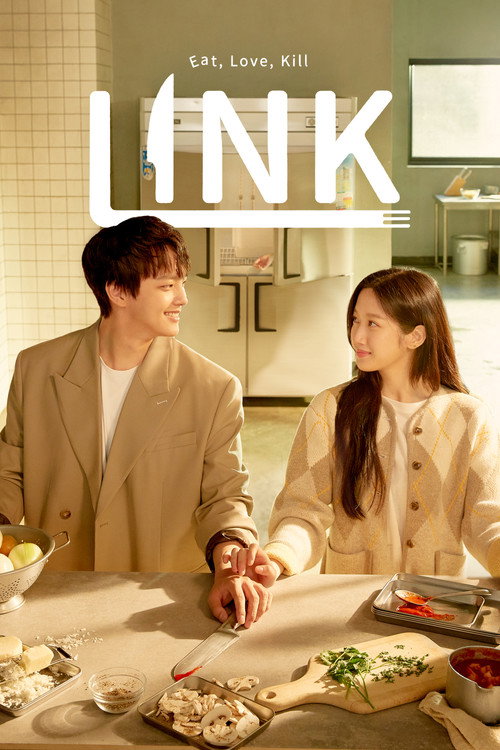
Link: Eat, Love, Kill
A melancholic mystery-melodrama soaked in rain and simmering broth, where telepathic grief pulses like an exposed nerve through quiet neighborhood alleys, slowly thawing two wounded souls back into warmth.
Link: Eat, Love, Kill

Link: Eat, Love, Kill

링크: 먹고, 사랑하라, 죽이게

06 June 2022 — 26 July 2022 South Korea 1 season 16 episode Ended 7.7 (131)

Cast: Yeo Jin-goo, Mun Ka-young, Ye Su-jeong, Kim Ji-young, Lee Suk-hyeong

Drama Mystery Empathy as Shared Burden and Grace Collective Silence and Bystander Complicity Trauma, Memory, and Repression Nourishment and Reparation (Food as Care) Generational Protection and Maternal Duty

Overview

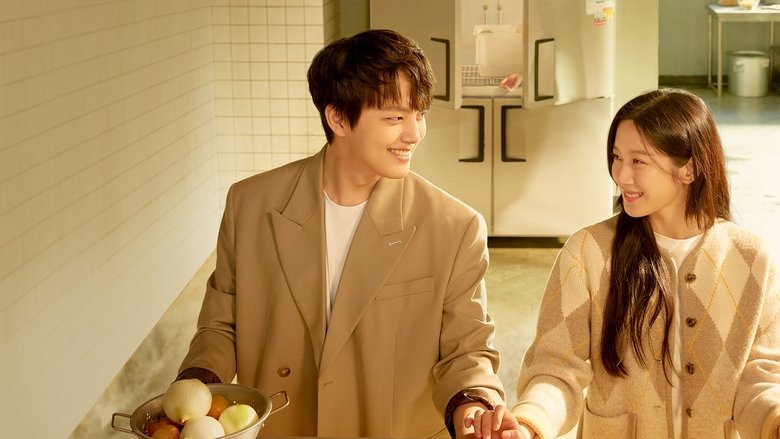
Link: Eat, Love, Kill (Korean: 링크: 먹고 사랑하라, 죽이게) is a 16-episode South Korean drama that intricately balances culinary romance, psychological suspense, and dark mystery. The story centers on Eun Gye-hoon, an executive sous-chef whose twin sister disappeared eighteen years prior. During childhood, Gye-hoon shared a telepathic emotional "link" with his sister, feeling every tremor of her fear, joy, and sorrow. That psychic connection vanished on the day of her abduction, leaving him emotionally shuttered and numb.

The narrative begins when Gye-hoon suddenly experiences spontaneous emotional outbursts—weeping uncontrollably while plating dishes or laughing without cause. Realizing the phenomenon has returned, he traces the connection to the run-down neighborhood of Jihwa-dong, where his sister vanished. There, he opens a European bistro and crosses paths with Noh Da-hyun, an emotionally bruised young woman struggling to survive through a relentless string of hardships.

As Gye-hoon discovers that his sensory link is tied directly to Da-hyun rather than his lost sister, the two become entangled in a dark web of local secrets. What appears to be an eccentric neighborhood harboring petty rivalries gradually reveals a shared collective trauma. Together with Da-hyun's fiercely protective mother and grandmother, the two must confront long-buried truths that bind the community's quiet streets to an unsolved crime.
Core Meaning

The core philosophical premise of Link: Eat, Love, Kill is that true empathy—though terrifying and painful—is the foundational cure for trauma and isolation. Through the fantastical device of a shared emotional link, the creators examine the burden of feeling another person's suffering without filter.

The series conveys that grief and guilt cannot be buried or ignored; when a community turns a blind eye to wrongdoing to preserve comfort, collective guilt festers and poisons everyone involved. Healing requires confronting uncomfortable truths, showing compassion toward victims, and sharing human connection through simple, restorative acts like preparing a warm meal for someone in pain.

Thematic DNA

Empathy as Shared Burden and Grace 30%
Collective Silence and Bystander Complicity 25%
Trauma, Memory, and Repression 20%
Nourishment and Reparation (Food as Care) 15%
Generational Protection and Maternal Duty 10%

Empathy as Shared Burden and Grace

Initially treated as an intrusive handicap that humiliates Gye-hoon in his kitchen, the emotional link shifts into a bridge of radical intimacy. It illustrates that bearing another’s sorrow is the highest expression of love.

Collective Silence and Bystander Complicity

The neighborhood of Jihwa-dong exemplifies how ordinary citizens become complicit through hesitation, willful ignorance, and fear, allowing a predator to thrive in plain sight for decades.

Trauma, Memory, and Repression

Explored through Da-hyun’s dissociative amnesia and Gye-hoon’s survivor guilt. The show demonstrates that forgotten pain remains active in the subconscious until recalled and processed.

Nourishment and Reparation (Food as Care)

Cooking serves as a language of restoration. When words fail, Gye-hoon cooks to steady Da-hyun’s trembling spirit, subverting cold violence with hospitality and comfort.

Generational Protection and Maternal Duty

Portrayed through Da-hyun’s mother and grandmother, who will cross any legal boundary to safeguard their daughter, contrasting destructive violence with fierce maternal devotion.

Character Analysis

Eun Gye-hoon

Yeo Jin-goo

Archetype: The Wounded Healer / Melancholic Hero Key Trait: Profound, involuntary emotional empathy

Motivation

Finding out the definitive truth behind his twin sister’s disappearance.

Character Arc

Begins as an emotionally detached, hyper-disciplined chef unable to move beyond the trauma of his sister's loss. As the link returns, he allows himself to feel raw vulnerability, shifting from seeking vengeful closure to protecting Da-hyun and restoring his broken community.

Noh Da-hyun

Mun Ka-young

Archetype: The Resilient Survivor Key Trait: Unyielding grit veiled by a bright demeanor

Motivation

Surviving daily perils, uncovering the gaps in her past, and protecting her family.

Character Arc

Starts as an exhausted, unlucky gig worker trapped by an aggressive stalker and repressed childhood memories. As her memory returns, she confronts severe childhood trauma and guilt, reclaiming agency over her life and identity.

All 5 characters and cast

Symbols & Motifs

The Red Refrigerator (Industrial Freezer)

Meaning:

Represents dark secrets, suppressed crimes, and frozen trauma.

Context:

A central visual and plot motif that serves as a literal hiding place for death and the burden the characters attempt to conceal.

The Shared Tear (Involuntary Crying)

Meaning:

Marks the piercing of emotional walls and the impossibility of isolating oneself from human pain.

Context:

Symbolizes unmediated emotional contagion when Gye-hoon sheds tears on a sunny day without personal sorrow.

The Cooking Knife vs. The Weapon Knife

Meaning:

A contrast motif between creation and destruction.

Context:

In Gye-hoon's hands, the blade creates life-giving meals and comfort; in the killer's hands, it severs lives and tears apart families.

Jihwa-dong Alleyways

Meaning:

Symbolizes the entangled secrets, voyeurism, and moral dead-ends of a guilty neighborhood where everyone watches but nobody acts.

Context:

Represented through the maze-like, dimly lit streets of the old town.

The Game Console / Cartridge

Meaning:

Represents predatory manipulation and innocence exploited.

Context:

A chilling childhood motif that highlights how young minds were bartered and bribed into becoming unwitting accomplices.

Memorable Quotes

내가 울 때마다 울어주고, 내가 웃을 때마다 웃어주는 사람... 그게 너였어.
— Noh Da-hyun

Context

Spoken in Episode 10.

Meaning

Da-hyun comes to understand that Gye-hoon's emotional outbursts were not coincidental eccentricities, validating their bond.

남의 감정이 내 안으로 들어온다는 건, 지옥일 수도 있지만... 누군가에게는 유일한 구원일 수도 있다.
— Eun Gye-hoon

Context

Spoken in Episode 1.

Meaning

Establishes the central dichotomy of the emotional "link" as both a tormenting curse and an instrument of human rescue.

All 4 quotes

Episode Highlights

Feeling After 18 Years

S1E1

Gye-hoon's long-dormant emotional link reactivates mid-service in a high-end restaurant, causing him to break down in tears. He relocates to Jihwa-dong, where Da-hyun accidentally kills her stalker in self-defense and stuffs the body into an abandoned refrigerator.

Significance:

Establishes the return of the supernatural link and initiates the central murder-mystery dynamic.

The Secret in the Neighborhood

S1E4

Gye-hoon discovers the stalker's disappearance is connected to Da-hyun's household. Suspicion mounts across Jihwa-dong as the mysterious refrigerator goes missing from the alley.

Significance:

Escalates tension within Jihwa-dong as community secrets begin to intersect with the unfolding crime.

Whose Tears Are These?

S1E7

Gye-hoon realizes his emotional link is linked to Da-hyun's heartbeat and distress rather than a ghost of his sister.

Significance:

Shifts the nature of the connection, allowing romantic feelings to begin blossoming amid rising danger.

The Fog of Memory

S1E10

Da-hyun begins to recover fragments of suppressed childhood memories, realizing she lived in Jihwa-dong eighteen years ago and was present during Gye-young’s abduction.

Significance:

Connects Da-hyun directly to the 18-year-old cold case and begins unlocking her repressed past.

The True Culprit Steps Out

S1E13

Lee Jin-geun confronts Gye-hoon and reveals how an adult manipulated children with arcade games. Local market owner Lee Young-hoon attacks Gye-hoon to silence Jin-geun.

Significance:

Exposes the predator's manipulation of local children and brings the true killer into the open.

Corpses and Confessions

S1E14

The police open the abandoned freezer and recover Lee Jin-geun’s body. Da-hyun breaks down, confessing that she survived the basement while Gye-young remained trapped.

Significance:

Reveals Da-hyun's survivor guilt and exposes the physical evidence of the escalating crimes.

The Basement of 18 Years Ago

S1E15

Full flashbacks reveal Gye-young helping Da-hyun escape through a small window. Lee Young-hoon is captured, and the burial sites of Gye-young and Gye-hoon's searching father are located.

Significance:

Resolves the central mystery of the past abduction and culminates in the arrest of the serial predator.

Eat, Love, and Live

S1E16

Resolution of the town's trauma; Jihwa-dong begins a painful journey toward reconciliation. Gye-hoon's restaurant flourishes, and the link persists as a gentle channel of love.

Significance:

Brings closure to the collective grief, showing the beginning of healing for the characters and community.

Philosophical Questions

Is total emotional transparency a blessing or a curse?

The show examines whether experiencing another human being's raw pain without boundaries deepens love or erodes personal autonomy.

Where does individual responsibility end and bystander complicity begin?

Jihwa-dong forces viewers to confront how silence and minor self-preservation enable severe atrocities.

Can guilt and trauma ever be outrun through forgetting?

Da-hyun's amnesia proves that somatic and emotional memory survives even when cognitive recall is blocked.

What constitutes genuine justice for cold-case victims?

The series argues that justice extends beyond incarcerating the killer; it requires societal restitution, public truth, and remembering the lost.

Alternative Interpretations

Empathy as Biological Phenomenon vs. Spiritual Destiny: Some viewers interpret the "link" not as arbitrary psychic magic, but as a metaphysical manifestation of deep emotional resonance. Originally existing between biological twins, the transfer to Da-hyun signifies that chosen empathy and love can transcend genetic bonds.

Full ending explanation

Cultural Impact

Aired in mid-2022, Link: Eat, Love, Kill arrived during a wave of K-dramas exploring collective guilt and systemic community neglect. The series reflected South Korean societal conversations regarding stalking laws (which were substantially overhauled in Korea around 2021–2022), victim-blaming, and the psychological vulnerability of children.

While it achieved modest domestic television ratings (hovering between 1.5% and 3.1%), it found a dedicated international cult following on streaming platforms for its tonal ambition and emotional vulnerability.

Audience Reception

Link: Eat, Love, Kill received praise from critics and audiences for the exceptional chemistry and acting performances by Yeo Jin-goo and Mun Ka-young, its elegant, atmospheric directing, evocative score, and grounded emotional portrayal of grief and maternal love (notably the performances of Ye Soo-jung and Kim Ji-young).

However, the series drew criticism for jarring shifts in genre—moving abruptly from dark thriller elements to light slapstick comedy—predictability in the third act regarding the mystery investigation and the killer's motives, as well as several police procedural tropes and questionable character decision-making during nighttime pursuits.

The overall verdict characterizes the drama as a poignant, emotionally resonant mystery-romance that occasionally struggles with pacing and tonal consistency, but succeeds powerfully as a character-driven study of empathy and healing.

Interesting Facts

  • Lead actors Yeo Jin-goo and Mun Ka-young reunited as romantic co-stars 13 years after working together as child actors on the SBS period drama Ja Myung Go (2009).
  • The drama was penned by screenwriter Kwon Ki-young (Suspicious Partner, Hello Monster) and helmed by director No Sang-hoon, who previously collaborated with Kwon on the critically acclaimed thriller Hello Monster (2015).
  • Yeo Jin-goo underwent intensive culinary training to convincingly execute knife work, flambéing, and plating techniques for the executive chef role without relying heavily on body doubles.
  • The production team structured the series as a hybrid experiment—weaving lighthearted romantic comedy, small-town slice-of-life, and grisly psychological murder mystery.
  • The show was produced by Studio Dragon and C-JeS Entertainment, broadcasting on tvN in South Korea and simultaneously streaming globally on Disney+.

Easter Eggs

Cameo by Kim Won-hae

Veteran character actor Kim Won-hae makes a memorable guest appearance as Antonio, senior restaurant manager and Gye-hoon’s early culinary mentor.

Homage to Hello Monster

Writer Kwon Ki-young integrated psychological tropes from her previous work, particularly regarding childhood trauma and memory repression.

Neighborhood Naming ("Jihwa-dong")

The fictional neighborhood's name Jihwa (지화) evokes Jihwaja (a traditional Korean exclamation of celebration), serving as an ironic contrast to the dark, repressed trauma buried beneath the town's streets.

The "Eat Pray Love" Play on Words

The title playfully subverts the well-known Western memoir and film Eat Pray Love, replacing spiritual contemplation with murder ("Kill") to signpost its hybrid genre.

Frequently Asked Questions

Explore More About This Movie

Dive deeper into specific aspects of the movie with our detailed analysis pages

Comments (0)

Leave a comment

No comments yet. Be the first to share your thoughts!

Similar Movies