Skip to content
Little Forest
A gentle seasonal drama of soil, steam and snowfall, where a weary young woman learns that hunger can be a compass. Each home-cooked meal opens like a window onto a quieter life.
Little Forest

Little Forest

리틀 포레스트

28 February 2018 South Korea 103 min 7.6 (190)

Director: Yim Soon-rye

Cast: Kim Tae-ri, Moon So-ri, Ryu Jun-yeol, Jin Ki-joo, Jeon Guk-hyang

Drama Healing through nature and slow living Food as memory, love and self-expression Pressure and failure in young adulthood Mother and daughter, leaving and returning Friendship and belonging

Overview

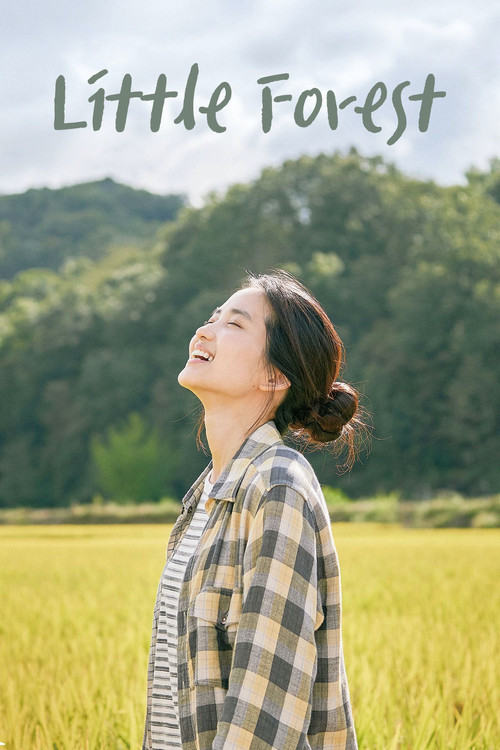
Little Forest (2018) is a South Korean drama directed by Yim Soon-rye. It adapts Daisuke Igarashi's manga, which had already been made into a two-part Japanese live-action film. Hye-won (Kim Tae-ri) lives in Seoul. After failing to pass the national qualification exam to become a teacher, she quits her part-time job and her city life stops working. One snowy winter day she goes back, on impulse, to the empty rural house where she grew up. She keeps saying it is only for a few days.

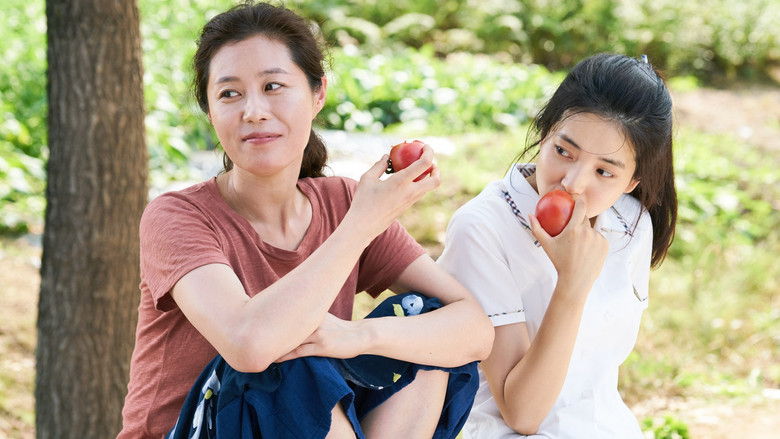
She stays through a full cycle of seasons. She farms, cooks with what she grows, and eats. Her mother (Moon So-ri) was an excellent cook and left home abruptly years earlier. Her two old friends (Ryu Jun-yeol and Jin Ki-joo) stayed in the village, and a puppy keeps her company. Reviewers describe the plot as simple: a very hungry young woman who is hungry for real food, for soul food and for answers.

The film has little conventional drama. It is built from small rituals: kneading dough, pulling weeds, waiting for food to ferment or ripen. Memories of Seoul and of her mother surface as she works. The film asks what she is really hungry for.


Core Meaning

The film argues that recovery comes slowly and through the body. Attending to work, seasons and food can restore a person whom competition and exams have emptied. Hye-won does not return home to hide forever. She returns to learn what nourishes her and to understand the mother who left her.

It also quietly criticizes a society that measures young people by exams, jobs and productivity. Her question is not "how do I succeed?" but "what do I actually want to eat, to do, to be?" Critics have noted the film's love for traditional Korean cooking and slow living, and they have also noted that this life is somewhat idealized.

Thematic DNA

Healing through nature and slow living 30%
Food as memory, love and self-expression 28%
Pressure and failure in young adulthood 17%
Mother and daughter, leaving and returning 15%
Friendship and belonging 10%

Healing through nature and slow living

The village and the seasonal farm work restore Hye-won. The film is a love letter to slow living, and it makes the pace of the countryside feel like a cure.

Food as memory, love and self-expression

Cooking links Hye-won to her mother, who was a skilled cook. The film shows the whole process: growing, preparing and eating. Cooking becomes a way to express the heart.

Pressure and failure in young adulthood

Failed exams, a lost job and a boyfriend who got hired while she did not push her out of Seoul. The film shows a generation exhausted by competition.

Mother and daughter, leaving and returning

Her mother's sudden departure shapes Hye-won's sense of what leaving means. She reflects that people leave in search of something. The mother's absence is the film's emotional undercurrent.

Friendship and belonging

Jae-ha and Eun-sook represent two opposite reactions to the same rural upbringing, and Hye-won sits somewhere between them. Their company shows what community offers.

Character Analysis

Hye-won

Kim Tae-ri

Archetype: Seeker / wounded hero Key Trait: Quietly resilient and hungry for real food

Motivation

To feed herself, literally and spiritually, and to find answers she could not find in the city.

Character Arc

She goes from a Seoul life in which nothing works to a self-sufficient life in the village, and she gradually faces her past and her mother's leaving.

Hye-won's mother

Moon So-ri

Archetype: Absent mentor Key Trait: A gifted cook who is free-spirited

Motivation

To find a life of her own after years of hardship.

Character Arc

She is present mainly through memory and through the dishes she taught. She left abruptly to find out what life had taken from her during the years as a widow and single mother.

All 4 characters and cast

Symbols & Motifs

Seasons

Meaning:

Healing as a cycle rather than a straight line.

Context:

The film moves from winter into spring, summer and autumn, and then returns to winter. Each season has its own dishes and its own chores.

Home-cooked meals

Meaning:

Self-care, memory and inherited love.

Context:

Hye-won cooks dishes such as dough soup when she is cold and hungry. Each one is tied to a memory of her mother or to the season.

The empty childhood house

Meaning:

A refuge, and also a place where she has to face what was left behind.

Context:

She comes back to it from Seoul in winter and rebuilds her life inside it.

Fivo the puppy

Meaning:

Warmth and unconditional companionship.

Context:

The dog stays with Hye-won through her self-sufficient life of farming, cooking and eating.

Weeds and crops

Meaning:

Persistent worries, and patience rewarded.

Context:

Hye-won pulls weeds that keep coming back, and she waits for crops and food to be ready. The film ties this to the idea that good food has to be waited for.

Memorable Quotes

넌 뭘 그렇게 어렵게 사냐...
— Hye-won

Context

Early in the film, she cuts off a call from her boyfriend, who has found a job while she has not, by pretending she cannot hear him.

Meaning

She turns a question on herself: why does she make life so hard? It sets up the film's argument for living more simply.

무언가를 찾아 떠났다. 그리고 나만 돌아왔다. 아무것도 답을 찾지 못한 채... 엄마는 찾았을까?
— Hye-won

Context

Hye-won reflects on leaving and returning, and on her mother, who left her suddenly.

Meaning

She links her own departure to her mother's. She wonders whether her mother found what she was looking for.

Philosophical Questions

What does it mean to live well, rather than to succeed?

Hye-won measures her days by meals and chores rather than by exams or salaries. The film sets this against the competitive life she left in Seoul and asks which one is richer.

Is leaving home an escape or a search?

Hye-won and her mother both leave in order to find something. The film leaves open whether either of them found it, and Hye-won wonders aloud about her mother.

Can we truly return to where we came from?

She comes back to the childhood house, but she is no longer the person who left. The seasonal cycle suggests that return means renewal rather than repetition.

How It Ends

Alternative Interpretations

One reading sees the film as a healing fantasy that praises withdrawal from society. A more critical reading is that this life is attractive but unattainable. It depends on a family house, free time and friends nearby, and it leaves out the hardships of farming.

Full ending explanation

Cultural Impact

Yim Soon-rye is described as one of the most important Korean female filmmakers and a leading figure of Korean New Wave Cinema. The film adapts a Japanese manga and gives it what ScreenAnarchy called a distinct Korean flavor. It was a commercial success in Korea. It also circulated at international festivals as a cinematic love letter to slow living.

Critics noted that in Korean cinema a retreat to the countryside usually ends badly for the characters, and that this film reverses the pattern. Some also noted that the film idealizes traditional Korean culture and cuisine and glosses over the harsher parts of country life, such as the extreme cold of winter. Meat is never eaten in the film, despite Korean cuisine's heavy reliance on it.

Audience Reception

Viewers praise the film as comforting. Many single out the food photography, the sound of cooking and nature, and Kim Tae-ri's natural performance. Letterboxd reviewers describe it as soothing and as a live-action Ghibli-like experience. Critics such as FilmDoo called it a gentle, low-stakes picture about the modest pleasures of simply being.

The main criticism is that it is idealized. Reviewers noted that it skips the hardships of country life, and some found the pace slight and uneventful. The overall verdict is warm: a restful film that leaves many viewers wanting to cook.

Interesting Facts

  • The film is based on Daisuke Igarashi's 2002 Japanese manga of the same name, which had already been adapted into a two-part live-action Japanese film in 2014.
  • The screenplay was written by Hwang Seong-gu and the film was produced by Jenna Ku for Watermelon Pictures.
  • It was released in South Korea on February 28, 2018 by Megabox Plus M and runs 103 minutes.
  • The film earned $5 million in its first five days, according to AsianMoviePulse, and Wikipedia lists a total box office of US$11.1 million.
  • Wikipedia lists a budget of US$1.4 million, though it flags the source as unreliable.
  • It was Kim Tae-ri's first lead role since her breakout in Park Chan-wook's The Handmaiden.
  • The film screened at festivals including the New York Asian Film Festival, Udine's Far East Film Festival and the Five Flavours Asian Film Festival.

Frequently Asked Questions

Explore More About This Movie

Dive deeper into specific aspects of the movie with our detailed analysis pages

Comments (0)

Leave a comment

No comments yet. Be the first to share your thoughts!

Similar Movies