Skip to content
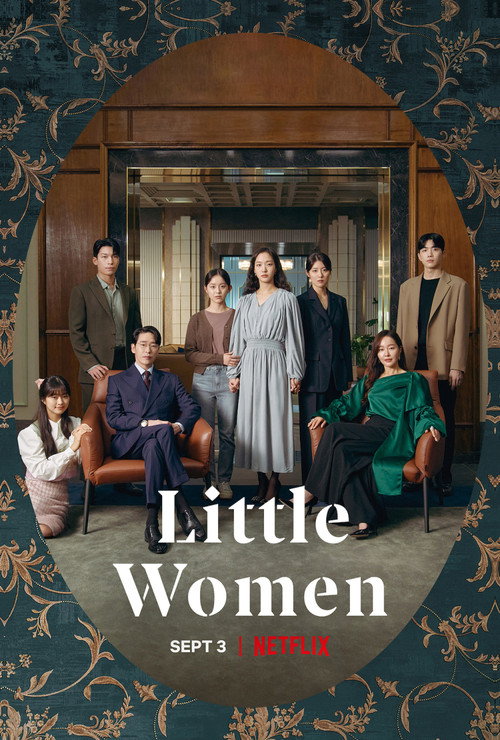
Little Women
A suffocating yet intoxicating psychological noir steeped in desperate ambition and grief, where brittle, poverty-stricken sisters navigate a labyrinth of predatory wealth like delicate ghost orchids blooming amidst venomous shadows.
Little Women

Little Women

작은 아씨들

"70 billion won that appeared out of nowhere, to keep or to return."

03 September 2022 — 09 October 2022 South Korea 1 season 12 episode Ended 8.0 (193)

Cast: Kim Go-eun, Nam Ji-hyun, Park Ji-hu, Wi Ha-jun, Uhm Ji-won

Drama Action & Adventure Mystery The Haunting Burden of Poverty and Hyper-Capitalism Sisterhood: Mutual Solidarity vs. Traumatic Martyrdom The Theater of Power and Fabricated Realities Historical Trauma and Intergenerational Complicity

Overview

Little Women (tvN / Netflix, 2022) is a 12-episode South Korean mystery thriller crafted by screenwriter Chung Seo-kyung and director Kim Hee-won. Loosely reimagining Louisa May Alcott’s classic 1868 novel within the hyper-capitalist landscape of modern Seoul, the series follows three impoverished sisters—accountant Oh In-joo, broadcast journalist Oh In-kyung, and art prodigy Oh In-hye—who have spent their lives bearing the brutal weight of generational debt and parental neglect.

The narrative ignites when In-joo’s close colleague mysteriously dies, leaving behind an untraceable 70 billion won ($50+ million) slush fund. In pursuit of financial liberation, truth, and artistic autonomy, the three sisters become individually entangled with South Korea’s wealthiest political dynasty: prominent mayoral candidate Park Jae-sang and his aristocratic wife Won Sang-a.

As the sisters’ paths converge, their search for independence unearths a shadowy, decades-old cabal known as the Jeongran Society, whose deadly calling card is an elusive blue orchid left beside every orchestrated demise. The sisters must reckon with the limits of their moral convictions and the true cost of survival in an unforgiving socio-economic hierarchy.
Core Meaning

The central thesis of Little Women investigates how extreme capitalist structures warp human soulfulness, morality, and familial affection. Screenwriter Chung Seo-kyung set out to explore what happens when the March sisters’ original Victorian struggles with poverty are plunged into modern neoliberal Korea—a society driven by financial speculation, real estate monopolies, and inherited trauma.

Across its run, the drama asserts that while capital dictates the physical terms of human existence, true liberation requires breaking free not only from destitute desperation, but also from the corrupting temptation to become monsters in order to escape it. It redefines sisterhood not as self-sacrificing martyrdom, but as a reciprocal bond that empowers each individual to achieve autonomous personhood.

Thematic DNA

The Haunting Burden of Poverty and Hyper-Capitalism 35%
Sisterhood: Mutual Solidarity vs. Traumatic Martyrdom 25%
The Theater of Power and Fabricated Realities 20%
Historical Trauma and Intergenerational Complicity 20%

The Haunting Burden of Poverty and Hyper-Capitalism

Poverty in the series is not just material deprivation; it is depicted as a lingering physiological and psychological trauma that impairs decision-making and limits imagination. Each sister processes this wound differently: In-joo craves immediate liquidity, In-kyung seeks moral righteousness and exposes financial crime, and In-hye strives to transcend her background through meritocratic art. The drama continuously challenges whether an impoverished person can attain wealth without inheriting the rot of the ruling class.

Sisterhood: Mutual Solidarity vs. Traumatic Martyrdom

The bond between the Oh sisters forms the emotional spine of the show, but it is complicated by unhealthy sacrificial dynamics. In-joo and In-kyung impose an overwhelming burden of care onto In-hye, which alienates the youngest sister and drives her into the arms of an elite patron. The narrative arc tracks the sisters moving away from infantilizing protection toward mutual respect and individual agency.

The Theater of Power and Fabricated Realities

The series deconstructs how political elites and chaebol dynasties curate synthetic narratives for public consumption. Power functions as an elaborately staged theatrical production where the wealthy script the lives and deaths of the working class. The struggle shifts from merely acquiring physical money to dismantling the false illusions manufactured by the powerful.

Historical Trauma and Intergenerational Complicity

Rooted in the historical context of the Vietnam War and the rapid industrialization of modern South Korea, the narrative exposes how the Jeongran Society forged illicit fortunes through wartime black budgets and real estate corruption. The series traces how historical sins are inherited by subsequent generations, asking whether descendants can break the cycle of corruption.

Character Analysis

Oh In-joo

Kim Go-eun

Archetype: Reluctant Everyman / The Protective Matriarch (Meg March parallel) Key Trait: Emotional transparency and tenacious maternal loyalty

Motivation

To obtain financial stability and protect her younger sisters at any cost.

Character Arc

Begins as a naive corporate outcast desperate to secure a clean apartment and safety for her sisters, traumatized by the childhood loss of an infant sister to poverty. Across the series, she evolves from a bewildered pawn manipulated by elites into an assertive, courageous agent who values sisterly integrity above sheer survival.

Oh In-kyung

Nam Ji-hyun

Archetype: Righteous Crusader / Seeker of Truth (Jo March parallel) Key Trait: Uncompromising moral conviction and fearless investigative tenacity

Motivation

To expose systemic injustice and prevent predatory corruption from poisoning the truth.

Character Arc

A fiercely idealistic broadcast journalist struggling with alcohol dependency used to numb her overwhelming empathy. Despite continuous professional sidelining and mortal threats from the Jeongran Society, she refuses financial compromise, ultimately dismantling the corrupt conspiracy through investigative rigor.

All 5 characters and cast

Symbols & Motifs

The Epipogium Aphyllum (Ghost / Blue Orchid)

Meaning:

Highly toxic and hallucinogenic, this rare flower represents illicit temptation, predatory ambition, and impending death.

Context:

Serves as the signature calling card and sacred emblem of the Jeongran Society, left beside every orchestrated suicide and demise.

Designer High Heels (Bruno Zumino Shoes)

Meaning:

Symbolizes social mobility, deceptive luxury, and the dangerous elevation into a social class that requires walking on unsteady ground.

Context:

Velvet ruby heels gifted by Jin Hwa-young to Oh In-joo.

The Elaborate Dollhouse / Closed Stage

Meaning:

Mirrors a warped psychological impulse to treat living human beings as programmable dolls within a scripted setting.

Context:

Won Sang-a’s miniature diorama, reflecting her impulse to turn real lives into her personal closed theatrical set.

The Fur Coat and Red Lipstick

Meaning:

Emblems of performative wealth and emotional armor used to project status.

Context:

Characters apply red lipstick or put on opulent coats to conceal terror and steel themselves against societal humiliation.

Popsicles and Ice Pops (Chungpodo)

Meaning:

A tactile motif contrasting childhood simplicity with the cold isolation of wealth.

Context:

Contrasts the austere childhood memory of sharing a frozen snack during sweltering heat with the icy, clinical isolation of lavish mansions.

Memorable Quotes

자본주의는 심리 게임이거든? 있는 사람은 극복할 수 있지만, 없는 사람은 못하는 감정이 있어. '상숤감'. 잃을 수 있어야지만 더 큰 돈을 만질 수 있어.
— Great-Aunt Oh Hye-seok

Context

Spoken by Great-Aunt Oh Hye-seok in Episode 4 during a discussion on wealth and risk.

Meaning

Captures the core economic philosophy of the series—the structural divide where the rich risk capital while the poor risk their very lives.

난 가난한 건 괜찮아. 그 상태로 이렇게 살아왔잖아. 그런데 가난해서 도됑이 되는 건 싫어. 그건 지는 거잖아.
— Oh In-kyung

Context

Delivered in Episode 3 when confronting the temptation of compromised wealth.

Meaning

Highlights In-kyung’s unyielding ethical stance and sets the moral counterweight to In-joo’s pragmatic desperation.

All 5 quotes

Episode Highlights

The Outcasts' Secret

S1E1

Establishes the bleak socio-economic reality of the Oh household, In-joo's bond with Jin Hwa-young, and the shocking discovery of Hwa-young's apparent suicide alongside 2 billion won in cash and the mysterious blue orchid tattoo.

Significance:

Launches the primary central mystery and places the sisters directly in the crosshairs of the elite.

The Ghost Orchid's Roots

S1E6

In-kyung investigates the deep history of the Jeongran Society, linking real estate scandals to Vietnam War veterans, while Great-Aunt Oh Hye-seok is ruthlessly murdered in her own home.

Significance:

Strips the sisters of their familial safety net and pushes the conflict into an existential war.

The Singapore Masquerade

S1E8

Set during the International Orchid Auction in Singapore, In-joo discovers she has been living under Hwa-young’s identity before Won Sang-a reveals she staged In-joo’s lavish overseas life as a private drama.

Significance:

Marks the series’ most celebrated midpoint twist, exposing the reality of Sang-a’s psychological manipulation.

The High Fall

S1E10

On the verge of winning the Seoul mayoral election, Park Jae-sang's past murders and true nature are broadcast on live television by In-kyung, prompting him to leap to his death with a blue orchid in hand on Sang-a's orders.

Significance:

Destroys the political powerhouse front and leaves Sang-a unhinged and fully unleashed.

The Courtroom Miracle

S1E11

In-joo is placed on trial for embezzling the 70 billion won, but just as the prosecution closes its net, the supposedly deceased Jin Hwa-young walks into the courtroom alive.

Significance:

Subverts the entire factual premise of the season and turns legal defense into a direct indictment of Sang-a.

The Secret Room Finale

S1E12

Culminates in a lethal confrontation inside Sang-a’s underground orchid greenhouse rigged with hydrochloric acid, leading to Sang-a's demise, Hwa-young serving prison time, and In-hye dividing the surviving slush fund fairly.

Significance:

Resolves the Jeongran conspiracy and establishes the independent futures of all three sisters.

Philosophical Questions

Can money purchased at the price of complicity ever provide true freedom?

The drama explores whether tainted capital can truly rescue an individual, or if the mechanism of the wealth inevitably turns the recipient into a servant of the system.

Where does familial loyalty end and self-preservation begin?

Through In-hye’s departure and In-joo’s desperate struggles, the show questions whether unconditional sacrifice strengthens family ties or damages personal self-worth.

Is objective truth possible in a media landscape controlled by financial interests?

In-kyung’s investigative crusade probes whether journalistic integrity can withstand the financial and structural pressures of media conglomerates.

Alternative Interpretations

The Psychological Thriller Lens (Generational Trauma): Sang-a and the Oh sisters represent opposing ways of handling childhood deprivation. Sang-a, locked in a room by her father, turned the world into her personal miniature theater to retain control, while the Oh sisters struggle not to let their past poverty dictate their humanity.

Full ending explanation

Cultural Impact

Historical Trauma of the Vietnam War in Modern Korea: The series draws deeply on South Korea’s historical participation in the Vietnam War, showing how military veterans, real estate syndicates, and financial institutions forged modern chaebol wealth during the 1970s and 1980s, critiquing how wartime trauma turned into institutional greed.

International Reception & Vietnam Ban Controversy: While globally celebrated on Netflix, the drama encountered severe controversy in Vietnam. In October 2022, Vietnam's Authority of Broadcasting and Electronic Information demanded the show be removed from Netflix Vietnam due to historical distortion regarding Korean military actions. Studio Dragon issued an apology and pledged greater cultural sensitivity in subsequent productions.

Modern Feminist TV Renaissance: Alongside works like My Liberation Notes and Extraordinary Attorney Woo, Little Women was lauded as a landmark female-driven production that broke traditional K-drama gender conventions by centering a multi-generational ensemble of flawed, ambitious women driving high-stakes political and financial maneuvers.

Audience Reception

Widespread Acclaim: Critics and audiences lauded the drama's exceptional aesthetic polish, dynamic pacing, and sharp feminist writing. Kim Go-eun’s emotionally raw performance and Uhm Ji-won’s chilling turn as Won Sang-a were singled out as career-defining highlights. The romantic chemistry between Kim Go-eun and Wi Ha-jun—grounded in unspoken tension and mutual survival rather than overt romance—was enthusiastically celebrated.

Points of Criticism: Some viewers and critics noted that the final two episodes leaned heavily on over-the-top melodrama and convenient contrivances, such as the courtroom body-double explanation and the acid trap in the greenhouse. However, the overwhelming consensus hailed it as one of the most stylish and intellectually engaging Korean thrillers of 2022.

Interesting Facts

  • The series marked the first television reunion between writer Chung Seo-kyung and high-profile production studio Studio Dragon, bringing cinematic noir sensibilities to weekend broadcast TV.
  • The pivotal Singapore episodes were filmed over two weeks in July 2022 in partnership with local production house Ochre Pictures, using locations like The Fullerton Hotel, Gardens by the Bay, and Robinson Road.
  • The underground 'Father Tree' orchid sanctuary was a bespoke practical set designed with handcrafted blue orchid props, mood lighting, and real botanical arrangements.
  • Screenwriter Chung Seo-kyung explicitly mapped the three sisters to Louisa May Alcott's characters (In-joo as Meg, In-kyung as Jo, In-hye as Amy), transforming Beth into the memory of an infant sibling who died due to poverty.
  • The drama earned critical acclaim across Asia, taking home major awards at the Asian Academy Creative Awards (AACA) and the APAN Star Awards for its technical production and screenplay.

Easter Eggs

Song Joong-ki's High-End Cameo

In Episode 2, Song Joong-ki cameos as a luxury shoe boutique salesman named 'Park Joo-hyung'—the exact Korean birth name of his titular character from director Kim Hee-won's previous hit drama Vincenzo.

Louisa May Alcott References

The dialogue frequently references the original novel: In-hye’s desire to study art in Europe mirrors Amy March’s Parisian journey, and Ha Jong-ho embodies the devoted childhood companion Laurie.

The 'Princess of Thieves' Flower Clue

In Episode 1, Hwa-young introduces In-joo to an orchid species known as the 'Princess of Thieves'—plain when dormant but blooming spectacularly—directly foreshadowing In-joo's trajectory from an unappreciated accountant to the owner of billions.

Title Sequence Foreshadowing

The animated opening credit sequence incorporates watercolor vignettes of blooming blue orchids, falling buildings, and shoes, visually laying out the entire plot trajectory from Episode 1.

Frequently Asked Questions

Explore More About This Movie

Dive deeper into specific aspects of the movie with our detailed analysis pages

Comments (0)

Leave a comment

No comments yet. Be the first to share your thoughts!

Similar Movies