Skip to content
Lookism
Draped in the harsh neon glare of urban youth culture, this gripping drama captures the raw ache of societal rejection through a fractured mirror reflecting two opposing bodies tied to a single soul.
Lookism

Lookism

외모지상주의

08 December 2022 — 08 December 2022 South Korea 1 season 8 episode Ended 8.3 (299)

Cast: Shim Kyu-hyuck, Han Shin, Ryu Seung-gone, Jeong Jae-heon, Nam Doh-hyeong

Drama Animation Comedy Lookism and the Tyranny of Conventional Aesthetics Systemic Bullying, Hierarchies, and Trauma Identity, Duality, and Self-Worth Parental Sacrifice and Guilt Solidarity of the Marginalized

Overview

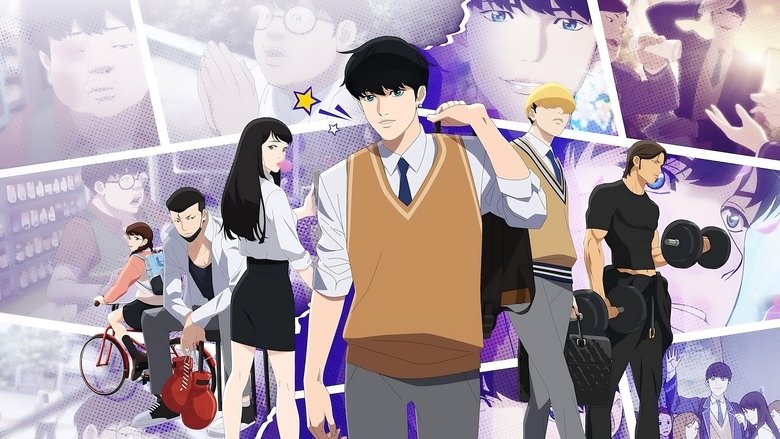
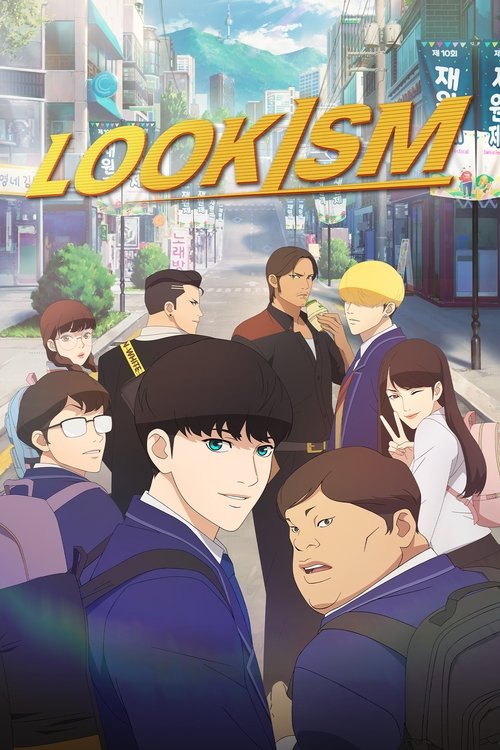
Lookism is an eight-episode animated drama based on the globally renowned South Korean webtoon by Park Tae-joon. The story centers on Park Hyeong-seok, an insecure, overweight high school student who endures relentless physical and psychological torment from school bullies. Desperate for a fresh start, he begs his impoverished single mother to let him transfer to Jaewon High School in Seoul. However, the evening before classes begin, an inexplicable supernatural event occurs: Hyeong-seok awakens in a statuesque, conventionally handsome, athletic body, discovering that one body remains active while the other sleeps, alternating consciousness whenever he falls asleep or wakes up.

As Hyeong-seok navigates everyday life, he divides his existence in two: attending school and social outings in his flawless new body by day, while running night shifts and taking care of basic chores in his original body by night. For the first time, he experiences the immediate charm, privilege, and unconditional admiration bestowed upon attractive individuals. Yet, this striking contrast lays bare the severe hypocrisy of a world that values aesthetic perfection above character.

Throughout the season, Hyeong-seok encounters a colorful ensemble of students, including the boxing prodigy Lee Jin-sung, the intimidating yet chivalrous Burn Knuckles leader Basco, the quiet protector Jay Hong, and fellow outcast Pyeon Deok-hwa. Rather than merely indulging in superficial popularity, Hyeong-seok confronts the internal hollows of his dual existence, forging authentic bonds and working to build genuine self-worth within both physical forms.
Core Meaning

The central thesis of Lookism is a direct indictment of societal prejudice and systemic discrimination based solely on physical appearance. Through the fantastical mechanic of two bodies sharing a single consciousness, the series demonstrates that external judgment dictates how society perceives human value, intelligence, and moral worth. The show asserts that true transformation cannot be gifted by an aesthetic facade; external beauty may grant unearned privilege, but genuine self-respect, inner dignity, and authentic human connection require confronting internal insecurities, standing up against injustice, and practicing unconditional empathy toward those whom society routinely overlooks.

Thematic DNA

Lookism and the Tyranny of Conventional Aesthetics 35%
Systemic Bullying, Hierarchies, and Trauma 25%
Identity, Duality, and Self-Worth 20%
Parental Sacrifice and Guilt 10%
Solidarity of the Marginalized 10%

Lookism and the Tyranny of Conventional Aesthetics

The primary social commentary examines how physical attractiveness functions as social currency in modern South Korea and global youth culture. The identical soul receives adoration or abuse depending entirely on which skin he inhabits, systematically exposing societal vanity.

Systemic Bullying, Hierarchies, and Trauma

The show unflinchingly depicts school violence, coercive power dynamics, and the psychological scarring that causes victims to feel subhuman. This theme matures from pure victimhood into collective resistance, empathy for fellow outcasts, and moral courage.

Identity, Duality, and Self-Worth

Hyeong-seok’s journey is an internal struggle between escapism and self-acceptance. The new body provides temporary relief, but true character growth begins only when he works out, practices discipline, and values his original self rather than treating it as an unwanted burden.

Parental Sacrifice and Guilt

The mother-son dynamic grounds the drama in poignant realism. Hyeong-seok's shame regarding his mother’s low-income struggles evolves into profound appreciation and a commitment to protect her dignity.

Solidarity of the Marginalized

Through relationships with characters like Deok-hwa and Basco, the narrative emphasizes finding power in community, mutual vulnerability, and creative artistic expression over brutal physical competition.

Character Analysis

Park Hyeong-seok (Small / Original Body)

Shim Kyu-hyuck

Archetype: Underdog / Reluctant Hero Key Trait: Deep-seated empathy born from shared pain

Motivation

To escape violent abuse, live a dignified life, and protect the people he loves.

Character Arc

Begins as a traumatized, insecure teen who projects his frustrations onto his devoted mother. Through living two lives, he gains perspective, starts exercising, and finds courage to defend others rather than running away.

Park Hyeong-seok (Big / Handsome Body)

Han Shin

Archetype: The Mask / The Ideal Self Key Trait: Innate physical talent coupled with gentle modesty

Motivation

To survive in high school and learn to navigate high-stakes social situations.

Character Arc

Initially utilized as an armor to bask in social validation and safety, it becomes a tool for Hyeong-seok to actively dismantle prejudice and stand up for friends who cannot defend themselves.

All 5 characters and cast

Symbols & Motifs

The Dual Bodies (The Split Self)

Meaning:

Symbolizes the psychological dissonance caused by societal expectations versus authentic selfhood.

Context:

Used through the seamless transfer of consciousness via sleep, highlighting how easily human perception is fooled by mere surface appearances.

The Mother’s Lunchbox / Scrapped Recyclables

Meaning:

Represents unconditional love, economic struggle, and parental sacrifice.

Context:

Acts as a moral compass that reminds Hyeong-seok of his roots and prevents him from becoming corrupted by superficial flattery.

The Microphone / The School Festival Stage

Meaning:

Symbolizes reclaiming one’s authentic voice and stripping away physical hierarchies.

Context:

Employed during Hyeong-seok and Deok-hwa's collaborative performance to communicate unvarnished emotional truth through music.

Basco’s Chocolate Milk

Meaning:

Embodying pure, childlike innocence and moral simplicity.

Context:

Frequently seen in the hands of Basco, contrasting with his intimidating, muscular exterior.

The Convenience Store Night Shift

Meaning:

Represents the invisible, unglamorous underbelly of society and working-class neglect.

Context:

Set during graveyard hours where Hyeong-seok operates in his original body, highlighting the isolating neglect suffered by marginalized individuals.

Memorable Quotes

몸이 바뀌어도... 나는 여전히 나야.
— Park Hyeong-seok

Context

Spoken during Hyeong-seok’s internal reflection in Season 1, Episode 2 ("New Life").

Meaning

Captures the fundamental alienation he feels upon discovering that society only loves his exterior, while the fragile boy inside remains unchanged.

나는 약한 자를 괴롭히는 놈들을 절대 용서하지 않아.
— Basco (Eun-tae Lee)

Context

Delivered in Season 1, Episode 3 ("Friends").

Meaning

Introduces Basco’s guiding principle and cements his role as a guardian figure who judges others by their actions rather than appearance.

All 5 quotes

Episode Highlights

Change

S1E1

Establishes the visceral reality of Hyeong-seok’s daily victimization, his mother's financial heartbreak, and the mystical occurrence that gives him a second body.

Significance:

Sets the high-stakes emotional groundwork for the entire series.

New Life

S1E2

Explores the mechanics of switching bodies via sleep and highlights the jarring contrast between daytime celebrity status in his new form and nocturnal invisibility in his original body.

Significance:

Establishes the dual-life premise and the pervasive reality of look-based social dynamics.

Friends

S1E3

Introduces key dynamics with Basco, who steps in to protect small Hyeong-seok from bullies without realizing both forms are the same person.

Significance:

Marks the pivotal shift from total isolation toward forming loyal friendships.

Mom

S1E4

Hyeong-seok takes his mother out, precipitating a confrontation that forces him to self-reflect and discard self-pity.

Significance:

Serves as the emotional core of the first half and inspires Hyeong-seok to begin physical training in his original body.

Recommendation

S1E6

Spotlights Pyeon Deok-hwa's struggles in the vocal department, introducing musical collaboration between outcasts.

Significance:

Acts as an emotional vehicle to confront institutional classism and look-based gatekeeping.

Special Training

S1E7

Under Deok-hwa’s patient guidance, Hyeong-seok discovers his vocal talent, deepening their mutual trust.

Significance:

Demonstrates genuine personal growth achieved through dedication rather than inherited physical gifts.

Wall

S1E8

The climax of the school festival where Hyeong-seok and Deok-hwa perform a moving rap-and-vocal duet that moves the audience.

Significance:

Exposes entertainment industry executives who still attempt to favor looks over artistry, setting up ongoing thematic conflicts for the series.

Philosophical Questions

Is Identity Defined by the Container or the Consciousness?

Explores whether a person’s internal moral core has inherent societal value if people respond strictly to physical casing, questioning if human worth is entirely conditional upon external appearance.

Can Unearned Privilege Cultivate Genuine Empathy?

Examines whether experiencing sudden beauty privilege makes an individual more compassionate toward the disenfranchised, or if it inevitably leads to complacency and vanity.

What Are the Limits of Moral Retribution?

Investigates how bullied individuals, upon gaining overwhelming physical power, resist the urge to become the very oppressors they once despised.

Alternative Interpretations

Alternative analytical readings of the series include:

Full ending explanation

Cultural Impact

Lookism emerged from a hyper-competitive South Korean social climate where aesthetic presentation ("spec") heavily influences hiring, social status, and daily interpersonal encounters. Park Tae-joon originally began serializing the manhwa on Naver Webtoon in 2014, quickly becoming one of the platform's most-read global properties with billions of views.

The 2022 animated adaptation proved significant as part of South Korea’s growing "Aeni" wave on global streaming platforms, demonstrating that Korean webtoons could be produced natively in Seoul rather than being outsourced entirely to Japanese anime studios. While the manhwa later transitioned into martial arts crime sagas ("Gangism"), the Netflix series was praised for faithfully preserving the slice-of-life, grounded social commentary of the webtoon's classic early arcs.

Audience Reception

The series received positive audience ratings, holding over a 90% Popcornmeter on Rotten Tomatoes and solid standing on anime databases. Viewers and critics lauded the emotional weight of early episodes, particularly the portrayal of family poverty and the resonant bond between Hyeong-seok and his mother. The dynamic fight animations by Studio Mir and the climactic musical performance in Episode 8 were highlighted as standout moments.

Conversely, some critics noted that at eight episodes, the pacing felt condensed, leaving side characters slightly archetypal. Certain viewers also expressed mixed feelings regarding instances of 3D CGI integration during select movement scenes. Overall, it is regarded as a faithful, entertaining, and emotionally poignant adaptation of the webtoon’s foundational arcs.

Interesting Facts

  • Lookism was the first Korean animated webtoon adaptation animated by Studio Mir, the studio acclaimed internationally for The Legend of Korra, DOTA: Dragon's Blood, and The Witcher: Nightmare of the Wolf.
  • The anime was initially scheduled to premiere on November 4, 2022, but was officially postponed to December 8, 2022, out of respect during South Korea’s national mourning period following the Itaewon crowd crush.
  • To emphasize the contrast between the two physical forms, the Korean production hired two voice actors for Hyeong-seok: Shim Kyu-hyuck for the original small body and Han Shin for the tall, handsome body.
  • Popular K-pop group ATEEZ recorded the official opening theme song titled "Like That," written to mirror the high energy and youth struggles of the narrative.
  • The adaptation was directed by Kwang Il Han with series composition and screenplays penned by veteran anime writer Isao Murayama and music direction by Kyung-Hoon Han.

Easter Eggs

Studio Mir Action Choreography

The dynamic martial-arts choreography during street brawls features fast-paced camera pans and impact frames reminiscent of Studio Mir's fight sequences in The Legend of Korra.

South Korean "Ulzzang" Culture References

Subtly satirizes 2010s "Ulzzang" (best face) internet culture, fashion trends, and rapid online virality typical of Seoul's Hongdae and Gangnam districts.

Faithful Webtoon Wardrobe

Characters sport streetwear labels and styling faithful to Park Tae-joon’s original weekly manhwa illustrations, accurately reflecting Korean youth fashion trends.

K-Pop Idol Trainee System Portrayal

The presence of talent scouts and entertainment agencies showcases the real-world cutthroat nature of South Korea's idol training industry, where visual marketability often outweighs raw talent.

Frequently Asked Questions

Explore More About This Movie

Dive deeper into specific aspects of the movie with our detailed analysis pages

Comments (0)

Leave a comment

No comments yet. Be the first to share your thoughts!

Similar Movies