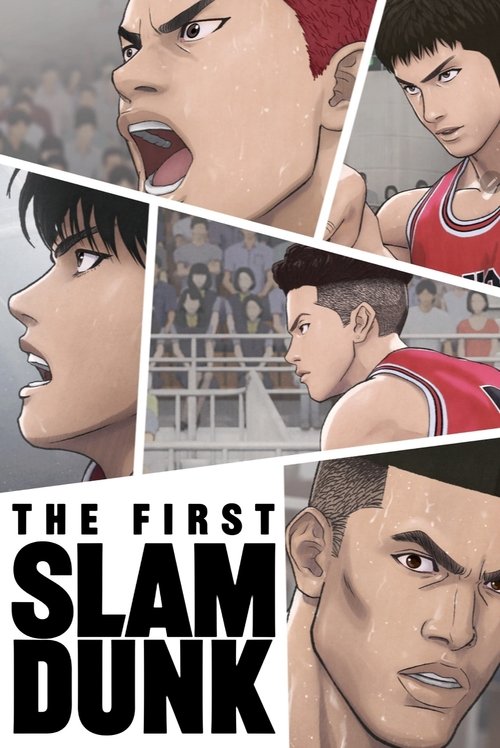
The First Slam Dunk
THE FIRST SLAM DUNK
"17 years and... 40 minutes."
Overview
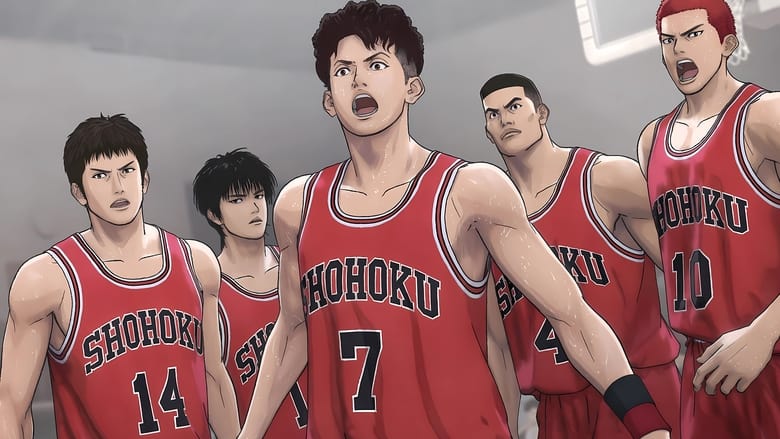
The First Slam Dunk (2022) is a cinematic reimagining of the climactic finale of Takehiko Inoue's legendary manga series. While the film centers on the high-intensity match between the underdog Shohoku High School and the reigning national champions, Sannoh Kogyo, it shifts its narrative lens to provide a deep, original backstory for the team's point guard, Ryota Miyagi. The story unfolds through a non-linear structure, weaving the heat of the game with poignant flashbacks of Ryota's childhood in Okinawa.
As the match progresses, viewers witness Ryota's personal struggle with the tragic loss of his older brother, Sota, a basketball prodigy who was the anchor of his family. The film meticulously balances the tactical, sweat-soaked reality of elite sports with a quiet, heartbreaking drama about a family fractured by grief. It serves as both a definitive conclusion for long-time fans and a standalone entry point for newcomers, focusing on the internal hurdles the players must overcome to achieve their 'glory moments.'
Core Meaning
The core message of the film revolves around the necessity of moving forward while carrying the weight of the past. Director Takehiko Inoue explores the idea that true strength is not the absence of fear or grief, but the ability to play through it. By centering on Ryota—the shortest and arguably most emotionally burdened player—the film argues that identity should not be a shadow of someone else's legacy, but a unique fire forged through one's own resilience. It is a meditation on survivor's guilt and the healing power of passion, suggesting that sports can be a medium for reconciliation between the living and the dead.
Thematic DNA
Grief and Reconciliation
Legacy vs. Individual Identity
Perseverance (The Spirit of 'Never Give Up')
The Psychology of Elite Sports
Character Analysis
Ryota Miyagi
Shugo Nakamura
Motivation
Character Arc
Hanamichi Sakuragi
Subaru Kimura
Motivation
Character Arc
Takenori Akagi
Kenta Miyake
Motivation
Character Arc
Hisashi Mitsui
Jun Kasama
Motivation
Character Arc
Kaede Rukawa
Shinichiro Kamio
Motivation
Character Arc
Symbols & Motifs
Sota's Red Wristband
The Secret Cave (Okinawa)
The Ocean / The Sea
The Number 7 Jersey
Memorable Quotes
Akirametara, soko de shiai shuryo desu yo. (If you give up, the game is already over.)
— Mitsuyoshi Anzai
Context:
Meaning:
Ikuzo. (Let's go.)
— Ryota Miyagi
Context:
Meaning:
Ore wa ima nanda. (I am in my glory moment now.)
— Hanamichi Sakuragi
Context:
Meaning:
Souta no inai sekai de... (In a world without Sota...)
— Ryota Miyagi
Context:
Meaning:
Philosophical Questions
When does a dream stop being a legacy and start being a burden?
Can silence be a form of communication?
Alternative Interpretations
While primarily a sports drama, some critics interpret the film as an existential exploration of 'the shadow.' Ryota's struggle isn't just against Sannoh, but against the 'ghost' of his brother. His decision to move to America at the end is seen by some as a final step in separating his identity from Sota's dream, pursuing a goal that Sota never even dared to verbalize. Another reading focuses on Kaoru (Ryota's mother); while some viewers see her as cold, others interpret her actions as 'smothering protection'—her decision to move the family and pack away Sota's things was an attempt to save Ryota from the pain of comparison, even if it was executed through a wall of silence.
Cultural Impact
The First Slam Dunk triggered a massive resurgence of 'Slam Dunk' mania across Asia, particularly in Japan, South Korea, and China. In South Korea, it became a 'centripetal force,' bringing together different generations—older fans who grew up with the manga in the 90s and new younger viewers attracted by the modern animation style. The film's success even reached the diplomatic level, with officials noting its ability to bridge cultural gaps between nations. It is widely credited with sparking a renewed interest in basketball in Japan, much like the original manga did decades ago. Its use of 3DCG also set a new high-water mark for the industry, proving that CGI can be used to enhance the 'analog' feel of a mangaka's original pen strokes.
Audience Reception
The film received widespread critical acclaim, particularly for its emotional depth and technical innovation. Initial skepticism regarding the 3DCG animation vanished upon release, as viewers were floored by the realistic, kinetic energy of the basketball matches. Long-time fans praised the focus on Ryota, noting that it gave a voice to the 'least developed' member of the Shohoku Five. Some minor criticism was directed toward the removal of comedic 'SD' (super-deformed) moments and side characters (like the Hanamichi Gang) that were staples of the 90s anime, but the overall consensus was that the film was a 'masterpiece of sports cinema' that matured alongside its original audience.
Interesting Facts
- The film is the directorial debut of Takehiko Inoue, the original creator of the 'Slam Dunk' manga.
- It marks the first animated project for the franchise in 26 years, following the end of the TV series in 1996.
- The animation uses a unique hybrid of 3DCG for the basketball movements (to capture the realism of the sport) and hand-drawn 2D for the emotional, character-driven scenes.
- The film grossed over $279 million worldwide, becoming one of the highest-grossing anime films of all time.
- Motion capture was used extensively with professional basketball players to ensure the tactical movements and 'weight' of the players were authentic.
- Takehiko Inoue personally retouched thousands of CGI frames to ensure the characters matched his specific manga art style.
Easter Eggs
Kainan High School Players
Uozumi's Cameo
Pierce Manga Reference
⚠️ Spoiler Analysis
Click to reveal detailed analysis with spoilers
Frequently Asked Questions
Explore More About This Movie
Dive deeper into specific aspects of the movie with our detailed analysis pages
Comments (0)
No comments yet. Be the first to share your thoughts!