Skip to content
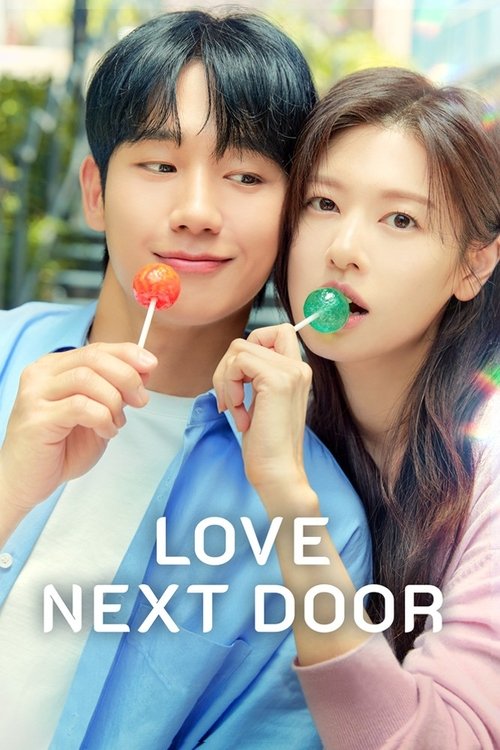
Love Next Door
Framed in golden neighborhood nostalgia, Love Next Door weaves a sun-drenched, emotionally vulnerable romance where childhood bonds illuminate adult burnouts like warm streetlamps along narrow, forgotten alleyways.
Love Next Door

Love Next Door

엄마친구아들

"The only thing I didn't know was your 'first love'."

17 August 2024 — 06 October 2024 South Korea 1 season 16 episode Ended 7.9 (271)

Cast: Jung Hae-in, Jung So-min, Kim Ji-eun, Yun Ji-on, Park Ji-young

Drama Comedy Burnout, Career Reboot, and Self-Redefinition Friends-to-Lovers & Long-Unspoken Longing Family Expectations, Parental Pride, and Generational Healing Vulnerability, Hidden Health Crises, and Emotional Honesty Civic Duty, Grief, and Found Families

Overview

Love Next Door centers on Bae Seok-ryu, a high-achieving project manager at a top international firm in the United States who seemingly possesses the ideal life—complete with a successful career and an impending marriage to a wealthy lawyer. However, beneath her polished exterior lies severe physical and emotional exhaustion. Without warning her family, Seok-ryu abruptly calls off her engagement, quits her high-paying job, and returns to her working-class childhood neighborhood of Hyeryeong-dong in Seoul to completely reboot her life.

Upon her return, she collides with Choi Seung-hyo, her childhood best friend and the son of her mother's close friend. Seung-hyo has grown into an acclaimed young architect and CEO of his own firm, Atelier In. While the pair immediately revert to their playful banter and long-standing rivalries, Seok-ryu's homecoming forces Seung-hyo to confront romantic feelings he has harbored in secret since high school.

As Seok-ryu searches for a new purpose—transitioning from corporate management to her true passion for culinary arts—she and Seung-hyo navigate family secrets, personal trauma, and shifting dynamics. Parallel to their journey, their eccentric circle of childhood friends and competitive mothers face their own turning points. Across its 16-episode arc, the series chronicles the messy, comforting process of confronting past failures to build a self-directed future.


Core Meaning

Created by director Yoo Je-won and screenwriter Shin Ha-eun, Love Next Door delivers a poignant message about modern adult burnout, societal expectations, and the nature of home. The series posits that true success cannot be measured by corporate titles, overseas prestige, or fulfilling parents' vicarious ambitions. Instead, it advocates for the courage to stop running, embrace vulnerability, and reconstruct one's life on one's own terms.

Furthermore, the creators highlight how childhood relationships and neighborhood roots serve as emotional anchors. Through the central romance and mother-child relationships, the show demonstrates that love is not about presenting a flawless facade, but about offering a safe harbor where one can reveal hidden scars, acknowledge failures, and heal alongside those who knew them before the world demanded perfection.

Thematic DNA

Burnout, Career Reboot, and Self-Redefinition 25%
Friends-to-Lovers & Long-Unspoken Longing 25%
Family Expectations, Parental Pride, and Generational Healing 25%
Vulnerability, Hidden Health Crises, and Emotional Honesty 15%
Civic Duty, Grief, and Found Families 10%

Burnout, Career Reboot, and Self-Redefinition

The show examines the suffocating pressures placed on overachievers. Seok-ryu's arc begins with total physical and mental collapse, forcing her to abandon her elite status to discover what she truly loves. As the series progresses, her journey normalizes career pivots in one's thirties, shifting the narrative of 'failure' into a necessary clearing of ground to plant new seeds.

Friends-to-Lovers & Long-Unspoken Longing

The romantic core explores how a lifelong friendship can shield unspoken love. Seung-hyo's suppressed feelings evolve from adolescent heartbreak to adult devotion. The show highlights the difficulty of transitioning from comfortable familiarity to romantic intimacy, proving that true romance requires shedding protective bantering mechanisms in favor of total honesty.

Family Expectations, Parental Pride, and Generational Healing

The drama spotlights the complex dynamic between Korean mothers and their adult children. Through the 'Lavender Club' mother group, the show illustrates how parents project their own unfulfilled dreams onto their offspring. Over the course of the series, both generations learn to separate love from external accomplishment, resulting in mutual forgiveness and emotional independence.

Vulnerability, Hidden Health Crises, and Emotional Honesty

Midway through the show, Seok-ryu's secret history with stomach cancer highlights the danger of hiding suffering to protect others. This theme evolves from tragic isolation to shared healing, emphasizing that strength lies in allowing loved ones to support you through trauma rather than bearing it alone.

Civic Duty, Grief, and Found Families

Explored through the secondary romance between paramedic Jung Mo-eum and single-father reporter Kang Dan-ho, this theme explores how shared loss, community service, and empathy can piece together unconventional, loving family structures.

Character Analysis

Bae Seok-ryu

Jung So-min

Archetype: Overachieving Hero seeking Redemption / Burning Star Key Trait: Relentless determination coupled with a hidden capacity for deep emotional endurance.

Motivation

To find her authentic self apart from her family's expectations.

Character Arc

Begins as a burnt-out perfectionist who flees her high-status U.S. life. Through painful vulnerability, she releases her need for external validation, learns to share her physical/emotional trauma, and successfully pivots into a passionate career as a chef.

Choi Seung-hyo

Jung Hae-in

Archetype: Devoted Guardian / Steadfast Childhood Ally Key Trait: Unflinching loyalty and quiet tenderness beneath a refined, calm exterior.

Motivation

To protect Seok-ryu and build meaningful spaces that bring people together.

Character Arc

Starts as an accomplished, emotionally guarded architect who conceals his long-standing crush behind playful teasing. As he supports Seok-ryu through her crisis, he confronts his own suppressed childhood pain regarding his parents' distant relationship and learns to express his love openly.

All 5 characters and cast

Symbols & Motifs

The Time Capsule and Letters

Meaning:

Represents suppressed feelings, forgotten childhood dreams, and the true trajectory of Seung-hyo's early love for Seok-ryu.

Context:

Buried behind their high school during their teenage years and unearthed later in life.

The Swimming Pool / Water

Meaning:

Represents Seung-hyo's lost adolescent dream and personal sacrifice. Water serves as a motif for cleansing emotion, quiet reflection, and the painful transition from youth to adulthood.

Context:

Utilized in scenes reflecting Seung-hyo's past as a competitive swimmer and his internal emotional state.

Architectural Blueprints and Home Models

Meaning:

Symbolizes rebuilding shattered lives. Designing spaces for Seok-ryu and her family reflects Seung-hyo's desire to build a safe, permanent haven for her.

Context:

Featured through Seung-hyo’s work at Atelier In as he designs home and business spaces.

Pomegranates / Cooking and Recipes

Meaning:

Cooking represents Seok-ryu’s rediscovery of passion and nurturing. Pomegranates specifically echo her name ('Ryu') and symbolize resilience, health, and hidden sweetness beneath a hard shell.

Context:

Appears throughout Seok-ryu's transition into culinary arts and personal healing.

The Lavender Club / Neighborhood Alleyways

Meaning:

Symbolizes community, traditional neighborhood solidarity, and the claustrophobic yet loving nature of Korean domestic life.

Context:

Seen in the gathering of local mothers and the shared paths traversed by the characters in Hyeryeong-dong.

Memorable Quotes

내 완벽함의 기준은 사람이 아니라, 잘 지어진 구조물이야.
— Choi Seung-hyo

Context

Spoken early on in Episode 1.

Meaning

Showcases Seung-hyo's architectural worldview and his emotional defense mechanism against human unpredictability before Seok-ryu destabilizes his controlled world.

나는 삶에 대한 애착이 아주 강해.
— Bae Seok-ryu

Context

Expressed in Episode 1.

Meaning

On the surface, a humorous remark about self-preservation, but in hindsight, a profound testament to her sheer willpower during her battle with cancer.

All 4 quotes

Episode Highlights

The Return of the Mom's Friend's Daughter

S1E1

Seok-ryu returns unannounced from the U.S. and is beaten with spring onions by her furious mother; Seung-hyo steps in to shield her.

Significance:

Sets the emotional foundation and establishes the dynamic of Hyeryeong-dong and the central trio's bond.

The Sealed Time Capsule

S1E3

Unearthing their high school time capsule reveals Seung-hyo's adolescent confession letter.

Significance:

Pivotal turning point for romance that re-ignites suppressed feelings and establishes Seung-hyo's sacrifice in giving up competitive swimming.

Unspoken Feelings and Pomegranate Blossoms

S1E6

Focuses on parents' backstories and Seung-hyo’s struggle to convey his feelings, alongside the dynamic between Seok-ryu’s father and Seung-hyo.

Significance:

Highlights community support and Seung-hyo's realization that he cannot hide his feelings forever.

Hidden Scars and Unbearable Truths

S1E9

Reveals that Seok-ryu suffered from Stage 3 stomach cancer three years prior in America.

Significance:

Major dramatic turning point that sparks an emotional breakdown among her family and Seung-hyo.

The Confession at the Sunflower Field

S1E11

Seung-hyo gives Seok-ryu time to process her feelings, leading to a romantic confession and their first genuine kiss.

Significance:

Shifts their dynamic from friends to romantic partners.

Family Confessions and Clashing Mothers

S1E15

Their secret romance is exposed to the Lavender Club mothers, triggering a rivalry between Mi-sook and Hye-sook until love and honesty prevail.

Significance:

Serves as a hilarious and emotional climax for the family dynamics.

The End and the Beginning

S1E16

Seok-ryu opens her dream healthy restaurant, Seung-hyo designs her space, Mo-eum leaves for the Antarctic with Dan-ho's support, and the leads decide to delay their wedding to fully enjoy dating.

Significance:

Resolves all main character arcs in the series finale.

Philosophical Questions

What constitutes a successful life when societal markers fail?

The show explores how Seok-ryu's external achievements (elite U.S. corporate position, wealthy fiancé) resulted in physical illness, asserting that personal fulfillment must be self-defined.

Can childhood sanctuaries survive adult transformation?

The drama questions whether returning to one's birthplace is regression or a necessary loop back to rediscover core truths lost during adult ambition.

Where does filial gratitude end and personal autonomy begin?

Through the Lavender Club mothers, the series asks how children can love their parents deeply without carrying the crushing burden of their unfulfilled desires.

Alternative Interpretations

1. The Slice-of-Life Family Healing Reading: Rather than a pure romantic comedy, many critics interpreted the series primarily as an intergenerational family drama, viewing the romance between Seung-hyo and Seok-ryu as secondary to the healing of the mothers' suppressed grief and the breakdown of toxic parental pressure.

Full ending explanation

Cultural Impact

The series arrived at a time when South Korea was openly discussing 'burnout culture' (beon-a-us) among younger generations facing intense academic and corporate competition. The show critiques Korea's rigid parental comparisons—where mothers brag about prestige to boost social standing—and offers a comforting alternative where career breaks and emotional vulnerability are normalized.

Love Next Door debuted with a modest 4.9% rating in South Korea and steadily climbed to peak at an impressive 8.5% nationwide rating for its finale, consistently holding top spots in tvN's weekend time slot. Globally, it dominated Netflix’s Top 10 Non-English TV charts for weeks.

Audience Reception

Audiences overwhelmingly applauded the magnetic, natural chemistry between Jung Hae-in and Jung So-min. The veteran ensemble cast (especially Park Ji-young and Jang Young-nam as the mothers) received glowing praise for their warm, hilarious, and relatable portrayals. The realistic depiction of corporate burnout resonated deeply with modern viewers.

However, the middle section of the series (Episodes 7–10) faced criticism for pacing issues and relying on overused melodrama tropes—namely the ex-fiancé returning and the sudden stomach cancer reveal.

Overall, despite minor plot contrivances, Love Next Door was hailed as a comforting, heart-warming, and deeply satisfying 'comfort drama' with an overall audience score averaging 8.3 to 8.5/10.

Interesting Facts

  • Love Next Door reunited hit director Yoo Je-won and writer Shin Ha-eun, who previously created Hometown Cha-Cha-Cha (2021).
  • Despite his extensive career, Love Next Door marked Jung Hae-in’s very first formal lead role in a traditional romantic comedy series.
  • The intense rapport between Jung Hae-in and Jung So-min during behind-the-scenes filming sparked widespread real-life dating rumors in South Korea, which both actors addressed lightheartedly during press promotions.
  • Lead actor Jung Hae-in personally recorded Part 9 of the show’s official soundtrack, titled 'The Ways to Love You', expressing his character's exact inner feelings for Seok-ryu.
  • The fictional neighborhood of Hyeryeong-dong was primarily filmed across historic, picturesque districts of Seoul, including Jongno-gu, Seochon, and Ihwa Mural Village.

Easter Eggs

Noh Yoon-seo Cameo (Episode 1)

Actress Noh Yoon-seo made a special cameo appearance in Episode 1 as herself/an elite celebrity, referencing her breakout collaboration with director Yoo Je-won in Crash Course in Romance.

Stray Kids Reference (Episode 4)

In Episode 4, a subtle background scene features music and visual nods to the K-pop group Stray Kids, delightfully noticed by K-pop fans watching worldwide.

'Atelier In' Naming Wordplay

Seung-hyo's architecture firm, Atelier In, holds a clever linguistic double meaning: 'In' references both architectural interior spaces and the Korean character for 'Human/Person' (人), emphasizing human-centric design.

Eomchina / Eomchinttal Trope Inversion

The title '엄마친구아들' directly plays on the iconic Korean trope of the 'Mom's Friend's Son'. The series subverts this by showing that both the 'perfect son' and 'perfect daughter' are deeply flawed, traumatized human beings.

Frequently Asked Questions

Explore More About This Movie

Dive deeper into specific aspects of the movie with our detailed analysis pages

Comments (0)

Leave a comment

No comments yet. Be the first to share your thoughts!

Similar Movies