Luca
A sun-drenched Italian coming-of-age fantasy where shimmering Mediterranean waves hide secrets of belonging. This nostalgic voyage captures the liberating magic of friendship and the courageous transformation required to embrace one's true, hidden self.
Luca

Luca

"Prepare for an unforgettable trip."

17 June 2021 United States of America 95 min ⭐ 7.8 (8,750)
Director: Enrico Casarosa
Cast: Jacob Tremblay, Jack Dylan Grazer, Emma Berman, Saverio Raimondo, Maya Rudolph
Animation Family Fantasy Comedy Adventure
Identity and Hiding The Power of Friendship Curiosity vs. Tradition Acceptance and Tolerance
Budget: $200,000,000
Box Office: $51,074,773

Overview

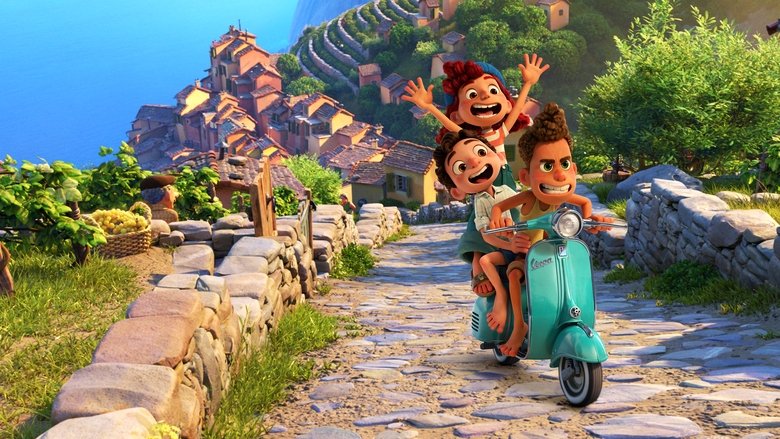
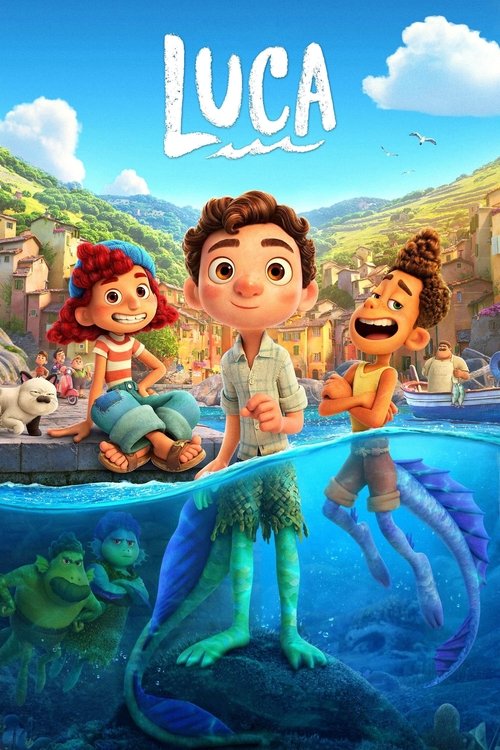
Set in the picturesque Italian Riviera during the 1950s, Luca follows a young sea monster named Luca Paguro who spends his days herding goatfish beneath the waves. Despite his parents' strict warnings about the dangerous "land monsters," Luca's curiosity is piqued when he meets Alberto Scorfano, a fellow sea monster living solo on the surface. To Luca's amazement, their species possesses the ability to transform into human form the moment they dry off, allowing them to blend into the human world.

Driven by dreams of owning a Vespa and exploring the world, the duo ventures into the seaside town of Portorosso. There, they form an unlikely trio with Giulia, a fiery and determined local girl who is an outsider in her own right. Together, they enter the Portorosso Cup—a grueling local triathlon—to win enough money for their scooter. However, the boys must constantly navigate the threat of being exposed by water, all while avoiding Luca's frantic parents and the town's arrogant bully, Ercole Visconti.
Core Meaning

At its heart, Luca is a celebration of the transformative power of friendship and the necessity of stepping out of one's comfort zone to find true belonging. The film's central mantra, "Silenzio Bruno!", serves as a metaphor for silencing the internal voice of fear and self-doubt that prevents growth. Director Enrico Casarosa emphasizes that the people who truly love us are those who push us to be more than we thought possible and accept us even when our "monstrous" secrets are revealed.

Thematic DNA

Identity and Hiding 35%
The Power of Friendship 30%
Curiosity vs. Tradition 20%
Acceptance and Tolerance 15%

Identity and Hiding

The sea monsters' physical transformation serves as a powerful metaphor for marginalized identities. The characters must "pass" as human to survive in a society that fears them, reflecting the universal struggle of hiding one's true self to avoid prejudice.

The Power of Friendship

The bond between Luca and Alberto is the film's emotional anchor. Alberto provides the courage Luca lacks, while Luca provides the stability and future Alberto never had. Their relationship demonstrates how friends can act as mirrors and catalysts for self-discovery.

Curiosity vs. Tradition

Luca's journey is driven by an insatiable desire for knowledge, contrasted with his parents' fear-based traditionalism. The film suggests that while tradition offers safety, only curiosity and education lead to true liberation.

Acceptance and Tolerance

The town of Portorosso's transition from fearing sea monsters to accepting them explores how exposure and personal connection can dismantle long-held prejudices and systemic fear.

Character Analysis

Luca Paguro

Jacob Tremblay

Archetype: The Explorer
Key Trait: Inquisitive

Motivation

Initially driven by curiosity about the surface, his motivation evolves into a deep thirst for knowledge and a desire to see the world.

Character Arc

Transitions from a timid, obedient "good boy" under the sea to a courageous, independent student who chooses to leave his family to pursue education and a life on land.

Alberto Scorfano

Jack Dylan Grazer

Archetype: The Mentor / Free Spirit
Key Trait: Rebellious

Motivation

Seeks companionship to fill the void left by his father and dreams of the freedom a Vespa provides.

Character Arc

Begins as a confident, worldly teacher to Luca, but is revealed to be deeply lonely and abandoned. He eventually learns to let go of his jealousy and support Luca's separate path.

Giulia Marcovaldo

Emma Berman

Archetype: The Outcast Ally
Key Trait: Resilient

Motivation

To defeat Ercole and prove herself to the town and her father.

Character Arc

A fierce competitor who has never won the Portorosso Cup; through her friendship with the boys, she finds a "tribe" of fellow underdogs and learns that winning isn't as important as belonging.

Massimo Marcovaldo

Marco Barricelli

Archetype: The Tough Mentor
Key Trait: Stoic but Kind

Motivation

Providing for his daughter and finding a sense of peace in his simple life as a fisherman.

Character Arc

Appears as a terrifying hunter of sea monsters, but is revealed to be a gentle, one-armed father figure who chooses to protect the boys despite their nature.

Symbols & Motifs

The Vespa

Meaning:

Represents unfettered freedom and the ability to escape one's circumstances. To Luca and Alberto, it is a ticket to the world beyond their small horizon.

Context:

Initially a crude drawing and a homemade wooden scrap-heap, the Vespa evolves from a physical goal to a symbol of the boys' shared dreams.

Water

Meaning:

Symbolizes truth and exposure. While land offers the disguise of humanity, water reveals the characters' inherent nature, serving as a constant tension between safety and authenticity.

Context:

Used throughout the film as a plot device (rain, fountains, the sea) that threatens to strip away the boys' human facades.

The Telescope

Meaning:

Represents education and perspective. It allows the characters to see things that were previously invisible or misunderstood, like the stars.

Context:

Giulia uses the telescope to teach Luca that the "fish" in the sky are actually giant suns, expanding his world beyond biological instinct to intellectual wonder.

Silenzio Bruno

Meaning:

A mantra for overcoming the inner critic. It represents the active choice to ignore the fear of failure or judgment.

Context:

Alberto teaches this phrase to Luca to help him ride a bike and jump off cliffs, eventually becoming Luca's personal tool for independence.

Memorable Quotes

Silenzio Bruno!

— Alberto Scorfano

Context:

Alberto shouts this to Luca when Luca is too afraid to try something new, like riding a homemade scooter off a cliff.

Meaning:

The most iconic line of the film, encouraging the listener to silence the voice in their head that says "you can't do it."

Some people, they'll never accept him. But some will. And he seems to know how to find the good ones.

— Grandma Paguro

Context:

Grandma says this to Luca's worried parents at the end of the film as Luca leaves for school.

Meaning:

A profound statement on tolerance and the reality of living as someone who is "different" in a judgmental world.

I never go anywhere. I just dream about it.

— Luca Paguro

Context:

Luca admits his desire for adventure to Alberto early in the film while they are on the island.

Meaning:

Captures the essence of longing and the static nature of Luca's life before meeting Alberto.

Philosophical Questions

Is security worth the cost of concealment?

The film pits the safety of the underwater world against the danger and freedom of the surface. It asks if a life lived in hiding can ever be truly fulfilling compared to a life of exposed, vulnerable authenticity.

Does knowledge redefine the 'monster'?

The film explores how prejudice is born from ignorance. As Luca and Giulia learn about each other's worlds, the concept of the "monster" evaporates, suggesting that fear is a construct of lack of information.

Alternative Interpretations

While the literal plot is a fantasy adventure, Luca is frequently interpreted through various lenses:

  • LGBTQ+ Allegory: The "sea monster" status is seen as a metaphor for being queer, with the transformation representing "passing," and the reveal at the end representing coming out to a community that must choose to accept or reject them.
  • Immigration Metaphor: Critics have noted parallels between the sea monsters and immigrants or refugees who must hide their culture and origin to assimilate into a new, often hostile, land.
  • Neurodivergent Reading: Some viewers see Luca's hyper-focus on specific interests (the stars, mechanics) and his social awkwardness as an exploration of the neurodivergent experience in a neurotypical world.

Cultural Impact

Released during the global pandemic as a Disney+ exclusive, Luca provided a much-needed sense of escapism and "summer vibes." It has been lauded for its celebration of "Italianicity", authentically capturing the textures, sounds, and culinary traditions of the Italian Riviera. Beyond its setting, the film sparked significant cultural discourse regarding LGBTQ+ representation. While the director stated the story focuses on platonic childhood friendship, many in the queer community embraced it as a profound allegory for the coming-out experience, particularly the fear of discovery and the search for a "found family." It solidified Pixar's new direction of producing smaller, personal, and more artistically varied stories following their high-concept era.

Audience Reception

Luca received highly positive reviews, holding a 91% rating on Rotten Tomatoes. Audiences praised its stunning visual aesthetics, which moved away from hyper-realism toward a more "hand-crafted" look inspired by woodblock prints and Studio Ghibli. Common points of praise included the emotional resonance of the ending and the relatability of the "Silenzio Bruno" concept. Some critics, however, found the stakes lower than previous Pixar epics like Coco or Soul, though many argued this smaller, intimate scale was precisely what made the film so charming and effective.

Interesting Facts

  • The character of Alberto is based on Director Enrico Casarosa's real-life best friend of the same name.
  • The sea monster design for Luca features exactly 3,436 scales.
  • Jack Dylan Grazer (Alberto) recorded all of his lines in his mother's closet due to the COVID-19 pandemic lockdowns.
  • The name of the town, Portorosso, is a subtle tribute to Studio Ghibli's 'Porco Rosso'.
  • Enrico Casarosa can be heard in a cameo as the fisherman who yells 'Stupido!' at a passing boat.
  • The background voices for the children in the town were recorded by actual local children in Italy to ensure authentic accents.

Easter Eggs

A113 on the train ticket

A recurring Pixar reference to the classroom at CalArts where many of the studio's animators studied.

Pizza Planet Truck as a Piaggio Ape

The iconic truck appears in the film's time-appropriate form: a three-wheeled Italian moped parked on a Portorosso street.

Luxo Ball on a rooftop

The classic red, yellow, and blue Pixar ball can be spotted on a terrace during the Portorosso Cup bicycle race.

Donald Duck and Pinocchio

A Donald Duck plush and a book of Pinocchio (referencing the 1940 Disney film and the original Italian author Carlo Collodi) appear in Giulia's bedroom.

⚠️ Spoiler Analysis

Click to reveal detailed analysis with spoilers

Frequently Asked Questions

Explore More About This Movie

Dive deeper into specific aspects of the movie with our detailed analysis pages

Comments (0)

Leave a comment

No comments yet. Be the first to share your thoughts!