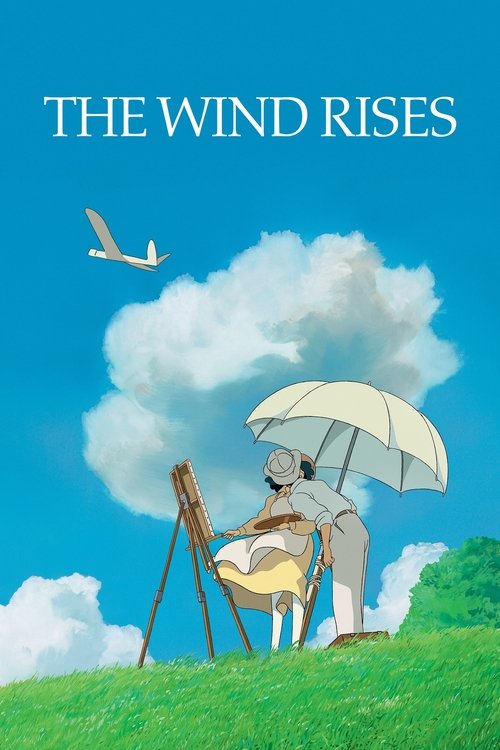
The Wind Rises
A sweeping historical drama blending childhood dreams and tragic romance, where the ethereal beauty of flight clashes with the looming shadow of war and the bittersweet fragility of a fading life.
The Wind Rises

The Wind Rises

風立ちぬ

"We must live."

20 July 2013 Japan 126 min ⭐ 7.8 (3,227)
Director: Hayao Miyazaki
Cast: Hideaki Anno, Hidetoshi Nishijima, Miori Takimoto, Masahiko Nishimura, Stephen Alpert
Drama Animation War History Romance
The Ambiguity of Creation The Ethos of Living (Le Vent Se Lève) Obsession vs. Human Connection Historical Determinism and Responsibility
Budget: $30,000,000
Box Office: $117,932,401

Overview

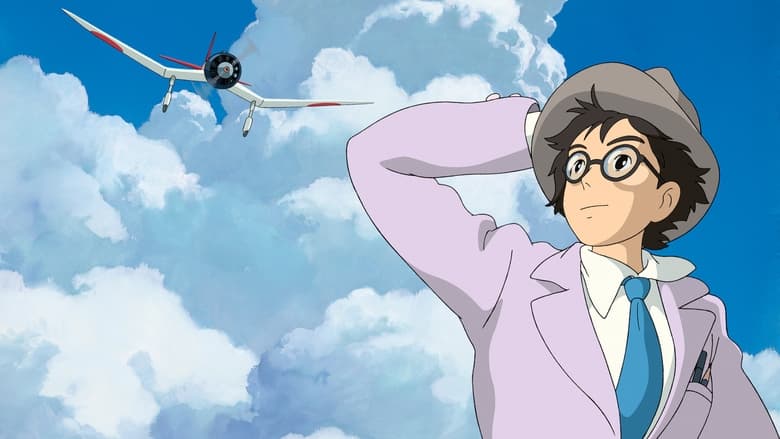
The Wind Rises is a fictionalized biographical account of Jiro Horikoshi, a visionary aeronautical engineer who designed the Mitsubishi A6M Zero fighter plane. The story follows Jiro from his provincial childhood in the Taisho era, where his nearsightedness prevents him from becoming a pilot, to his transformation into a brilliant designer driven by a singular, obsessive passion to create something beautiful. His journey is guided by recurring dream encounters with the legendary Italian aircraft designer Giovanni Caproni, who becomes a spiritual mentor and philosophical mirror for Jiro's ambitions.

Set against the turbulent backdrop of early 20th-century Japan, the film depicts historical milestones such as the Great Kanto Earthquake of 1923 and the subsequent rise of Japanese militarism and the Great Depression. Parallel to his professional evolution, Jiro experiences a profound, tragic romance with Naoko Satomi, a young woman he meets during the earthquake. Their love story, inspired by Tatsuo Hori’s novel, becomes a race against time as Naoko battles tuberculosis while Jiro labors to perfect his masterpiece amidst a country descending into the horrors of World War II.
Core Meaning

The core of the film is a meditation on the "cursed dream" of the artist and the engineer. Miyazaki explores the paradox of creation: the pursuit of pure, aesthetic beauty that inevitably becomes entangled with destruction and death. Jiro's desire is not to build weapons, but to create "beautiful airplanes," yet the reality of his time demands that his genius be used for war. The film suggests that while the winds of history may be terrifying and destructive, the individual must still find the courage to live and create, regardless of the eventual fate of their work. It is a deeply personal reflection on Miyazaki's own career, questioning whether the obsessive devotion required for high art is worth the personal and social costs.

Thematic DNA

The Ambiguity of Creation 35%
The Ethos of Living (Le Vent Se Lève) 25%
Obsession vs. Human Connection 20%
Historical Determinism and Responsibility 20%

The Ambiguity of Creation

The film posits that all great inventions are "cursed dreams." Jiro's pursuit of the perfect aeronautical curve is an act of pure artistic devotion, yet its realization facilitates mass destruction. The narrative constantly balances the wonder of flight against the misuse of technology.

The Ethos of Living (Le Vent Se Lève)

Based on Paul Valéry's poem, the theme of "trying to live" in the face of disaster is central. Whether facing a devastating earthquake, a terminal illness, or an impending world war, characters are defined by their resilience and their choice to find beauty in a crumbling world.

Obsession vs. Human Connection

Jiro's character arc highlights the isolation of genius. His intense focus on aircraft design often keeps him at a distance from the suffering around him, creating a poignant tension between his professional masterpiece and his personal relationship with the dying Naoko.

Historical Determinism and Responsibility

The film examines how individuals are swept up by the "winds" of their era. It questions if a creator is responsible for how their work is used by the state, presenting Jiro as a man who chooses to build even when he knows his creations will never return home.

Character Analysis

Jiro Horikoshi

Hideaki Anno

Archetype: The Dreamer
Key Trait: Obsessive focus

Motivation

Driven by a singular, aesthetic obsession to design the most beautiful and efficient airplanes possible.

Character Arc

Develops from a nearsighted boy with a dream to a world-class engineer who achieves his goal of creating a masterpiece, only to see it used as a tool of slaughter.

Naoko Satomi

Miori Takimoto

Archetype: The Tragic Muse
Key Trait: Selfless devotion

Motivation

Deep love for Jiro and a desire to live her short life with maximum beauty and intensity.

Character Arc

Meets Jiro twice—once as a child and once as an adult. She chooses to spend her final, tuberculosis-stricken days supporting Jiro's dream rather than seeking treatment in isolation.

Giovanni Battista Caproni

Nomura Mansai

Archetype: The Mentor
Key Trait: Charismatic wisdom

Motivation

To encourage Jiro to embrace his "creative decade" and accept the cursed nature of their shared craft.

Character Arc

Appears only in Jiro's dreams as a flamboyant, philosophical guide who mirrors Jiro's internal struggles and validates his creative spirit.

Kiro Honjo

Hidetoshi Nishijima

Archetype: The Pragmatic Friend
Key Trait: Grounded realism

Motivation

To modernize Japan's aviation industry and support his friend's genius despite the surrounding poverty and war-mongering.

Character Arc

Works alongside Jiro at Mitsubishi, serving as the voice of reality who is acutely aware of Japan's technological inferiority and the grim political climate.

Symbols & Motifs

The Wind

Meaning:

Represents the unpredictable and often violent force of history and change. It is both the wind that lifts the planes and the "terrifying wind" of war and death that shakes the trees and takes Naoko away.

Context:

Used as a literal catalyst (meeting Naoko) and a metaphorical signifier of transition and passing throughout the film.

Paper Airplanes

Meaning:

Symbolize the purity of childhood wonder and the playfulness of romance, detached from the lethal reality of military aviation.

Context:

Jiro and Naoko use them to communicate and express affection, contrasting with the heavy, metallic warplanes Jiro designs at Mitsubishi.

The Mackerel Bone

Meaning:

Represents the organic perfection of nature that inspires engineering. It symbolizes Jiro's ability to find aeronautical beauty in the simplest, most mundane forms.

Context:

Jiro studies the curve of a mackerel bone during dinner, seeing in it the ideal shape for a wing spar.

Smoking

Meaning:

A symbol of shared burdens, intimacy, and the shared "breath" of the characters. It serves as a grounded, human habit amidst their lofty dreams.

Context:

Frequent scenes of Jiro and Honjo smoking together represent their camaraderie, and a controversial scene where Jiro smokes while holding Naoko's hand signifies their desperate closeness.

Memorable Quotes

Le vent se lève!... Il faut tenter de vivre!

— Jiro/Naoko (quoting Paul Valéry)

Context:

First quoted when Jiro and Naoko meet as adults, setting the tone for their relationship and the film's philosophy.

Meaning:

The central mantra of the film: the wind is rising, we must try to live. It signifies the necessity of finding the will to exist and create despite the looming storm.

Airplanes are beautiful, cursed dreams, waiting for the sky to swallow them up.

— Giovanni Caproni

Context:

Spoken to Jiro in a dream to prepare him for the reality of his career.

Meaning:

Articulates the film's core conflict: the inherent tragedy of creation when it is divorced from its ultimate impact on the world.

Which would you choose: a world with pyramids or a world without?

— Giovanni Caproni

Context:

Caproni uses this metaphor to help Jiro justify his pursuit of engineering excellence during wartime.

Meaning:

A rhetorical question asking if the creation of monumental human achievements is worth the suffering and cost required to build them.

Philosophical Questions

Is technology truly neutral?

The film explores whether an engineer can claim moral neutrality when their 'beautiful' designs are inherently intended for destruction, challenging the idea that the creator is separate from the usage.

Does the value of a 'creative decade' justify the neglect of personal life?

Through Jiro's choice to work while Naoko dies, the film asks if achieving artistic immortality is worth the loss of human connection and personal happiness.

Alternative Interpretations

Many critics view Jiro as a direct surrogate for Hayao Miyazaki himself. In this reading, the airplanes are metaphors for animated films—beautiful dreams that demand total sacrifice and can be misinterpreted or misused by the world. Another interpretation focuses on the ending: when Jiro says "thank you" in the final dream, some see it as a moment of atonement, while others see it as a tragic acceptance that his life's work resulted in a "kingdom of dead planes." Some also interpret Naoko's illness as a metaphor for the "illness" of Japan during the militaristic period—beautiful but doomed from within.

Cultural Impact

The Wind Rises sparked significant controversy upon its release. In Japan, it was criticized by the political right for being "anti-Japanese" due to Miyazaki's concurrent essay opposing constitutional changes for remilitarization. Conversely, some pacifists and South Korean audiences criticized it for glorifying the designer of the Zero, a plane used for imperial aggression. Despite this, it was the highest-grossing Japanese film of 2013 and received universal critical acclaim, earning an Academy Award nomination. It is regarded as Miyazaki's most "adult" film, shifting away from fantasy toward a complex, morally ambiguous exploration of national identity and historical trauma.

Audience Reception

Audience reception was polarized but generally very positive. Western audiences and critics praised the film's breathtaking animation and mature themes, often ranking it as one of Miyazaki's most profound works. However, some viewers found the lack of clear condemnation for Jiro's military contributions unsettling. The romance was praised for its emotional weight, though some felt it was overly sentimental compared to the grounded engineering plot. In Japan, it remained at the top of the box office for weeks, resonating with a generation reflecting on the nation's past and the uncertainties of its future.

Interesting Facts

  • Most of the mechanical sound effects in the film, including airplane engines and the rumbling earthquake, were created using human voices.
  • Hayao Miyazaki famously wept during the first screening of the finished film, marking the first time he had ever cried at one of his own works.
  • The lead character is voiced by Hideaki Anno, the director of 'Neon Genesis Evangelion', who had no previous major voice acting experience.
  • The film was originally intended to be Miyazaki's final feature before he came out of retirement to direct 'The Boy and the Heron'.
  • Miyazaki insisted on a monaural sound mix for the film because he felt modern surround sound distracted the audience from the visuals.
  • The design of the character Castorp was physically modeled after Miyazaki's long-time friend and former Ghibli employee, Stephen Alpert.

Easter Eggs

The character of Castorp and the Magic Mountain

The German character Castorp is a direct reference to the protagonist of Thomas Mann’s novel The Magic Mountain, which also deals with tuberculosis and a society on the brink of war.

Caproni's Real-Life Failure

The dream sequence featuring Caproni's giant multi-wing plane (the Ca.60) crashing is a historically accurate reference to a real event that occurred in 1921.

Hideaki Anno's Cameo-like Presence

Casting Anno, a fellow auteur, was an intentional 'meta' choice. Critics often interpret Jiro's struggle as a reflection of both Miyazaki's and Anno's own obsessive creative lives.

⚠️ Spoiler Analysis

Click to reveal detailed analysis with spoilers

Frequently Asked Questions

Explore More About This Movie

Dive deeper into specific aspects of the movie with our detailed analysis pages

Comments (0)

Leave a comment

No comments yet. Be the first to share your thoughts!