Rocky
"His whole life was a million-to-one shot."
Overview
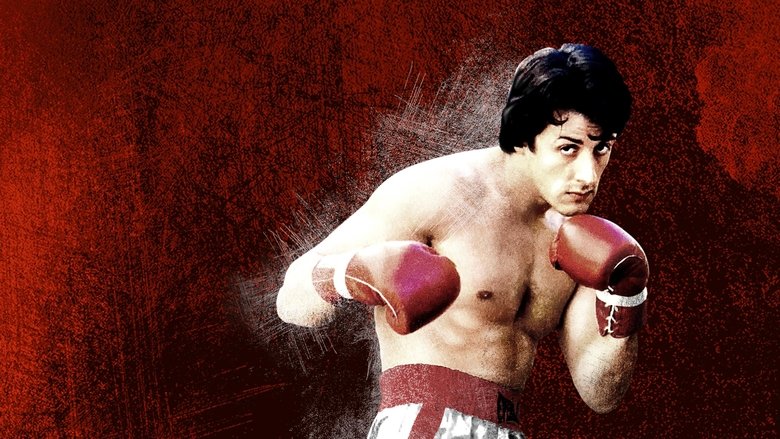
Rocky (1976) tells the evocative story of Rocky Balboa, a small-time southpaw boxer from the rough streets of Philadelphia who scrapes by as a debt collector for a local loan shark. Labeled a "bum" by his cynical trainer Mickey, Rocky is a man of quiet integrity and untapped potential, leading a lonely existence alongside his pet turtles and a growing affection for Adrian, a painfully shy pet shop clerk.
His life takes an extraordinary turn when the world heavyweight champion, Apollo Creed, decides to grant a local "nobody" a title shot as a publicity stunt for the United States Bicentennial. While Creed views the match as a mere spectacle, Rocky sees it as a once-in-a-lifetime opportunity to prove he isn't just another failure from the neighborhood. The film follows his grueling training and his emotional evolution as he prepares for a fight that everyone expects him to lose.
Core Meaning
The core message of Rocky is that victory is defined by personal dignity rather than the final score. Director John G. Avildsen and writer/star Sylvester Stallone present a narrative where the protagonist's triumph lies in his refusal to stay down. The film argues that "going the distance"—surviving the full fifteen rounds with the best in the world—is a valid and noble form of success, asserting that self-respect and love are the ultimate prizes of the human struggle.
Thematic DNA
The American Dream and Opportunity
The film serves as a modern allegory for the American Dream, where a man from the lower class is given a random chance to rise to greatness. However, it subverts the cliché by emphasizing the labor and suffering required to seize that opportunity, rather than just the eventual reward.
Perseverance and Resilience
The recurring mantra of "going in one more round" highlights that life is a war of attrition. Rocky’s ability to absorb punishment—both in the ring and from a harsh society—and still remain standing is his defining heroic trait.
Redemption and Self-Worth
Rocky and Mickey both seek redemption for wasted years. The film explores how mentorship and belief from others can transform a person's internal narrative from being a "bum" to being a contender.
Love as a Catalyst for Change
The relationship between Rocky and Adrian is the emotional anchor. Their mutual support allows both characters to break out of their metaphorical "cages"—Adrian's shyness and Rocky's self-doubt—proving that personal growth is rarely a solitary journey.
Character Analysis
Rocky Balboa
Sylvester Stallone
Motivation
To prove to himself and the world that he is not a failure by "going the distance" with the champion.
Character Arc
Transitions from a self-loathing debt collector who views himself as a "bum" to a man who realizes his own worth through a display of indomitable will.
Adrian Pennino
Talia Shire
Motivation
Finding emotional safety and mutual respect in her relationship with Rocky.
Character Arc
Begins as a wallflower living in fear of her brother; through Rocky's love, she finds her voice and the courage to confront her environment.
Mickey Goldmill
Burgess Meredith
Motivation
To have one last chance at the spotlight and to pass on his knowledge before his "prime" is completely forgotten.
Character Arc
A former fighter who has grown bitter with age; he rediscovers his passion for the sport by vicariously living through Rocky's opportunity.
Apollo Creed
Carl Weathers
Motivation
Maintaining his public image and financial success through the spectacle of the Bicentennial fight.
Character Arc
Starts as an overconfident celebrity who underestimates his opponent; ends the film with a newfound, grudging respect for Rocky's toughness.
Symbols & Motifs
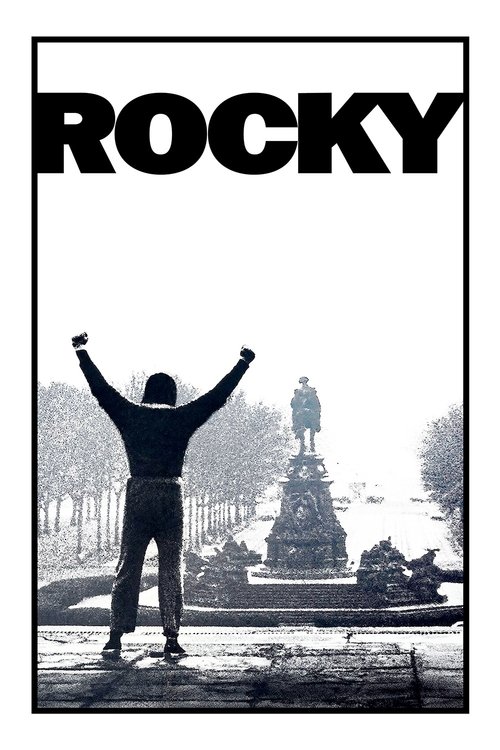
The Philadelphia Museum of Art Steps
Symbolizes the arduous journey to success and the physical manifestation of Rocky's rising self-esteem. Reaching the top represents a perspective shift from being trapped in the slums to overlooking the entire city.
Used during the iconic training montages; initially, Rocky fails to run up them easily, but by the climax, he sprints and dances at the summit.
Raw Eggs
Represents unrefined potential and the "raw" nature of Rocky's training compared to Apollo Creed's polished, high-tech preparation.
Rocky drinks five raw eggs at 4:00 AM, a visceral scene emphasizing the gritty, unglamorous reality of his commitment.
Cuff and Link (Turtles)
Symbolize Rocky's slow but steady progress and his own solitary, protective nature.
They are Rocky's only companions at home early in the film, reflecting his isolation and humble life.
The Broken Nose
Symbolizes legitimacy and the true test of character. Rocky notes he never had his nose broken in 64 fights, implying he hadn't yet faced a challenge that truly tested his limits.
Apollo breaks Rocky's nose in the first round, signifying that this is the first fight where Rocky is truly "going the distance" with greatness.
Memorable Quotes
I was thinking, it really don't matter if I lose this fight... all I wanna do is go the distance.
— Rocky Balboa
Context:
Rocky confesses his fears and his true goal to Adrian the night before the fight.
Meaning:
This quote defines the film's philosophy. It shifts the stakes from winning a trophy to achieving a personal sense of accomplishment and proof of existence.
You're a bum, Rock. You're a bum.
— Mickey Goldmill
Context:
Mickey confronts Rocky in the gym about wasting his life as a loan shark collector.
Meaning:
A harsh assessment that serves as the catalyst for Rocky's self-reflection. It represents the external world's low expectations of him.
Yo, Adrian!
— Rocky Balboa
Context:
The final moments of the film after the bell rings and the decision is being announced.
Meaning:
A primal scream for love that drowns out the noise of the boxing world. It signifies that for Rocky, his relationship with Adrian is the only victory that truly matters.
Philosophical Questions
What constitutes a 'win' in a life where the odds are mathematically stacked against you?
The film explores the concept of the Internal Victory. It suggests that if the external world is rigged or superior, the individual finds meaning by setting their own metric for success—in Rocky's case, simply remaining upright until the end.
Is the American Dream a reality or a promotional gimmick?
Through the character of Apollo Creed, the film shows the "Land of Opportunity" being used as a marketing tool. However, Rocky’s genuine effort suggests that while the system may be cynical, the human response to opportunity can still be sincere and transformative.
Alternative Interpretations
Some critics have analyzed Rocky as a political allegory for the white working class in the mid-70s, viewing Apollo Creed as a symbol of flashy, commercialized capitalism that the gritty, "authentic" proletariat must endure. Others see it as a religious resurrection story, noting the opening shot of a Jesus painting and the name of the gym, "Resurrection Athletic Center," suggesting that Rocky's journey is a spiritual rebirth through physical suffering. A modern reading occasionally critiques the early dynamics of the Rocky-Adrian romance as dated, though fans argue it reflects the awkwardness of two marginalized individuals finding connection.
Cultural Impact
Rocky became a global phenomenon, grossing $225 million and winning the Academy Award for Best Picture. It revitalized the sports drama genre, moving it away from pure competition toward character-driven emotional arcs. Historically, it resonated with a 1970s American audience grappling with economic malaise, offering a message of hope. The "Rocky Steps" in Philadelphia became a worldwide cultural landmark, and the film's theme song, "Gonna Fly Now," remains a universal anthem for determination.
Audience Reception
Upon release, Rocky was a massive critical and commercial success. Audiences were particularly moved by the film's unvarnished realism and the chemistry between Stallone and Shire. While some contemporary critics found the plot slightly formulaic, most praised the earnestness and the "everyman" quality Stallone brought to the role. The film holds a legendary status for its ability to make audiences cheer in theaters, a rare feat for a somber character drama.
Interesting Facts
- Sylvester Stallone wrote the first draft of the script in only three and a half days.
- The film was shot on a shoestring budget of approximately $1.1 million over just 28 days.
- Rocky's dog, Butkus, was actually Stallone's real-life dog; Stallone had sold him when he was broke but bought him back after selling the script.
- Talia Shire had a severe flu during the filming of the first kiss scene, which contributed to her character's realistic hesitation.
- The legendary meat locker scene was improvised after Stallone visited a packing plant and saw boxers training on carcasses.
- Rocky was one of the first films to utilize the Steadicam, invented by Garrett Brown, for its fluid movement during the training run.
Easter Eggs
Frank Stallone's Cameo
Sylvester Stallone's brother, Frank, appears as one of the street corner singers (the group singing 'Take You Back') in the neighborhood scenes.
The Stallone Family Photos
The photos of Rocky as a child shown in his apartment are actual childhood photos of Sylvester Stallone.
Joe Frazier Cameo
Real-life heavyweight champion Joe Frazier makes a cameo appearance as himself, introduced in the ring before the final fight.
⚠️ Spoiler Analysis
Click to reveal detailed analysis with spoilers
Frequently Asked Questions
Explore More About This Movie
Dive deeper into specific aspects of the movie with our detailed analysis pages
Comments (0)
No comments yet. Be the first to share your thoughts!