Skip to content
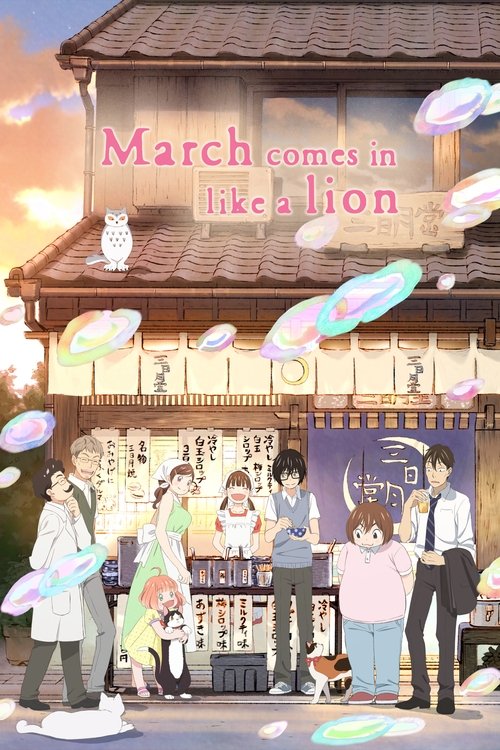
March Comes In Like a Lion
An introspective psychological drama drenched in quiet sorrow and luminous warmth, where the suffocating black waters of clinical depression gradually give way to the golden hearth of human connection.
March Comes In Like a Lion

March Comes In Like a Lion

3月のライオン

08 October 2016 — 31 March 2018 Japan 2 season 44 episode Ended 8.0 (142)

Cast: Kengo Kawanishi, Kentaro Tone, Kana Hanazawa, Ai Kayano, Misaki Kuno

Drama Animation Isolation, Depression, and the Path to Healing Found Family and Reciprocal Empathy The Weight of Ambition, Talent, and Professional Duty Moral Courage and Standing Up Against Injustice

Overview

March Comes In Like a Lion (3-gatsu no Lion), adapted from Chica Umino’s acclaimed manga by Studio Shaft and directed by Akiyuki Shinbo and Kenjirou Okada, follows Rei Kiriyama, a 17-year-old elite professional shogi player. Orphaned at a young age after a tragic accident killed his parents and sister, Rei was taken in by his father’s friend, a professional shogi player. To survive within a household torn apart by competition and resentment, Rei threw himself into shogi, eventually moving out into a desolate apartment in Rokugatsu-cho (June Town) to live in self-imposed isolation, weighed down by immense depression, survivor's guilt, and alienation.

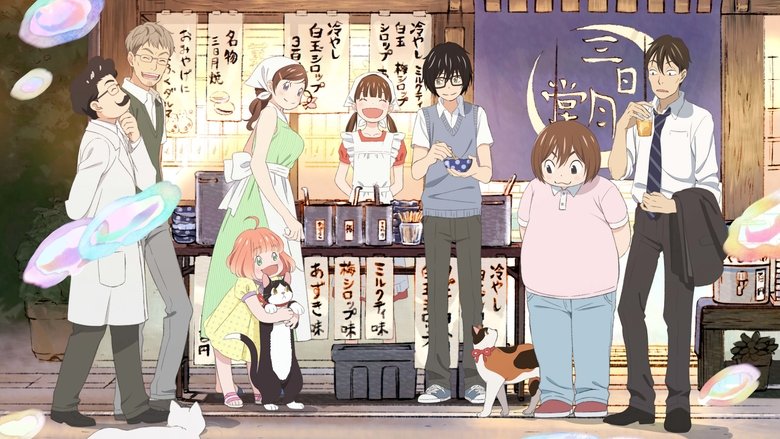
The narrative expands across two distinct 22-episode seasons that bridge two worlds: the brutal, solitary arena of professional shogi and the gentle, domestic sanctuary of Sangatsu-cho (March Town). Across the river from Rei's bare apartment lives the Kawamoto family—three orphaned sisters (Akari, Hinata, and Momo) and their grandfather—who invite Rei into their lives and slowly restore his capacity to feel warmth and hope.

As the story progresses into the second season, the focus shifts outward from Rei's personal healing to the struggles of those around him. When Hinata becomes the victim of relentless school bullying and the Kawamotos face familial abandonment, Rei transforms from a passive recipient of kindness into an active protector and empathetic competitor. Across its 44 episodes, the series weaves a holistic tapestry of coming-of-age growth, communal resilience, and the relentless pursuit of purpose.
Core Meaning

The overarching thesis of March Comes In Like a Lion is that no human being is designed to survive as an island; self-worth and healing cannot be earned solely through individual triumph, but through vulnerable connection and reciprocal care.

Through Rei’s journey, the creators illustrate that trauma and depression cause people to retreat inward, falsely believing they are toxic burdens to others. However, the series demonstrates that the antidote to despair is not professional excellence or emotional hardening, but reaching across the metaphorical river to allow oneself to be loved, while cultivating the courage to fight for others in return.

Thematic DNA

Isolation, Depression, and the Path to Healing 30%
Found Family and Reciprocal Empathy 25%
The Weight of Ambition, Talent, and Professional Duty 25%
Moral Courage and Standing Up Against Injustice 20%

Isolation, Depression, and the Path to Healing

In Season 1, depression is portrayed as an overwhelming, silent aquatic abyss. Rei views himself as an intruder who brought discord to his foster family. As the series unfolds, healing is shown not as an instantaneous epiphany, but as an incremental, daily endeavor built on small acts: sharing warm meals, admitting pain, and learning self-compassion through supportive mentors.

Found Family and Reciprocal Empathy

The Kawamotos provide Rei with unconditional affection despite carrying their own profound grief from losing their mother and grandmother. Across Season 2, this dynamic deepens into reciprocity: Rei realizes he can be a shield for the family that sheltered him, proving that family is forged through emotional presence rather than mere blood relation.

The Weight of Ambition, Talent, and Professional Duty

Shogi serves as a crucible for human character. The series humanizes Rei’s opponents—from aging veterans battling declining health (Yanagihara) to hard-working middle-tier pros (Shimada) and aloof geniuses (Souya). Shogi is portrayed not just as a game, but as a grueling lifelong vocation where victory requires sacrificing parts of oneself.

Moral Courage and Standing Up Against Injustice

Dominating Season 2, this theme crystallizes through Hinata’s middle school bullying arc. The narrative tackles institutional cowardice, peer pressure, and the internal struggle to remain compassionate in a cruel environment. It emphasizes that doing the right thing often exacts a painful personal toll, but preserving one's integrity is essential for true dignity.

Character Analysis

Rei Kiriyama (桐山 零)

Kengo Kawanishi (Japanese) / Khoi Dao (English)

Archetype: Wounded Prodigy / The Seeker Key Trait: Introspective sensitivity and stubborn determination.

Motivation

Initially plays shogi strictly as a survival mechanism; gradually evolves into playing with passion, respect for his rivals, and a desire to build a secure life alongside those dear to him.

Character Arc

Begins as a hollow, traumatized adolescent paralyzed by depression and survivor's guilt. Through the warmth of the Kawamotos and the camaraderie of the shogi world, he evolves across both seasons into an emotionally grounded young man who proactively fights to protect the people he loves.

Hinata Kawamoto (川本 ひなた)

Kana Hanazawa (Japanese) / Kayli Mills (English)

Archetype: The Moral Compass / The Resilient Heart Key Trait: Fierce emotional bravery and radiant sincerity.

Motivation

Driven by unyielding empathy and a refusal to betray her moral conscience, even at high personal cost.

Character Arc

Starts as a cheerful, innocent middle schooler. In Season 2, when she stands up for a bullied classmate and becomes the new target of harassment, her profound moral courage redefines Rei’s world and inspires everyone around her.

All 5 characters and cast

Symbols & Motifs

The Chuo Ohashi Bridge and the Sumida River

Meaning:

Represents the threshold between self-imposed exile and communal connection.

Context:

The physical bridge connecting Rei’s cold, utilitarian apartment in Rokugatsu-cho to the bustling warmth of the Kawamoto home in Sangatsu-cho. Crossing the bridge mirrors Rei's emotional transitions throughout the show.

Water and Drowning (The Dark Abyss)

Meaning:

A visual metaphor used to portray clinical depression and existential panic.

Context:

When overwhelmed, Rei envisions himself submerged in pitch-black waters, unable to breathe or reach the surface.

The Shogi Board as a "Burnt Field" (Yakenohara)

Meaning:

Symbolizes a desolate wasteland where veterans have fought for decades, where surviving requires carrying the shattered dreams of all defeated opponents.

Context:

Introduced prominently in Season 2 during the veteran matches, particularly involving Sakutaro Yanagihara.

Food and Shared Meals

Meaning:

Serves as a visual language for love, comfort, and nourishment of both body and spirit.

Context:

The meticulously animated hot dishes prepared by Akari contrast sharply with Rei's sterile convenience store meals.

The "Cuckoo’s Nest"

Meaning:

Encapsulates Rei's deep-seated survivor's guilt.

Context:

Rei frequently views himself as a parasitic cuckoo chick that pushed his foster siblings out of their home due to his shogi talent.

Memorable Quotes

後悔なんてしてない。しちゃいけない。だって、私のした事は絶対にまちがってなんかない!
— Hinata Kawamoto (quoted/internalized by Rei Kiriyama)

Context

Season 2, Episode 4 (Episode 26 overall). After being ostracized at school for defending a bullied friend, Hinata breaks down in tears.

Meaning

Her words shatter Rei's cynicism, becoming a spiritual catalyst that saves him from his own lingering despair.

一人じゃ無理なときは、誰かに頼るんだよ。じゃないと、今度はその誰かもお前を頼れないんだぞ。
— Takashi Hayashida

Context

Season 2, Episode 6 (Episode 28 overall). Teacher Hayashida advises Rei on how to support Hinata during her bullying crisis.

Meaning

Teaches Rei that interdependence is not a burden but a foundation of human trust.

All 4 quotes

Episode Highlights

Something Given (Part 1 & 2) / Childhood

S1E10

Rei faces veteran player Matsunaga, who is on the verge of retirement.

Significance:

The match reveals the tragic weight of professional matches where one person's triumph ends another's lifelong dream, marking a major turning point in Rei's self-awareness.

New School Term / Fighter

S1E22

Rei establishes his own high school shogi/science club with Hayashida-sensei.

Significance:

Demonstrates Rei's first conscious step toward integrating into society outside of his isolation in the Season 1 finale.

Ladybug Bush (Parts 2 & 3) / Feelings

S2E4

Hinata reveals the torment of her bullying to Rei.

Significance:

Hinata's emotional confession and refusal to compromise her values move Rei deeply, prompting his internal vow to protect her and changing the series' emotional trajectory.

Small World / Letter

S2E6

Rei navigates his deep helplessness over Hinata's school environment and seeks counsel from Mr. Hayashida.

Significance:

The episode examines practical empathy and how supportive adult intervention works.

Sunlight / Small Palm & Black Mist / Light

S2E11

The resolution of Hinata's middle school bullying arc alongside the introduction of the substitute teacher Kokubu.

Significance:

Delivers a masterclass in dismantling institutional apathy and demonstrating emotional accountability across Episodes 33 and 34.

Burnt Field (Parts 1–4)

S2E17

The legendary Kishou title defense match between Kai Shimada and the aging Sakutaro Yanagihara.

Significance:

A dramatic pinnacle representing the beauty, pain, and legacy of lifelong dedication to a craft across Episodes 39 and 40.

The Other House / Child of March Town

S2E22

Rei confronts the Kawamoto sisters' estranged, manipulative father (Seijiro) to protect the home that welcomed him.

Significance:

Illustrates Rei's complete transformation from a passive outsider to a self-assured protector in the anime finale.

Philosophical Questions

What constitutes true responsibility when someone we love is suffering?

The series explores whether offering empathy, intervening forcefully, or simply remaining present is the most ethical response to another person's pain, particularly through Rei's response to Hinata's bullying.

Can excellence in a craft compensate for a neglected inner life?

Explored through the contrasting figures of Souya (a genius living in silence) and Rei (who actively seeks a balanced existence among friends and family).

Is human vulnerability a weakness or the prerequisite for genuine strength?

Rei's journey posits that real resilience emerges only after one discards excessive pride and embraces mutual reliance and emotional openness.

Alternative Interpretations

The Reality vs. Defense Mechanism of the Kawamotos: Some critical analyses propose that the almost angelic, fairy-tale gentleness of the Kawamoto home in the initial episodes is partially filtered through Rei’s starved, romanticized perception of familial warmth. Only in Season 2, as their domestic crises, financial hardships, and unresolved maternal grief are exposed, does Rei see them as real, flawed, and struggling individuals rather than just saviors.

Full ending explanation

Cultural Impact

Serialized in Hakusensha's Young Animal starting in 2007, March Comes In Like a Lion gained recognition as a literary masterpiece in manga form, sweeping major Japanese cultural awards including the 4th Manga Taisho (2011), the 35th Kodansha Manga Award, the 18th Tezuka Osamu Cultural Prize Grand Prize (2014), and the Grand Prix at the 24th Japan Media Arts Festival.

The anime adaptation (2016–2018) revitalized public and international interest in shogi culture. Concurrently with its broadcast, the real-world rise of young prodigy Sota Fujii (who became a pro in middle school, matching the fictional Rei Kiriyama) ignited a nationwide "shogi boom" in Japan. Critics frequently cited the series as a key standard for how modern media can address youth mental health, classroom bullying, and adolescent isolation with nuance and empathy.

Audience Reception

Both seasons of March Comes In Like a Lion received universal critical acclaim, frequently ranking among the highest-rated anime series of the 2010s across aggregators like MyAnimeList (with Season 2 maintaining a historic score above 8.9/10).

Strengths Praised:

  • The mature, honest depiction of depression
  • The layered visual metaphors directed by Studio Shaft
  • The dynamic pacing of shogi matches
  • The emotionally devastating yet uplifting Middle School Bullying Arc in Season 2

Points of Criticism: Occasional viewers noted that the sudden tonal shifts between somber psychological drama and slapstick comedic gags (chibi animations, cat songs) in Season 1 could feel slightly jarring before settling into a more cohesive balance in Season 2.

Interesting Facts

  • The renowned Japanese rock band BUMP OF CHICKEN collaborated with author Chica Umino, writing the song 'Fighter' alongside an original manga chapter in 2014, with Shaft later using 'Answer' and 'Fighter' as the main opening and ending themes.
  • Professional 9-dan shogi grandmaster Manabu Senzaki served as the official shogi supervisor for the manga and anime, ensuring that all board states, opening tactics, and tournament procedures reflected authentic high-level competitive play.
  • Chief director Akiyuki Shinbo and series director Kenjirou Okada deliberately modulated Shaft's typical hyper-surrealistic visual techniques to serve the grounded emotional tone of Umino’s writing while retaining expressive metaphorical set pieces.
  • March Comes In Like a Lion aired on NHK General TV, Japan’s primary public broadcaster, receiving a prime time slot rarely granted to late-night seinen adaptations.

Easter Eggs

Subtle Geographic Symbolism

The districts in the series correspond directly to real-world Tokyo geography along the Sumida River. Rei’s district, Rokugatsu-cho (June Town), evokes the gloomy, rainy season (Tsuyu), while the sisters reside in Sangatsu-cho (March Town), reflecting the arrival of spring and renewal.

Literary Allusion in the English Title

The English title March Comes In Like a Lion references the English proverb "March comes in like a lion, and goes out like a lamb," symbolizing turbulent beginnings softening into peaceful closure.

Kyouko’s Storm Motif

Whenever Rei's foster sister Kyouko appears, the weather visual shifts to biting winds, thunder, or oppressive heatwaves, externalizing her volatile psychological state and the emotional disruption she brings into Rei's life.

Frequently Asked Questions

Explore More About This Movie

Dive deeper into specific aspects of the movie with our detailed analysis pages

Comments (0)

Leave a comment

No comments yet. Be the first to share your thoughts!

Similar Movies