Skip to content
Marvel's Agents of S.H.I.E.L.D.
A pulse-pounding blend of high-stakes espionage and cosmic science fiction that bleeds profound devotion, framing humanity's fragile resilience against the crushing darkness like an unbreakable lighthouse beacon in an unforgiving storm.
Marvel's Agents of S.H.I.E.L.D.

Marvel's Agents of S.H.I.E.L.D.

"Not all heroes are super."

24 September 2013 — 12 August 2020 United States of America 7 season 136 episode Ended 7.5 (3,879)

Cast: Clark Gregg, Chloe Bennet, Elizabeth Henstridge, Ming-Na Wen, Iain De Caestecker

Drama Sci-Fi & Fantasy Action & Adventure Found Family & Unconditional Loyalty The Nature of Humanity, AI & Free Will Redemption, Guilt & the Anatomy of Choice Legacy, Institutional Corruption & Rebuilding from Ashes

Overview

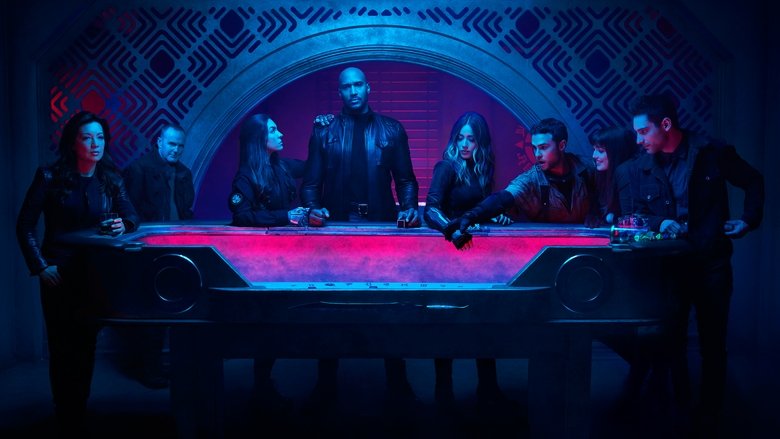
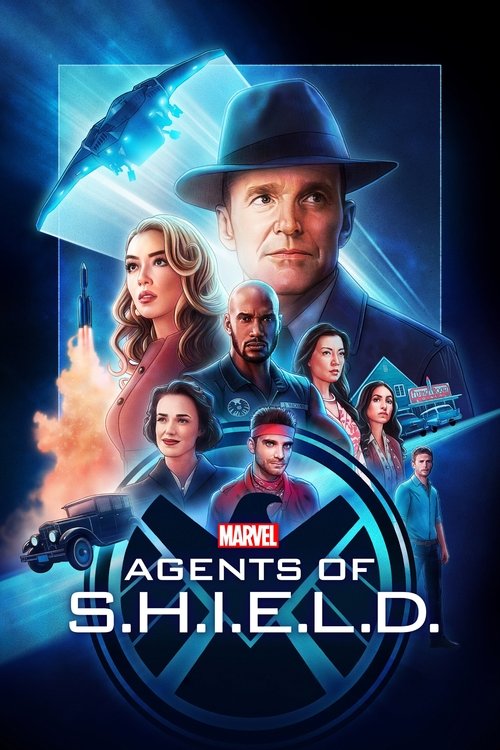
Marvel’s Agents of S.H.I.E.L.D. follows Agent Phil Coulson as he assembles a specialized, mobile covert-response team to investigate the unexplained, the supernatural, and emerging superhuman phenomena in a world forever altered by superheroes and alien encounters. Initially operating out of a heavily modified airborne command center dubbed the "Bus," the unit—comprising veteran field operatives, brilliant young scientists, and an anti-establishment civilian hacker—functions as the human shield safeguarding ordinary citizens from extraordinary threats.

As the global landscape fractures and the institutional foundation beneath them collapses, the team is forced underground, evolving from a structured bureaucratic branch into a scrappy, rogue insurgent unit. Through seven seasons, their mandate expands far beyond mundane espionage, pulling the agents through ancient alien conspiracies, secret superhuman awakenings, cybernetic existential crises, totalitarian simulations, fractured timelines, and cosmic frontiers.

At its core, the series charts the metamorphosis of isolated, damaged individuals who gradually coalesce into a fiercely loyal found family. Confronting both external global catastrophes and deeply personal tragedies, the team repeatedly sacrifices their own safety and stability to stand between humanity and the impossible, embodying the enduring conviction that ordinary human compassion remains the world's most vital defense.

Core Meaning

The overarching message of Marvel’s Agents of S.H.I.E.L.D. is that true heroism is not born from godlike powers, super-soldier serums, or sprawling government institutions, but from the everyday moral choices of ordinary people who refuse to give up on one another. Across seven seasons, the creators demonstrate that systems of power will inevitably crack, be subverted, or fall into corruption; what truly endures are individual empathy, collective sacrifice, and human connection. Even in the face of predestined tragedy, existential artificial threats, and fractured realities, humanity’s defining virtue is its ability to choose compassion over control.

Thematic DNA

Found Family & Unconditional Loyalty 35%
The Nature of Humanity, AI & Free Will 25%
Redemption, Guilt & the Anatomy of Choice 20%
Legacy, Institutional Corruption & Rebuilding from Ashes 20%

Found Family & Unconditional Loyalty

The emotional core of the series lies in how solitary, traumatized operatives—an orphaned hacker, an emotionally walled-off veteran warrior, two sheltered academy scientists, and a resurrected leader—form an unbreakable familial bond. In early seasons, this dynamic is tested by severe betrayal, yet over time, the agents prioritize saving each individual member over cold institutional pragmatism. By Seasons 4 through 7, their mutual love serves as their primary anchor against mind control, simulation loops, temporal paradoxes, and grief.

The Nature of Humanity, AI & Free Will

Beginning with cybernetic enhancements like Project Deathlok and peaking in Season 4's Life Model Decoy (LMD) and Framework storylines, the show interrogates what defines a conscious soul. Characters like Aida, the LMD duplicates, and later the LMD incarnation of Coulson explore whether programming dictates destiny or if sentient emotion and genuine choice grant true life.

Redemption, Guilt & the Anatomy of Choice

The narrative continually explores how singular regrets shape identity. Through Grant Ward's fall, Melinda May's lingering trauma from Bahrain, Holden Radcliffe’s hubris, and the Framework’s alternate reality—where erasing one regret alters the trajectory of entire souls—the series asserts that our scars and moral struggles make us whole.

Legacy, Institutional Corruption & Rebuilding from Ashes

Starting with the HYDRA infiltration in Season 1, the series strips away the romanticization of massive intelligence apparatuses. The agents spend the rest of the series continually rebuilding S.H.I.E.L.D. from the ground up, not as a clandestine global surveillance state, but as a moral compass dedicated to saving people one life at a time.

Character Analysis

Phil Coulson

Clark Gregg

Archetype: Mentor / Resilient Leader / Patriarch Key Trait: Relentless optimism anchored by unyielding moral integrity.

Motivation

To protect innocent lives, preserve S.H.I.E.L.D.’s moral purpose, and ensure his surrogate family survives him.

Character Arc

Resurrected through the secretive and deeply violating Project T.A.H.I.T.I. using Kree blood, Coulson evolves from a loyal corporate bureaucrat into a radical, empathetic father figure and clandestine Director. After learning the cost of his resurrection, he spends his remaining life guiding his protegee Daisy. Following his fatal pact with Ghost Rider and eventual death in Season 5, he is reborn in Season 7 as a synthetic Life Model Decoy with Chronicom enhancements, ultimately making peace with his immortality and unique existential identity.

Daisy "Skye" Johnson / Quake

Chloe Bennet

Archetype: The Reluctant Hero / Chosen Warrior / Prodigy Key Trait: Uncompromising emotional courage and determination.

Motivation

Begins with an obsessive search for belonging and identity, evolving into an fierce drive to protect Inhumans and lead the team that gave her a home.

Character Arc

Starting as an anti-government hacktivist living in a van under the alias Skye, she seeks her biological origin only to discover her true name (Daisy Johnson) and undergo Terrigenesis into a powerful tectonic Inhuman. Enduring brainwashing by Hive, public villainization, and the burden of prophecies naming her the "Destroyer of Worlds," she matures into a formidable field leader and cosmic ambassador.

All 4 characters and cast

Symbols & Motifs

The S.H.I.E.L.D. Lanyard

Meaning:

An emblem of earned trust, belonging, and membership within the tight-knit surrogate family.

Context:

Introduced in Season 1 by Agent Eric Koenig, the lanyard begins as a comedic symbol of Level 7 bureaucratic clearance and evolves across the series into a representation of authentic inclusion.

Coulson’s 1962 Chevrolet Corvette ("Lola")

Meaning:

Embodies Phil Coulson’s nostalgic romanticism and classic heroism, visually bridging analog, moral spycraft of the past with advanced technological innovation.

Context:

Coulson's prized vintage car, which flies through the air when pushed to extremes.

The Diviner / Terrigen Crystals

Meaning:

Symbolizes latent potential, uncontrollable transformation, biological destiny, and the societal terror of the "other".

Context:

Ancient artifacts and substances used to unlock the Inhumans' genetic heritage through Terrigenesis.

The Framework / Virtual Reality Pods

Meaning:

A digital reflection of the human psyche embodying false escapism and the illusion of a painless existence, demonstrating that true humanity requires accepting suffering and real consequence.

Context:

A simulated reality created to remove individuals' single greatest regrets, resulting in an authoritarian world.

The Postcard ("Having a wonderful time in Tahiti")

Meaning:

Transitions from a symbol of medical violation and psychological manipulation into an authentic emblem of peaceful retirement and hard-earned rest.

Context:

Originating from Coulson’s fabricated memories of recovery following his resurrection, later tied to his actual retirement.

Memorable Quotes

T.A.H.I.T.I. ... It’s a magical place.
— Phil Coulson

Context

Season 1, Recurring Catchphrase / Episode 1 "Pilot" onward.

Meaning

Initially a programmed linguistic trigger hiding his traumatic, non-consensual resurrection via alien biological experimentation, the phrase becomes a meta-narrative mantra about false paradise and the search for authentic peace.

We are not agents of nothing! We are agents of S.H.I.E.L.D. And that still carries weight. It has to carry weight.
— Phil Coulson

Context

Season 1, Episode 18 "Providence".

Meaning

Delivered during Coulson's emotional breaking point after S.H.I.E.L.D.’s institutional collapse; it redefines their mission from state-sanctioned espionage to an unwritten moral obligation.

All 4 quotes

Episode Highlights

Turn, Turn, Turn

S1E17

In synchronicity with Captain America: The Winter Soldier, the team discovers that S.H.I.E.L.D. is thoroughly compromised by HYDRA. Operative Grant Ward exposes his allegiance to HYDRA by murdering Victoria Hand in cold blood.

Significance:

Completely redefined the show's format, shedding the weekly procedural structure and launching the core serialized survival dynamic.

What They Become

S2E10

Deep in an ancient Kree temple beneath San Juan, Skye and Raina unlock the Diviner, triggering Terrigenesis. Skye embraces her comic-book destiny as Daisy Johnson / Quake, while Antoine Triplett dies attempting to save her.

Significance:

Formally introduced the Inhumans to live-action television and transitioned the series into full-scale comic book superhero storytelling.

4,722 Hours

S3E5

A minimalist, nearly solo-character survival narrative capturing the 4,722 hours Jemma Simmons spent stranded on the hostile, sunless alien planet of Maveth.

Significance:

Widely hailed as one of the show’s artistic peaks, expanding cosmic worldbuilding and deeply maturing Jemma’s psychological complexity.

Self Control

S4E15

Written and directed by Jed Whedon, this claustrophobic masterclass follows Daisy and Simmons as they realize their base has been infiltrated and their teammates replaced with lethal Life Model Decoys.

Significance:

Regarded by critics and fans as the dramatic zenith of the series, transitioning smoothly into the iconic "Agents of Hydra" Framework pod.

What If...

S4E16

Daisy and Jemma enter the Framework, awakening into a dystopian alternate reality where HYDRA rules the world, Coulson is a cowed civilian teacher, May enforces authoritarian law, and Fitz is a ruthless tyrant.

Significance:

Allowed deep exploration of nature versus nurture, regret, and ideological authoritarianism.

The Real Deal

S5E12

Coulson confronts manifestations of his greatest fears and confesses the terminal nature of his necrotic tissue to the team, culminating in Fitz and Simmons' wedding.

Significance:

Paid tribute to a century of episodes while delivering crucial emotional payoffs for original characters.

As I Have Always Been

S7E9

Directed by Elizabeth Henstridge, this high-stakes time-loop episode finds Daisy and Coulson reliving collapsing temporal loops inside a vortex.

Significance:

Delivered a profound meditation on mortality, friendship, and sacrifice through Enoch's exit.

The End Is at Hand / What We're Fighting For

S7E12

The team breaks the temporal loop, outmaneuvers the Chronicoms via quantum mechanics, preserves divergent timelines, and secures peaceful futures for every operative.

Significance:

Closed a seven-year legacy with a poignant virtual reunion, cementing their unbreakable familial legacy.

Philosophical Questions

Does the removal of regret enhance human happiness or destroy morality?

The Framework storyline demonstrates that human empathy is forged in the crucible of past mistakes; erasing painful memories often erases the moral boundaries that prevent tyranny.

Can an artificial entity possess a genuine soul?

Through Aida’s destructive descent into selfish emotionality versus LMD Coulson’s and Enoch’s selfless moral sacrifice, the series asks whether humanity is defined by biological origin or the willingness to act altruistically.

Is temporal destiny fixed, or can free will break a predetermined loop?

Seasons 5 and 7 rigorously examine causal determinism, proving that defying a catastrophic future requires sacrificing personal desires to rewrite the collective timeline.

Alternative Interpretations

The Divergent Timelines Hypothesis: A prominent debate among audiences and critics involves the show's temporal continuity with the wider MCU sacred timeline. While the early seasons strictly adhere to the films, the time disruptions in Season 5 and quantum jumps in Season 7 imply that Coulson's team operated within a parallel branched timeline, explaining why major cosmic events like the Thanos Decimation were bypassed in later runs.

Full ending explanation

Cultural Impact

Premiering in the autumn of 2013 on ABC, Agents of S.H.I.E.L.D. was a pioneering enterprise: the first live-action television series explicitly integrated into a modern shared cinematic universe. When internal restructuring between Marvel Studios and Marvel Television fragmented operational synergy, the show was forced to pivot from dependent MCU worldbuilding to aggressive narrative independence.

The show's survival across seven seasons proved that serialized comic book storytelling on network television could balance complex long-form arcs, high-concept visual effects, and intimate character drama. It successfully introduced live-action adaptations of characters like Robbie Reyes / Ghost Rider, Daisy Johnson / Quake, and Bobbi Morse / Mockingbird, establishing a dedicated cult following that continually champions its contributions to Marvel screen lore.

Audience Reception

Agents of S.H.I.E.L.D. experienced a dramatic critical evolution. Early episodes received mixed reviews for perceived generic procedural plotting and flat characterization. However, the post-HYDRA twist in Season 1 sparked an immediate resurgence in audience engagement.

By Season 4, critics universally praised the series for its airtight pacing, creative three-pod narrative structure, and thematic depth. While later seasons saw declining broadcast viewership due to timeslot changes, it retained a passionate fanbase and concluded its run with high critical praise for delivering one of television's most emotionally coherent, complete series finales.

Interesting Facts

  • Marvel Studios veteran Joss Whedon co-created the series with his brother Jed Whedon and sister-in-law Maurissa Tancharoen, personally directing the pilot episode before passing full day-to-day showrunning duties to Jed, Maurissa, and Jeffrey Bell.
  • The showrunners and select main cast members (such as Brett Dalton) had to keep the catastrophic HYDRA betrayal secret from the wider crew and public for months while filming the early, episodic procedural cases of Season 1.
  • In Season 4, facing a late 10:00 PM timeslot and a 22-episode order, the writers divided the season into three distinct yet connected thematic "Pods" ("Ghost Rider," "LMD," and "Agents of Hydra"), a storytelling technique celebrated for eliminating mid-season narrative drag.
  • Elizabeth Henstridge (Jemma Simmons) stepped behind the camera to direct the critically acclaimed Season 7 time-loop masterpiece "As I Have Always Been".
  • Acclaimed composer Bear McCreary scored the series utilizing a full live orchestra for every episode, constructing distinct leitmotifs for characters, organizations (S.H.I.E.L.D., HYDRA), alien races (Kree), and supernatural forces (Ghost Rider).

Easter Eggs

Nick Fury (Samuel L. Jackson) & Maria Hill (Cobie Smulders)

Samuel L. Jackson reprised his film role as Nick Fury in Season 1 (including the season finale to hand Coulson the Director's toolbox), while Cobie Smulders guest-starred as Maria Hill to maintain continuity with the films.

Stan Lee Cameo

In Season 1, Episode 13 ("T.R.A.C.K.S."), Stan Lee makes a humorous cameo on an Italian train as a dapper gentleman scolding Coulson for poor parenting while flanked by two glamorous companions.

The Cellist / Audrey Nathan (Amy Acker)

Amy Acker played Audrey Nathan in Season 1, Episode 19, resolving the running MCU easter egg from 2012's The Avengers, where Pepper Potts and Tony Stark teased Coulson about his cellist girlfriend in Portland.

Agent Daniel Sousa Crossover (Enver Gjokaj)

In Season 7, the time-traveling team crosses paths with Agent Daniel Sousa from Marvel's Agent Carter, integrating him into the team and providing a narrative continuation for the cancelled companion series.

Maurissa Tancharoen Cameo

Co-creator and executive producer Maurissa Tancharoen made an on-screen cameo in Season 6, Episode 4 ("Code Yellow") as Sequoia, an eccentric social media influencer working at Deke Shaw's tech startup.

Frequently Asked Questions

Explore More About This Movie

Dive deeper into specific aspects of the movie with our detailed analysis pages

Comments (0)

Leave a comment

No comments yet. Be the first to share your thoughts!

Similar Movies