Skip to content
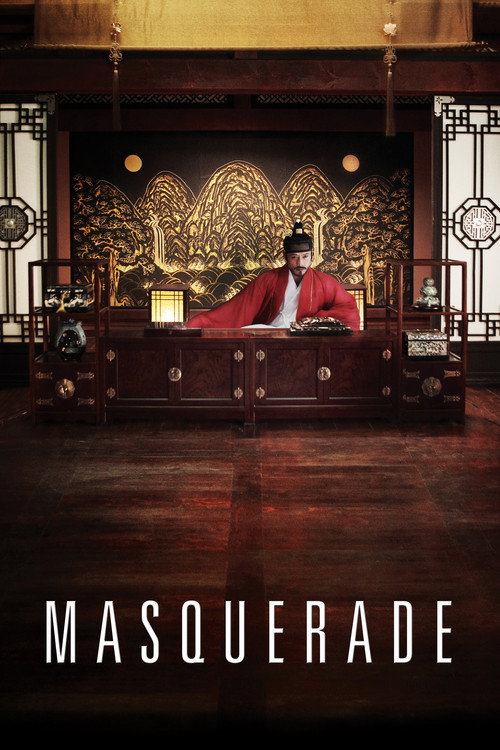
Masquerade
A lavish Joseon court drama where a clown's borrowed crown becomes a mirror, reflecting the kind of king a frightened, divided palace has forgotten it could have.
Masquerade

Masquerade

광해, 왕이 된 남자

"15 days lost to history."

13 September 2012 South Korea 131 min 7.7 (178)

Director: Choo Chang-min

Cast: Lee Byung-hun, Ryu Seung-ryong, Han Hyo-joo, Kim In-kwon, Jang Kwang

Drama History Legitimacy and the nature of leadership Identity and performance Power and its moral weight Class and empathy History and imagination

Overview

In 1616, during the reign of King Gwanghae of Joseon, the paranoid monarch fears being assassinated by poison. He orders his Chief Secretary, Heo Gyun, to find a double, someone who can sit on the throne when the danger is too great.

The man they find is Ha-sun, a humble entertainer caught telling bawdy jokes about the royal family. He looks exactly like the King, right down to the beard. When the King collapses after an assassination attempt, the loyal ministers put the clown on the throne full-time to keep the country from falling into chaos.

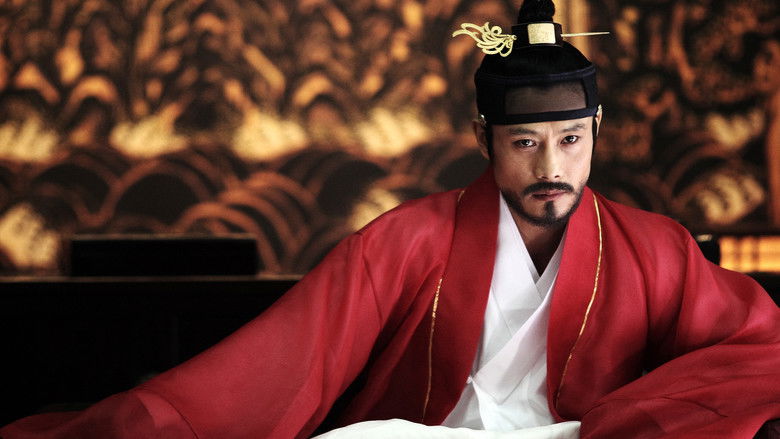
Built around 15 missing days in the official court records, the film follows Ha-sun as he learns royal manners, gets through the court's political traps, and slowly finds out how heavy, and how powerful, the role he is playing really is. Lee Byung-hun plays both the King and the clown.
Core Meaning

Masquerade asks what makes a ruler legitimate. Is it bloodline and ceremony, or care for the people? By putting a commoner in place of a paranoid king, Choo Chang-min suggests that real kingship is moral, not inherited. A clown who remembers what it's like to be poor can rule with more humanity than a man raised to rule.

The film uses a gap in the historical record, the 15 missing days of 1616, to picture a Joseon that might have been. It invites Korean audiences to think about the kind of leader they want. The story mixes comic warmth with serious drama, so the lesson comes across as something felt rather than lectured.

Thematic DNA

Legitimacy and the nature of leadership 30%
Identity and performance 20%
Power and its moral weight 20%
Class and empathy 15%
History and imagination 15%

Legitimacy and the nature of leadership

Ha-sun has no royal blood, yet his choices on the throne slowly show a compassionate kind of rule. It stands against the cold paranoia of the real King and asks whether the crown makes the king or the king makes the crown.

Identity and performance

Ha-sun makes a living by performing, and now he must play the ultimate role. His lighthearted clown persona gets more complicated as he becomes the part, until it's unclear where the mask ends and the man begins.

Power and its moral weight

The film follows Ha-sun as he realizes how serious his position is. His scenes run from pratfalls to cold political calculation, showing both how power can tempt a person and how heavy a burden it is.

Class and empathy

Because Ha-sun comes from the bottom of Joseon society, he sees the court's policies through the eyes of the people they affect. That gives his decisions a warmth the aristocratic ministers lack.

History and imagination

Inspired by the gap in The Journal of the Royal Secretariat, the film treats missing history as a place to imagine an alternative, more humane reign.

Character Analysis

Ha-sun

Lee Byung-hun

Archetype: Everyman hero / the fool who becomes king Key Trait: Warm-hearted humility and quick wit

Motivation

At first, money. Later, a real sense of responsibility toward the people and the few people at court who come to trust him.

Character Arc

He starts as a carefree acrobat and clown mocking the royals. As a stand-in king he grows into a thoughtful, compassionate ruler who understands the power he holds and what it costs.

King Gwanghae

Lee Byung-hun

Archetype: Tragic, paranoid monarch Key Trait: Paranoia

Motivation

Survival amid court conspiracies and the constant threat of poison.

Character Arc

A bizarre, fearful ruler who is left incapacitated by an assassination attempt. His absence sets up the story, and his presence stands in dark contrast to his double's.

All 3 characters and cast

Symbols & Motifs

The double / doppelganger

Meaning:

Two sides of one kingdom: fear-driven power and humane power. The double shows how much the person wearing the crown matters.

Context:

Lee Byung-hun plays both the paranoid King Gwanghae and the commoner Ha-sun. The same face makes the moral difference between them stand out.

The missing 15 days

Meaning:

The silences in official history, and the chance that ordinary people shaped events without being recorded.

Context:

The film's premise is built on 15 unrecorded days in 1616 from The Journal of the Royal Secretariat.

Poison

Meaning:

The rot of court politics, where trust is impossible and every meal is a threat.

Context:

The King's fear of being poisoned is what sets the story in motion and brings the double into the palace.

The beard and royal costume

Meaning:

The outward signs of authority, which can be copied and worn by anyone.

Context:

Ha-sun matches the King right down to the beard, a visual joke that points to how shallow outward legitimacy can be.

Memorable Quotes

엿 드시오
— Ha-sun (as King)

Context

Ha-sun sarcastically offers taffy to court officials while delivering a pointed jab at them.

Meaning

A crude pun on the Korean insult 엿 먹어라 ("eat taffy," roughly "screw you"), offered as a courtesy. It sums up how Ha-sun's commoner cheek breaks through court formality, and it's one of the film's most-cited moments.

Philosophical Questions

Is legitimacy inherited, or earned through action?

A commoner with the King's face rules more justly than the King. The film invites viewers to separate the office from the bloodline.

Can wearing a mask reveal a person's true self?

Ha-sun's performance as king brings out a conscience and courage that may already have been in him but only surfaced once he had the power to act.

What does history leave out?

By filling in 15 unrecorded days, the film suggests that official records may miss the people and acts of kindness that actually shaped events.

How It Ends

Alternative Interpretations

Political allegory: Many viewers read the film as a commentary on modern leadership. It came out in a Korean election year, and the ideal of a humble, people-first leader was read as a contemporary wish.

Full ending explanation

Cultural Impact

Masquerade was a huge critical and commercial success. It sold about 12.3 million tickets, earned around US$94.3 million, and became one of the highest-grossing Korean films ever. It swept the 49th Grand Bell Awards with 15 wins, a record-setting haul, and Choo Chang-min also won Best Director at the Baeksang Arts Awards.

Released in 2012, the film joined a strong tradition of Korean historical dramas that reimagine Joseon history to comment on the present. It took a Western story template (The Prince and the Pauper, Dave) and gave it a distinctly Korean political and emotional texture. Its image of an ideal, people-centered ruler struck a chord with audiences, and it remains a reference point in discussions of popular Korean period cinema.

Audience Reception

Audiences received the film very enthusiastically, as its 12.3 million admissions show. Lee Byung-hun's dual performance gets the most praise, especially his range from clownish pratfalls to cold political scheming to melodramatic romance. Reviewers note that the real pleasure lies in the performances, which lighten the royal solemnity with comic warmth.

Critics called the direction competent. Some found the story conventional and borrowed from familiar Western templates like The Prince and the Pauper and Dave, and felt the melodrama was heavy-handed in places. Overall, it's widely seen as a crowd-pleasing, well-acted, handsomely made historical drama.

Interesting Facts

  • The story is built around 15 missing days in 1616 from The Journal of the Royal Secretariat (Seungjeongwon ilgi).
  • The film draws inspiration from Mark Twain's novel 'The Prince and the Pauper' and Ivan Reitman's political comedy 'Dave'.
  • Lee Byung-hun plays two roles: King Gwanghae and the commoner Ha-sun.
  • It swept the 49th Grand Bell Awards with 15 wins, including Best Film, Best Director, Best Screenplay and Best Actor.
  • Choo Chang-min also won Best Director at the Baeksang Arts Awards for the film.
  • It sold about 12.3 million tickets and grossed roughly US$94.3 million.
  • It was the second highest-grossing film of its year in Korea and ranks as the ninth highest-grossing South Korean film domestically.

Easter Eggs

Echoes of 'The Prince and the Pauper' and 'Dave'

The lookalike-commoner-replaces-ruler setup deliberately recalls Mark Twain's classic and Ivan Reitman's 1993 political comedy Dave, moved into Joseon-era court intrigue.

The real historical gap

The film's fiction fits into a real 15-day gap in the royal records of 1616, which lets it play a historical "what if" without contradicting the official chronicle.

Frequently Asked Questions

Explore More About This Movie

Dive deeper into specific aspects of the movie with our detailed analysis pages

Comments (0)

Leave a comment

No comments yet. Be the first to share your thoughts!

Similar Movies